Article

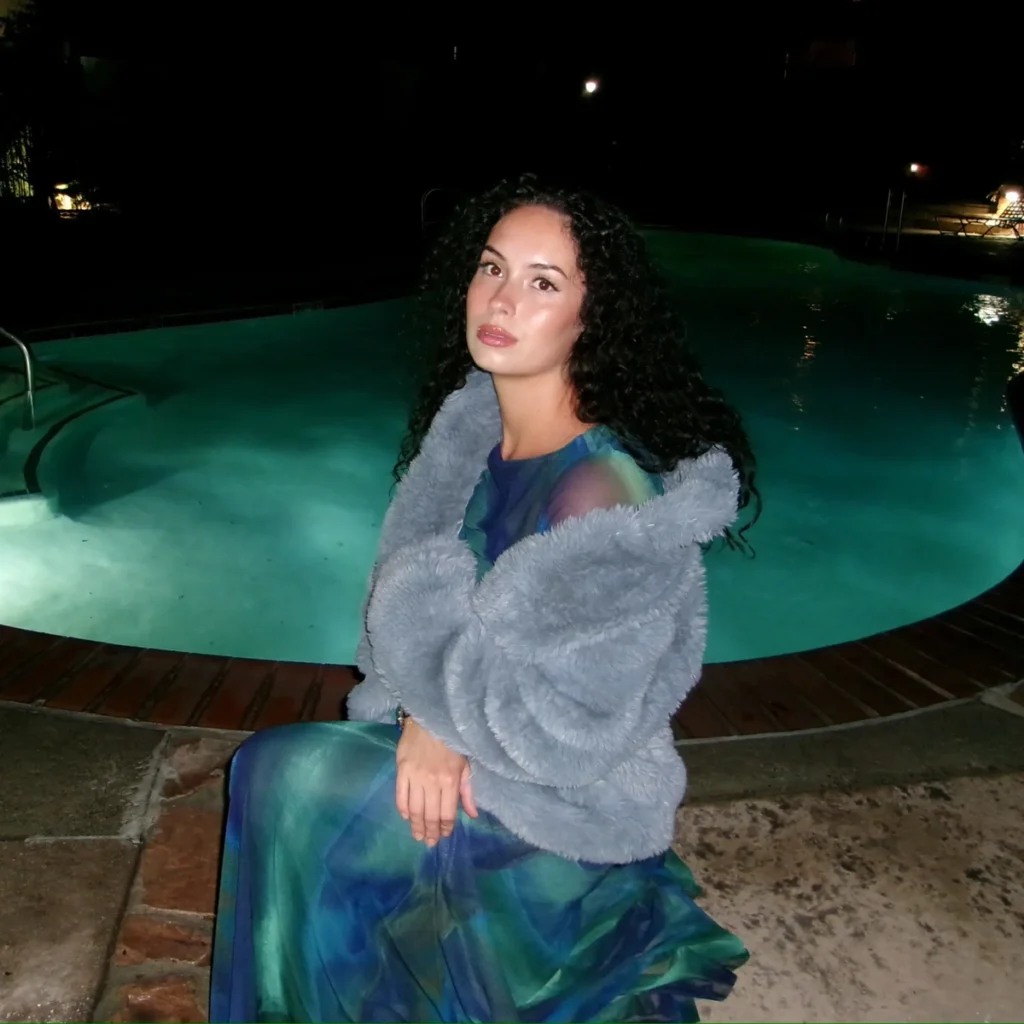
Arca singing into a microphone under blue stage light

Arca Made a Mixtape and Then Decided to Call It an Album

Arca spent nearly five years without a full-length record. When one finally arrived, it was a mixtape she had decided to relabel.

XXXXX came out on 31 July through XL Recordings, running forty-seven minutes and nine seconds across sixteen tracks in Spanish and English. She made it as a mixtape, then released it as an album without substantially reorganising the material.

The Designation Is the Only Thing That Changed

This is worth stating precisely because the temptation is to assume something was reworked. The running order was retained from the mixtape version, including several brief pieces sitting between the longer tracks, and the abrupt transitions that came with the original format survived intact.

Arca described the change in designation as a playful response to expectations surrounding her first full-length release in nearly five years — which is a fairly direct way of pointing out that the distinction was never in the music.

A mixtape and an album have been technically identical for two decades. Both are a set of tracks in an order, delivered digitally, and the labels now signal intent rather than format: a mixtape is understood as looser, less accountable, less of a statement, while an album invites the full weight of a review cycle.

Deciding to accept that weight for a record made under the other assumption is a real decision, and it makes the album's structural oddities into deliberate features rather than the leniencies of a lesser format.

Release material called three of the short tracks — "Cinch", "Enraptured" and "Throb" — "experimental diva FM" idents. An ident is radio furniture, the sound that separates one segment from the next, and describing them that way is an admission that the record is sequenced like a broadcast rather than composed as a suite. Our piece on why release metadata decides who hears you covers what a label like album or mixtape actually does downstream.

Five Albums in Eighteen Months, Then Nothing

The gap before this one has a specific cause. Arca released the five albums of her Kick series between June 2020 and December 2021, finishing the project by issuing its final four instalments on consecutive days.

That pace produced burnout. She has said she temporarily lost interest in making another album, and turned to painting instead.

Releasing four albums in four days is an extreme thing to do, and it is easy to read it as a stunt rather than as work. The five-year silence that followed suggests otherwise: it was not a marketing structure but an actual quantity of material, delivered at a rate that emptied her out.

Her reason for choosing painting is the most interesting detail in the whole story. She contrasted the endless revision possible in recorded music with painting, which required her to accept decisions that could not be undone.

That is the fundamental complaint about digital production stated plainly. A session file can be revisited indefinitely, so nothing is ever finished; a brushstroke is finished the moment it lands. An artist whose method is defined by extreme manipulation of sound went looking for a medium that would not let her manipulate anything.

An Exhibition Before the Album

The paintings became a series titled Angels, shown at the Institute of Contemporary Arts in London from 4 to 19 April 2026 — her first institutional presentation and the first London exhibition devoted to the series.

Arca has said the painting helped her resume making music, which suggests the detour was a route back rather than an exit. Whether the finality of the medium transferred into the record is a fair question to ask of an album that was released essentially as first drafted.

The rollout matched the tone. The album was announced on 20 July, eleven days ahead of release, with the artwork, tracklist and a livestream performance titled Diva.Experimental transmission, directed by Daniel Sannwald and broadcast from Barcelona.

Eleven days is a very short lead for a major release, and pairing it with a single broadcast event rather than a run of singles keeps the record as one object rather than a series of instalments — which is what the previous project had been.

It also removes the mechanism by which most albums are now introduced. A staged singles campaign lets listeners meet a record in pieces and decide in advance what it is; announcing everything at once and releasing it a week and a half later forces the first encounter to be with the whole thing.

For a record that keeps its interstitial pieces and its abrupt cuts, that is close to necessary. Extracted as singles, tracks built to be interrupted lose the thing that makes them work.

What the Music Is Doing

Early reviews described an experimental electronic record combining avant-garde production, deconstructed club, contemporary classical influences and pop structures, with recurring themes of transformation, futurism and transhumanism.

The arrangements move between sustained drones, walls of noise, metallic percussion, low-frequency pulses and more open passages built around fragments of her voice. Paul Attard, writing for Slant Magazine, connected the severity and unpredictability of the production to her earlier albums Xen and Mutant, but heard the same elements realised on a larger scale.

Ludovic Hunter-Tilney in the Financial Times described the textures on "Heart" as resembling blood circulating through a body, connecting them to the album's treatment of the body as something altered by technology.

Shaad D'Souza in The Guardian compared the production on "Everything" to Aphex Twin and identified a footwork influence in the quicker rhythm of "Fxck". That track repeats the phrase "kill the father", which Arca has explained as a rejection of internalised patriarchy and an attempt to make room for a maternal archetype and a different mythology.

"Raver" is the clearest illustration of the method. It rearranges the elements of mainstream dance music but replaces the conventional build and release with interruptions and bursts of noise — the shape of a club track with its central mechanism removed.

That is what deconstructed club means as a practice rather than a genre tag. The style takes the recognisable furniture of dance music — the kick, the riser, the drop — and withholds the payoff those elements exist to deliver, so the listener's expectation does the work the track refuses to do.

"Willow" sets the terms early, combining bells and computerised tones with disruptive percussion before handing over to the heavier low-frequency material of "Eidolon". A record that opens by establishing a texture and then immediately undermining it is telling you how to listen to the rest.

Two Languages and a Flamenco Title

The record moves between Spanish and English, and one track title makes the Venezuelan and Iberian threads explicit. "Taconeando" takes its name from the Spanish term for the heel-stamping used in flamenco and tango, tying the track's percussion to a specific physical movement.

That is a more grounded reference point than the album's futurist themes suggest, and it is characteristic. A record concerned with transhumanism naming a track after a dance step performed with the body's own weight is the sort of contradiction her work tends to hold rather than resolve.

The sequence works the same way. "No End" opens the album, followed by "Willow", "Eidolon", "Heart" and "Syncope"; "Cinch" separates "Raver" from "Fxck"; and near the close, "Enraptured" and "Throb" interrupt the run from "Grip" to "Everything".

Those interruptions are the mixtape showing through, and keeping them was the choice. An album is supposed to flow; this one was left with its seams visible, and then called an album anyway.

XXXXX is out now on XL Recordings.

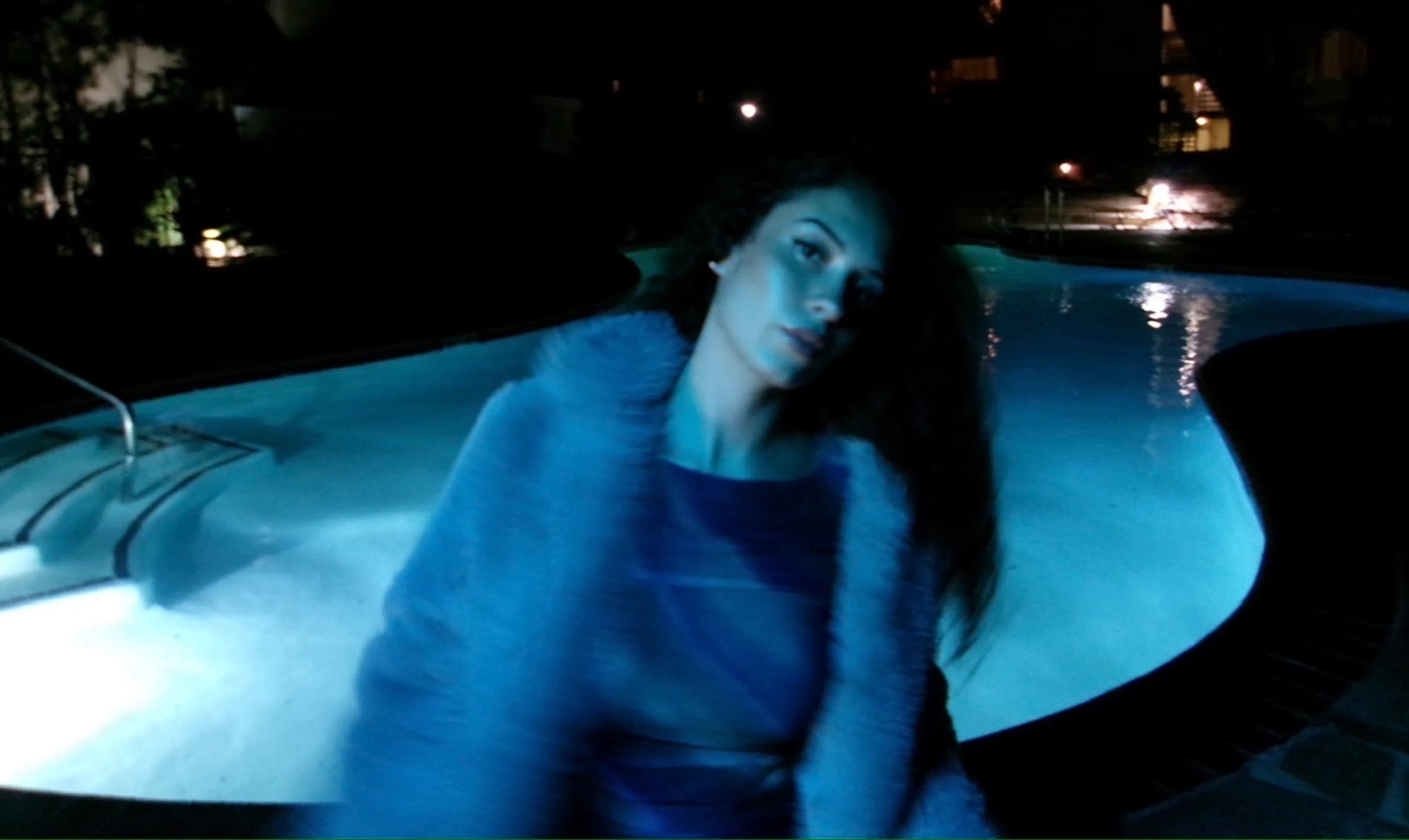
Close portrait of Kelela on stage looking to her left

Kelela Answered Ten Years of R&B With a Shoegaze Album

Kelela spent a decade being the reference point other people used for what alternative R&B could be. Her third album is built on distorted guitars.

New Avatar came out on 10 July through Warp, running forty minutes and forty-seven seconds, and its genre list reads shoegaze, indie rock, grunge, electronic and alternative R&B — in roughly that order of surprise.

The Turn Is Real, Not Cosmetic

Forty minutes is also a deliberate length for a record this dense. Guitar distortion is fatiguing at volume, and an album built on it that ran an hour would be asking more of a listener than the songs could repay.

Artists announce reinventions constantly and usually mean a tempo change. This is not that. Shoegaze and grunge are guitar traditions built on volume, distortion and a vocal pushed back into the mix — close to the opposite of the precise, foregrounded, space-conscious singing Kelela built her reputation on.

Reviewers noticed the difficulty of describing it. Resident Advisor wrote that the record "reconfigures shoegaze, IDM and R&B into a Black, femme sound of the future", pointing to the fusion of distorted guitars with electronic production and contemporary R&B songwriting.

DJ Mag described much the same combination — indie rock, shoegaze and grunge, while retaining ties to her experimental club and electronic work. Two publications reaching independently for a three-genre formula is a fair indication that the record does not sit anywhere existing.

The precedent that makes it plausible is the one she set in 2015. Hallucinogen told a relationship backwards, beginning at the end — an artist willing to invert the basic structure of a break-up EP was never going to treat genre as fixed either.

The Club Instinct Did Not Go Anywhere

What stops this reading as abandonment is that the electronic side survived. She has not swapped one lane for another; she has layered a guitar tradition over the production approach she already had.

That is a harder proposition than a straight genre switch. A shoegaze record made by someone with no club background sounds like shoegaze; one made by a producer who thinks in club structures has to reconcile two rhythmic logics that do not naturally agree.

The Warp connection makes more sense of it than a label change would. Warp has spent thirty years releasing music that sits between electronic and rock without belonging to either, so a record like this arrives somewhere it fits rather than somewhere it has to be explained.

Three Producers, One of Them Her

A. K. Paul is a telling inclusion in particular — a producer whose own work lives in the same gap between guitar playing and electronic construction that this album is trying to occupy.

The album was produced by Kelela with Oscar Scheller and A. K. Paul. Three names on a record this stylistically specific is a small number, and her own presence among them matters.

An artist making a genre turn has two options: hire specialists in the new genre and follow them, or keep control and learn it. The production credit suggests the second, which is the riskier and more interesting route.

It also explains why the result is a hybrid rather than a pastiche. Someone who has fully handed over a guitar record makes a guitar record; someone still producing alongside brings their own instincts into it whether or not they intend to.

Naming the record New Avatar is about as explicit as an artist gets about what she is doing. An avatar is a chosen form rather than a true one, and the title concedes in advance that this is a version of her rather than a replacement.

A Career Built on Long Gaps

Her catalogue has never moved quickly. She emerged with the mixtape Cut 4 Me in 2013, then Hallucinogen in 2015 — an EP that told a relationship in reverse chronological order, which is the kind of structural idea that signals an artist thinking in projects rather than singles.

Take Me Apart arrived in 2017 to strong reviews, and was followed by a five-year silence. Raven broke it in February 2023, In the Blue Light came in 2025, and New Avatar is the third album in a career now thirteen years old.

The 2025 release In the Blue Light sits between Raven and this one, so the gap before New Avatar was shorter than the five-year silence that preceded Raven. The pace has quickened slightly, without becoming anything like prolific.

Three albums in thirteen years is a slow rate by any standard, and it is context for the genre turn. An artist who releases constantly cannot afford a reinvention, because the audience is renewed too often to follow one. An artist whose listeners have waited years between records has a following that arrived for her rather than for a sound.

Warp is also a label that has never required its artists to stay put. Signing there is, in itself, a decision about how much room you expect to need, and a record that spans five genres is close to the reason the label exists.

Why This Kind of Move Usually Fails

The genre pivot is one of the most commonly attempted and least commonly successful manoeuvres in pop. The failure mode is legible: the new genre is adopted as costume, the songwriting stays where it was, and the result satisfies neither audience.

What appears to have saved this one is that the songwriting is described as intact. Both publications quoted above identify contemporary R&B songwriting inside the guitar textures rather than replaced by them.

That distinction is the whole thing. Changing what a record is made of is a production decision; changing how the songs are written is a different and much larger one, and doing only the first is what makes a pivot convincing rather than desperate. Our piece on why release metadata decides who hears you covers a practical consequence — a record this hard to classify is also hard to file.

Shoegaze in particular is a forgiving destination for a singer who wants to be heard differently. The genre's defining move is burying the voice in guitar, which for a vocalist known for clarity is not a limitation but a disguise — and one that changes what the singing has to do.

The Filing Problem Is the Interesting One

A record spanning five genres has a distribution problem before it has an audience problem. Playlists, charts and shops all need one answer, and every available answer here is partly wrong.

Listing it as alternative R&B undersells the guitars; listing it as shoegaze hides it from the people who followed her for a decade. There is no correct choice, only a least-bad one.

Her own category is arguably the least useful of all. Being described for a decade as an alternative R&B artist becomes a constraint the moment the music stops matching, and a record like this is one way of refusing the label without arguing about it.

That is the practical cost of a record like this, and it is worth stating plainly rather than treating boundary-crossing as automatically admirable. Kelela has made something the systems around music are poorly equipped to handle, which is usually a sign the music got somewhere first.

Thirteen years in, that is a more interesting position to be in than a comfortable one.

New Avatar is out now on Warp Records.