Classical

Alice Sara Ott Recorded Johann Johannsson for Solo Piano

Alice Sara Ott Recorded Johann Johannsson for Solo Piano

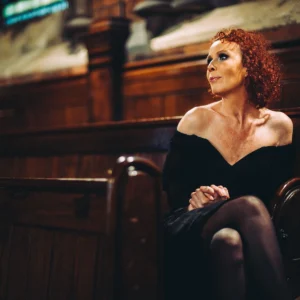
Alice Sara Ott signing after a concert in 2013.

Alice Sara Ott released thirty first recordings of music by Johann Johannsson arranged for solo piano, made in Iceland where he was from.

He died in 2018, and none of these versions existed until now.

What a World Premiere Recording Means Here

Every track on the album is a first recording, which for a composer this widely heard requires explanation.

Johannsson's music is extremely well known in its original form, largely through film scores that reached enormous audiences.

What did not exist was the music written out for one piano, and a transcription that has never been recorded is a genuinely new object even when the tune is familiar.

Thirty of them at once is not a selection but an attempt at a body of work.

The Edition Behind It

The arrangements come from a published edition of solo piano transcriptions issued by a music publisher rather than assembled by the pianist.

Published editions matter more than they appear to, because they make a repertoire available to everybody rather than to one performer.

Once printed music exists, students play it, other pianists record it, and a body of work moves from a recording catalogue into an actual repertoire.

Recording It in Iceland

The album was recorded in the composer's home country, which is a decision about meaning rather than acoustics.

There is no sonic reason a piano record has to be made in any particular country, and plenty of practical reasons not to fly a project to a small island.

What it buys is a claim about context, and in this case a fairly specific one, since the sound of the music is frequently described in terms of the landscape it came from.

Composers Who Died Too Early

Johannsson died in 2018, in the middle of a career that was accelerating rather than settling.

When a composer dies at that point, the catalogue stops but the interest does not, and what follows is usually a period of arrangement, transcription and posthumous release.

That process can be respectful or extractive, and the difference generally comes down to whether the new versions do something the originals could not.

Film Music on a Concert Piano

Moving film music to solo piano changes what it is, because film scores are written to support images rather than to stand alone.

A cue that works under a scene is often deliberately incomplete, leaving room for dialogue and picture, and it can sound thin in a concert hall.

What survives the transfer tends to be the material with real harmonic movement, which is why transcription projects are also a form of criticism.

Thirty Tracks and Two Records

The album is issued digitally, on CD and as a double vinyl set.

Thirty short pieces across two records is closer to a book of studies than to a conventional album, and it invites the listener to move around inside it.

Vinyl in particular imposes an order and a set of breaks that a streaming sequence does not, which changes how a collection of miniatures is experienced.

Deutsche Grammophon After Sixteen Years

She has recorded for the same label for well over a decade and a half, which is long even by classical standards.

Classical contracts have historically been more durable than pop ones, because the catalogue is the asset and artists take longer to develop.

That stability is also what makes a project like this possible, since a label that has recouped over sixteen years can afford one record that is not obviously commercial.

Artist in Residence in Berlin

She holds a residency at the Konzerthaus Berlin this season, which is a different arrangement from a run of guest appearances.

A residency typically involves several concerts across a year, often in varied formats, and gives an artist a chance to build a programme rather than deliver one.

For a hall it is a way of attaching an identity to a season, and for a performer it is a rare opportunity to be heard more than once by the same audience.

Hong Kong, Seoul and Germany

Her concert diary this year took in Hong Kong in April, Seoul in May and a run of German halls in late May.

The programmes differ by city, with an Irish nocturne composer and Beethoven in Hong Kong, Ravel in Korea and Beethoven again in Germany.

Varying the programme by territory is a normal part of recital planning, since audiences and presenters in different markets expect different things.

The Composer Who Invented the Nocturne

The Hong Kong programme included John Field, who is a genuinely underplayed figure.

He established the nocturne as a form before Chopin took it up, and his own pieces are heard far less often than the ones they made possible.

Programming him next to Beethoven is a quietly argumentative choice, since it places a marginal composer in the company of a central one.

Streaming and the Classical Pianist

She is among the most streamed classical pianists working, which is a genuinely new category of achievement.

Classical music performs unusually well on streaming platforms relative to its share of physical sales, because listeners use it for concentration and play it for hours.

That has shifted which repertoire gets recorded, and a thirty-track album of short atmospheric pieces is exactly the shape the format rewards.

Transcription as a Serious Practice

Piano transcription has an odd status, treated as both a central historical practice and a slightly lesser activity.

For most of the nineteenth century it was how people heard orchestral music at all, since there were no recordings and few concerts.

The tradition faded once recording made the originals universally available, and it has returned mainly as a way of bringing music from outside the concert repertoire into it.

What Reduction Reveals

Playing orchestral or electronic music on one instrument is a stress test that the original never has to pass.

Texture disappears first. Music that depended on the sound of massed strings, or on a synthesiser's decay, has to find another way to hold attention, and frequently cannot.

What remains is harmony and line. A piece with real voice-leading survives the reduction and often improves, because the movement becomes audible without the surface.

A transcription project is therefore an argument that the underlying writing was always the point, which is a considerably stronger tribute than a re-release.

Posthumous Projects and Consent

There is an unavoidable question attached to any posthumous arrangement, which is whether the composer would have wanted it.

Nobody can answer that, and the honest position is to acknowledge it rather than to claim an endorsement that cannot exist.

What can be judged is the care taken: whether the arrangements are the work of somebody who understood the music, whether an estate was involved, and whether the result is presented as the composer's work or as somebody else's version of it.

A published edition, a full-length recording and a label with a reputation to protect are at least the marks of a project taken seriously.

What Is Actually Being Tested

Two things. Whether music written for orchestras, electronics and film survives being reduced to eighty-eight keys and one player.

And whether thirty first recordings turn a film composer's catalogue into a piano repertoire other people will actually play.

Thirty pieces, one piano, an island in the North Atlantic, and a composer who has been gone for eight years.
Klaus Makela Conducts Five Chicago Programmes This Season

Klaus Makela Conducts Five Chicago Programmes This Season

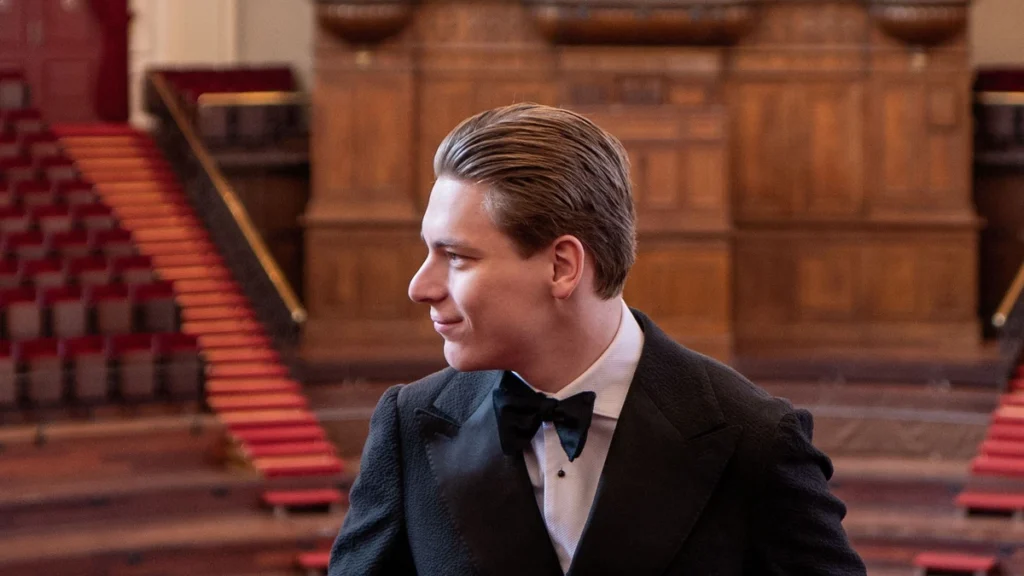
Klaus Makela photographed at the Concertgebouw in Amsterdam in 2022.

Klaus Makela conducts five Chicago Symphony programmes across this season, a year before the job formally becomes his.

The first runs from 24 to 26 September and pairs Sibelius with Shostakovich.

What a Designate Year Is For

American orchestras appoint music directors years before the post begins, and the interval has a specific function.

The incoming conductor spends it working with the players in concert conditions, which is the only way to learn how an orchestra actually responds rather than how it sounds on record.

It also gives the administration time to build seasons around somebody whose taste they do not yet fully know, which is a substantial planning problem.

Five programmes across a designate year is a heavy commitment, and it suggests both sides want the relationship established before it officially starts.

Opening With Sibelius and Shostakovich

The September programme puts a Finnish composer next to a Soviet one, which is a pairing with more logic than it first appears.

Both wrote symphonies under political pressure, both were claimed as national figures by states with an interest in claiming them, and both wrote music whose apparent meaning is contested to this day.

For a Finnish conductor, opening with Sibelius is also a statement about inheritance, since that repertoire is closer to a birthright than a choice.

Mahler 9 in October

The second programme is Mahler's Ninth Symphony, which runs from 1 to 4 October.

It is among the most demanding works in the repertoire for both orchestra and conductor, lasting roughly eighty minutes and ending in a slow movement that dissolves rather than concludes.

Conductors tend to programme it when they want to be measured, because there is no bravura in it and nothing to carry a performance that is not fully controlled.

Petrushka and a Choral Work

The third programme, on 8 and 9 October, pairs Stravinsky's Petrushka with Walton's Belshazzar's Feast.

That is a loud evening. One is a ballet score of enormous rhythmic complexity, the other a choral piece that requires a full chorus and brass placed around the hall.

Programmes of that kind are expensive and are usually reserved for occasions where an orchestra wants to demonstrate scale rather than subtlety.

Spring and Summer Programmes

The season's later dates bring a violin concerto alongside Sibelius's First Symphony in May, and Beethoven's Ninth in June.

Returning to Sibelius at the other end of the season closes a loop that the opening programme began, which is the sort of structure that only becomes visible once a full year is published.

Beethoven's Ninth in June is a season-closing choice by convention, since it requires a chorus and four soloists and functions as an occasion rather than a concert.

Fourteen Weeks a Year

From 2027 the post commits him to a minimum of fourteen weeks each season, ten of them in Chicago and four on tour.

That is a substantial figure by contemporary standards and a modest one historically, since music directors of the mid-twentieth century were effectively resident.

The change reflects the jet age more than anything else. A conductor can now hold two major posts on different continents, which was not physically possible when the model was designed.

Two Orchestras at Once

He also takes on the Royal Concertgebouw Orchestra in Amsterdam, announced alongside the Chicago appointment.

Holding two of the world's most prominent orchestras simultaneously is unusual and was widely discussed when the news broke, largely in terms of whether it is possible to do both properly.

The counter-argument is that a fourteen-week commitment leaves room for another, and that the alternative model, in which a conductor is present for thirty weeks, no longer exists anywhere.

Appointed Very Young

He was in his twenties when the appointments were announced, which is remarkably early for posts of this seniority.

Conducting has traditionally been a profession people enter early and reach the top of late, on the theory that authority over a hundred musicians takes decades to acquire.

What has changed is the audition process. Orchestras now hear a candidate repeatedly as a guest before appointing, which surfaces talent much earlier than the old system did.

The European Tour in January

He leads his first European tour with the orchestra in January, taking in Germany, Austria, Luxembourg and Paris.

Touring is the part of the job that builds an orchestra's international standing, and it is also the part that costs the most money for the least direct return.

American orchestras tour Europe partly to be heard by European critics, which sounds absurd and is a genuine factor in institutional reputation.

What Chicago Is Known For

The orchestra's reputation rests substantially on its brass section, which has been considered among the finest anywhere for well over half a century.

Reputations of that kind are self-sustaining, because the best players in the world audition there, and they shape what repertoire the orchestra is expected to play.

A conductor arriving at an orchestra with a defining characteristic has to decide whether to build on it or work against it, and both choices are visible immediately.

Inheriting an Institution

A music director does not simply conduct. The post carries responsibility for programming, hiring, education work and the orchestra's public argument for its own existence.

Those are managerial duties, and a substantial part of what an orchestra is buying is judgement about matters that have nothing to do with a baton.

It is also why designate years matter: an incoming director is learning an institution as much as an ensemble.

Why Orchestras Announce So Far Ahead

A three-year gap between announcement and first season looks strange from outside and is entirely practical.

Conductors at this level have diaries booked four or five years out, with guest engagements agreed long before any appointment exists.

Unwinding those commitments takes years, and orchestras accept the delay because the alternative is appointing somebody who was available.

The Politics of Programming

Season programming is where a music director's actual views become public, and every choice is read.

A season heavy on the nineteenth-century canon reads as conservative; one heavy on new commissions reads as adventurous and sells fewer tickets.

Most directors compromise by anchoring subscription weeks in familiar repertoire and placing the risks next to them, which is roughly the shape visible here.

What a Conductor Actually Changes

The persistent public question about conducting is what difference the person on the podium makes to an orchestra that already knows the notes.

The honest answer is that in performance the influence is smaller than the gestures suggest, and in rehearsal it is enormous.

Balance is the main lever: which lines are audible, how loud the brass sit against the strings, whether an inner voice is brought forward. Those decisions are made in rehearsal and they change the piece more than tempo does.

The second lever is attitude. An orchestra that believes in the person in front of it plays with a commitment that is audible and impossible to fake, which is why the designate year exists at all.

Sibelius as a Statement of Origin

Beginning and ending the season with the same composer is not a coincidence, and the choice of Sibelius is not a neutral one.

His symphonies were treated for much of the twentieth century as provincial by central European critics, and they were championed most persistently in Britain and America rather than in Germany or Austria.

A Finnish conductor placing them at both ends of an American season is making an argument about where that music belongs in the repertoire, and doing it without a word of explanation.

Programming is the only rhetoric a conductor has, and it is read closely by exactly the people it is aimed at.

What Is Actually Being Tested

Two things. Whether five programmes in a designate year build the relationship an orchestra needs before a first season, or simply exhaust the goodwill early.

And whether a fourteen-week commitment split across two continents produces a music director or a very frequent guest.

Five programmes, two symphonies by the same composer at either end, one European tour, and a job that does not officially start until next year.

Vikingur Olafsson Recorded Continuum II in His Own Studio

Vikingur Olafsson Recorded Continuum II in His Own Studio

Vikingur Olafsson performing at a piano recital.

Vikingur Olafsson releases a Bach album in November that he recorded at home in Iceland rather than in a concert hall.

It is the first record he has made entirely in his own studio.

A Studio Instead of a Hall

Classical piano records are almost always made in concert halls or purpose-built recording rooms, and the reason is acoustic.

A grand piano needs volume of air around it. In a small room the instrument overwhelms the space, the low register turns muddy, and the reverberation that makes a piano sound like a piano simply is not there.

Building a studio capable of holding a concert instrument is therefore a serious construction project rather than a matter of buying equipment.

An artist who does it is buying time rather than sound: unlimited access to a room, at any hour, for as long as a record takes.

Why Studio Time Is the Real Constraint

Hall bookings are expensive and they run to a schedule that has nothing to do with the recording.

A pianist recording in a concert hall works around the resident orchestra's rehearsals, gets the room overnight or on dark days, and pays for a producer and engineer by the day throughout.

That structure pushes everybody toward efficiency, which is the opposite of what a difficult piece needs. Owning the room removes the clock entirely.

The Second Part of a Project

Continuum II follows an earlier instalment, which makes this a project rather than a sequence of unrelated albums.

Multi-part recording projects are common in classical music and rare in the way this one is framed, since most are complete-works cycles organised by catalogue number.

A project with a title rather than a catalogue range implies an argument, and the listener is entitled to expect the second part to advance it.

Bach as the Subject

The material is by Bach, which is both the safest and the most exposed choice available to a pianist.

It is safe because the audience exists and will always exist, and exposed because every note has been recorded hundreds of times by players whose versions are considered definitive.

What that produces is a genre where interpretation is the entire content, since nobody is discovering the notes.

An Arrangement Rather Than a Transcription

The first single was his own arrangement of a well-known Bach piece, released in July.

Arranging Bach for piano has a long history, because most of the music was not written for the instrument in its modern form and someone has always had to decide how it should sound.

A performer who arranges rather than plays an existing transcription is taking on a compositional role, and the choices are audible to anyone who knows the original.

The Piece Behind the Single

The particular work is itself already an arrangement, made in the nineteenth century by a violinist who transposed an orchestral movement so it could be played on a single string.

That version is now more famous than the original, which is an unusual outcome and a useful reminder that the canon is full of accidents.

Arranging it again for solo piano is therefore not a departure from tradition but a continuation of exactly what happened to the piece in the first place.

A Summer of European Halls

The touring this year took in Copenhagen, Oslo, Edinburgh, Amsterdam, Lucerne and Grafenegg across August.

Those are among the most acoustically regarded rooms in Europe, and several of them are festival venues that programme only in summer.

A recitalist playing that circuit is doing the classical equivalent of a festival run, with the same compressed routing and the same audiences who booked months ahead.

An Outdoor Date in Austria

The Grafenegg booking is an open-air stage in a castle park, which is a genuinely difficult environment for solo piano.

Amplification becomes unavoidable outdoors, and amplifying a piano well is one of the hardest problems in live sound because the instrument produces an enormous dynamic range from a large resonating body.

Recitalists accept those dates because the audiences are large and unusually mixed, which is exactly the audience a solo piano recital does not otherwise reach.

Autumn in Britain

Later dates include Bristol in September, the Royal Festival Hall in London in October and Liverpool in November.

Spreading three British dates across three months rather than clustering them is unusual, and it generally reflects a season programme booked hall by hall rather than a tour routed by a promoter.

That is how classical touring has always worked, and it explains why a recitalist's calendar looks scattered compared with a band's.

The Recital Programme

This season's programme pairs a late Beethoven sonata with works by Bach and Schubert.

Late Beethoven is the repertoire pianists use to state what they are, since the writing is structurally strange and offers nowhere to hide behind technique.

Placing it alongside Bach is a standard and effective construction, because the counterpoint in the Beethoven is audibly descended from the Bach and the audience hears the connection without being told.

Iceland as a Base

Building the studio in Iceland rather than in a European capital is a decision about where to live as much as where to record.

International classical careers are usually run from a small number of cities, because that is where the halls, the agents and the flights are.

Remaining outside that system requires a career established enough that promoters will book you regardless of where you sleep.

Vinyl for a Solo Piano Record

The album is issued on vinyl as well as digitally and on CD, which is worth noting for this repertoire.

Solo piano is among the hardest material to cut to vinyl, because sustained low frequencies and wide dynamic range are exactly what the format handles least well.

Doing it anyway reflects a physical-media audience that classical labels spent two decades assuming had disappeared.

What Owning a Room Changes About Playing

The effect of unlimited studio access shows up in the performances rather than in the sound.

A pianist on a hall booking plays under time pressure, and the standard response is to record complete takes and pick the best, because assembling a performance from fragments costs more time than anybody has.

With no clock, the same player can record a movement twenty times across three weeks, sleep on it, and return to a passage that never quite worked.

That does not automatically produce better records. It produces different ones, in which the interpretation has been revised rather than captured, and the risk is a performance polished past the point of being alive.

Why Pianists Keep Recording Bach

The obvious objection to another Bach album is that the recorded catalogue is already enormous.

The answer is that Bach wrote almost nothing for the modern piano, so every recording is a translation, and translations date in a way original-language texts do not.

Each generation's Bach playing reflects what that generation believes about tempo, ornamentation, pedalling and whether the instrument should pretend to be a harpsichord.

A pianist recording it now is not competing with the definitive versions so much as declaring what the music sounds like from here, which is a question that has to be reasked every twenty years or so.

What Is Actually Being Tested

Two things. Whether a purpose-built home studio can produce a piano sound that stands next to records made in the great halls.

And whether a second instalment advances the project or simply extends it, which is the question every multi-part recording eventually has to answer.

One studio in Iceland, one composer, a summer of European halls, and a record arriving in November.

Max Richter Turned Sleep Into a Ninety-Minute Album

Max Richter Turned Sleep Into a Ninety-Minute Album

Max Richter speaking on stage in 2021.

Max Richter released a ninety-minute work about the state between waking and sleeping, and spent this year touring two other programmes entirely.

It is a companion to the eight-hour piece he wrote a decade ago.

The Piece Before This One

A decade ago he wrote a work lasting eight hours, intended to be slept through rather than listened to.

The premiere performances were staged overnight with beds instead of seats, which turned a concert into something closer to a supervised night's rest.

It was widely treated as a stunt at the time and has since become one of the most streamed contemporary classical works in existence, which is a reversal worth noting.

Very little about how it was received in the first year predicted where it ended up.

What the Hypnagogic State Is

The new record concerns the narrow window between being awake and being asleep, which has a name and a small research literature.

It is the period where thinking stops being sequential, where images arrive without being summoned, and where most people experience the falling sensation that jolts them back.

Writing music about it rather than for it is a different proposition from the earlier work, since the subject is a transition rather than a duration.

Ninety Minutes Instead of Eight Hours

The length is the clearest signal of intent. Eight hours is a night; ninety minutes is a concert.

The earlier piece was designed to be experienced unconsciously, which meant it could not have events in it. Anything memorable would have woken somebody up.

A ninety-minute work can have structure, incident and an ending, which returns it to something a listener is expected to follow.

Deutsche Grammophon and the Long Relationship

The album arrived through Deutsche Grammophon, a label whose catalogue is largely the standard classical repertoire.

Its willingness to release contemporary work of this kind is a relatively recent development, and a commercially motivated one, since the audience for the core repertoire is not growing.

What that produces is an odd shelf, where a new ninety-minute ambient work sits under the same imprint as a hundred years of orchestral recordings.

Two Programmes on the Road

The touring did not feature the new record at all. The programmes were his 2024 album and a work from twenty years earlier.

Pairing a recent album with a much older one is a standard concert construction, and it lets an audience hear how a composer's language has changed without anybody having to explain it.

It also acknowledges that a substantial part of the audience came for the older piece, which is true and not worth pretending otherwise.

Seven Dates Across Europe

The European run went from Florence on 27 February to Ljubljana on 10 March, taking in Rome, Lucerne, Katowice, Vienna and Budapest.

Every one of those is a concert hall rather than a rock venue, and several are the principal classical rooms of their cities.

That routing places the work firmly inside the classical circuit rather than the crossover one, which is a positioning decision made venue by venue.

Vienna and Katowice in Particular

Two of those bookings carry more weight than the others.

The Vienna hall sits at the centre of the most conservative classical culture in Europe, where contemporary programming is contested in a way it is not elsewhere.

The Katowice hall is the opposite case: a modern building with an international reputation for acoustics, built for a Polish orchestra and used as an argument for public investment in music.

Twelve Days in North America

The American run opened on 12 June at Atlanta Symphony Hall and closed on 23 June at the Palace Theatre in Albany.

Twelve days is a short leg, and it is the shape a touring ensemble takes when the players have other commitments.

Finishing in Albany rather than New York is another instance of a pattern visible throughout this year's fleet of tours: the last night is increasingly somewhere small.

A Film Score in November

He also scored a feature directed by Chloe Zhao, with the soundtrack released through Decca.

Film work has been a consistent part of the career rather than an occasional detour, and the two practices feed each other in a specific way.

Scoring teaches economy, because the music has to do one thing quickly and then stop, and composers who move between concert work and film tend to write shorter concert pieces as a result.

The Twenty-Year-Old Album

The older work on the touring programme dates from the early 2000s and remains the record most people know.

It arrived at a point when the category it now anchors did not really exist commercially, and it took years rather than months to find its audience.

Performing it two decades later, to rooms that sell out on its name, is a fairly complete answer to the question of whether it worked.

Why Long-Form Music Streams Well

The commercial success of extended ambient work is counterintuitive and has a straightforward explanation.

Streaming pays per play, and music used for sleeping, working or concentrating is played for hours at a time by listeners who never skip.

That makes long quiet pieces unusually well suited to the economics, which is why a form with no radio presence and no singles has become financially viable.

The Problem With Functional Music

There is a real criticism attached to that success, and it deserves stating.

Music optimised for use rather than attention risks becoming furniture, and the streaming platforms actively encourage this by organising it into playlists named after activities rather than composers.

The defence is that the intention matters: a piece written to be slept through is doing something deliberate, whereas a piece written to be ignored is doing nothing at all.

What Concert Halls Do for This Music

Quiet extended music makes demands a rock venue cannot meet, and the concert hall exists to meet exactly those demands.

The rooms are built so that a single sustained note carries to the back without amplification, and so that the silence between phrases is genuinely silent rather than filled with air handling and bar noise.

They also come with an audience that has agreed to sit still, which is a convention rather than a rule and is the single largest factor in whether this music works live.

Composers who move from clubs to halls almost always describe the same discovery: they can play far quieter than they thought, and the effect is larger rather than smaller.

Sequels to Conceptual Works

Returning to the territory of a famous piece a decade later is a risk with a well-documented failure mode.

The trap is repetition dressed as continuation, where the new work exists because the old one was popular and adds nothing to it.

The escape is to change the question. An eight-hour work asks what happens to music when nobody is listening; a ninety-minute one about the same subject asks what the edge of consciousness sounds like to someone awake.

Those are different pieces about a shared subject, which is the only version of a sequel worth making.

What Is Actually Being Tested

Two things. Whether a ninety-minute work about sleep can hold a listener who is expected to stay awake for it.

And whether touring two older programmes while the new record sits unplayed is confidence in the catalogue or avoidance of the new material.

Eight hours a decade ago, ninety minutes now, seven European halls, and a last night in Albany.