Month: July 2026

Ethel Cain Finished a Ninety-Two Show Tour in Hamburg

Ethel Cain Finished a Ninety-Two Show Tour in Hamburg

Ethel Cain performing at Primavera Sound in 2024.

Ethel Cain played the final night of the Willoughby Tucker Forever Tour in Hamburg on 1 July, closing a run of ninety-two shows.

It opened in Seattle in August 2025 and took eleven months to finish.

Ninety-Two Nights Across Eleven Months

The scale is the first thing worth stating plainly, because ninety-two shows is a large number for an artist two studio albums into a career.

Tours of that length are normally the province of established acts with a decade of material to draw on, and they are usually broken up by long gaps at home.

This one was structured as five legs with breaks between them, which is the standard way to make a run of that size survivable, and it still meant most of a year on the road.

What it buys is territory. An artist who plays ninety-two rooms reaches audiences that streaming numbers alone never convert into a live following.

Where It Started and Where It Ended

It began on 12 August 2025 at the Paramount Theatre in Seattle, a large old room on the opposite side of the country from where she grew up.

It ended on 1 July in Hamburg, which is an unglamorous place to finish and a very normal one, because European routing rarely puts the most famous city last.

Between those two dates it covered North America, the United Kingdom, continental Europe, Australia and New Zealand.

A Dollar From Every Ticket

Cain partnered with The Ally Coalition so that one dollar from every ticket sold went to organisations serving trans people.

Structured as a per-ticket amount rather than a lump sum, that scales with the size of the audience, which makes it a meaningfully different commitment on a ninety-two date tour than on a short run.

It is also a durable arrangement rather than a gesture attached to one night, which is the distinction that usually separates real support from a press release.

The Album It Was Built Around

The tour supported her second studio album, released in 2025, and was named after it.

That record continued a narrative approach she had established on the debut, where songs function as chapters rather than as standalone singles.

Touring narrative material creates a specific problem: the songs assume an order, and a set list that reshuffles them for pacing risks dismantling the thing that made the record work.

The Other Record From the Same Year

Earlier in 2025 she released a separate project running to roughly ninety minutes, built from ambient and drone rather than from songs.

Putting out a long-form ambient work and a narrative album in the same year is an unusual pair of moves, and the second one is the commercially sensible half.

Artists who do both are generally signalling that the audience should not expect the next record to resemble the last one, which is a useful expectation to set early.

Two Hometown Nights at The Moon

The spring leg included two nights at The Moon in Tallahassee, on 5 and 6 May, billed as hometown shows.

Cain is from north Florida, and Tallahassee is the nearest city of any size to the part of the state she grew up in.

Hometown dates on a tour of this scale are usually about something other than ticket revenue, and playing two of them rather than one suggests demand rather than sentiment.

Australia and New Zealand in February

The second leg ran through Auckland, Melbourne, Sydney, Brisbane and Fremantle between 13 and 28 February.

Australasian legs are expensive to mount and are usually the first thing cut when a tour budget tightens, because the flights alone can exceed the revenue from a short run of shows.

Including one at this stage of a career is a bet that the audience there is worth establishing early rather than later.

Two Weekends at Coachella

She played both Coachella weekends in April, at the Empire Polo Club in Indio.

Festival bookings of that kind serve a different purpose from headline dates, since the audience is largely there for somebody else and has to be won rather than assumed.

Playing both weekends doubles the exposure and also doubles the risk, because a set that does not land the first weekend is public knowledge before the second.

Red Rocks and the American Spring

The North American spring leg took in San Diego, Las Vegas, Omaha, Milwaukee, Louisville, New Orleans and Tulsa, and included Red Rocks Amphitheatre outside Denver.

Red Rocks is the venue American artists measure their standing by, because it is a natural amphitheatre that seats several thousand and sells out on the strength of the room as much as the act.

Reaching it two albums in is quick, and the rest of the routing is notable for how much of it avoids the largest markets in favour of mid-sized cities.

Primavera Sound in June

She played Primavera Sound at the Parc del Forum in Barcelona in early June.

Primavera occupies a particular position in European festival programming, with a reputation for booking artists ahead of their commercial peak rather than after it.

An appearance there tends to function as a signal to other European programmers, which is why it so often precedes a wider run of continental dates.

Eight Shows to Finish in Europe

The final leg ran through Luxembourg City, Cologne, Cardiff, Halifax, Birmingham, Dublin and Edinburgh before Hamburg.

The British dates avoid London entirely, which is a deliberate choice rather than an oversight, and Halifax in particular is an unusual booking for an artist at this level.

Routing away from capital cities spreads a tour into places that rarely receive them, and audiences in those towns tend to respond accordingly.

What the Support Acts Tell You

The opening slots rotated substantially: one band covered most of the 2025 dates, with different acts appearing on individual nights across the later legs.

Support choices are one of the few places an artist can make a public statement about what they are listening to, since the slot has no commercial logic beyond taste.

A tour that used a Scottish piper and a British art-rock band on the same European leg is not choosing openers by genre, which is the point.

What Five Legs Cost a Performer

The physical demand of a tour this size is routinely underestimated by everybody except the people doing it.

Singing at full commitment four or five nights a week for months is an athletic activity, and a voice that is also the instrument has no substitute available when it fails.

Long tours are consequently built around rest days, humidifiers, cancelled press and a great deal of silence during daylight hours, none of which the audience ever sees.

Narrative Albums and the Set List Problem

An album built as a story creates a live problem with no clean solution.

Playing it in sequence preserves the narrative and produces a set with the pacing of a record rather than of a concert, including whatever quiet stretch sits in the middle.

Reordering it for energy produces a better-paced show and discards the structure the songs were written to support.

Most artists compromise, and the compromise is visible: a broadly sequential first half, then a reshuffled run to the end.

Playing a Character for Eleven Months

The name is a persona rather than a stage name, attached to a specific fictional figure whose story the records tell.

Performing a character nightly is closer to theatre than to most touring, and theatre has developed an entire vocabulary about the cost of it that music largely has not.

What makes it harder in this case is that the material draws on religion, violence and the American South in ways audiences frequently read as autobiography regardless of the framing.

Why the Southern Gothic Register Travels

The imagery is specifically American and rural, which by conventional logic should limit how far it reaches.

In practice it has done the opposite, and the reason is that the register is legible without the geography. Isolation, religious inheritance and the sense that a landscape is watching you are not confined to Florida.

Audiences in Auckland and Cologne responded to a body of work about the American South because the emotional architecture translates even when the specific references do not.

That is the usual mechanism by which regional music becomes international, and it works better than any attempt to write for everywhere at once.

What Is Actually Being Tested

Two things. Whether an artist two albums in can sustain a ninety-two date tour without the material or the performer coming apart somewhere in the middle.

And whether a per-ticket commitment to trans organisations, carried across a full year of shows, sets an expectation other tours will now be measured against.

Ninety-two nights, five legs, a theatre in Seattle, a room in Hamburg, and a dollar from every ticket in between.

Perfume Genius Is Touring Glory as a Two-Person Show

Perfume Genius Is Touring Glory as a Two-Person Show

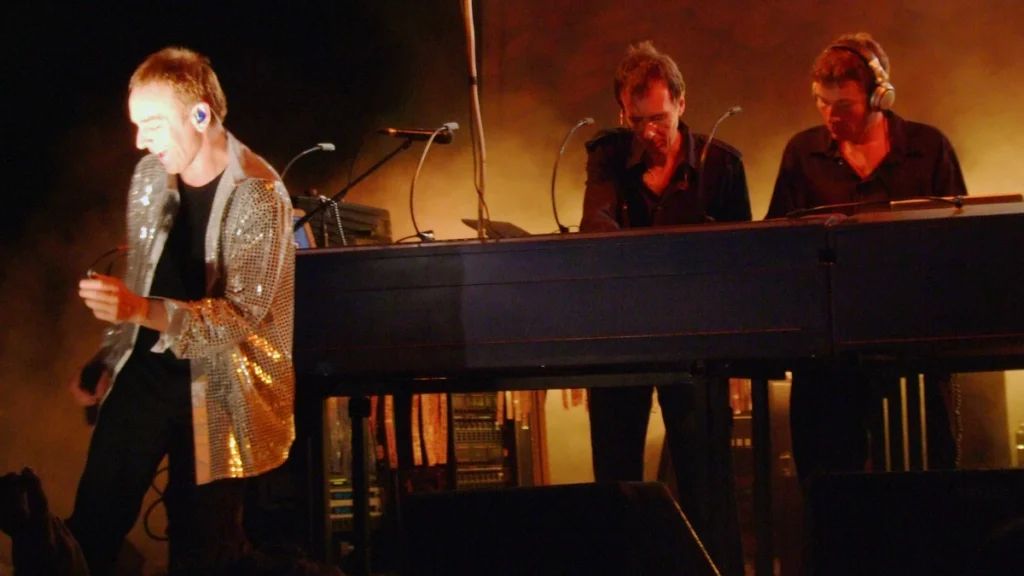
Perfume Genius performing in November 2025.

Perfume Genius is touring the album Glory as a duo, with Mike Hadreas singing and Alan Wyffels playing keyboards, and nobody else on stage.

The run opened in Chicago in January, broke for two months, and resumes at the end of March.

Two People and a Keyboard

The configuration is the entire story here, because Glory was not made this way.

The record is a full band album with drums, guitars and arrangements built in a studio over months, and the obvious way to tour it is with the musicians who played on it.

Reducing that to a singer and a keyboard player removes almost every element the songs were constructed around, which means the arrangements have to be rewritten rather than reduced.

What survives that process is a reasonable test of whether the songs were good before the production arrived.

Who Alan Wyffels Is

Wyffels is Hadreas's longtime partner as well as his keyboard player and co-writer, which makes this a domestic arrangement as much as a musical one.

Couples who tour together are not unusual in music, but couples who tour as a two-piece with nobody else present are a much smaller category.

There is no band to absorb a bad night, no other musicians in the van, and no separation at all between the working relationship and the personal one for the length of the run.

Fifteen Years Back to the Start

The pair first performed together around fifteen years ago, and the duo format is what they used then.

The earliest Perfume Genius shows were exactly this: one voice, one keyboard, and material that had been recorded at home rather than in a studio.

Returning to that configuration after seven albums is a deliberate loop rather than a cost-saving measure, and the framing of the tour makes that explicit.

What Glory Actually Was

Glory arrived through Matador Records in March 2025 and runs to eleven tracks.

It is a warmer and more band-oriented record than its immediate predecessor, built around live playing rather than the processed textures that dominated the previous album.

Aldous Harding appears on one track, which is a pairing that makes sense on paper: two singers who both use their voices in ways that unsettle listeners expecting conventional phrasing.

The Grammy That Went Elsewhere

Glory was nominated for best recording package at the 68th Grammy Awards, held on 1 February 2026.

The award went to Tyler, the Creator, and the Perfume Genius nomination recognised the album's art direction rather than the music itself.

Packaging categories are frequently dismissed as minor, which underrates how much of an album's identity is established before anybody presses play.

A Tour Split Into Two Halves

The routing is unusual: the run opened on 22 January at Lincoln Hall in Chicago, then stopped for two months.

It resumes on 31 March at the Lincoln Theatre in Washington, and continues through Philadelphia, New York, Boston, Montreal and Toronto.

Splitting a tour that way is a scheduling choice rather than an artistic one, and it usually reflects a venue calendar, a recording commitment or simply a decision not to spend eleven consecutive weeks on the road.

Ending in a Town Nobody Tours

The final date is 9 April at the Center for the Arts in Homer, New York, which is a village in the centre of the state with a population in the low thousands.

Artists at this level do not usually finish a tour there, and the choice says something about what the duo format makes possible.

A two-piece can play a small arts centre profitably in a way a six-piece band cannot, which opens up a map of venues that are otherwise permanently out of reach.

What a Duo Does to a Song

Removing a rhythm section changes the fundamental unit of a performance from groove to phrasing.

With drums present, a song moves forward whether or not anybody is doing anything interesting, because the pulse carries it.

Without them, the tempo is whatever the two players decide it is at that moment, and a song can slow down, hang, or stop entirely if that is what the room seems to want.

That is either liberating or exposing depending on the material, and songs that relied on momentum tend not to survive the transition.

Where the Voice Sits Without a Band

The most immediate consequence is that the voice becomes the loudest thing in the room by a considerable margin.

Hadreas sings in a way that is already unusually exposed, moving between a near-whisper and full volume within a single phrase, and a band normally provides a floor underneath that.

Taking the floor away means every breath, every crack and every decision about where to place a syllable is audible to the back row.

Matador and a Long Relationship

Matador has released Perfume Genius records for the entire career, which is now an unusually long label relationship.

Independent labels rarely keep an artist across seven albums, because the economics usually push either the artist toward a major or the label toward newer signings.

Continuity of that kind gives an artist something increasingly rare: people who have heard every record and can tell whether a new one is a development or a repetition.

Seven Albums Across Fifteen Years

The catalogue now runs to seven studio albums, beginning with a home-recorded debut in 2010.

The trajectory from that record to the present is one of the more complete transformations in recent independent music, moving from lo-fi piano songs to full studio productions without abandoning the original register.

What connects them is subject matter rather than sound. The songs have consistently been about bodies, shame, illness and desire, and the production has changed while the concerns have not.

The Dance Piece That Became an Album

One of the previous albums grew out of a collaboration with a choreographer, in which Hadreas performed as a dancer rather than only as a singer.

Writing music for bodies moving through space produces different material than writing songs, because the structure is dictated by choreography rather than by verses and choruses.

That record is the least conventional in the catalogue, and the album that followed it was noticeably more direct, which is the usual pattern after an experiment.

Why Stripping Back Is a Risk

Acoustic and reduced tours are often assumed to be safe, and the assumption is backwards.

A full band is a considerable safety net. Volume covers a great deal, arrangements are rehearsed, and the audience's attention is distributed across several players.

Two people have none of that. Every gap is real silence, and an audience that stops paying attention has nothing to look at.

Small Rooms as a Deliberate Choice

The venues on this run are mostly theatres and clubs in the several-hundred to low-thousand range rather than the larger rooms a full band tour would target.

That is a decision to trade gross revenue for a particular kind of evening, since the format only works in a room where quiet is possible.

Artists who can fill larger venues and choose not to are making a statement about what the performance is for, and audiences generally read it correctly.

What Partnership Does to a Performance

Two musicians who live together play differently from two musicians who work together, and the difference is legible from the audience.

Anticipation is the main one. A phrase that slows down does not need a cue, because the other player has heard that hesitation in a kitchen as well as on a stage.

The risk is the same thing inverted. A bad week is not left at the venue door, and there is no third person present to reset the atmosphere.

Why Artists Return to Their First Format

Going back to the configuration you started with is a recurring move late in a career, and the motivation is rarely nostalgia.

The usual reason is diagnostic. A songwriter who has spent a decade adding layers eventually wants to know which songs still function with everything removed, because that is the only way to find out whether the writing or the production was carrying them.

It is also a way of testing an audience. People who came for a spectacle will not enjoy a two-piece, and the ones who remain are the ones who were listening to the songs.

Doing it after seven albums rather than after two is what makes it interesting, because there is now a substantial body of material that was never designed to be played this way.

What Is Actually Being Tested

Two things. Whether a full band album survives being played by two people, which is a question about the songs rather than about the performance.

And whether a fifteen-year loop back to the original format reads as a return or as a retreat, which the room will decide nightly.

One voice, one keyboard, a Chicago club in January, a village arts centre in April, and nothing on stage to hide behind.

Christian McBride and Brad Mehldau Are Touring as a Duo

Christian McBride and Brad Mehldau Are Touring as a Duo

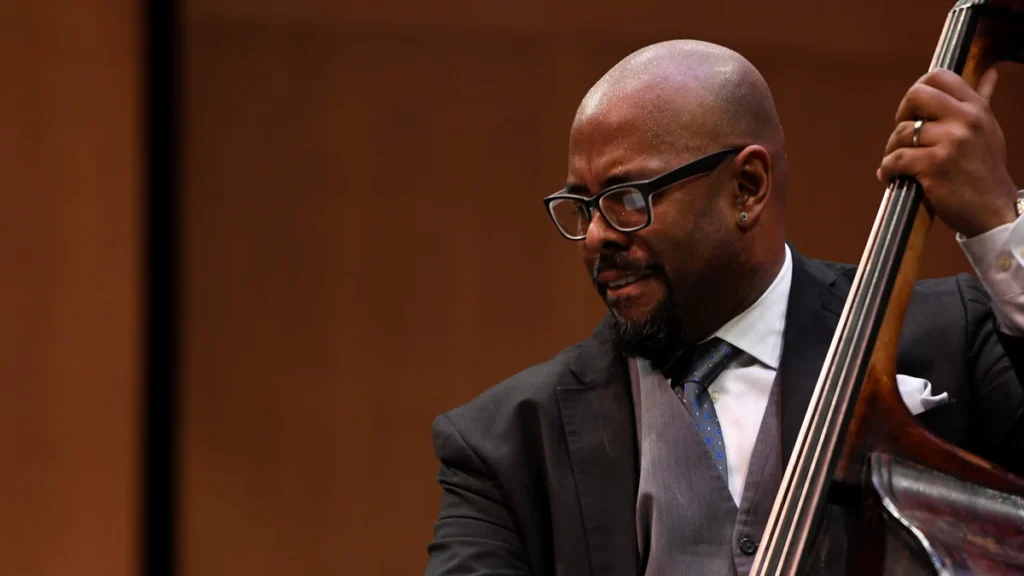
Christian McBride performing on upright bass.

Christian McBride and Brad Mehldau are performing as a duo across the current season, bass and piano with nothing else on stage.

The dates run through concert halls as well as clubs, including a jazz series at Symphony Center in Chicago.

Two Instruments and No Drums

The bass-and-piano duo is one of the most exposed formats in jazz, and the reason is what is missing.

In a standard trio the drummer keeps the time, which frees the bassist to move between anchoring the harmony and playing melodically.

Remove the drums and the bass becomes responsible for both at once: the pulse and the harmonic foundation, with no cymbal marking where the beat is.

Every hesitation is audible, and there is nowhere for either player to hide behind volume or density.

Why the Format Is Rare

Duos of this kind are performed far less often than the recorded history suggests, and the obstacle is practical.

Two musicians who do not already have deep rapport cannot sustain ninety minutes without a rhythm section, because the conversation has to carry the entire performance.

It requires players who can anticipate each other's phrasing, which comes only from having played together over years rather than from rehearsal.

They Have Worked Together Before

The two have performed together previously, including a tour as a trio with a drummer, which is the usual route into a duo.

Trios establish whether two players actually hear the same things, with the drums providing cover while that gets worked out.

Stripping back to a duo afterwards is a decision made once both are confident the material survives the reduction.

Concert Halls Rather Than Clubs

Booking a jazz duo into Symphony Center places the performance in a classical concert environment rather than a jazz one.

That changes the evening substantially. The audience is seated, silent and facing forward, and there is no bar noise or table service to play over.

For quiet music it is a considerable advantage. A duo playing at low volume in a club is competing with the room; in a concert hall the room is on their side.

Opening an Anniversary Season

They also open the Clarice Smith Performing Arts Center's twenty-fifth anniversary season, which is a specific kind of booking.

Anniversary programming is chosen carefully, because the opening night sets the tone for everything that follows.

Selecting a jazz duo rather than a large ensemble suggests a venue confident that its audience will sit with something quiet and demanding.

The Blue Note Half of the Run

The same touring includes a run at the Blue Note in New York, which is the opposite environment.

Club audiences sit close, drink, and respond audibly, and the music has to work in a room with a different energy entirely.

Playing the same duo material in both settings is genuinely difficult, and the arrangements usually have to shift between them.

McBride's Position in the Music

McBride is among the most recorded bassists of his generation, with a career spanning straight-ahead jazz, funk, and work with singers across several genres.

He also occupies institutional roles, hosting radio and holding artistic directorships, which places him at the centre of how American jazz is presented.

That breadth is unusual. Most musicians at his level either play or administrate, and doing both requires a schedule most would not attempt.

The Bassist Who Talks

His public role as a broadcaster is a meaningful part of the picture, because jazz has a persistent communication problem.

The music is frequently presented as difficult, and the people best placed to explain it are often the least inclined to try.

A working bassist who can describe what is happening in a performance to a general audience is doing something the field structurally needs.

Mehldau's Recent Recording

Mehldau's recent work includes an album built around music by the songwriter Elliott Smith.

Jazz pianists interpreting songwriters from outside the tradition is well established and frequently goes badly, producing versions that flatten the original into a set of chord changes.

The successful approach treats the song as a structure worth respecting rather than a vehicle, which requires actually liking the source material.

Interpreting Songs Rather Than Standards

The jazz standard repertoire was largely written between the 1920s and 1950s, and it has been thoroughly worked.

Musicians looking for fresh material have increasingly turned to later popular songwriting, which brings different harmonic and structural assumptions.

Those songs were not written to be improvised over, which is precisely what makes them interesting to a player looking for resistance.

What a Season Booking Means

Being programmed into a symphony orchestra's season is a different arrangement from a normal tour date.

Season programmes are assembled a year or more ahead and marketed as a package, with subscribers buying multiple concerts rather than single tickets.

That gives the artists an audience who did not specifically choose them, which is either an opportunity or a difficulty depending on the performance.

The Economics of Two People

A duo is the cheapest possible touring configuration above a solo performance.

Two fees, two flights, two hotel rooms and almost no equipment beyond a bass that has to travel carefully.

That economy is why duos persist despite being harder to play, because the format lets musicians tour venues that could not support a quintet.

Travelling With an Upright Bass

The practical difficulty in this format is the instrument itself, which is large, fragile and expensive.

Bassists either buy a seat for it, ship it in a flight case that costs more than most instruments, or hire locally and accept an unfamiliar instrument.

None of those options is good, and the choice shapes touring decisions in ways audiences never see.

Why Quiet Music Needs the Right Room

A duo playing at conversational volume depends entirely on the acoustics and the audience's willingness to listen.

In a good hall the instruments carry without amplification and the silence between phrases becomes part of the music.

In a bad room the same performance is inaudible past the tenth row, which is why the venue choice matters more here than for almost any other format.

What the Drummer Was Actually Doing

The clearest way to understand a duo is to list what disappears when the drums leave, because it is more than timekeeping.

A drummer marks the form. The audience knows a chorus has ended because a cymbal crash tells them, and the other players know where they are in a thirty-two bar structure without counting. Remove that and both musicians have to hold the form internally while also playing.

A drummer also supplies dynamics. A build is created by adding density and volume behind the soloist, and a release by dropping to brushes. A duo has neither option: the only way to build is for two people to play more, and the only way to release is for one to stop.

What is gained is transparency. Every harmonic choice the pianist makes is audible because nothing is covering it, and every note the bassist plays is a decision rather than a function. Audiences who find trios comfortable often find duos unexpectedly gripping for exactly that reason.

Why Jazz Keeps Reaching for Newer Songs

The standards repertoire is finite, and after a century of recording it has been examined more thoroughly than almost any body of music.

That creates a problem for improvisers. A musician playing a song that has been recorded ten thousand times is competing with an enormous documented history, and originality becomes progressively harder to find inside material everyone knows completely.

Later popular songwriting offers resistance instead. Songs from the last fifty years were written for voices and guitars rather than for horn players, with structures that do not divide neatly into thirty-two bars and harmony that does not always move where a jazz musician expects.

That awkwardness is the appeal. A song that fights the treatment forces genuine decisions, and the results tend to sound like discovery rather than like another pass through familiar changes.

What Is Actually Being Tested

Two things. Whether a duo can hold a full concert hall across a season, which requires sustaining attention without the dynamic range a band provides.

And whether two musicians with long individual careers can subordinate them to a conversation, which is the whole proposition of the format.

Two instruments, no drums, a concert hall in Chicago, a club in New York, and nowhere at all to hide.

Esperanza Spalding Made an Album With Milton Nascimento

Esperanza Spalding Made an Album With Milton Nascimento

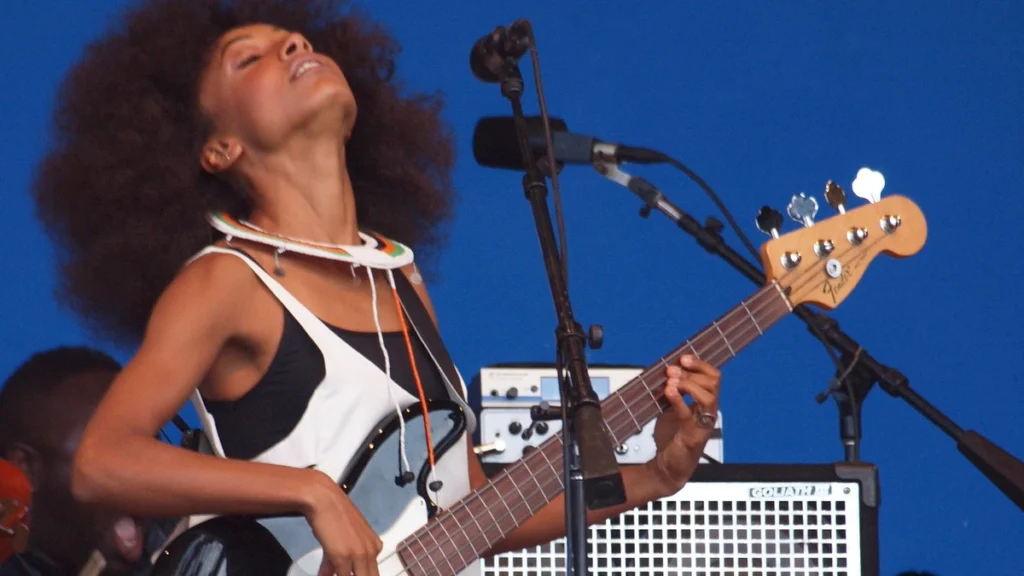
Esperanza Spalding performing on bass.

Esperanza Spalding released a collaborative album with the Brazilian singer and songwriter Milton Nascimento through Concord Records, and spent this summer headlining festivals in Europe.

The pairing spans roughly four decades of age difference and two distinct musical traditions.

Who Nascimento Is

Milton Nascimento is one of the central figures in Brazilian music, and his work is inseparable from the scene that emerged from Minas Gerais in the late 1960s.

That music combined Brazilian folk forms with jazz harmony, choral writing and a particular kind of melodic melancholy that has no direct equivalent elsewhere.

He has also worked with American jazz musicians for decades, which makes a collaboration of this kind a continuation rather than a novelty.

His voice is the most distinctive element: a very high, pure tone that has remained recognisable across sixty years of recording.

Why the Age Gap Matters

Collaborations across a forty-year gap are rare and usually structured as tribute, with the younger artist deferring throughout.

A genuine duo record requires both parties to contribute equally, which is difficult when one has a catalogue the other grew up studying.

What makes it possible is a shared harmonic language. Brazilian music and jazz have been in conversation since the 1960s, and musicians from both traditions can play together without translation.

Singing and Playing Bass at Once

Spalding's defining technical feature is that she sings while playing bass, which is considerably harder than it sounds.

The bass line and the vocal melody are usually rhythmically independent, which means the two hands and the voice are executing three different patterns simultaneously.

Most bassists who sing simplify one part or the other. Doing both at full complexity is a small category of musician.

The Bass as a Lead Instrument

She works on both upright and electric bass, and treats the instrument as a lead voice rather than a supporting one.

Jazz has a tradition of bass soloists, but the instrument's primary role remains anchoring the harmony and the time.

An artist who fronts a band from the bass position changes how the ensemble works, because the rhythmic foundation is also the thing drawing attention.

A Catalan Festival in July

She headlined the Vijazz festival in Vilafranca del Penedes, a wine town in Catalonia, in early July.

Regional European festivals of this kind carry more weight than their size suggests, with long histories and audiences that return annually.

The bill also included Nubya Garcia and Incognito, which spans contemporary British jazz, acid jazz and the American tradition on one stage.

A Guest Appearance That Preceded It

She features on a track from Garcia's album, which means the shared billing brought two musicians together who had already recorded.

Festival programmers actively look for those connections, because they raise the possibility of something happening between sets.

Whether it does is unpredictable, which is part of what an audience is buying.

Concord Across Both Records

Concord released both the Nascimento collaboration and Garcia's album, which is not a coincidence.

Labels with deep jazz rosters generate connections between their own artists, because the people running them think in terms of a catalogue rather than individual acts.

That is one of the underrated functions a label still performs: introducing musicians who would not otherwise have met.

Winning Best New Artist

Spalding won the Grammy for best new artist in 2011, becoming the first jazz musician to take that award.

The win was contentious at the time, largely because the other nominees had far larger commercial profiles.

Fifteen years later it reads differently. The award has a poor record of predicting careers, and hers is among the more durable it has produced.

The Academic Half of the Career

She has taught at university level alongside performing, which is a common arrangement in jazz and a substantial commitment.

Teaching provides income stability that performance cannot, and it puts working musicians in front of the next generation.

It also shapes the work. Musicians who teach tend to be more articulate about what they are doing, because they have had to explain it repeatedly.

Portland and an Unusual Route In

She grew up in Portland, Oregon, which has no significant jazz infrastructure, and came to the music through a route that bypassed most of the usual institutions.

Musicians from outside the established centres arrive without the assumptions those scenes install, which frequently produces more individual players.

The cost is the network. Everything has to be built from scratch, which is why so few artists from those places reach an international level.

Brazilian Music's Long Reach Into Jazz

The exchange between Brazilian music and American jazz is one of the most productive in twentieth-century music, and it has run in both directions.

Bossa nova reached American musicians in the early 1960s and permanently altered the rhythmic vocabulary of jazz.

Brazilian musicians took American harmony in return, which is why players from both traditions can improvise together with almost no adjustment.

What a Duo Record Requires

Two-name albums are difficult because the balance has to be genuine, and audiences detect imbalance immediately.

The failure mode is a record where one artist is clearly the guest, which produces something less than either would have made alone.

The successful version usually involves both parties writing, both singing, and neither treating the other's material as the foundation.

Late Career and Legacy Recording

Recording with an artist in the later part of a very long career carries a particular responsibility.

The temptation is reverence, producing a record that treats the older musician as a monument rather than a collaborator.

The alternative is to write for who they are now rather than for who they were, which requires knowing the difference and being willing to act on it.

Summer Festivals as the Working Year

A summer spent headlining European festivals is the standard working shape for a jazz musician at this level.

The dates pay reliably, the audiences are large, and the routing allows several countries in a fortnight.

What it does not allow is developing new material, which is why so much jazz writing happens in the winter months when the circuit shuts down.

What Minas Gerais Produced

The scene Nascimento came from is specific enough to be worth describing, because it is not simply Brazilian music in general.

Minas Gerais is an inland state, mountainous and historically isolated from the coastal cities where bossa nova and samba developed. The music that emerged there in the late 1960s drew on Catholic choral singing, folk forms from the interior, and the harmonic vocabulary arriving from jazz and from the Beatles at roughly the same moment.

What resulted sounds like nothing else in Brazilian music: modal rather than tonal in places, built on vocal group textures rather than solo singing, and carrying an ambiguity that resists being described as either happy or sad.

Musicians outside Brazil have been drawn to it for fifty years precisely because it does not resolve into a familiar category, and a collaboration with one of its central figures is a chance to work inside that ambiguity rather than merely admire it.

Why Bassists Rarely Lead

The bass is structurally the hardest instrument to front a band from, and the reasons are practical rather than musical.

The bass line is load-bearing. If the guitarist stops for four bars nothing collapses; if the bass stops, the harmony loses its floor and the drummer loses their reference point. That makes the instrument difficult to step away from, which is exactly what a frontperson has to do.

There is also a physical problem. The bass is large, it is played standing in a fixed position, and its lowest frequencies are felt more than heard, which means the audience's attention does not naturally travel toward it.

The few musicians who have led from the position solved it the same way: by making the bass part interesting enough to follow as melody, so the ear goes there without being directed. That is a compositional solution to a staging problem, and it is rarer than it sounds.

What Is Actually Being Tested

Two things. Whether a duo record across a forty-year gap reads as genuine collaboration or as a younger artist paying respects.

And whether a bassist who sings can hold a festival headline slot, which is a position built for frontpeople rather than for musicians anchoring the rhythm section.

Two names on one sleeve, four decades between them, a Catalan wine town in July, and a bass carrying both the low end and the tune.

Nubya Garcia Headlined a Catalan Festival With Odyssey

Nubya Garcia Headlined a Catalan Festival With Odyssey

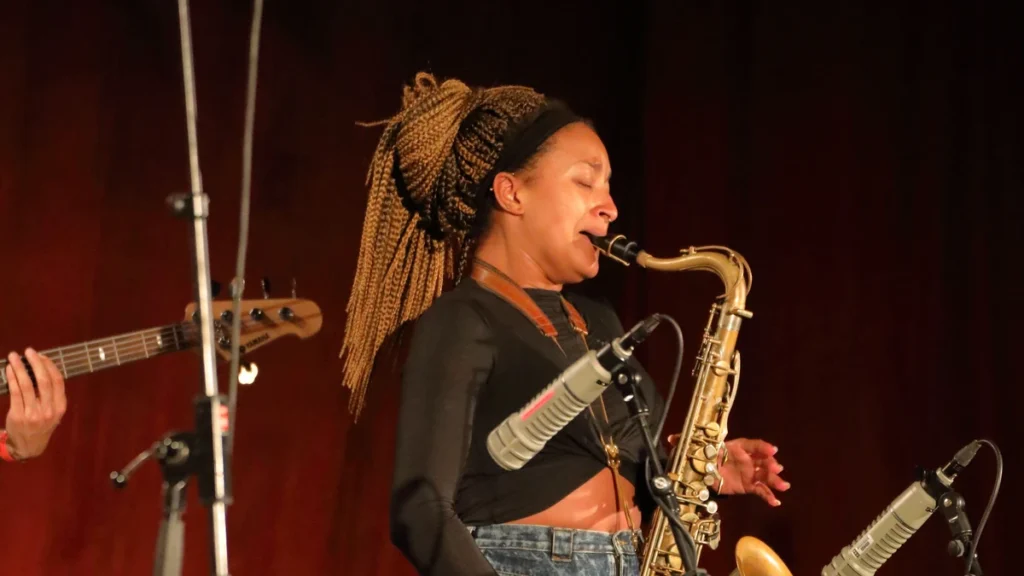
Nubya Garcia performing on tenor saxophone.

Nubya Garcia headlined the Vijazz festival in Vilafranca del Penedes in July, two years into the touring cycle behind her second album.

That record pairs orchestral arrangements with dub, which is a combination almost nobody attempts.

A Wine Town in Catalonia

Vilafranca del Penedes is a small town at the centre of a Catalan wine region, and its festival programmes jazz alongside the local industry.

European jazz festivals of this kind are the backbone of the international circuit, and most of them are in places nobody outside the region has heard of.

They are also where a substantial proportion of international jazz income is generated, which is why an artist's summer routing looks like a tour of small European towns.

She shared the headline billing with Esperanza Spalding and Incognito, which is a bill spanning three quite different traditions.

Two Years of Touring One Album

The album arrived in September 2024, and the touring behind it has now run across two summers.

That is long by pop standards and normal in jazz, where albums are treated as calling cards rather than as products with a shelf life.

A jazz record generates very little income directly. What it does is justify bookings, and a well-received album can support two or three years of festival dates.

Orchestral Writing Plus Dub

The record combines written orchestral arrangements with dub production techniques, and those two things pull in opposite directions.

Orchestral writing is fixed. Every part is notated, the players read, and the arrangement sounds the same each time.

Dub is the opposite: a producer manipulating a recording in real time, dropping instruments out, drenching them in echo and rebuilding the track as a live process.

Putting both on one record means committing to a fixed score and then treating the recording of it as raw material, which is a genuinely unusual method.

Where Dub Comes From Here

The dub element is not decorative. Garcia is British of Guyanese and Trinidadian descent, and dub is part of the musical inheritance that shaped London.

Caribbean sound-system culture reshaped British music comprehensively, and its influence runs through genres that have no obvious surface connection to it.

A London jazz musician using dub techniques is drawing on a local tradition rather than importing a foreign one.

The London Scene She Came From

She emerged from a generation of London musicians who came up through the same youth programmes and community bands.

That scene reset international perceptions of British jazz, which had spent decades being treated as a provincial version of an American form.

What distinguished it was that its members drew on Caribbean, West African and electronic music as naturally as on the jazz canon, because those were the sounds they had grown up inside.

The Tenor Saxophone Position

She plays tenor, which is the instrument most associated with the jazz canon and therefore the one carrying the heaviest historical weight.

Every tenor player works in the shadow of a small number of figures whose recordings define what the instrument can do.

The way through is not to avoid the comparison but to have enough of an individual sound that it stops being the first thing anybody says.

Concord and the Independent Jazz Label

Concord Jazz is one of a small number of labels still funding jazz records at a scale that permits orchestral arrangements.

That is not a trivial thing. Hiring string players and recording them properly costs more than most jazz albums earn.

Labels able to underwrite it are the reason ambitious jazz records still get made, and there are fewer of them every year.

A First Headlining American Tour

She completed her first headlining tour of the United States in spring 2025, which is a specific milestone rather than a routine one.

British jazz musicians historically reached American audiences as support acts or festival additions, not as headliners.

Selling tickets under your own name in a country with its own deep jazz tradition is a considerably harder proposition than doing so in Europe.

Australia, Japan and China

The same year included dates in Australia, Japan and China, which describes a genuinely global touring footprint.

Japan in particular has one of the oldest and most sophisticated jazz audiences outside the United States, with a listening culture built around records and specialist bars.

Reaching that market matters commercially and reputationally, since Japanese jazz audiences are famously discriminating.

Spalding on the Record

Esperanza Spalding features on one track of the album, which makes their shared festival billing a reunion rather than a coincidence.

Festival programmers frequently build bills around existing relationships, because artists who have recorded together will usually appear on each other's sets.

That is one of the quiet pleasures of the summer circuit: collaborations that exist on record become live for one night.

Why Jazz Albums Take Years to Tour

The extended touring cycle is a consequence of how the festival calendar works.

Most festivals run once a year within a narrow summer window, and a booking missed in one year cannot be recovered until the next.

An album released in September therefore cannot reach the European circuit until the following July, and covering the whole circuit takes at least two summers.

Small Festivals and Large Reputations

A headline slot at a small regional festival is worth more than it appears from outside.

These events have loyal local audiences, long histories and programmers whose choices are followed by their counterparts elsewhere.

An artist who plays well at one of them tends to find the following year's offers arriving without being chased.

What the Album Was Trying to Do

The ambition is legible from the instrumentation alone: a saxophonist writing for strings while treating the studio as an instrument.

That places the record in a lineage of jazz musicians who used orchestral resources not for prestige but because the writing required them.

The risk in that approach is grandeur for its own sake, which is why the dub element matters. It keeps the record from becoming reverent.

How the European Circuit Actually Pays

The summer festival network is the financial spine of international jazz, and its structure is worth understanding because it explains almost every touring decision an artist makes.

Festivals pay a fixed fee agreed months in advance, which removes the ticket risk entirely. An artist knows what a date is worth before leaving home, and the fee does not change if it rains or if a bigger act is playing forty miles away the same night.

They also cluster geographically and chronologically. A musician can play six countries in ten days because the events are scheduled around each other, sharing artists and sometimes sharing production, which makes the economics work in a way isolated club dates never could.

The constraint is that it all happens between June and September. Nine months of the year the circuit does not exist, which is why jazz musicians teach, record, tour clubs and take session work for the rest of it.

What Gets Lost Between Record and Stage

An album with orchestral arrangements creates a specific problem the moment it has to be performed.

Strings do not travel. A festival fee that comfortably covers a quintet will not cover a quintet plus a string section, their flights, their accommodation and the extra freight, and no promoter will absorb the difference for a mid-bill act.

So the parts have to go somewhere else. They get played on keyboards, triggered from samples, redistributed to the horns, or simply dropped in favour of arrangements that use the band that exists.

Musicians differ on whether that is a loss or an opportunity. The version of a song that survives the reduction is often leaner and more direct than the recorded one, and audiences who know the album hear the difference as interpretation rather than absence.

What Is Actually Being Tested

Two things. Whether orchestral arrangements survive translation to a festival stage, where the string section stays at home and the parts have to be covered.

And whether a two-year touring cycle keeps a record alive or simply postpones the point at which the next one has to arrive.

One album, two summers, a Catalan wine town, a tenor saxophone, and a string section nobody can afford to take on the road.

Robert Glasper Is Taking Robtober Into a Seventh Year

Robert Glasper Is Taking Robtober Into a Seventh Year

Robert Glasper at the piano.

Robert Glasper returns to the Blue Note in New York this October for a residency entering its seventh consecutive year.

The format is a month of shows in one room, with a line-up that changes nightly and is mostly not announced in advance.

A Month in One Room

Month-long residencies are rare in contemporary music and were once standard, which is part of what makes this one interesting.

Jazz musicians historically built their reputations through extended runs at a single club, playing to the same room night after night and developing material in public.

That model disappeared as touring economics changed and clubs shortened bookings, and its revival by a musician with the draw to sustain it is a deliberate act of restoration.

Doing it seven years running turns it from an event into an institution, which is a different thing entirely.

Guests Nobody Announces

The defining feature is that the guest list is largely unannounced, and audiences buy tickets without knowing who will appear.

That is only possible with an artist whose own draw is sufficient, since the show has to sell on his name alone.

What it buys is genuine spontaneity. A guest who agreed that afternoon plays differently from one booked three months earlier with a rehearsal.

Who Turned Up Last Year

The sixth season drew guests across comedy, hip-hop production and soul singing, which is a fair description of the range his work touches.

A jazz residency that hosts a stand-up comedian is not doing what a jazz residency traditionally does, and that is the point.

The through-line is not genre but a shared musical culture that treats those categories as adjacent rather than separate.

Four Albums in Two Years

He released four records across 2024 and 2025, which is a rate almost nobody in jazz sustains.

They spanned different formats, including a holiday album, which is a commercially sensible move that most serious jazz musicians decline to make.

Working at that volume is only possible for someone with a fixed band, a studio relationship and a willingness to release material rather than refine it indefinitely.

A Nomination for the Alternative Category

One of those albums drew a Grammy nomination for best alternative jazz album.

That category exists because the main jazz categories were consistently unable to accommodate records built on hip-hop production and electronic textures.

Its creation was contested at the time, and the argument is the familiar one: whether a new category recognises work or quarantines it.

The Black Radio Position

His best-known project is a series of records placing jazz musicianship inside a hip-hop and R&B frame, with a rotating cast of singers and rappers.

That approach has a long lineage and a long history of being dismissed, usually by people for whom jazz stopped developing at a particular point.

What distinguishes it from earlier attempts is that the rhythm section plays the other genre properly rather than approximating it, which is a musicianship question rather than a taste one.

Programming a Festival as Well

He also curates the Black Radio Experience at the Blue Note Jazz Festival in Napa, which is a different job from performing.

Curating means deciding who plays and in what order, which is a form of argument about what the music is and who belongs inside it.

Musicians with programming authority are able to build the context their own work sits in, which is a rare position and a durable one.

Blue Note as an Institution

The Blue Note operates as a club, a festival and now a small chain of venues, which is an unusual amount of infrastructure for a jazz brand.

Its expansion, including a Los Angeles venue, reflects a bet that the audience for live jazz in a club setting is larger than the recorded market suggests.

Artists with long relationships to a venue of that kind gain something a record label cannot provide: a room, a date and a guaranteed audience.

Houston and the Church

Glasper came up in Houston, where his mother was a working singer and church musician, and that background is audible throughout the playing.

Church musicianship produces specific skills: accompanying singers, changing key without warning, and holding an arrangement together while somebody else improvises over it.

Those are exactly the skills a residency built on unannounced guests requires, which is not a coincidence.

Why Accompaniment Is the Harder Job

Most attention in jazz goes to soloists, and the accompanist's role is systematically undervalued.

Supporting a singer well means anticipating where the phrase is going, leaving space that has not been asked for, and being audible without competing.

A pianist who can do that with a guest they have never played with before is doing something considerably harder than a solo.

The Economics of a Residency

A month in one venue is financially attractive in ways touring is not.

There is no freight, no hotel routing and no travel days, and the production is built once and used thirty times rather than assembled and struck nightly.

For the venue it fills a month of calendar with a known draw, which is why both sides keep returning to the arrangement.

What Repetition Does to a Band

Playing the same room every night for a month changes how a band plays in ways short tours do not.

The room stops being an unknown, the sound is dialled in after two nights, and the players stop compensating for unfamiliar acoustics.

What is left is the music, and bands in that condition take risks they would not take on the third night of a nine-city run.

Jazz's Live Economy Now

Recorded jazz generates very little income for all but a handful of artists, which makes the live economy close to the whole business.

Festivals cover the summer and clubs cover the rest, and an artist with a reliable annual residency has a fixed point the rest of the year can be built around.

That predictability is unusual in a field where most musicians assemble a year from unrelated fragments.

Seven Years Is a Tradition

One residency is a booking. Seven consecutive years is something audiences plan around.

Annual events accumulate their own history: people who attended the first year, guests who have returned, nights that are still discussed.

That accumulation is the actual product, and it cannot be manufactured quickly by anyone.

Why the Club Residency Disappeared

The extended run was the standard working arrangement in jazz for decades, and understanding why it vanished explains why reviving one is notable.

Clubs once booked a band for a week or two because that was the only economic model available: there was no touring infrastructure to speak of, no festival circuit, and a band needed somewhere to work. The music developed in those rooms because musicians had time to develop it.

What ended it was the arrival of a national and then international touring circuit, which made one-night stands more profitable for everybody. A band could play six cities in a week for more money than six nights in one, and clubs could sell six different acts instead of one.

The cost was invisible at the time and is obvious now. Music that used to be worked out over a fortnight in front of an audience is now worked out in rehearsal and played identically for a year, which is a different creative process producing a different kind of result.

What an Unannounced Guest Changes Musically

The difference between a booked guest and an unannounced one is not just marketing, and it shows up in the playing.

A booked appearance comes with preparation. There is a rehearsal, an agreed key, a discussed arrangement and usually a soundcheck, and everybody arrives knowing roughly what will happen. The result is polished and, almost always, safe.

Someone who walks on unannounced has none of that. The band has to find the key by ear in the first eight bars, the arrangement is decided by whoever moves first, and the ending is negotiated in real time by people watching each other.

That produces performances that can genuinely fail, which is the price of performances that can genuinely surprise. Audiences who attend residencies of this kind are paying for the possibility of both.

What Is Actually Being Tested

Two things. Whether an unannounced-guest format stays genuinely spontaneous in year seven or hardens into a rotation of the same familiar names.

And whether a musician releasing four albums in two years while curating a festival and holding a month-long residency is sustaining a practice or spreading one thin.

One club, one month, seven years, four recent albums, and a guest list nobody sees until the lights go down.

DMAS Made Their Fifth Album Between Sydney and Los Angeles

DMAS Made Their Fifth Album Between Sydney and Los Angeles

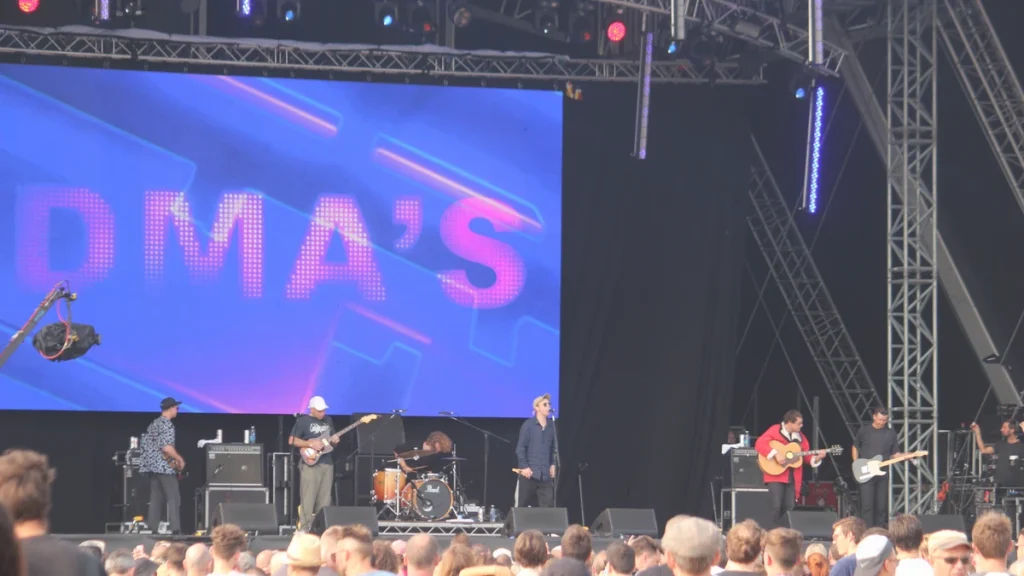
DMAS performing at Victorious Festival.

DMAS released their self-titled fifth album in August, written and recorded between their own studio in Sydney and sessions in Los Angeles.

The band have described it as the record with the most in common with their first, which is an unusual claim to make five albums in.

Self-Titling on Album Five

Naming an album after the band this far into a career is a deliberate signal rather than a shortage of ideas.

Debut albums are self-titled because there is nothing else to call them. A self-titled fifth record is a claim: this is the one that represents what the band actually is.

It is also a reset. A record with the band's name on it invites listeners to treat it as a starting point rather than as the latest instalment.

Coming alongside a new label arrangement, that framing does real work.

Their Own Studio in Glebe

A substantial part of the record was made in the band's own studio in Glebe, an inner-western suburb of Sydney.

Owning a room changes the economics of making an album completely. There is no day rate, no booked end date and no pressure to have decided anything before walking in.

What that buys is time to be wrong. Bands working to a studio budget cannot afford to spend two days on an idea that fails, and owning the space removes that constraint entirely.

Los Angeles for the Other Half

The rest was recorded in Los Angeles, which is the standard destination for an Australian band with international ambitions.

Los Angeles offers session players, engineers and a production culture that Sydney cannot match at the same density, and it puts a band inside the industry rather than twelve thousand kilometres from it.

Splitting a record between a home studio and a professional environment produces a specific hybrid: the writing happens without pressure and the execution happens with resources.

A New Global Deal

The album is their first under an arrangement with Wonderlick Entertainment alongside Sony and RCA in the United Kingdom.

Global deals matter disproportionately for Australian bands, because the domestic market is small and the distance from Europe and North America is a genuine commercial obstacle.

An arrangement that covers multiple territories under one agreement removes the licensing negotiations that historically slowed Australian records reaching international audiences.

The Return to DIY Framing

The band have positioned the record as a return to how they worked at the start, which is a familiar claim and occasionally an accurate one.

Early records are made without expectation, without label input and usually without money, and the constraints frequently produce something that later resources cannot recreate.

Bands that try to return to that state generally cannot, because the expectation is now permanent. Owning the studio is the one thing that genuinely reproduces the original condition.

Lach Bostock in the Chair

The album was co-produced with Lach Bostock, who carries a Grammy nomination.

Co-production credits on a record described as DIY are not a contradiction. A band recording in their own room still needs someone making structural decisions from outside the songs.

The distinction is where the authority sits. A producer hired by a band into the band's own studio operates differently from one a label appoints.

Four Months From Announcement to Release

The album was announced in April and arrived in August, which is a longer runway than most current releases get.

Four months allows two singles to work properly, gives international press time to schedule, and lets a touring announcement land separately from the album news.

Shorter campaigns are more common now precisely because attention decays, but a band building internationally needs the longer window to reach territories one at a time.

Two Singles, Five Weeks Apart

The lead single arrived in March, with a second alongside the album announcement in April.

That is a compact pairing followed by a long quiet period, which is an unusual shape and suggests the singles were doing announcement work rather than sustaining a campaign.

It also means the record arrived in August with most of it unheard, which is increasingly rare and generally better for how an album lands.

Where the Band Sit in Australian Rock

They emerged into a scene that has produced a steady run of guitar bands with international reach over the last decade.

Australian rock benefits from a strong domestic radio network, a well-developed festival circuit and a live culture that supports bands before they have any recorded output.

The obstacle is always the same: distance. Touring internationally from Australia is expensive enough that a band has to be certain before committing.

Three Dates in Six Days

The Australian tour runs Brisbane, Melbourne and Sydney between 27 November and 3 December.

Three shows is a small run and it reflects the country's geography rather than the band's draw. Australia's population is concentrated in a handful of coastal cities.

A national tour there is therefore structurally short, which is why Australian bands tour internationally so much earlier in their careers than European or American ones.

The Britpop Comparison

The band have been compared to British guitar music of the mid-nineties since they started, consistently and not always helpfully.

The comparison is not baseless. The melodic sensibility, the vocal delivery and the arrangement priorities all point in that direction.

What it obscures is everything that is not that, and bands saddled with a comparison early tend to spend several albums working against it.

Guitar Music's Current Position

Rock has spent a decade being described as commercially diminished, and the description is broadly accurate at the top of the charts and misleading everywhere else.

Guitar bands still fill mid-sized venues, still sustain festival bills and still build durable audiences. What they no longer do is dominate the singles chart.

For a band at this level that distinction matters, because the business is touring and catalogue rather than radio.

What a Home Studio Does to a Catalogue

Owning a recording space changes what a band's output looks like over a decade rather than over one album.

The marginal cost of recording drops to almost nothing, which means ideas get finished rather than abandoned and B-sides exist again.

It also means a band can wait. A record does not have to be delivered because studio time was booked, which is the single most common reason albums arrive unfinished.

Why Distance Still Costs Australian Bands

The tyranny of distance is a cliché in Australian music because it remains materially true, and streaming did not fix it.

Recorded music travels instantly now, but bands do not. A European act can play twenty cities in a month by van, sleeping at home some nights and covering costs from door money. An Australian band reaching the same audience has to fly, freight equipment, obtain visas and commit to a run long enough to justify the airfare before a single ticket is sold.

That changes what a career looks like. Australian bands typically have to be commercially proven at home before international touring is affordable, which delays the point at which overseas audiences encounter them and compresses the window in which a band is still new.

It is also why the global deal matters more than it would for a British or American act. Coordinated international release removes at least the recorded-music half of the problem, even if the flights remain.

What Self-Titling Actually Signals

The self-titled album has three distinct uses in popular music, and telling them apart requires knowing where it sits in a catalogue.

On a debut it means nothing beyond introduction. On a second or third record it usually signals a reset after something that did not work, a way of drawing a line under a direction and starting again.

Later than that, and it becomes a summary claim. The band is asserting that this record is the definitive statement of what the name means, which is a considerable thing to put on a sleeve and impossible to retract.

The risk is obvious. A self-titled album that turns out to be a middling entry in a catalogue reads badly in retrospect, because the title promised more than the record delivered. Bands only make the claim when they believe it.

What Is Actually Being Tested

Two things. Whether a band five albums in can genuinely recover the working conditions of their first, or whether the claim describes an intention rather than a result.

And whether a global deal converts into an international audience, which is the specific problem every Australian guitar band eventually runs into.

Five albums, one self-titled, two cities, a studio in Glebe, and three shows in six days at the end of the year.

Kamasi Washington Marked a Coltrane and Miles Centenary

Kamasi Washington Marked a Coltrane and Miles Centenary

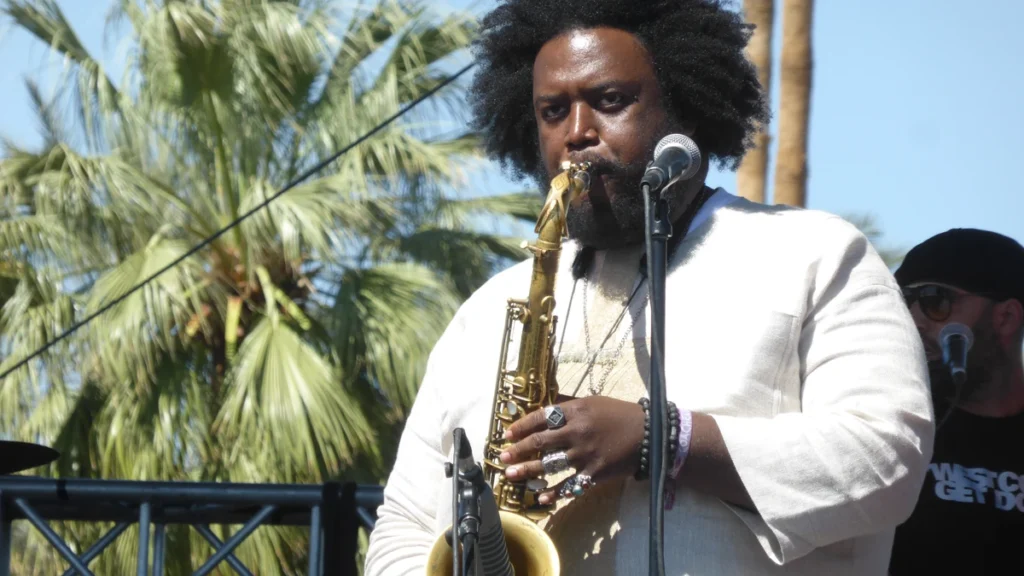
Kamasi Washington performing at Coachella.

Kamasi Washington headlined a set at the Newport Jazz Festival marking a hundred years of John Coltrane and Miles Davis, performing alongside Chief Adjuah.

Both men were born in 1926, which is why the festival circuit spent this summer building programmes around the coincidence.

Two Centenaries in One Year

Anniversary programming is a permanent feature of jazz festivals, and a year containing two centenaries of this size is unusual.

Coltrane and Davis are the two figures whose names carry furthest outside the music, which makes them the obvious anchor for any programme aimed at a general audience.

They also worked together, which allows a single event to cover both without the programme feeling like two unrelated tributes stapled together.

The risk in this kind of programming is reverence. A centenary set can very easily become a museum exhibit with a rhythm section.

Why He Is the Right Person for It

Washington is the most visible saxophonist of his generation and one of very few jazz musicians with an audience outside the form.

That visibility came from work adjacent to jazz as much as from jazz itself, including arrangements on one of the most significant rap albums of the last decade.

An artist who reaches listeners who do not otherwise attend jazz concerts is precisely who a festival wants fronting a centenary, because the point is to bring people in rather than to reassure the people already there.

Chief Adjuah Alongside Him

Chief Adjuah performed with him, which is a pairing that says something about the intended approach.

Adjuah is a trumpeter who has moved progressively away from conventional jazz instrumentation and toward instruments of his own design and West African and Indigenous traditions.

Putting a saxophonist and a trumpeter together for a Coltrane and Davis programme is the obvious structural choice, but pairing two musicians who both work outside the tradition signals interpretation rather than recreation.

Fort Adams and the Newport History

The festival runs at Fort Adams State Park in Rhode Island, and its history is genuinely foundational.

Newport was among the first jazz festivals anywhere and has hosted performances that changed careers, including some of the most documented live recordings in the music.

Playing a centenary set there attaches a performance to that lineage automatically, which is part of what the booking is buying.

Montreal Earlier in the Summer

He also returned to the main stage at the Montreal Jazz Festival, which ran from 25 June to 4 July.

Montreal is the largest jazz festival in the world by attendance, and its main stage is free and outdoors, which produces audiences in the tens of thousands.

That festival also premiered previously unreleased Coltrane recordings this year, which places both appearances inside the same anniversary programming.

Unreleased Recordings as Programming

Presenting previously unheard archival material is a recurring feature of anniversary years, and the supply is not accidental.

Recordings sit unreleased for decades for legal, commercial and archival reasons, and an anniversary provides the commercial justification to resolve those problems.

It also raises a question the field has never fully settled: whether releasing material an artist chose not to release serves the music or only the estate.

The Los Angeles Scene He Came From

Washington emerged from a Los Angeles collective of musicians who came up together and have appeared across each other's records for two decades.

That collective structure is unusual and it explains a great deal about the sound: large ensembles, multiple soloists and arrangements built for a group that already knows how to play together.

It also produced a genuinely local scene at a point when jazz was assumed to be centred elsewhere.

Large Ensembles Are Expensive

His records and live shows use ensembles far larger than the standard jazz quartet or quintet, frequently including choir and strings.

That is a substantial financial commitment. Every additional player is another fee, another flight and another hotel room, and festival budgets are fixed.

Artists who tour at that scale can only do so with a draw large enough to justify it, which is why so few jazz musicians attempt it.

What Anniversary Sets Get Wrong

The failure mode is well understood: a tribute becomes a note-for-note recreation, which honours the recording rather than the musician.

Both Coltrane and Davis spent their careers refusing to repeat themselves, and a set that reproduces their records exactly is doing the opposite of what they did.

The alternative is to play in their spirit rather than their notes, which is harder to execute and considerably easier to get wrong in the other direction.

Miles Davis and the Refusal to Settle

Davis changed idiom repeatedly across four decades, moving through bebop, cool, modal, and electric fusion, and losing part of his audience at every turn.

That trajectory is the reason his centenary is difficult to programme. There is no single Miles Davis to celebrate.

Any set has to choose a period, and whichever it chooses will be the wrong one for a substantial part of the room.

Coltrane's Later Work Is the Harder Half

Coltrane's late recordings moved into free playing that remains divisive nearly sixty years later.

A centenary programme can stay with the well-known modal period and satisfy everyone, or engage with the later work and satisfy fewer people more deeply.

Musicians who came up on the later material tend to make the second choice, which is where the interest in a set like this lies.

Jazz Festivals as the Genre's Infrastructure

The festival circuit is now the primary economic support for jazz at every level, from local players to international headliners.

Club residencies have declined, recorded income is minimal for all but a handful of artists, and the summer circuit is where the year's income is concentrated.

That gives festival programmers unusual influence over what gets played, which is why anniversary years shape so much of a season.

Reaching Outside the Form

The recurring argument about Washington is whether his crossover audience is good for jazz or a dilution of it.

The argument is old and usually unproductive. Every generation has an artist accused of the same thing, and the accusation says more about the accusers than the music.

What is measurable is attendance. Festivals booking him report audiences who do not attend other jazz events, which is the only outcome the field can afford to want.

What the Two Men Actually Shared

Pairing them in one programme is more defensible than most double tributes, because the connection is direct rather than thematic.

Coltrane played in Davis's quintet during the second half of the 1950s, and the recordings from that period are among the most studied in the music. He arrived as a technically formidable but stylistically unsettled player and left having found the language he spent the next decade extending.

Davis, characteristically, had moved on by the time Coltrane's own major work appeared, and the two careers then ran in parallel rather than together. Both kept changing; neither changed in the same direction.

A centenary set therefore has a genuine narrative available: two musicians who overlapped at a specific moment, learned from each other, and then spent their remaining years proving they had learned different things.

What Happens to a Tribute Without Its Subjects

The practical difficulty in this kind of programming is that the audience contains two groups with incompatible expectations.

One arrives wanting recognition. They know the recordings, they know the solos, and a set that departs too far from the source reads to them as a missed opportunity dressed up as interpretation.

The other arrives wanting to hear what living musicians make of the material, and for them a faithful recreation is pointless: the original recordings exist and are better played.

There is no arrangement that satisfies both completely, which is why the best anniversary sets tend to pick one audience and commit. Trying to split the difference produces a performance that is neither faithful enough nor free enough to be worth attending.

What Is Actually Being Tested

Two things. Whether a centenary set can interpret rather than reproduce, which is the difference between a performance and a re-enactment.

And whether the anniversary programming that shaped this summer leaves anything behind once the year ends, or whether it simply resets to the standard circuit in January.

Two men born in 1926, a fort in Rhode Island, a saxophonist and a trumpeter, and a set that had to decide which decade to play.

Beartooth Pure Ecstasy Is Their First for Fearless Records

Beartooth Pure Ecstasy Is Their First for Fearless Records

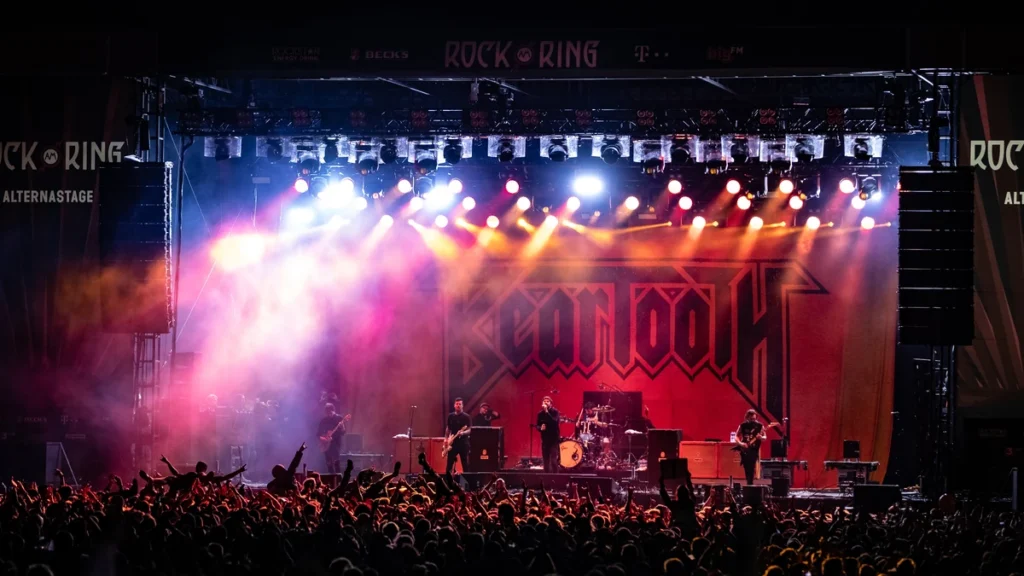
Beartooth performing at Rock am Ring.

Beartooth released Pure Ecstasy through Fearless Records, their sixth album, their first for that label and their first in three years.

It runs eleven songs across thirty-eight minutes, and for the first time the production credit is shared.

A Project Built on Doing It Alone

The band has always been effectively one person's operation, with Caleb Shomo writing, performing and producing the records himself.

That is unusual in heavy music, where the band format is close to universal and the producer is normally an external figure.

Working alone gives complete control and removes the friction that produces compromise, which is why artists do it. It also removes the second opinion, which is why most eventually stop.

Bringing in a co-producer on album six is therefore a real change in method rather than a credit adjustment.

Jordan Fish in the Room

The co-producer is Jordan Fish, whose credits run through some of the most commercially successful heavy music of the last decade.

His background is in a band that moved deliberately from metalcore toward pop structure, which is precisely the territory this record is described as occupying.

Hiring someone who has already made that transition with another band is a pointed decision. It suggests the direction was chosen before the producer was.

First Album for a New Label

Moving to Fearless Records after five albums elsewhere is a structural change as well as a commercial one.

Label moves at this stage usually follow either a contract ending or a mismatch in ambition, and they reset the working relationships around an artist entirely.

A new label also means a new set of people arguing about singles, artwork and release timing, which is exactly the kind of friction a self-producing artist has historically avoided.

Three Years Between Records

Three years is a normal gap for a heavy band with a substantial touring commitment, and it is longer than this band's earlier pace.

Longer gaps in this genre usually reflect touring cycles rather than writing difficulty, since the live circuit is where the income is.

It also allows a change of direction to be absorbed. An audience that has waited three years is more willing to accept a different record than one that expected it in eighteen months.

Eleven Songs, Thirty-Eight Minutes

The running time averages under three and a half minutes per track, which is standard for the genre and shorter than the current album norm.

Heavy music has largely resisted the streaming-driven expansion that pushed rap and pop albums past an hour, and the reason is structural.

Aggression does not sustain. A record built on intensity has a natural length, and past about forty minutes the listener stops registering it as intense.

Pop Songwriting Inside Heavy Music

Reviewers have consistently noted the pop craft underneath the heaviness, and that combination is the defining feature of the band's recent work.

It is also the most contested thing about it. Audiences in heavy music are unusually attentive to perceived softening, and melodic choruses are the first thing that gets called out.

The defence is that the two are not opposed. A chorus that works is a chorus that works, and the genre's best records have always had them.

What the Reviews Disagreed About

Response has been broadly positive with one recurring criticism: that the record lacks cohesion across its eleven tracks.

That is a common consequence of a producer change. Two people making decisions produce more variety than one, and variety and coherence pull against each other.

Whether it reads as range or as inconsistency depends largely on what a listener wanted from the record before hearing it.

Writing About Depression Without Repeating Yourself

The band's catalogue has consistently addressed depression, and the difficulty at album six is finding a new position on the same subject.

Reviews describe this record as approaching the material from a different angle, with the darkness still present but no longer the only thing there.

That is a genuinely harder record to write. Despair has a clear emotional register; ambivalence does not.

Titles That State the Position

The tracklist is unusually direct: "Free", "Sorry", "You", "I Made It", and the title track itself.

One-word and short-phrase titles are characteristic of the genre, where the emotional content is meant to arrive immediately rather than through construction.

Closing an album about depression with a song called "I Made It" is not subtle, and it is not attempting to be.

Columbus and the Midwestern Scene

The band comes from Columbus, Ohio, which sits inside a midwestern heavy-music infrastructure that rarely gets written about.

That region has produced a disproportionate number of bands in this genre, sustained by an all-ages venue circuit and a touring geography that makes it cheap to reach several markets quickly.

Scenes like that do not generate coverage but they generate bands, which is the more useful output.

The Self-Producing Musician

Artists who record themselves entirely have become far more common as the tools have got cheaper, and the results split predictably.

The advantage is time. Somebody working in their own room can spend six months on a record without paying for a day of it, which allows a level of revision no studio budget permits.

The disadvantage is that nobody says no, and records made without that resistance frequently need an editor more than they need another idea.

Why Fearless Is a Sensible Home

The label has a long history in the melodic end of heavy music, with a roster built around bands that sit between hardcore and pop-punk.

That is a reasonable match for a record described as pushing heaviness and pop songwriting simultaneously.

Label fit matters more in this genre than in most, because the audience follows labels and treats them as a signal about what a band is.

A Late-August Release Date

The record arrived on one of the busiest release Fridays of the year for rock and metal, sharing the date with more than sixty other titles.

That crowding is a genuine cost for a mid-sized band, since coverage is finite and the largest names absorb most of it.

What it buys is the end of the festival season, when the audience is already engaged and the autumn touring calendar is about to open.

What a Co-Producer Actually Changes

The word producer covers several unrelated jobs, and which one is being described determines how much this credit matters.

At one end it means engineering: microphone choice, signal path, the technical business of capturing sound well. At the other it means editorial authority — deciding which song stays, whether the second verse is necessary, and whether the chorus arrives too late.

An artist who already engineers their own records is not hiring the first kind. They are hiring the second, which means voluntarily reintroducing an argument they had been winning by default for five albums.

That is why the credit reads as a change of method rather than a change of personnel. Somebody in the room is now allowed to say the song is not finished, and the record either benefits from that or does not.

The Cost of Genre Loyalty Tests

Heavy music polices its own boundaries more actively than almost any other genre, and bands that add melody are the most frequent target.

The accusation is always some version of selling out, and it rests on an assumption that heaviness and accessibility are opposed — that a chorus a general audience could enjoy must have been added for that audience rather than because it was good.

The history does not support it. The records that defined the genre in every era had hooks, and the bands remembered as uncompromising were frequently the most melodically sophisticated of their moment.

What the criticism does reliably produce is caution. Bands that fear the accusation write conservatively, which is a worse outcome for the genre than any individual pop chorus could be.

What Is Actually Being Tested

Two things. Whether an artist who has controlled every element of five records can share that control without the result losing its identity.

And whether an audience built on a specific emotional register follows a record that changes the register while keeping the subject.

Six albums, eleven songs, a new label, a second producer, and a closing track that says it made it.

Underworld Are Playing Festivals Across Three Continents

Underworld Are Playing Festivals Across Three Continents

Underworld performing live in New York.

Underworld are working across three continents this year, from a field in Cheshire in late August to a festival in Mexico City in November.

The run continues the cycle behind Strawberry Hotel, and it is the kind of routing a band builds only when the live show is the point.

Cheshire, New York, Chicago, Pasadena, Mexico City

The dates are geographically scattered rather than routed as a conventional tour.

Creamfields in Cheshire on 27 and 28 August, the Knockdown Center in New York on 3 September, ARC Music Festival in Chicago three days later, the Rose Bowl in Pasadena on 7 November and Corona Capital in Mexico City on 21 November.

That is not a tour in the old sense of a bus moving between adjacent cities. It is a series of individually negotiated appearances spread across a year.

Electronic acts increasingly work this way, because a two-person setup can fly to a festival, play and leave without the freight and crew a band requires.

Festivals Rather Than a Headline Run

Almost all of these are festival slots rather than the band's own shows, which changes the economics substantially.

A festival pays a fee regardless of how many people attend, which removes the ticket-sales risk that a headline tour carries.

It also puts the act in front of audiences who came for something else, which is how a thirty-year-old catalogue keeps finding people who were not born when it was made.

The Knockdown Center Is the Outlier

One date is not a festival. The Knockdown Center in New York is a former glass factory converted into a venue, and it holds a fraction of the others.

Playing a warehouse-scale room between festival appearances is a deliberate contrast, and it produces a completely different show.

Electronic music at that scale works the way it was designed to: loud, in a dark room, with no seats and no sightlines to protect.

A Band Built on Live Performance

Underworld's reputation rests substantially on what happens on stage rather than on the records alone.

That is unusual in electronic music, where the studio is normally the primary site and the live show is a reproduction of it.

Their approach has been closer to a band's: tracks are rebuilt for performance, extended, restructured and driven by a vocalist working the room rather than a producer behind a laptop.

Two People and a Very Long Career

The core has been Karl Hyde and Rick Smith for decades, and the division of labour is unusually clear.

Smith builds the tracks; Hyde writes and delivers the words, which are closer to stream-of-consciousness poetry than to conventional lyrics.

That combination is why the live show works. A producer alone cannot hold a stadium field, and a vocalist alone has nothing to stand on.

The Trainspotting Problem

One track from the mid-nineties, attached to a film, remains their best-known recording by a very wide margin.

Songs of that magnitude are a permanent asset and a permanent constraint. The audience contains people who know one record and nothing else.

Bands handle it in one of two ways: refuse to play it, or play it well and let the rest of the set do the arguing. The second is more generous and considerably more difficult.

Strawberry Hotel as the Current Record

Strawberry Hotel is the album this touring cycle sits behind, and it arrived deep into a catalogue that already ran to a dozen records.

Albums that late in a career rarely change an artist's position, and they are not usually intended to.

What they do is give the live show new material and give promoters a reason to book, which is the actual function of a record for an act at this stage.

The Festival Economy for Legacy Electronic Acts

Festivals have become the primary employer for electronic acts with long catalogues, and the reason is programming rather than nostalgia.

A festival needs acts that can hold a large crowd at nine in the evening without the audience knowing the new material, and a thirty-year catalogue does that better than anything else available.

The trade is that the set becomes a greatest-hits proposition, which is a constraint on any act still making records.

Why the Routing Looks Random

Two dates in early September on opposite ends of the United States, then nothing until November, is not how a tour is normally built.

Festival calendars are fixed years ahead and do not coordinate with each other, so an act taking festival slots accepts whatever geography results.

For a two-person act the inefficiency is affordable. For a six-piece band with a production build it would be ruinous.

Creamfields and the British Dance Circuit

Creamfields is one of the largest dance festivals in Britain and occupies the August bank holiday weekend, which is the peak of the domestic calendar.

Britain's dance festival infrastructure is unusually developed, a direct inheritance of the rave era and the club culture that followed it.

An act of this vintage playing that event is being programmed as heritage and as a live draw simultaneously, which are not quite the same thing.

ARC and the American Rebuild

ARC Music Festival in Chicago is comparatively new and exists to reconnect American dance music with the city where house was invented.

American electronic festival culture spent a decade dominated by a very different commercial strain, and events like this represent a deliberate correction.

Booking a British act with a thirty-year history into that context is a statement about lineage rather than a booking of convenience.

The Rose Bowl and Scale

A November date at the Rose Bowl in Pasadena puts them in a stadium-adjacent setting, which is a different proposition again.

Electronic music in very large outdoor spaces has an acoustic problem: low frequencies disperse and the intimacy that makes a club work disappears entirely.

Acts that manage it do so by simplifying rather than expanding, which is the opposite of what the venue seems to invite.

Mexico City Closes the Year

Corona Capital in Mexico City is one of Latin America's largest festivals and has become a reliable stop for international acts.

The Mexican live market has grown substantially, and its audience is notably younger than the European one for the same acts.

Ending a scattered year there rather than at home is a reasonable indication of where the growth actually is.

Longevity in a Genre Without Much of It

Electronic music has produced very few acts with careers measured in decades, and the reasons are structural.

The technology changes every few years, the audience turns over faster than in rock, and most producers work alone without the band structure that sustains people through lean periods.

Acts that last tend to be the ones that built a live show rather than a studio practice, because a live show is a reason to keep going.

What Is Actually Being Tested

Two things. Whether a festival-led touring model keeps a catalogue alive or gradually reduces it to a fixed set of the same six tracks.

And whether new material can hold its place in a set alongside a song that has been famous for thirty years, which is the permanent problem of the long career.

Five appearances, three continents, two people, one field in Cheshire, and a catalogue old enough that most of the audience arrived after it was made.