Esperanza Spalding Made an Album With Milton Nascimento
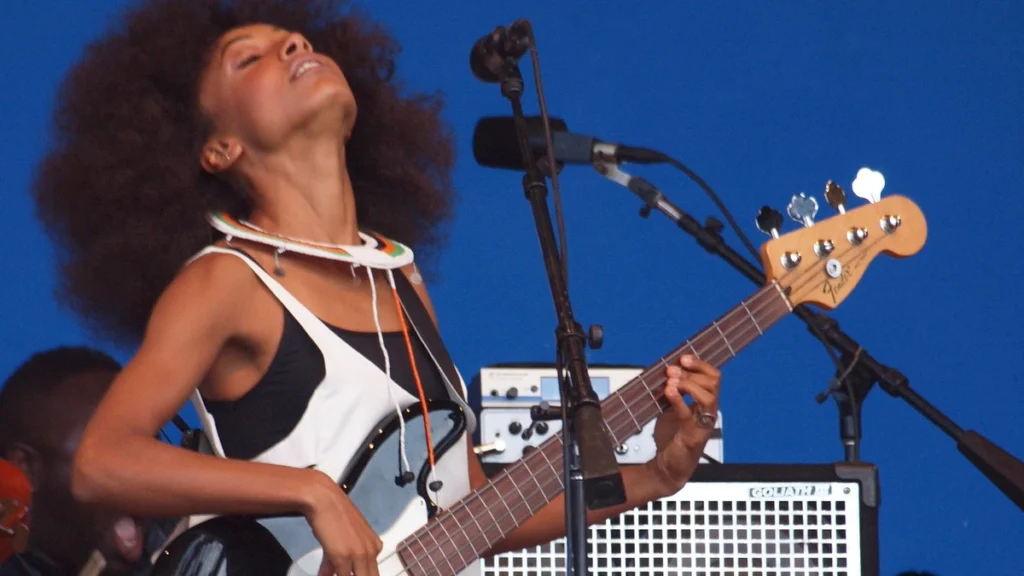
Esperanza Spalding performing on bass.
Esperanza Spalding performing on bass.
Esperanza Spalding released a collaborative album with the Brazilian singer and songwriter Milton Nascimento through Concord Records, and spent this summer headlining festivals in Europe.
The pairing spans roughly four decades of age difference and two distinct musical traditions.
Who Nascimento Is
Milton Nascimento is one of the central figures in Brazilian music, and his work is inseparable from the scene that emerged from Minas Gerais in the late 1960s.
That music combined Brazilian folk forms with jazz harmony, choral writing and a particular kind of melodic melancholy that has no direct equivalent elsewhere.
He has also worked with American jazz musicians for decades, which makes a collaboration of this kind a continuation rather than a novelty.
His voice is the most distinctive element: a very high, pure tone that has remained recognisable across sixty years of recording.
Why the Age Gap Matters
Collaborations across a forty-year gap are rare and usually structured as tribute, with the younger artist deferring throughout.
A genuine duo record requires both parties to contribute equally, which is difficult when one has a catalogue the other grew up studying.
What makes it possible is a shared harmonic language. Brazilian music and jazz have been in conversation since the 1960s, and musicians from both traditions can play together without translation.
Singing and Playing Bass at Once
Spalding’s defining technical feature is that she sings while playing bass, which is considerably harder than it sounds.
The bass line and the vocal melody are usually rhythmically independent, which means the two hands and the voice are executing three different patterns simultaneously.
Most bassists who sing simplify one part or the other. Doing both at full complexity is a small category of musician.
The Bass as a Lead Instrument
She works on both upright and electric bass, and treats the instrument as a lead voice rather than a supporting one.
Jazz has a tradition of bass soloists, but the instrument’s primary role remains anchoring the harmony and the time.
An artist who fronts a band from the bass position changes how the ensemble works, because the rhythmic foundation is also the thing drawing attention.
A Catalan Festival in July
She headlined the Vijazz festival in Vilafranca del Penedes, a wine town in Catalonia, in early July.
Regional European festivals of this kind carry more weight than their size suggests, with long histories and audiences that return annually.
The bill also included Nubya Garcia and Incognito, which spans contemporary British jazz, acid jazz and the American tradition on one stage.
A Guest Appearance That Preceded It
She features on a track from Garcia’s album, which means the shared billing brought two musicians together who had already recorded.
Festival programmers actively look for those connections, because they raise the possibility of something happening between sets.
Whether it does is unpredictable, which is part of what an audience is buying.
Concord Across Both Records
Concord released both the Nascimento collaboration and Garcia’s album, which is not a coincidence.
Labels with deep jazz rosters generate connections between their own artists, because the people running them think in terms of a catalogue rather than individual acts.
That is one of the underrated functions a label still performs: introducing musicians who would not otherwise have met.
Winning Best New Artist
Spalding won the Grammy for best new artist in 2011, becoming the first jazz musician to take that award.
The win was contentious at the time, largely because the other nominees had far larger commercial profiles.
Fifteen years later it reads differently. The award has a poor record of predicting careers, and hers is among the more durable it has produced.
The Academic Half of the Career
She has taught at university level alongside performing, which is a common arrangement in jazz and a substantial commitment.
Teaching provides income stability that performance cannot, and it puts working musicians in front of the next generation.
It also shapes the work. Musicians who teach tend to be more articulate about what they are doing, because they have had to explain it repeatedly.
Portland and an Unusual Route In
She grew up in Portland, Oregon, which has no significant jazz infrastructure, and came to the music through a route that bypassed most of the usual institutions.
Musicians from outside the established centres arrive without the assumptions those scenes install, which frequently produces more individual players.
The cost is the network. Everything has to be built from scratch, which is why so few artists from those places reach an international level.
Brazilian Music’s Long Reach Into Jazz
The exchange between Brazilian music and American jazz is one of the most productive in twentieth-century music, and it has run in both directions.
Bossa nova reached American musicians in the early 1960s and permanently altered the rhythmic vocabulary of jazz.
Brazilian musicians took American harmony in return, which is why players from both traditions can improvise together with almost no adjustment.
What a Duo Record Requires
Two-name albums are difficult because the balance has to be genuine, and audiences detect imbalance immediately.
The failure mode is a record where one artist is clearly the guest, which produces something less than either would have made alone.
The successful version usually involves both parties writing, both singing, and neither treating the other’s material as the foundation.
Late Career and Legacy Recording
Recording with an artist in the later part of a very long career carries a particular responsibility.
The temptation is reverence, producing a record that treats the older musician as a monument rather than a collaborator.
The alternative is to write for who they are now rather than for who they were, which requires knowing the difference and being willing to act on it.
Summer Festivals as the Working Year
A summer spent headlining European festivals is the standard working shape for a jazz musician at this level.
The dates pay reliably, the audiences are large, and the routing allows several countries in a fortnight.
What it does not allow is developing new material, which is why so much jazz writing happens in the winter months when the circuit shuts down.
What Minas Gerais Produced
The scene Nascimento came from is specific enough to be worth describing, because it is not simply Brazilian music in general.
Minas Gerais is an inland state, mountainous and historically isolated from the coastal cities where bossa nova and samba developed. The music that emerged there in the late 1960s drew on Catholic choral singing, folk forms from the interior, and the harmonic vocabulary arriving from jazz and from the Beatles at roughly the same moment.
What resulted sounds like nothing else in Brazilian music: modal rather than tonal in places, built on vocal group textures rather than solo singing, and carrying an ambiguity that resists being described as either happy or sad.
Musicians outside Brazil have been drawn to it for fifty years precisely because it does not resolve into a familiar category, and a collaboration with one of its central figures is a chance to work inside that ambiguity rather than merely admire it.
Why Bassists Rarely Lead
The bass is structurally the hardest instrument to front a band from, and the reasons are practical rather than musical.
The bass line is load-bearing. If the guitarist stops for four bars nothing collapses; if the bass stops, the harmony loses its floor and the drummer loses their reference point. That makes the instrument difficult to step away from, which is exactly what a frontperson has to do.
There is also a physical problem. The bass is large, it is played standing in a fixed position, and its lowest frequencies are felt more than heard, which means the audience’s attention does not naturally travel toward it.
The few musicians who have led from the position solved it the same way: by making the bass part interesting enough to follow as melody, so the ear goes there without being directed. That is a compositional solution to a staging problem, and it is rarer than it sounds.
What Is Actually Being Tested
Two things. Whether a duo record across a forty-year gap reads as genuine collaboration or as a younger artist paying respects.
And whether a bassist who sings can hold a festival headline slot, which is a position built for frontpeople rather than for musicians anchoring the rhythm section.
Two names on one sleeve, four decades between them, a Catalan wine town in July, and a bass carrying both the low end and the tune.
About The Author