Ate by Kick 5000 Takes Miami Storytelling Onto a Baltimore Club Drill Beat
The Carol City Rapper Swaps Trap for an Up-Tempo Club Beat and Miami Storytelling
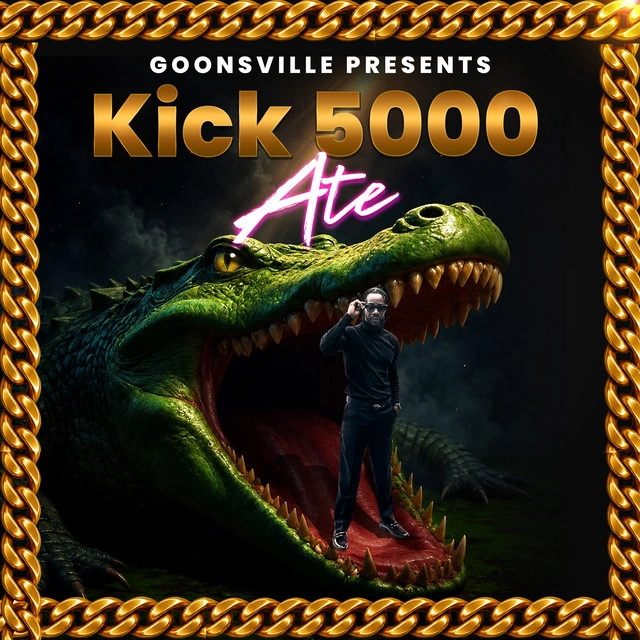
Kick 5000 released Ate on 28 August 2026. The three-minute single moves the Miami rapper off trap and onto a Baltimore club drill beat. At 3:03, the track serves the punchlines, with Kick 5000 rapping over an up-tempo beat about life in Miami. It is out now on Goonsville Entertainment.
Kick 5000's Ate sits in the playlist below, and the full run of coverage is on Kick 5000's artist profile. It reached MusicDrops.News through PopHits.Co Music Charts, which verifies independent artists and places their releases across its network of music news desks. Hit play on Ate, then read on for where it sits in the catalogue.

Before Ate, Kick 5000 Built a Miami Catalogue of Hip Hop, R&B and Reggae Singles
Kick 5000 comes out of Carol City, in Miami Gardens, Florida. Over the years the music has moved between hip hop, R&B and reggae. The official site describes it as storytelling and lyricism, drawn from real life and from what the artist has witnessed.
The catalogue also runs back years. Apple Music lists singles from 2017 onwards, plus projects such as Audi 5000 (2020), Miami Vice (2021) and Frequencies (2023). After that, the run kept moving through m.b.d and Spray in 2025 and 2 man in February 2026. Then Ate arrived in August.
Through all of it, the constant has been the bars. Kick 5000 likes to rap on up-tempo beats because they support the punchlines.
Carol City and Goonsville Entertainment
Carol City has a deep place in Miami rap. For example, Rick Ross grew up there and turned Miami street stories into a career. Likewise, Denzel Curry came out of the same neighbourhood with fast, technical flows.
By comparison, Kick 5000 works at a smaller, independent scale. The artist helped form a local rap group called The Goons, and now runs Goonsville Entertainment LLC as its CEO. That company is also the label behind Ate.

Ate by Kick 5000 Moves Off Trap and Onto a Baltimore Club Drill Beat Built for Punchlines
Ate is a deliberate experiment. Kick 5000 set out to explore beats other than trap. The result runs on a fast Baltimore club drill beat.
In fact, the artist describes the session as feeling like making a house hip hop song. That is a fair description of the format. Baltimore club took shape in its home city in the early 1990s, borrowing from house and hip hop alike. It usually sits around 130 beats per minute and leans on chopped breakbeats. As a result, that tempo leaves little room for long, slow verses.
That pace suits the writing. Kick 5000 reaches for up-tempo production to support the punchlines. Meanwhile, the story underneath is about the life and times in Miami.
The move also has a recent precedent in the mainstream. In 2022, Lil Uzi Vert took a rap verse onto a Jersey club beat with Just Wanna Rock. Jersey club is Baltimore club's closest relative. Ate works on the same idea at street level, with Miami storytelling in place of a stadium hook.


What Comes Next
The single is the newest step in a catalogue that keeps moving between styles. It suggests that the punchline-first writing travels. In other words, the approach that suited trap can work at a club tempo too.
That opens doors. A rapper who can hold a story together at club speed has more beats to choose from. So Ate reads like a first test of that range rather than a one-off. The YouTube channel already points forward, too. In early September it carried two new clips titled WTFG, one of them a freestyle.
For now, though, Ate is the place to start. It is short, fast and clear about what it wants to do. On Apple Music it is the newest single in that run, filed under hip-hop and rap.
Who It Is For
Ate is for hip hop listeners who want bars first and a beat that moves. Fans of Miami rap who know the Carol City lineage will find a familiar storyteller here. Anyone curious about a street rapper on a club tempo has a clear reason to press play.
It also works as an entry point. At just over three minutes, it makes a quick first listen. Beyond it, the catalogue is there for anyone who wants to hear where the writing came from.
From the MusicDrops.News Curator Team: "Club tempos punish long setups. Kick 5000 picked this beat because up-tempo production supports punchlines. That turns a genre experiment into a fair test of the writing."
Where to Stream Ate by Kick 5000 and Follow the Carol City Rapper
Stream Ate on Spotify or Apple Music. Then follow Kick 5000 on Spotify, Apple Music, SoundCloud, YouTube, Instagram, X and Facebook. Finally, visit the official site.