Rock

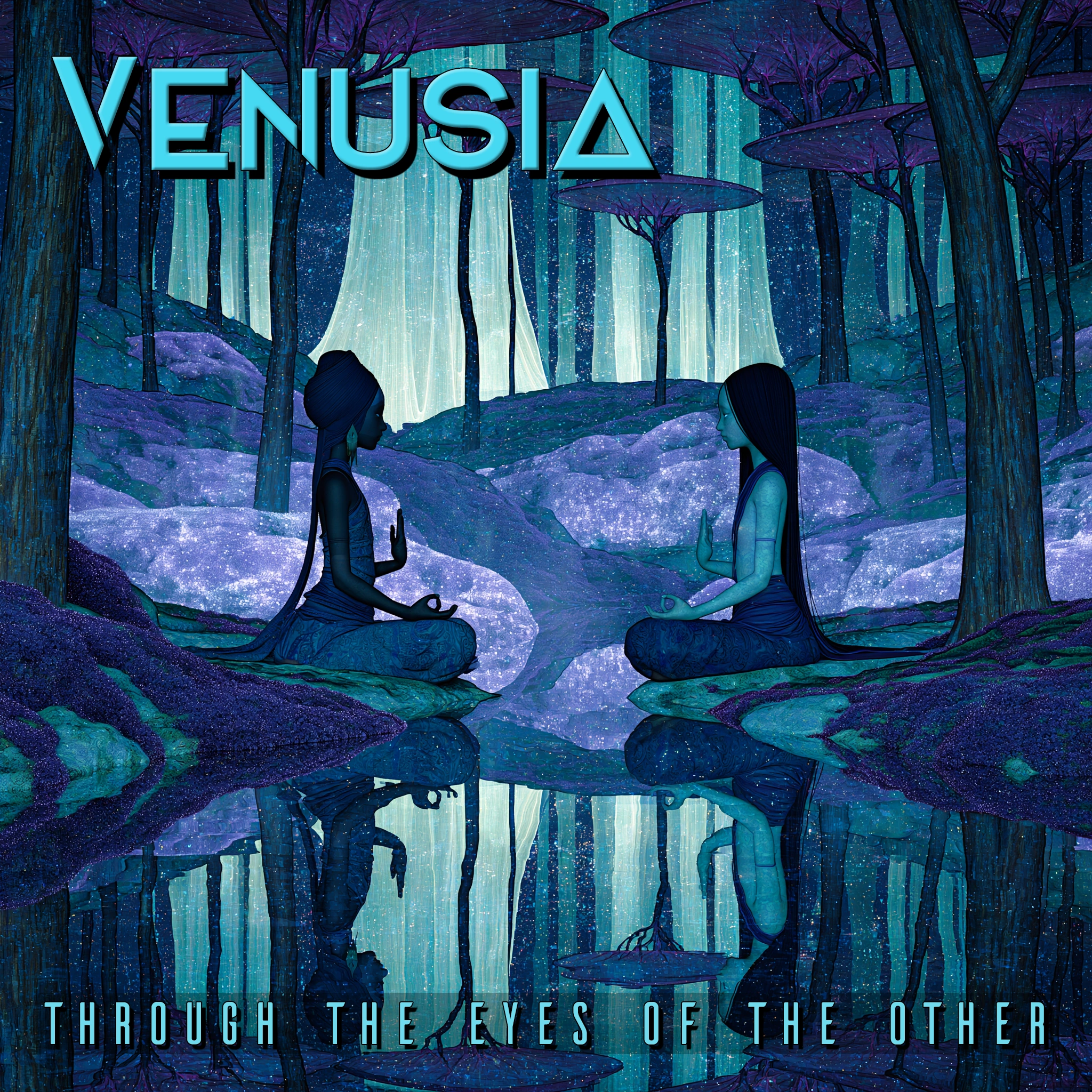
Venusia Lead Light Waves with Through the Eyes of the Other

Venusia Lead Light Waves with Through the Eyes of the Other

A Song Andrew Bayuk Wrote in 2008 Becomes the Basel Duo's Two-Voice Case for Empathy

Venusia released Through the Eyes of the Other on 22 August 2026 as the first single from Light Waves. That is the Basel duo's debut album. Across the single's four minutes, Andrew Bayuk and Anisah Alyahya trade lead vocals. As a result, a song about seeing life from the other side is sung from two sides at once.

https://open.spotify.com/track/4EuJNduHddUkluNILLZDB0

Venusia’s music is in the playlist below, alongside the rest of this desk’s rock and alternative picks, and the full run of coverage is collected on the Venusia profile. Through the Eyes of the Other came to MusicDrops.News through PopHits.Co Music Charts, which verifies independent artists and places their releases across its network of music news desks. Press play, then read on for the story behind the song.

https://open.spotify.com/playlist/2zc7e1w8s4p4lILt3XSJiL


Venusia Lead Light Waves with Through the Eyes of the Other

Before Light Waves, Five Venusia Singles Built the Two-Voice Sound Heard Here

Venusia started in 2020, during the pandemic lockdowns. Bayuk grew up in the United States and Alyahya in Malaysia. Their first recordings were built from sound clips sent back and forth by email.

The first song they wrote in the same room, at their first meeting on the Winter Solstice, became Solstice Love. They released it on the Summer Solstice in June 2022. That September, the French blog Indie Chronique picked it up. The same year, the pair told Illustrate Magazine they were finishing a first album called Light Waves.

Four more singles followed. Their version of David Bowie's The Man Who Sold The World arrived in October 2022. Next, Think Peace came out on 2 June 2023. When Obscure Sound reviewed Think Peace, it heard a Beatles influence in the harmonies and hooky guitar. It also picked out the dual vocals as an edge of their own. Waking Dream and The Dreamer or the Dream complete that early run of five.

Meanwhile, the instruments split cleanly between the two of them. Bayuk plays acoustic and electric guitars, bass and drums, while Alyahya plays piano, synthesiser and cello, and both sing. In fact, the new single was already part of their live set. A live performance on YouTube, filmed at Schifflände in Basel, went up on their channel in May 2025. That was more than a year before the studio version.

Through the Eyes of the Other Sets Two Lead Voices Against Acoustic Guitar, Piano and Cello

The song is older than the band. Bayuk wrote it in 2008 after hearing the story of an Israeli mother and a Palestinian mother talking. At first, each described how she had been treated by the other side. As they kept talking, however, they found they wanted the same things. Both wanted food, shelter, freedom, safety and a good education for their children.

The recording follows that shape. Bayuk and Alyahya take turns at the lead, so two perspectives move toward each other as the song goes on. The lyric opens on the line "An eye for an eye will make us blind". From there it works through the old rules of payback, from tooth for tooth to fire with fire. Then the chorus turns to the idea of learning to see through the eyes of the other.

Musically, it pairs the raw energy of 90s rock with acoustic melody. The track runs to 4:10. Bayuk's guitars, bass and drums sit underneath, with Alyahya's piano, synthesiser and cello around the two voices. Bayuk also wrote and produced it, and the duo recorded it at Guardians Records. Reto Muggli then mixed and mastered it at Powerplay Studios in Zürich.

So who is it for? Listeners raised on the later records of The Beatles will recognise the method. Bayuk has named their stacked harmonies and counter-melodies as the starting point for the duo's arrangements. Fans of Crosby, Stills, Nash & Young get the other half of the lineage. That means close harmony over acoustic guitars, used to carry a message rather than decorate it. Alyahya, meanwhile, counts Pearl Jam and Nirvana among the bands of a teenage grunge phase. That fits the 90s rock grit the single leans on.


https://www.youtube.com/watch?v=ETj328eg39A
Watch the video and check the artist's YouTube channel for more.

Venusia Lead Light Waves with Through the Eyes of the Other

Shadow Boxing Followed in September as the Light Waves Album Heads for Vinyl and CD

Shadow Boxing, the next song from the album, came out on 11 September 2026. According to the duo's website, Light Waves is due on vinyl and CD in September. Their profile on Switzerland's Mx3 music portal describes the album as six years of work. It ties songs of unconditional love to calls for peace and empathy.

That gives the single a clear place in the story. Think Peace argued that peace starts from within. By contrast, Through the Eyes of the Other asks the listener to step into someone else's position. As the first release from Light Waves, it also sets the album's terms early. Expect two lead voices, guitar, piano and cello, and a message in plain words.

From the Curator Team: "What earned Through the Eyes of the Other a first listen here is the casting. The song gives each side of its argument a real voice, Bayuk's and Alyahya's. It also puts cello and piano beside a rock rhythm section. As a result, a plea for empathy arrives with the warmth of an acoustic record and the drive of a band."

Where to Stream Venusia and Follow the Duo Through the Light Waves Album Cycle

Stream Through the Eyes of the Other on Spotify or pick your preferred platform from the release page. Venusia's catalogue also sits on Apple Music, Tidal and SoundCloud, and the duo post videos on their YouTube channel.

To keep up with the album rollout, follow Venusia on Instagram, Threads and Facebook. Every current link sits on their Linktree and their Mx3 profile. The lyrics and the story behind the song are on the official website.


Rubber Soul Gets New Mixes and an Unheard Lennon Song

Rubber Soul Gets New Mixes and an Unheard Lennon Song

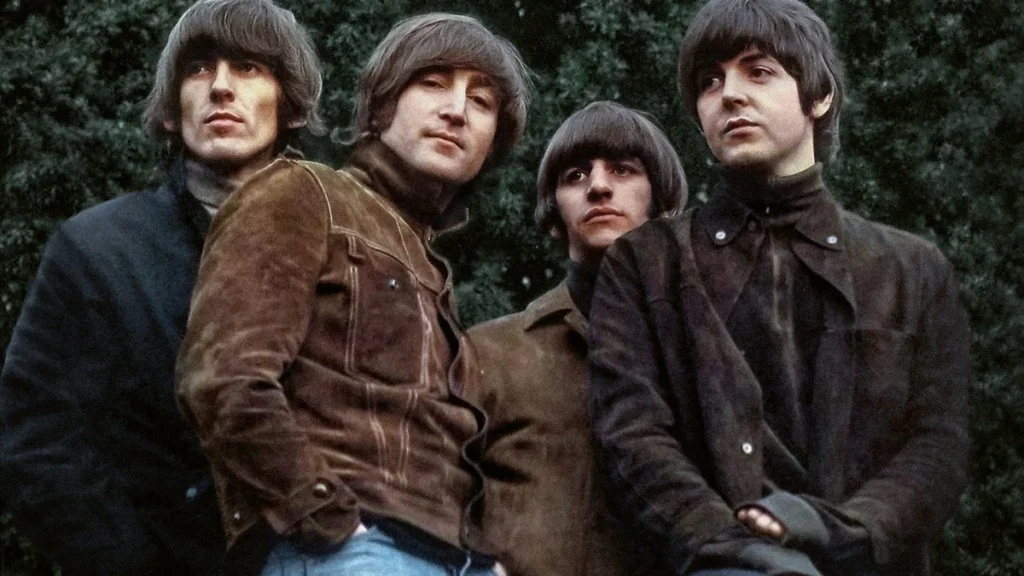
The Beatles' Rubber Soul arrives in an expanded special edition on Friday 2 October, with a new stereo mix by producer Giles Martin and engineer Sam Okell and a Super Deluxe box that runs to 68 tracks. The find that matters most is a John Lennon home demo called "Little Girl", a song outline that, according to the official announcement, was never before released or even rumoured.

Apple Corps and Universal Music announced the Rubber Soul reissue on 29 July. It is out on 2 October through Apple Corps, Capitol and UMe, more than six decades after the album was first released on 3 December 1965.

What Is in the New Rubber Soul Box

The Super Deluxe edition comes as four CDs or five LPs, each with an 88-page hardbound book in a 12-inch slipcase. The CD set runs to 68 tracks: the new stereo mix of the 14-song album, a disc of 28 sessions, demos and the single, the original 1965 mono mix, and the 12-track Capitol US version of the album, according to the full format listing from Universal Music Canada.

The vinyl box splits the outtakes across two records of 26 tracks and adds a 7-inch single of "Day Tripper" and "We Can Work It Out". Every format carries the new stereo mix, which the labels say was sourced directly from the original four-track master tapes.

Below the box sets sit 2CD and 2LP special editions with a curated selection of session highlights, demos and the single, plus standard 1CD and 1LP releases. A Blu-ray carries a new Dolby Atmos mix, high-resolution stereo and the promotional films for "Day Tripper" and "We Can Work It Out". There is also a limited orange vinyl pressing and a zoetrope picture disc sold direct to fans.

The Lennon Demo Nobody Knew About

"Little Girl" is the headline for collectors. Rolling Stone's Rob Sheffield, who previewed the set in an exclusive first listen, describes it as a raw sketch with an unfinished lyric and a bittersweet tune that sounds like an early draft of "I'm Only Sleeping", the song that later became a highlight of Revolver.

Martin told the magazine the tape came from the Lennon side of the family. "It was one of those things that came from the Lennon estate, I think it was Sean," he said. "It was one of those things where they say, 'Oh, and then there's this.'"

It sits on the sessions disc next to two more home demos: an early songwriting work tape of "Day Tripper" and Paul McCartney's demo of "We Can Work It Out". Those three demos, and 20 of the session takes, have never been released before, according to the announcement.

Session Tapes That Show the Songs Changing

The outtakes are arranged to show songs being built. "Norwegian Wood (This Bird Has Flown)" appears in three versions, takes one to three. "Nowhere Man" and "I'm Looking Through You" each appear in a first and a second version, so the arrangement can be heard changing between sessions, according to the track listing published by The Beatles Bible.

There are instrumental backing tracks for "Drive My Car", "Wait", "Run for Your Life", "If I Needed Someone", "What Goes On", "The Word" and "Girl". "Michelle" appears as a guitar rehearsal and as its first take, which was released as a preview track on the day of the announcement.

"In My Life" gets its first take and an extract with an unused organ solo. The finished record famously uses George Martin's piano solo, sped up to sound like a harpsichord, and this collection includes an outtake where he tries the part on organ, Rolling Stone reports.

The disc also keeps the studio chatter. A track titled Beatle Talk catches the band working out vocal overdubs for George Harrison's "Think for Yourself". "I try and put as much dialogue on there as possible, because I think it's really important to hear them as people," Martin told Rolling Stone.

How the New Stereo Mix Was Made

The new mix uses the de-mixing technology built for Peter Jackson's Get Back documentary. The software was developed by the sound team led by Emile de la Rey at Jackson's WingNut Films, and Martin and Okell used it on this project to bring the audio forward from the original tapes.

That matters on a record made on four-track tape. The new stereo mix is sourced directly from the original four-track masters, and the labels say the aim was clarity while staying faithful to the spirit of the original recordings. All 14 of the new stereo mixes are collected together for the first time.

The album was recorded over four weeks in October and November 1965, following the band's record-breaking Shea Stadium concert in front of more than 55,000 fans in New York. Martin's own summary of the sessions is blunt: "It's an album born out of frustration of not wanting to be little boys anymore."

Why Rubber Soul Still Sounds Like a Turning Point

The labels bill Rubber Soul as the record where the band stopped writing for the singles chart, and it is widely regarded as having pioneered the long-form pop album. Martin put it the same way to Rolling Stone: "This is the first album where they weren't trying to write a bunch of singles and deciding what should be the single."

The album carried "Drive My Car", "Norwegian Wood (This Bird Has Flown)", "Nowhere Man", "Michelle", "Girl" and "In My Life", and it brought new sounds into the band's records, including the sitar on "Norwegian Wood" and the harmonium on "The Word". "It was a license to experiment," Martin said.

The sessions changed the band's working hours too. "'Drive My Car' was the first session they played beyond 12 o'clock at night," Martin told the magazine. "But by the time two weeks later, they were recording till seven in the morning."

Its reach went well beyond the band. Brian Wilson heard the album and set out to match it, recalling in 2009: "I said to myself, 'Now I'm gonna make an album just as good as Rubber Soul.'" The next morning he went to the piano and wrote "God Only Knows", according to Rolling Stone.

Where This Fits in the Beatles Reissue Series

Rubber Soul is the latest in a run of special editions that began with Sgt. Pepper in 2017 and continued with the White Album in 2018, Abbey Road in 2019, Let It Be in 2021, Revolver in 2022 and Anthology in 2025, Rolling Stone notes. With Revolver already done, both records from the band's turn toward the studio now have full editions.

The Super Deluxe book adds new writing too. It opens with a fresh introduction by Paul McCartney and a foreword compiled from John Lennon's own words about the album across his life, including the years after the band split, alongside rare photographs and track notes.

The Capitol US version is worth a listen in its own right. The American album dropped some UK tracks and added "I've Just Seen a Face" and "It's Only Love" from Help!, opening with "I've Just Seen a Face", a different running order from the UK album, according to the Beatles Bible listing.

Is the Rubber Soul Special Edition Worth It

For most listeners the answer depends on format. The 1CD and 1LP editions carry only the new stereo mix, which is the point of entry for anyone who knows the songs from streaming. The 2CD and 2LP sets add the best of the outtakes, and the Super Deluxe box is for anyone who wants every take, the mono mix and the book.

The reissue lands in a busy stretch for the band's catalogue. The announcement also points to a fan experience planned at 3 Savile Row, the site of the rooftop concert, opening in 2027, and to Sam Mendes's four-film Beatles project due in April 2028. Elsewhere this month, we reported that Watching the Tide is Steve Cropper's final studio album.

Rubber Soul is out on Friday 2 October. "Michelle (Take 1)" is streaming now.

Tinashe performing on stage in an orange fringed outfit and wide-brimmed hat with dancers

Six New Albums Worth Hearing, From Tinashe to Tom Morello

Tinashe performing in 2023

Six new albums arrived on Friday 25 September that are worth pressing play on, and they could hardly be further apart: an eighth album from Tinashe, a new record from Blondshell, a 21st from Kenny Chesney, a fifth from Nothing But Thieves, a new collection from Joy Oladokun and what Tom Morello calls his first solo rock album.

Here is what each one is, who made it and who it is for. All six appear on this week's Friday release list.

Tinashe Stretches What a Popstar Can Be

Popstar is out now, and it is Tinashe's eighth studio album. Clash describes the 16-track collection as moving between high-octane, club-skewed experiments and languid R&B futurism, built with a long list of pop and electronic producers including Arca, Machinedrum, Kingdom, Fred Ball, Ricky Redd, Zach Sekoff and Dave Hamelin.

The singles set out both sides. Lead single "Crash Out" is the straight pop song; "Melatonin", in The FADER's description, is a vaguely ballroom-inflected sugar rush that sounds like a longer pop song chopped, screwed and sent into hyperdrive. The FADER singles out "Flashbacks" as the standout, opening with vocal chops that recall Arca before settling into chanted lines over a sombre piano loop, and reads the album's thesis as simple: Tinashe is a popstar, but under her gaze that label can mean just about anything.

She is marking the release with in-store vinyl signings in New York, Baltimore, Chicago and Southern California, and the Grammy Museum will host an intimate performance and Q&A on 22 October in Los Angeles. Who it is for: anyone who likes their pop with the edges left on.

Blondshell Takes the Slow Road on Violins

Violins is out now on Partisan Records. Blondshell, the project of Sabrina Teitelbaum, made it with producer Yves Rothman, and it was mixed by Beatriz Artola and mastered by Emily Lazar, according to Stereogum. The first taste was "Heart Has To Work So Hard", followed by the title track and a video directed by Sabra Binder, in which Teitelbaum tries to save a melting ice sculpture of a fawn in a room of one-way mirrors.

Teitelbaum has said the title track sums up the album: it sets images of patience and kindness beside images of violence, and it is about healing slowly and refusing to be rushed. In a social post before the announcement, she said that "each time I get to do this the music ends up closer to what I intended." Stereogum called the title song the brooding, thoughtful rock that listeners have come to expect from her. Who it is for: fans of guitar-led indie rock with lyrics that cut close.

Kenny Chesney Goes Independent on Silver Sands Marina

Silver Sands Marina is Kenny Chesney's 21st album and his first full-length release on his own HEY NOW Records, produced by Chesney with longtime collaborator Buddy Cannon. Its lead single, "Carry On", was the label's debut, and according to Chesney's own announcement it became the first independent single, and only the third ever, to lock out the country radio reporting panel in its first week.

The songs come from a deep bench of Nashville writers, among them Tony Lane, Matraca Berg, Shane McAnally and Brett James, alongside Jessie Jo Dillon, Tenille Townes and Adam Wright, with guest turns from Colbie Caillat, Lily Meola and Megan Moroney. "I love everything about music, but especially how it makes you feel," Chesney says. "It can crack open a tough moment, lift you up, blow you up and make you laugh harder than anything."

He announced the album just after opening his second residency at Sphere in Las Vegas. Who it is for: anyone who wants the long-drive, sunshine side of country, from a 2025 Country Music Hall of Fame inductee.

Nothing But Thieves Head Back to Where They Started

Stray Dogs is the fifth album from the Southend five-piece and their first since 2023's Dead Club City. Speaking to NME on release day, the band said they wrote it over five months on the road and recorded it in the same studio where they made their 2015 debut, taking a DIY approach and turning the songs towards gratitude for the friends, family, crew and fans around them.

"I feel like we're a band that takes left turns," they told the magazine. This time, the left turn was to make something "smaller and noisy", designed like a dream-state version of their live show: the songs bleed into each other, and crowd noise from their own gigs is woven into the transitions, including the album's opening. The singles "Evolution", "Baby Kool (Evelyn)", "A Different Kind Of Happiness" and the title track previewed it, with "#5", which the band call the cornerstone of the album, arriving alongside it. Who it is for: rock fans who like their big choruses with some grit.

Joy Oladokun Confronts the Past on Hope Is a Heavy Thing

Hope Is A Heavy Thing is out now on Concord Records: 12 songs produced by Oladokun with additional contributions from the Nigerian producer Spellz, and a collaboration with the Nigerian artist Adekunle Gold. "'To understand your future you have to confront your past.' This is the driving theme behind Hope Is A Heavy Thing," Oladokun says in the album announcement. She describes it as a collection she wrote "to help myself find my light again after burning out".

The record was produced in Nashville, New York and, in her words, "the back of a speeding tour bus", and it nods to the Soulquarians, Bob Dylan, Afrobeats, the sampling of J Dilla and the Ronettes, with some songs drawing on the rock and roll protest music of the 1960s and 70s. The daughter of Nigerian immigrants, Oladokun has been nominated for Americana Artist of the Year, and her song "i see america" was a finalist for the Recording Academy's Best Song for Social Change award. Who it is for: listeners who want folk and soul songwriting with a wider world of rhythm underneath it.

Tom Morello Makes His First Solo Rock Album

Everyone Gets Everything They Want is out now on Mom + Pop Music, and Tom Morello calls it his first solo rock album, after decades with Rage Against the Machine, Audioslave and his solo work as The Nightwatchman. According to Blabbermouth, the 12 tracks confront fascism, immigrant rights and global political turmoil, with production from Tyler Smyth, Carl Restivo, Zakk Cervini, Dan Carey and Sam Nelson Harris.

Serj Tankian, Kneecap and Beartooth all appear, and his 15-year-old son Roman shares writing credits on five songs. "Date Night" tells the true story of Truus and Freddie Oversteegen and Hannie Schaft, three young Dutch resistance fighters who worked against the Nazis during the Second World War. "'Date Night' is really a 'which side are you on?' song," Morello said. On 3 October he hosts Power To The People, a sold-out one-day festival he curated at Merriweather Post Pavilion in Maryland. Who it is for: anyone who wants riffs with a message attached.

For more from the release calendar, MusicDrops also covered how Sia pitched Chaka Khan a dance album, and Chakzilla is the result. Between them, this week's six new albums cover pop, indie rock, country, arena rock, folk-soul and protest rock.

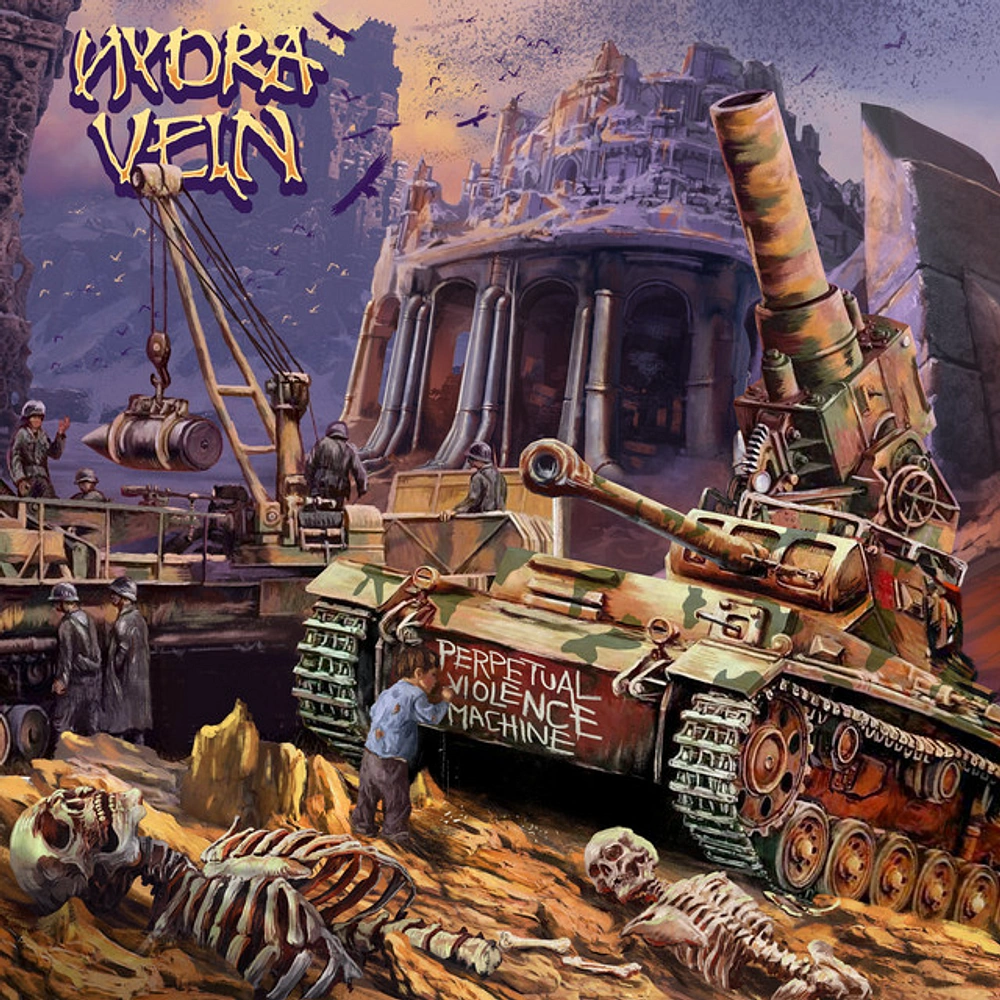
Hydra Vein Releases Perpetual Violence Machine with One Original Member Left

Hydra Vein Releases Perpetual Violence Machine with One Original Member Left

One Original Member, A New Singer, and A Band That Kept Going Anyway

Perpetual Violence Machine is out now on Iron Shield Records. The most useful thing to know about it is who plays on it. Of the band that made the first Hydra Vein records in the late eighties, one man remains. Everything else about this EP is downstream of that fact.

https://open.spotify.com/album/6xqJI4GMOovrBiIstLFjks

Hydra Vein's music is in the playlist below, and the band's full run of coverage sits on the Hydra Vein profile. Perpetual Violence Machine came to this desk through PopHits.Co Music Charts, which verifies independent artists and places their releases across its network of music news desks. Put it on loud, then read on.

https://open.spotify.com/playlist/0AbUGsUd4iODe5sxlxNeiO


Hydra Vein Releases Perpetual Violence Machine with One Original Member Left

Where Hydra Vein Came From, And What Got Them Here

Hydra Vein were a UK thrash band in the first wave. Then they were nothing for a very long time. Then in 2022 they came back with Unlamented. That is the story in three lines, and it skips the part that matters. How much of the band actually survived the gap?

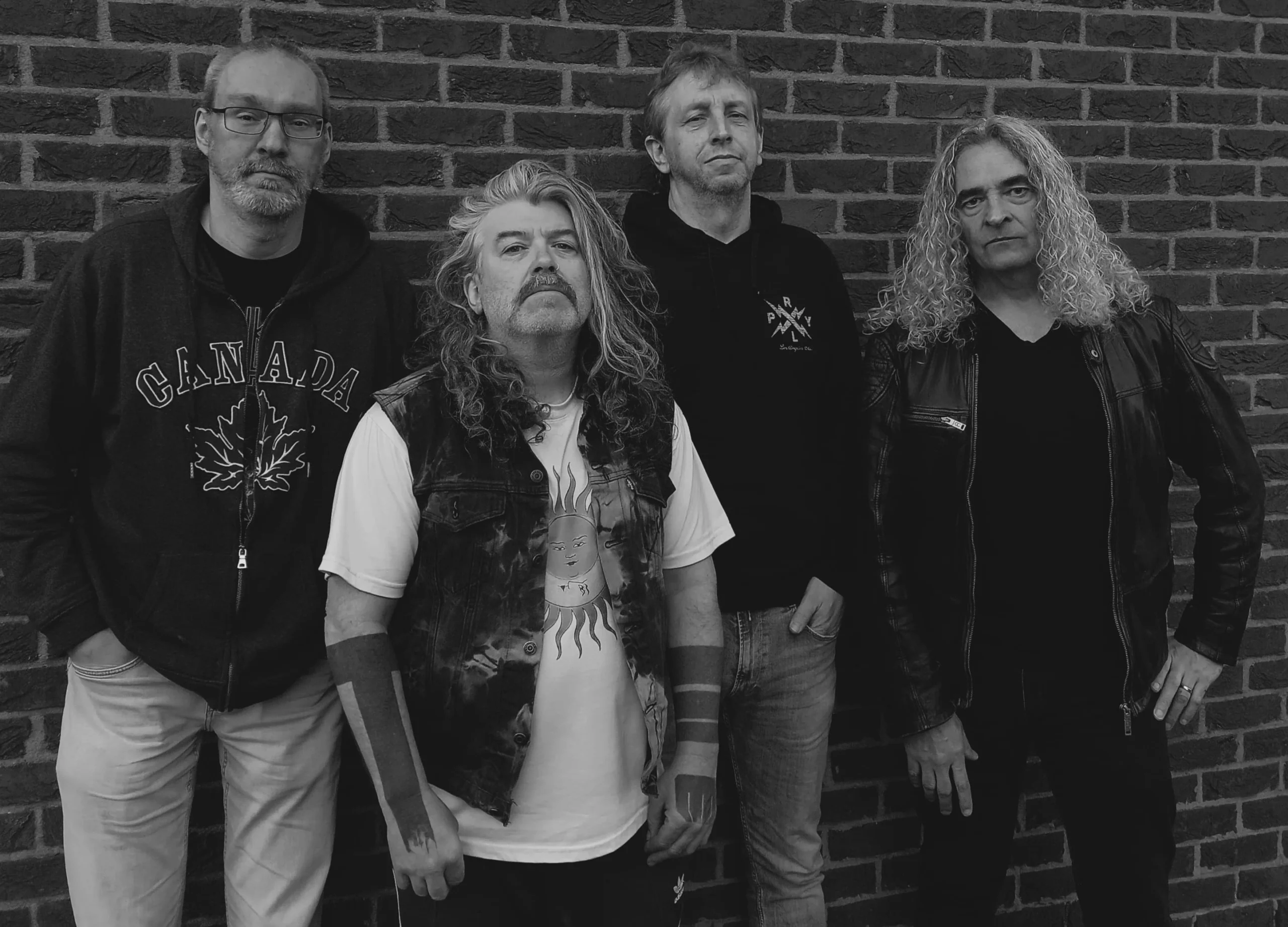
The answer is one. Bassist Damon Maddison is the only member left from the original run. Both of the outlets that have covered this EP in detail land on the same point. Metal Invader puts it plainly. From the old guard only Maddison remains, and seasoned underground players now surround him. Metal Forces records the same line-up arithmetic, and adds the other change that shapes this record. Ross Curry has come in on vocals in place of James Manley-Bird.

So this is not a nostalgia reunion holding its original shape. Instead one person and a body of songs carry the band. That is harder to do, and more honest to admit.

The other change is geography. Hydra Vein started as a British band and now operate out of the Netherlands. That puts them inside the European thrash circuit rather than the English one they came up in.

Why The Label Matters Here

Iron Shield Records is not a general metal label. It states its remit openly: old school and traditional metal, mostly heavy, speed and thrash, nothing modern or trendy. So a band signing there tells you what kind of record it intends to make, before a note is played.

That is worth saying because a first-wave thrash band returning in the 2020s has two obvious routes. One is to modernise and chase a contemporary production. The other is to find a label whose entire catalogue is built for the sound you already have. Hydra Vein took the second. The EP follows that choice rather than fighting it.

https://www.youtube.com/watch?v=dNHqW77bO4Q
Watch the video and check the artist's YouTube channel for more.

Hydra Vein Releases Perpetual Violence Machine with One Original Member Left

What Perpetual Violence Machine Does, And Where It Leaves Them

The material is raw British thrash with anti-war writing running through it. Moreover, the reviews so far agree on the register rather than arguing about it. Metal Invader calls the EP tightly bound. It hears in Curry's delivery a lyricism and a grumpiness close to Megadeth's Dave Mustaine. That is a fair reference for a vocal that carries a lyric rather than shouting over the riff.

The wider comparison is the European thrash that stayed working while the UK wave broke up. Sodom are the clearest example of the type. They kept the tempo and the politics, they simply never stopped, and their audience has been reliably there for forty years. Hydra Vein are attempting a compressed version of the same thing, with a long gap in the middle of it.

Neil Arnold's write-up in Metal Forces has the sentence that best explains what this release is for. He says he is glad they are still going, and gladder still that they put out something that takes him back to that era. That names the audience, and it is a real one.

From the MusicDrops.News curator team: "The line-up arithmetic is the story. One original member, a new singer, and a label whose whole catalogue is old-school thrash. Everything this EP does follows from those three decisions rather than from a marketing plan."

Where To Hear Perpetual Violence Machine And Follow Hydra Vein

As for what comes next, the band's own answer is currently the EP itself. There is no announced follow-up, and Iron Shield's published schedule for the coming year does not list them. The band is active and the record is out. This run of coverage is therefore the push behind it, rather than a trailer for something else. For a band in its third act, holding position with a record people still write about is not the worst place to be.

You can hear the EP on Spotify, Apple Music, Deezer and Amazon Music. It also sits on Bandcamp. The full EP stream sits on YouTube.

Keep up with Hydra Vein on Facebook and Instagram.


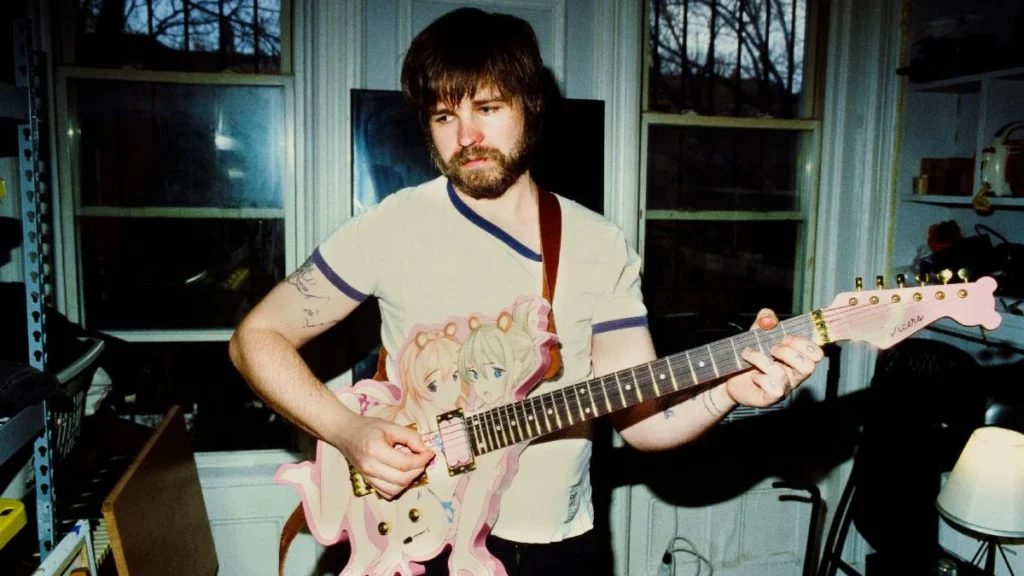
Nate Amos of This Is Lorelei holding a guitar

This Is Lorelei Wrote His Matador Debut From a Van Window

This Is Lorelei releases The Singer in My Band this week, the first album Nate Amos has made for Matador Records. It is for anyone who followed the run of records he has been putting out since 2024 and wondered what happens when the underground songwriter gets a proper label behind him.

The thing worth noting is how it was written. Amos was on tour, with no instrument to hand, and the songs arrived through a van window.

Written Without an Instrument

"The ideas incubated while daydreaming in the car without access to any instruments," Amos says in Matador's own notes on the record. "So instead of being home and writing on the guitar or a computer, they developed slowly and subconsciously, existing as a sort of intangible thing while looking out the van window."

That is a real constraint, not a colour detail. A song written at a guitar tends to be shaped by what the hands can reach. A song assembled in the head has no such limit, and no editing either.

Matador calls it the first true road record in his discography. It was written while touring in support of releases from both of his projects, which is a lot of van.

What He Is Building On

Amos plays in Water From Your Eyes and runs This Is Lorelei on his own. In 2024 he signed the solo project to Double Double Whammy and released Box For Buddy, Box For Star.

That record did more than land well. Stereogum described it as having emerged as one of the defining indie rock albums of this decade, and noted the growing recognition of Amos as a singular songwriter.

Last year he re-recorded a batch of old songs as Holo Boy. Before any of that, This Is Lorelei was known only to a small circle in Chicago, where Amos moved in his early twenties and produced hundreds of albums and EPs before relocating to New York.

Other Artists Keep Covering Him

The clearest measure of where he stands is who has recorded his songs. MJ Lenderman, Hayley Williams, Jeff Tweedy and Cameron Winter have all covered his material, and Waxahatchee and Snail Mail joined the run of Box For Buddy covers issued across deluxe editions.

That is an unusual list for someone at this stage. Covers from established artists usually follow commercial success; here they arrived alongside it, and in some cases ahead of it.

It also tells you something about the songs themselves. Material that survives being sung by four very different voices is material with structure underneath it, not just a performance.

He Made It Himself, With His Family on It

Amos engineered, produced and performed everything on the record. The exceptions are all family: banjo from his father, the bluegrass musician Bob Amos, and vocals from his sister Sarah Amos and his partner Al Nardo.

"They're three people who had a fundamental impact on what this album was to begin with," he told The Line of Best Fit when the album was detailed in June.

Banjo from a bluegrass parent is not a decorative credit on a record framed around the Great American Songbook. It is the actual lineage, played by someone who plays it for a living.

Lead single "Billy Came Back" arrived with the announcement, and Amos described its writing in terms that match the van-window method exactly. "'Billy Came Back' stewed for months before I picked up a guitar to work it out," he said. "I kept forgetting about it but it always came back. Finishing the song was the only way to get it to leave me alone."

That is the same filter described earlier, stated from the inside. The song was not written down and worked on; it was carried until it refused to be ignored. On a record made this way, the surviving material has already passed a test most demos never face.

The Songbook Reference Is Doing Real Work

Matador frames the record as taking the building blocks of the Great American Songbook and twisting them into new shapes, describing the result as at once strangely familiar and endearingly offbeat.

Read that alongside the writing method and it makes sense. Standards are the most portable songs ever written: melody and chord movement that survive being hummed, transposed and rearranged, because they were built to be played by anyone. They are exactly the kind of song you can carry in your head across a continent.

A record written without an instrument almost has to lean that way. Whatever cannot be remembered does not make it into the song, which is a harsh filter and a useful one.

Formats and Release

The record is out this week, with Matador listing orders arriving around 11 September. It comes on bone white vinyl and standard black vinyl, both at under twenty-six dollars, and on CD at under fourteen. LP orders include a bumper sticker while supplies last, and there is a T-shirt bundle.

The two vinyl variants are worth a note for anyone who cares. Colour-variant pressings on an indie label usually sell out first and do not return, so the choice is effectively made in the first week or not at all.

For a first album on a new label, that is a straightforward release: three formats, no deluxe edition, no staggered rollout. The record is the product.

Three Records in Three Years

The release rate is worth stating plainly, because it is unusual for a songwriter at this level of attention. Box For Buddy, Box For Star in 2024, Holo Boy in 2025 pulling songs from his back catalogue, and now The Singer in My Band, alongside continuing work with Water From Your Eyes.

Most artists slow down after a record lands the way the 2024 album did. The standard advice is to protect the moment, tour it for eighteen months and take time over the follow-up.

Amos did roughly the opposite, and the Chicago years explain why. Someone who produced hundreds of releases before anyone was listening does not experience a two-year gap as caution; he experiences it as a stoppage. The pace here is the normal pace, and the attention is the new part.

That also reframes the deluxe editions. Two expanded versions of the 2024 album, carrying covers by other artists, kept that record in circulation while this one was being carried around in a van. It is an efficient way to stay present without releasing filler, and it is the sort of move a prolific catalogue makes possible.

What the Label Move Actually Changes

Double Double Whammy to Matador is a real step up in reach rather than in prestige. Both are respected; only one has the distribution to put a record in shops on three continents in the same week.

Amos has already played sold-out shows across multiple continents, so the audience exists. What a larger label supplies is the ability to serve that audience physically, at the moment the record comes out, rather than by mail order six weeks later.

The risk of the move is the familiar one. A songwriter who produced hundreds of releases in Chicago on his own terms now has a release schedule and a marketing calendar. On the evidence of the writing method, that has not reached the songs yet.

What to Play First

Start with the title track, because a record named after one of its songs is usually telling you where its argument sits. Then work outward.

If you are new to Amos entirely, Box For Buddy, Box For Star is the sensible entry point and the reason anyone is paying attention to this one. If you already know that record, the question here is whether songs assembled in transit hold together differently from songs built at a desk. Two years of van windows is a strange way to make an album, and it is the most interesting thing about this one.

Songwriters who take the long route to a first proper platform tend to arrive with more finished than anyone expects, as with Marco Margna, who spent twenty years on other people's records before I Say No to You.

The Singer in My Band is out this week on Matador Records.

DMAS Made Their Fifth Album Between Sydney and Los Angeles

DMAS Made Their Fifth Album Between Sydney and Los Angeles

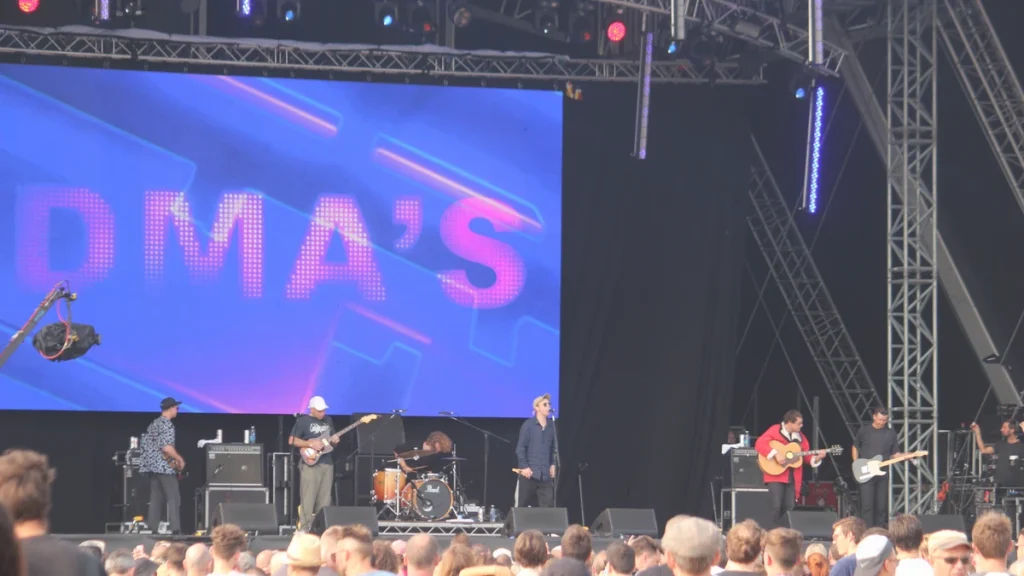
DMAS performing at Victorious Festival.

DMAS released their self-titled fifth album in August, written and recorded between their own studio in Sydney and sessions in Los Angeles.

The band have described it as the record with the most in common with their first, which is an unusual claim to make five albums in.

Self-Titling on Album Five

Naming an album after the band this far into a career is a deliberate signal rather than a shortage of ideas.

Debut albums are self-titled because there is nothing else to call them. A self-titled fifth record is a claim: this is the one that represents what the band actually is.

It is also a reset. A record with the band's name on it invites listeners to treat it as a starting point rather than as the latest instalment.

Coming alongside a new label arrangement, that framing does real work.

Their Own Studio in Glebe

A substantial part of the record was made in the band's own studio in Glebe, an inner-western suburb of Sydney.

Owning a room changes the economics of making an album completely. There is no day rate, no booked end date and no pressure to have decided anything before walking in.

What that buys is time to be wrong. Bands working to a studio budget cannot afford to spend two days on an idea that fails, and owning the space removes that constraint entirely.

Los Angeles for the Other Half

The rest was recorded in Los Angeles, which is the standard destination for an Australian band with international ambitions.

Los Angeles offers session players, engineers and a production culture that Sydney cannot match at the same density, and it puts a band inside the industry rather than twelve thousand kilometres from it.

Splitting a record between a home studio and a professional environment produces a specific hybrid: the writing happens without pressure and the execution happens with resources.

A New Global Deal

The album is their first under an arrangement with Wonderlick Entertainment alongside Sony and RCA in the United Kingdom.

Global deals matter disproportionately for Australian bands, because the domestic market is small and the distance from Europe and North America is a genuine commercial obstacle.

An arrangement that covers multiple territories under one agreement removes the licensing negotiations that historically slowed Australian records reaching international audiences.

The Return to DIY Framing

The band have positioned the record as a return to how they worked at the start, which is a familiar claim and occasionally an accurate one.

Early records are made without expectation, without label input and usually without money, and the constraints frequently produce something that later resources cannot recreate.

Bands that try to return to that state generally cannot, because the expectation is now permanent. Owning the studio is the one thing that genuinely reproduces the original condition.

Lach Bostock in the Chair

The album was co-produced with Lach Bostock, who carries a Grammy nomination.

Co-production credits on a record described as DIY are not a contradiction. A band recording in their own room still needs someone making structural decisions from outside the songs.

The distinction is where the authority sits. A producer hired by a band into the band's own studio operates differently from one a label appoints.

Four Months From Announcement to Release

The album was announced in April and arrived in August, which is a longer runway than most current releases get.

Four months allows two singles to work properly, gives international press time to schedule, and lets a touring announcement land separately from the album news.

Shorter campaigns are more common now precisely because attention decays, but a band building internationally needs the longer window to reach territories one at a time.

Two Singles, Five Weeks Apart

The lead single arrived in March, with a second alongside the album announcement in April.

That is a compact pairing followed by a long quiet period, which is an unusual shape and suggests the singles were doing announcement work rather than sustaining a campaign.

It also means the record arrived in August with most of it unheard, which is increasingly rare and generally better for how an album lands.

Where the Band Sit in Australian Rock

They emerged into a scene that has produced a steady run of guitar bands with international reach over the last decade.

Australian rock benefits from a strong domestic radio network, a well-developed festival circuit and a live culture that supports bands before they have any recorded output.

The obstacle is always the same: distance. Touring internationally from Australia is expensive enough that a band has to be certain before committing.

Three Dates in Six Days

The Australian tour runs Brisbane, Melbourne and Sydney between 27 November and 3 December.

Three shows is a small run and it reflects the country's geography rather than the band's draw. Australia's population is concentrated in a handful of coastal cities.

A national tour there is therefore structurally short, which is why Australian bands tour internationally so much earlier in their careers than European or American ones.

The Britpop Comparison

The band have been compared to British guitar music of the mid-nineties since they started, consistently and not always helpfully.

The comparison is not baseless. The melodic sensibility, the vocal delivery and the arrangement priorities all point in that direction.

What it obscures is everything that is not that, and bands saddled with a comparison early tend to spend several albums working against it.

Guitar Music's Current Position

Rock has spent a decade being described as commercially diminished, and the description is broadly accurate at the top of the charts and misleading everywhere else.

Guitar bands still fill mid-sized venues, still sustain festival bills and still build durable audiences. What they no longer do is dominate the singles chart.

For a band at this level that distinction matters, because the business is touring and catalogue rather than radio.

What a Home Studio Does to a Catalogue

Owning a recording space changes what a band's output looks like over a decade rather than over one album.

The marginal cost of recording drops to almost nothing, which means ideas get finished rather than abandoned and B-sides exist again.

It also means a band can wait. A record does not have to be delivered because studio time was booked, which is the single most common reason albums arrive unfinished.

Why Distance Still Costs Australian Bands

The tyranny of distance is a cliché in Australian music because it remains materially true, and streaming did not fix it.

Recorded music travels instantly now, but bands do not. A European act can play twenty cities in a month by van, sleeping at home some nights and covering costs from door money. An Australian band reaching the same audience has to fly, freight equipment, obtain visas and commit to a run long enough to justify the airfare before a single ticket is sold.

That changes what a career looks like. Australian bands typically have to be commercially proven at home before international touring is affordable, which delays the point at which overseas audiences encounter them and compresses the window in which a band is still new.

It is also why the global deal matters more than it would for a British or American act. Coordinated international release removes at least the recorded-music half of the problem, even if the flights remain.

What Self-Titling Actually Signals

The self-titled album has three distinct uses in popular music, and telling them apart requires knowing where it sits in a catalogue.

On a debut it means nothing beyond introduction. On a second or third record it usually signals a reset after something that did not work, a way of drawing a line under a direction and starting again.

Later than that, and it becomes a summary claim. The band is asserting that this record is the definitive statement of what the name means, which is a considerable thing to put on a sleeve and impossible to retract.

The risk is obvious. A self-titled album that turns out to be a middling entry in a catalogue reads badly in retrospect, because the title promised more than the record delivered. Bands only make the claim when they believe it.

What Is Actually Being Tested

Two things. Whether a band five albums in can genuinely recover the working conditions of their first, or whether the claim describes an intention rather than a result.

And whether a global deal converts into an international audience, which is the specific problem every Australian guitar band eventually runs into.

Five albums, one self-titled, two cities, a studio in Glebe, and three shows in six days at the end of the year.

Beartooth Pure Ecstasy Is Their First for Fearless Records

Beartooth Pure Ecstasy Is Their First for Fearless Records

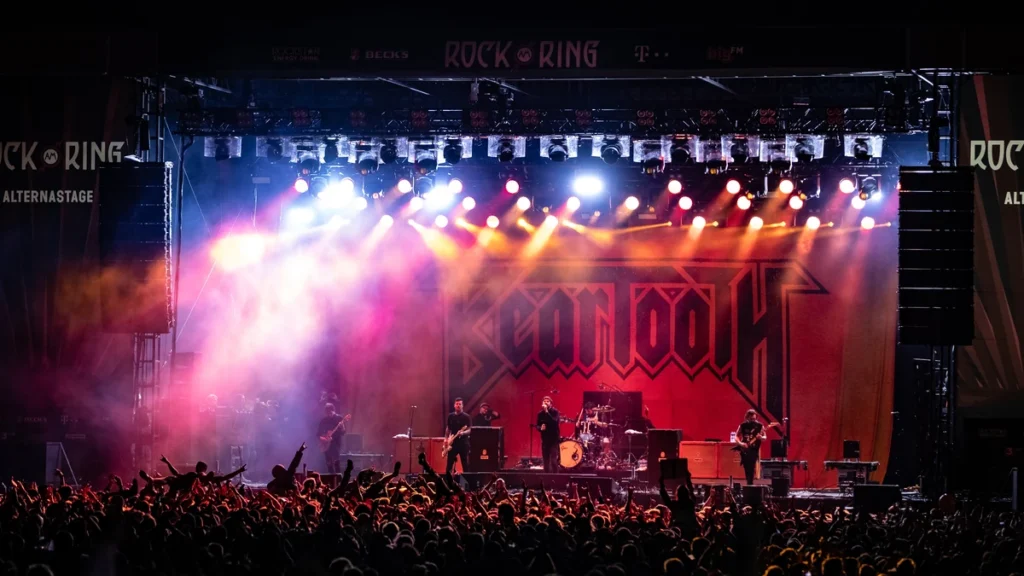
Beartooth performing at Rock am Ring.

Beartooth released Pure Ecstasy through Fearless Records, their sixth album, their first for that label and their first in three years.

It runs eleven songs across thirty-eight minutes, and for the first time the production credit is shared.

A Project Built on Doing It Alone

The band has always been effectively one person's operation, with Caleb Shomo writing, performing and producing the records himself.

That is unusual in heavy music, where the band format is close to universal and the producer is normally an external figure.

Working alone gives complete control and removes the friction that produces compromise, which is why artists do it. It also removes the second opinion, which is why most eventually stop.

Bringing in a co-producer on album six is therefore a real change in method rather than a credit adjustment.

Jordan Fish in the Room

The co-producer is Jordan Fish, whose credits run through some of the most commercially successful heavy music of the last decade.

His background is in a band that moved deliberately from metalcore toward pop structure, which is precisely the territory this record is described as occupying.

Hiring someone who has already made that transition with another band is a pointed decision. It suggests the direction was chosen before the producer was.

First Album for a New Label

Moving to Fearless Records after five albums elsewhere is a structural change as well as a commercial one.

Label moves at this stage usually follow either a contract ending or a mismatch in ambition, and they reset the working relationships around an artist entirely.

A new label also means a new set of people arguing about singles, artwork and release timing, which is exactly the kind of friction a self-producing artist has historically avoided.

Three Years Between Records

Three years is a normal gap for a heavy band with a substantial touring commitment, and it is longer than this band's earlier pace.

Longer gaps in this genre usually reflect touring cycles rather than writing difficulty, since the live circuit is where the income is.

It also allows a change of direction to be absorbed. An audience that has waited three years is more willing to accept a different record than one that expected it in eighteen months.

Eleven Songs, Thirty-Eight Minutes

The running time averages under three and a half minutes per track, which is standard for the genre and shorter than the current album norm.

Heavy music has largely resisted the streaming-driven expansion that pushed rap and pop albums past an hour, and the reason is structural.

Aggression does not sustain. A record built on intensity has a natural length, and past about forty minutes the listener stops registering it as intense.

Pop Songwriting Inside Heavy Music

Reviewers have consistently noted the pop craft underneath the heaviness, and that combination is the defining feature of the band's recent work.

It is also the most contested thing about it. Audiences in heavy music are unusually attentive to perceived softening, and melodic choruses are the first thing that gets called out.

The defence is that the two are not opposed. A chorus that works is a chorus that works, and the genre's best records have always had them.

What the Reviews Disagreed About

Response has been broadly positive with one recurring criticism: that the record lacks cohesion across its eleven tracks.

That is a common consequence of a producer change. Two people making decisions produce more variety than one, and variety and coherence pull against each other.

Whether it reads as range or as inconsistency depends largely on what a listener wanted from the record before hearing it.

Writing About Depression Without Repeating Yourself

The band's catalogue has consistently addressed depression, and the difficulty at album six is finding a new position on the same subject.

Reviews describe this record as approaching the material from a different angle, with the darkness still present but no longer the only thing there.

That is a genuinely harder record to write. Despair has a clear emotional register; ambivalence does not.

Titles That State the Position

The tracklist is unusually direct: "Free", "Sorry", "You", "I Made It", and the title track itself.

One-word and short-phrase titles are characteristic of the genre, where the emotional content is meant to arrive immediately rather than through construction.

Closing an album about depression with a song called "I Made It" is not subtle, and it is not attempting to be.

Columbus and the Midwestern Scene

The band comes from Columbus, Ohio, which sits inside a midwestern heavy-music infrastructure that rarely gets written about.

That region has produced a disproportionate number of bands in this genre, sustained by an all-ages venue circuit and a touring geography that makes it cheap to reach several markets quickly.

Scenes like that do not generate coverage but they generate bands, which is the more useful output.

The Self-Producing Musician

Artists who record themselves entirely have become far more common as the tools have got cheaper, and the results split predictably.

The advantage is time. Somebody working in their own room can spend six months on a record without paying for a day of it, which allows a level of revision no studio budget permits.

The disadvantage is that nobody says no, and records made without that resistance frequently need an editor more than they need another idea.

Why Fearless Is a Sensible Home

The label has a long history in the melodic end of heavy music, with a roster built around bands that sit between hardcore and pop-punk.

That is a reasonable match for a record described as pushing heaviness and pop songwriting simultaneously.

Label fit matters more in this genre than in most, because the audience follows labels and treats them as a signal about what a band is.

A Late-August Release Date

The record arrived on one of the busiest release Fridays of the year for rock and metal, sharing the date with more than sixty other titles.

That crowding is a genuine cost for a mid-sized band, since coverage is finite and the largest names absorb most of it.

What it buys is the end of the festival season, when the audience is already engaged and the autumn touring calendar is about to open.

What a Co-Producer Actually Changes

The word producer covers several unrelated jobs, and which one is being described determines how much this credit matters.

At one end it means engineering: microphone choice, signal path, the technical business of capturing sound well. At the other it means editorial authority — deciding which song stays, whether the second verse is necessary, and whether the chorus arrives too late.

An artist who already engineers their own records is not hiring the first kind. They are hiring the second, which means voluntarily reintroducing an argument they had been winning by default for five albums.

That is why the credit reads as a change of method rather than a change of personnel. Somebody in the room is now allowed to say the song is not finished, and the record either benefits from that or does not.

The Cost of Genre Loyalty Tests

Heavy music polices its own boundaries more actively than almost any other genre, and bands that add melody are the most frequent target.

The accusation is always some version of selling out, and it rests on an assumption that heaviness and accessibility are opposed — that a chorus a general audience could enjoy must have been added for that audience rather than because it was good.

The history does not support it. The records that defined the genre in every era had hooks, and the bands remembered as uncompromising were frequently the most melodically sophisticated of their moment.

What the criticism does reliably produce is caution. Bands that fear the accusation write conservatively, which is a worse outcome for the genre than any individual pop chorus could be.

What Is Actually Being Tested

Two things. Whether an artist who has controlled every element of five records can share that control without the result losing its identity.

And whether an audience built on a specific emotional register follows a record that changes the register while keeping the subject.

Six albums, eleven songs, a new label, a second producer, and a closing track that says it made it.

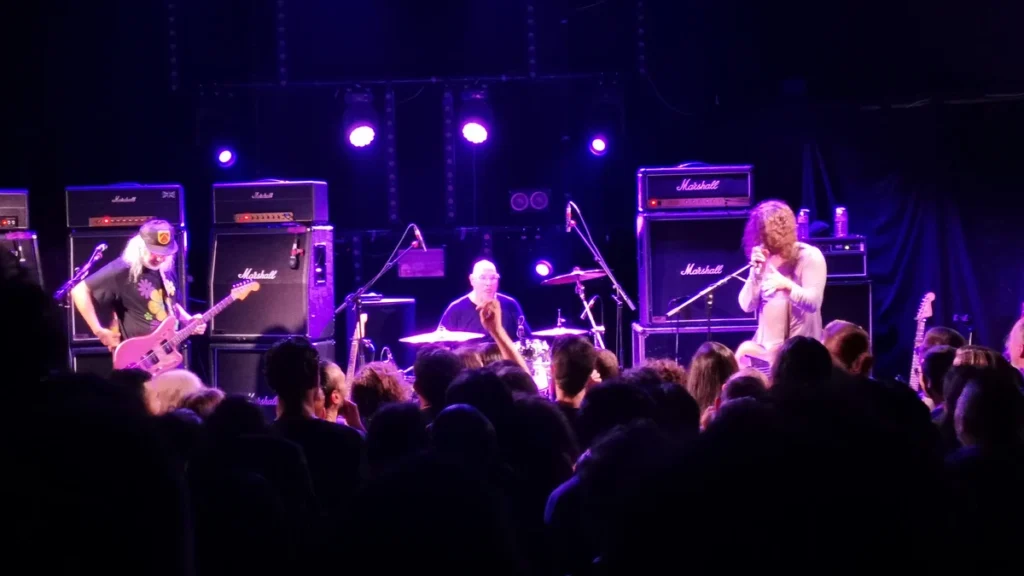
Dinosaur Jr on stage in front of stacked amplifiers under purple lighting

J Mascis Took Rick Rubin’s Advice Without Hiring Rick Rubin

Producers get paid large sums to tell bands to go back and listen to their first album. J Mascis worked out he could do it himself.

There Near arrives today, eleven tracks long, the sixth Dinosaur Jr album since the original line-up reformed and the first in a while to sound deliberately unpolished.

The Advice He Gave Himself

Mascis has been unusually clear about the mechanism. He acquired a 1970s Mesa Boogie MK1, the same model an engineer used when the band tracked their 1985 debut, and the tone followed.

"It has a real interesting sound I haven't gotten for a while," he said. Then the part that explains the whole record: "You always hear how Rick Rubin makes bands he's producing sit down and listen to their first album and say let's get back to that sound. So I just gave myself his advice."

That is a genuinely funny thing to admit, and it is also a serious observation about what a producer of that kind actually supplies. The instruction is not technical. It is permission -- an outside authority telling a band it is allowed to stop refining.

Bands rarely give themselves that permission, because every year of a career adds another reason to sound more capable than last time. Hiring someone to say the opposite is, in a sense, buying an argument you cannot win with yourself.

Mascis skipped the intermediary and bought an amplifier instead. It is cheaper, and on the evidence of the tone it works, which raises an awkward question about how much of the celebrated back-to-basics production job is really the equipment.

A Trio, a Year, and a Studio in Their Own Town

The making of the record matches its sound. It was created in short, intense bursts across the course of a year at Bisquiteen Studio in Amherst, and recorded almost entirely by the core three.

Murph is on drums, Lou Barlow on bass and vocals, Mascis on guitar and vocals, with piano and organ from a local musician, Ken Mauri. That is the whole cast.

Amherst is where the band formed in 1984, which makes the location less a choice than a return. A record about going back to a 1985 sound, cut in the town the band came from, is consistent to the point of being a little on the nose.

The working method matters as much as the room. Short bursts across a year is the opposite of a booked block, and it produces a different kind of record: nothing is attempted because the studio time is already paid for, and nothing gets over-refined because the session ends before boredom sets in.

It also fits three men who have known each other since the early eighties and do not need a warm-up week. A band that has played these songs' ancestors for four decades can walk in, cut something, and leave.

The near-total absence of guests is the other tell. Their previous album, Sweep It Into Space, was co-produced by Kurt Vile and leaned poppier; this one has one outside musician on keys and no producer credited from beyond the circle.

Eleven Tracks and Where the Weight Sits

The record opens with "Several Got Away" and settles into a run of songs less interested in polish than in noise. Mascis's guitar tone is described as more animalistic than usual, which for this band is a high bar.

"Everything At Once" is a clanging love song. "Take Me With You" carries two solos of the kind that provoke involuntary air guitar. Deeper cuts "Gone Off" and "Clam Along" do not reinvent the formula and are not trying to.

Eleven tracks is the length this band has always worked at, and the sequencing follows the pattern too -- a loud opener, a mid-record showcase, and a couple of album tracks that exist to hold the shape rather than to be singles.

Our piece on where new rock is actually coming from covers the scenes a record like this now lands into, four decades after this band helped invent the template.

Barlow Takes Two, and Has a Target

Lou Barlow continues his long-standing arrangement of writing and singing a small number of the songs, and continues to make them count. He takes two of the record's standouts, with "Blowin' Up" ranked among his best.

Its subject is current: bored, doom-mongering keyboard warriors. That is a pointed thing for Barlow specifically to write about, given that his own most famous song outside this band was a very public airing of a grievance.

The history is worth restating, because it is why the current line-up is remarkable at all. Barlow was kicked out of Dinosaur Jr in 1989 after touring Bug, formed Sebadoh, and put "The Freed Pig" at the front of Sebadoh III in 1991 -- a song documenting exactly how he felt about the way he had been treated.

A man who wrote the definitive song about being aggrieved in public is now, thirty-five years later, writing about people who are aggrieved in public for a living. Whether that is self-awareness or coincidence, it is a better lyric than the setup deserves.

The wider point is that Barlow's two-songs-per-album allocation has become one of the band's defining structures. It gives each record a second voice and a different writer's instincts, and it is the clearest sign that the reunion is a functioning band rather than a Mascis solo project with familiar personnel.

The Reunion Is Now Four Times the Original

The arithmetic has quietly become absurd. The original line-up ran from 1984 to 1989, when Barlow was removed -- five years. The reformation began in 2005 and has now produced six albums across twenty-one years.

The reunion has outlasted the original run several times over, without much fuss and without ever being treated as the main event. Most of the writing about this band still describes the eighties as the real period and everything since as an epilogue.

That framing is now indefensible on the numbers. Six albums is a career; three albums in five years by people who reportedly could not stand each other is a beginning.

The debut those six records keep circling was not, at the time, an event either. Dinosaur came out in 1985, recorded for around five hundred dollars at a home studio in the woods outside Northampton, and sold roughly 1,500 copies in its first year while the music press ignored it.

That is what makes the amplifier story more than gear talk. The sound Mascis went back for is not the sound of a triumph; it is the sound of three young men in a cheap room with nobody listening.

What Going Back Actually Means Here

Records made in pursuit of an earlier sound usually fail in one of two ways. Either the band cannot play badly enough to convince, or they can, and the result is a worse version of something that already exists.

The escape route is the one taken here: change the equipment and the working method rather than the writing. A different amplifier and a series of short sessions produce a rawer record without anyone having to pretend to be twenty-two.

It also means the songs are allowed to be what four decades of practice produce. A love song with a clanging guitar on it is not a 1985 song played through a 1985 amp; it is a 2026 song that happens to sound like it was recorded in a room.

Reviewers have landed on "solid" and "gnarly", which is roughly the correct assessment of a band delivering exactly what it promised. Nobody comes to a Dinosaur Jr album for a surprise.

What they come for is the fuzz, the drawl, two Barlow songs and a solo that makes your hands move. Six albums into a second act longer than the first, that is still being supplied.

There Near is out now.

Close portrait of Kelela on stage looking to her left

Kelela Answered Ten Years of R&B With a Shoegaze Album

Kelela spent a decade being the reference point other people used for what alternative R&B could be. Her third album is built on distorted guitars.

New Avatar came out on 10 July through Warp, running forty minutes and forty-seven seconds, and its genre list reads shoegaze, indie rock, grunge, electronic and alternative R&B — in roughly that order of surprise.

The Turn Is Real, Not Cosmetic

Forty minutes is also a deliberate length for a record this dense. Guitar distortion is fatiguing at volume, and an album built on it that ran an hour would be asking more of a listener than the songs could repay.

Artists announce reinventions constantly and usually mean a tempo change. This is not that. Shoegaze and grunge are guitar traditions built on volume, distortion and a vocal pushed back into the mix — close to the opposite of the precise, foregrounded, space-conscious singing Kelela built her reputation on.

Reviewers noticed the difficulty of describing it. Resident Advisor wrote that the record "reconfigures shoegaze, IDM and R&B into a Black, femme sound of the future", pointing to the fusion of distorted guitars with electronic production and contemporary R&B songwriting.

DJ Mag described much the same combination — indie rock, shoegaze and grunge, while retaining ties to her experimental club and electronic work. Two publications reaching independently for a three-genre formula is a fair indication that the record does not sit anywhere existing.

The precedent that makes it plausible is the one she set in 2015. Hallucinogen told a relationship backwards, beginning at the end — an artist willing to invert the basic structure of a break-up EP was never going to treat genre as fixed either.

The Club Instinct Did Not Go Anywhere

What stops this reading as abandonment is that the electronic side survived. She has not swapped one lane for another; she has layered a guitar tradition over the production approach she already had.

That is a harder proposition than a straight genre switch. A shoegaze record made by someone with no club background sounds like shoegaze; one made by a producer who thinks in club structures has to reconcile two rhythmic logics that do not naturally agree.

The Warp connection makes more sense of it than a label change would. Warp has spent thirty years releasing music that sits between electronic and rock without belonging to either, so a record like this arrives somewhere it fits rather than somewhere it has to be explained.

Three Producers, One of Them Her

A. K. Paul is a telling inclusion in particular — a producer whose own work lives in the same gap between guitar playing and electronic construction that this album is trying to occupy.

The album was produced by Kelela with Oscar Scheller and A. K. Paul. Three names on a record this stylistically specific is a small number, and her own presence among them matters.

An artist making a genre turn has two options: hire specialists in the new genre and follow them, or keep control and learn it. The production credit suggests the second, which is the riskier and more interesting route.

It also explains why the result is a hybrid rather than a pastiche. Someone who has fully handed over a guitar record makes a guitar record; someone still producing alongside brings their own instincts into it whether or not they intend to.

Naming the record New Avatar is about as explicit as an artist gets about what she is doing. An avatar is a chosen form rather than a true one, and the title concedes in advance that this is a version of her rather than a replacement.

A Career Built on Long Gaps

Her catalogue has never moved quickly. She emerged with the mixtape Cut 4 Me in 2013, then Hallucinogen in 2015 — an EP that told a relationship in reverse chronological order, which is the kind of structural idea that signals an artist thinking in projects rather than singles.

Take Me Apart arrived in 2017 to strong reviews, and was followed by a five-year silence. Raven broke it in February 2023, In the Blue Light came in 2025, and New Avatar is the third album in a career now thirteen years old.

The 2025 release In the Blue Light sits between Raven and this one, so the gap before New Avatar was shorter than the five-year silence that preceded Raven. The pace has quickened slightly, without becoming anything like prolific.

Three albums in thirteen years is a slow rate by any standard, and it is context for the genre turn. An artist who releases constantly cannot afford a reinvention, because the audience is renewed too often to follow one. An artist whose listeners have waited years between records has a following that arrived for her rather than for a sound.

Warp is also a label that has never required its artists to stay put. Signing there is, in itself, a decision about how much room you expect to need, and a record that spans five genres is close to the reason the label exists.

Why This Kind of Move Usually Fails

The genre pivot is one of the most commonly attempted and least commonly successful manoeuvres in pop. The failure mode is legible: the new genre is adopted as costume, the songwriting stays where it was, and the result satisfies neither audience.

What appears to have saved this one is that the songwriting is described as intact. Both publications quoted above identify contemporary R&B songwriting inside the guitar textures rather than replaced by them.

That distinction is the whole thing. Changing what a record is made of is a production decision; changing how the songs are written is a different and much larger one, and doing only the first is what makes a pivot convincing rather than desperate. Our piece on why release metadata decides who hears you covers a practical consequence — a record this hard to classify is also hard to file.

Shoegaze in particular is a forgiving destination for a singer who wants to be heard differently. The genre's defining move is burying the voice in guitar, which for a vocalist known for clarity is not a limitation but a disguise — and one that changes what the singing has to do.

The Filing Problem Is the Interesting One

A record spanning five genres has a distribution problem before it has an audience problem. Playlists, charts and shops all need one answer, and every available answer here is partly wrong.

Listing it as alternative R&B undersells the guitars; listing it as shoegaze hides it from the people who followed her for a decade. There is no correct choice, only a least-bad one.

Her own category is arguably the least useful of all. Being described for a decade as an alternative R&B artist becomes a constraint the moment the music stops matching, and a record like this is one way of refusing the label without arguing about it.

That is the practical cost of a record like this, and it is worth stating plainly rather than treating boundary-crossing as automatically admirable. Kelela has made something the systems around music are poorly equipped to handle, which is usually a sign the music got somewhere first.

Thirteen years in, that is a more interesting position to be in than a comfortable one.

New Avatar is out now on Warp Records.