Watching The Tide Is Steve Cropper’s Final Studio Album
Brian May wrote the lyrics to My Angels Are Calling from Cropper’s perspective, and sings them himself.
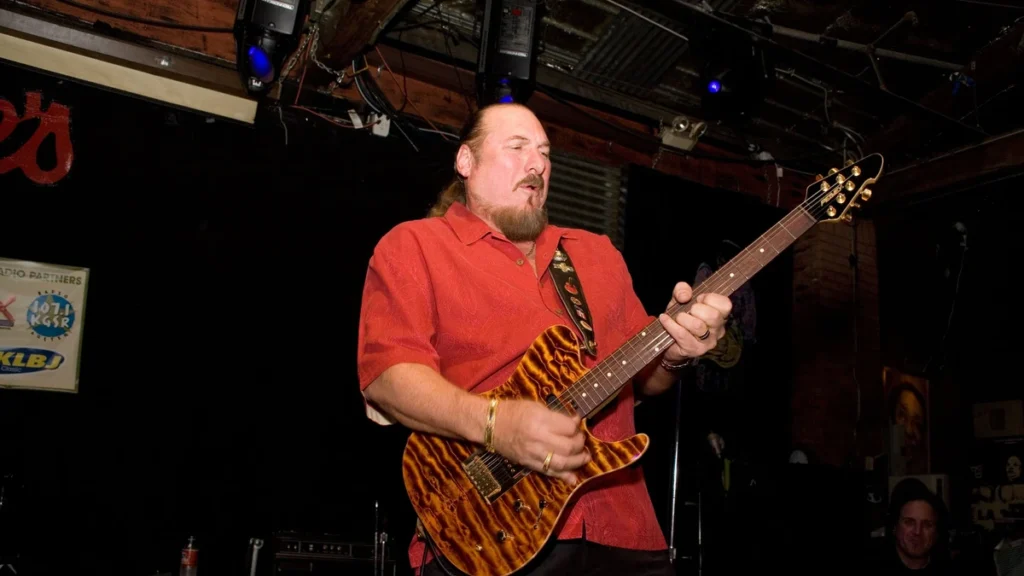
Watching The Tide arrived on 28 August through Provogue Records, on CD, LP and digital, credited to Steve Cropper & The Midnight Hour. It runs to twelve tracks and it is the last studio album Steve Cropper finished before his death on 3 December 2025.
The thing worth knowing before pressing play is on track three. Brian May wrote the lyrics to “My Angels Are Calling” from Cropper’s perspective, and sings them himself.
The Record He Was Determined to Make
Most people assumed the Grammy-nominated Friendlytown, from 2024, would close the catalogue. Cropper had other ideas.
“Making music was Steve’s greatest joy,” longtime collaborator, songwriter and producer Jon Tiven told The Blues Magazine. “He was energized by Friendlytown and was determined to make another record.” Sessions took place at RCA Studio C in Nashville, where Cropper is reported to have stayed sharp and fully engaged throughout.
This is a posthumous release only in the narrow sense that it came out after he died. He played on it, finished it and signed it off.
Brian May Wrote Lyrics From Cropper’s Perspective
“My Angels Are Calling” opens with ocean sounds, then May’s vocal. He wrote the words as if he were Cropper, which is an unusual thing to attempt and an unusually direct one.
“I’m here to thank you Lord for taking me on board; I been a lucky man,” he sings, and later, “but now my angels are calling, my angels are calling me home. My angels are calling to bring me back where I belong.” Billy Gibbons plays on the same track.
Writing a farewell in someone else’s voice could easily have gone wrong. Reviewing the album for Blues Rock Review, Moe Moore called it “a beautiful piece, especially considering the circumstances”, and said it deserves an audience beyond people who already knew Cropper’s work.
Clapton Opens the Guest List
The first single, “Ticket First”, features Eric Clapton and came out ahead of the album. Tiven says Clapton recorded eleven takes of it in Nashville.
Its origin is a joke Cropper used to tell, about a woman who rubs a magic lamp and asks the genie to let her win the lottery. The genie tells her she needs a ticket first. Roger C. Reale sings the payoff line: “If you want to win the prize, you got to get a ticket first.”
Ronnie Wood adds slide guitar to “Until Now”, a blues rocker with Reale again on lead. Gibbons returns alongside vocalist Ana Grosh on “Stand Right Here”.
Twelve Tracks, and Two Titles That Point Backwards
The tracklist runs: “Tandoori Chicken”, “Ticket First” featuring Eric Clapton, “My Angels Are Calling” featuring Brian May and Billy F. Gibbons, “Until Now” featuring Ronnie Wood, “Blood From A Stone”, “Here & Gone” featuring Ana Grosh, “It’s Gonna Get Worse”, “Down & Out”, “Stand Right Here” featuring Billy F. Gibbons and Ana Grosh, “Tipoff To The Ripoff”, “House Of Cards” and “Tandoori Chicken Part 2”.
Both names on the sleeve are self-references. The album title comes from a lyric in “(Sittin’ On) The Dock Of The Bay”, which Cropper co-wrote with Otis Redding. The band name comes from “In The Midnight Hour”, which he co-wrote with Wilson Pickett.
A record that opens and closes on two parts of the same instrumental, and takes its title from a song about watching time pass, is not accidentally structured.
Who Actually Plays on It
The Midnight Hour is Cropper on guitar, Jon Tiven on keyboards, bass, saxophone and vocals, Roger C. Reale on lead vocals, Ana Grosh on vocals, Nioshi Jackson on drums and percussion, and Eddie Gore on keyboards and percussion. The four guests appear across four tracks.
It is worth stating who the bandleader was, because the guest list can make a record like this sound like a tribute assembled around an absence. Cropper was born in Dora, Missouri, moved to Memphis at nine and got his first guitar at fourteen. He was an early member of the Royal Spades, who became The Mar-Keys, and then a founding member of Booker T. & the M.G.’s, the Stax Records house band. He played in the Blues Brothers Band.
His co-writes include “Sittin’ on the Dock of the Bay”, “Green Onions”, “In the Midnight Hour” and “Knock on Wood”. He took seven Grammy nominations and won twice, entered the Songwriters Hall of Fame in 2005 and the Nashville Songwriters Hall of Fame in 2010, and sits 36th on Rolling Stone’s list of the 100 greatest guitarists. Keith Richards summarised him in two words: “Perfect, man.”
Where the Playing Came From
Cropper’s style was formed in Memphis rather than in the Delta, and the distinction shows up in what he does not play. He arrived in the city at nine and was exposed to a great deal of Black gospel music, which Blues Rock Review identifies as the formative influence on his playing. His named guitar influences were Chuck Berry, Chet Atkins, Lowman Pauling and Jimmy Reed, which is a short list covering rock and roll, country fingerstyle, gospel-schooled R&B and downhome blues in four names.
What came out of that combination was a player who served the song. The records his parts sit on are famous for their restraint: the guitar arrives, states something small and gets out of the way of the vocal. That is a producer’s instinct as much as a guitarist’s, and Cropper was both, plus an engineer and a songwriter, which is why his catalogue is so much larger than his solo discography suggests.
It is a useful frame for this album, because a record with Clapton, May, Gibbons and Wood on it could easily have become a guitar exhibition. It does not. The guests appear across four of the twelve tracks and each is given a defined job: Clapton a blues lead, Gibbons a texture, Wood a slide part, May a lyric and a vocal. Reviewing it, Moore described the set as twelve tracks of masterfully performed and recorded music and singled out the band itself, not the visitors, for doing an outstanding job.
For a first listen, “Ticket First” and “Until Now” are the two that move; “My Angels Are Calling” is the one to sit with.
He Heard It, and He Called It His Best
Cropper was in hospital when Tiven brought him a copy. According to Tiven, he phoned the night before he died to say how much he loved the recording, and that it was the best record he had ever made.
That is a large claim from a man who played on “Green Onions”. It is also the only review of this album that carries any real authority, and it is worth taking at face value rather than treating as sentiment: he had heard the mixes, he knew the catalogue he was measuring it against, and he made the call himself.
Whether a listener agrees matters less than what the sequence documents. A guitarist in his eighties, energised by one late record, went back in and made another with friends who flew in to play on it, then got to hear it finished.
Blues Rock Review’s Moore notes the obvious caveat: this is the last release under the name unless unreleased recordings surface, which, given how productive Cropper was, would surprise nobody.
For anyone tracking what is out this season, it lands in an unusually crowded week for the genre. The same 28 August date brought new records from Danielle Nicole, Kevin Burt and Heather Anne Lomax, a fiftieth-anniversary Antone’s tribute and the first Alabama Shakes album in eleven years, all listed on The Blues Magazine’s 2026 release calendar. Watching The Tide is the one with a full stop at the end of it.
About The Author