Mannheim Steamroller Sends Two Ensembles Out at Once
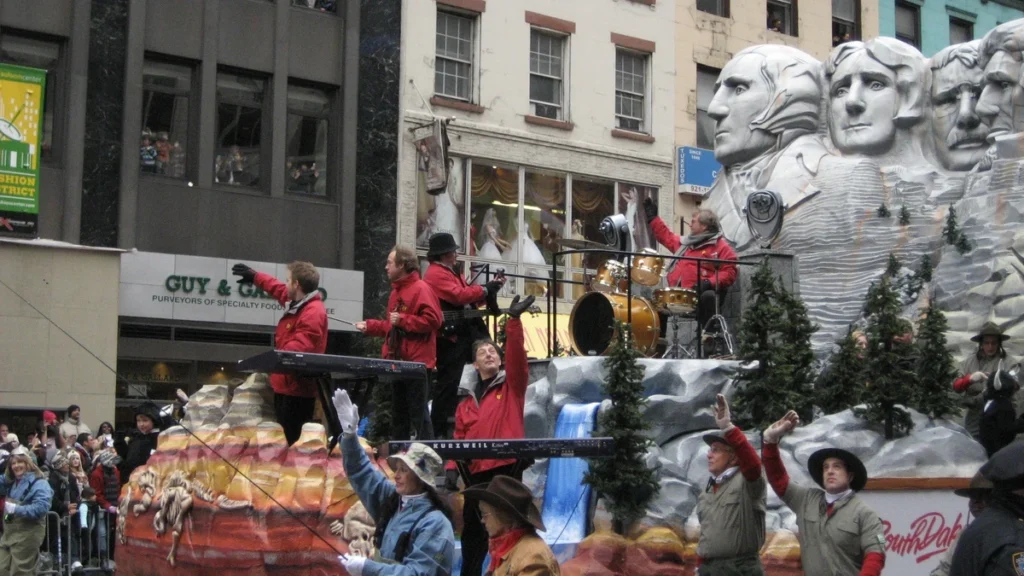
Mannheim Steamroller performing on a parade float.
Mannheim Steamroller performing on a parade float.
Mannheim Steamroller runs its annual Christmas tour from 11 November to 30 December, using two separate travelling ensembles.
That allows two cities to be played on the same night.
Two Units on the Road
Sending out two ensembles under one name is the central fact about this operation and the reason it can do what it does.
A single touring group is limited by geography and by the calendar, which for holiday music means roughly seven weeks and one city a night.
Two units roughly double that, which turns a tour into something closer to a distributed annual event.
It also means the show has to be reproducible by musicians who are not interchangeable in any other sense, which is a genuine production discipline.
How the Format Works
Running parallel companies is standard in theatre and almost unknown in music.
A touring musical will have several productions running simultaneously, all working from the same score, staging and lighting plot, with different casts.
Applying that model to a concert requires treating the show as a fixed piece rather than as a performance that varies nightly, which is a decision with real artistic consequences.
Seven Weeks and Then Nothing
The run ends on 30 December, and there is no possibility of extension.
Every holiday act works inside the same wall: the audience for this material disappears completely within days of Christmas, and no amount of demand changes that.
Finishing on 30 December rather than the 23rd is itself notable, since it means playing the strange dead week when most touring has stopped.
Opening in Florida
The run opens at a theatre in St. Petersburg on 11 November before dates in Daytona Beach, Jacksonville and West Palm Beach.
Starting a Christmas tour in Florida in mid-November is counterintuitive and entirely practical, since the state has an enormous audience for this kind of programming and no weather risk.
It also allows the two ensembles to work through the southeast before the northern dates, which are the ones a snowstorm can cancel.
A Retirement Community With Two Shows
The first week includes two performances on the same day at a performing arts centre in a large Florida retirement community.
Booking two shows in one day in one venue is a demand signal that has nothing to do with the size of the surrounding city.
Communities of that kind are among the most reliable markets in American touring and are almost never discussed as such.
Old Theatres in the Routing
The Atlanta date is at the Fox Theatre, a restored cinema palace from the 1920s.
Rooms of that vintage are the natural home for this material, which was written for an ensemble sound rather than for amplification at volume.
They also carry an association with a particular kind of evening, which for a Christmas show is doing part of the work before anybody plays a note.
Where the Franchise Started
The group’s founder has said the first Christmas album came out in 1984 and the first tour followed, at a point when the idea was not taken seriously.
His account is that people told him focusing on Christmas simply would not work as a business.
Four decades later the annual run is among the longest continuously operating tours in American music, which is a fairly complete rebuttal.
Why Nobody Believed It Would Work
The scepticism made sense at the time, because the holiday album was then understood as a novelty product.
Christmas records were made cheaply, sold for a few weeks, and were not expected to sustain anything, let alone a touring career.
What changed the arithmetic was durability: a seasonal record that returns every year eventually outsells a conventional one, and a tour that repeats annually builds an audience that plans around it.
Instrumental Music at Christmas
The group’s material is largely instrumental, which distinguishes it from almost everything else in the seasonal market.
Christmas music is overwhelmingly vocal, because the songs are known by their words and audiences want to sing along.
An instrumental approach removes that, and it substitutes arrangement and texture, which is a harder sell and a more durable one once it lands.
Synthesisers and Early Music
The sound combines electronic keyboards with instruments and forms drawn from much older European music.
That combination was unusual when it started and remains identifiable, which is the single most valuable thing a seasonal act can have.
Distinctiveness matters more here than in any other genre, because the songs are shared and the arrangement is the only thing that belongs to the performer.
An Independent Label From Nebraska
The recordings have come out through a label the founder established himself, based in Omaha rather than in any music industry centre.
Artist-owned labels rarely sustain a catalogue at this scale, and the ones that do are almost always built on a product with predictable annual demand.
Seasonal music is close to the ideal case, since the sales are forecastable to a degree nothing else in music approaches.
A Tour That Books Itself
Regional theatres programme these dates a year or more ahead, and they compete for them.
A December show that reliably sells is worth a substantial share of a small venue’s annual revenue, which gives a long-running holiday act unusual leverage.
That is why the routing can include markets that would not otherwise support a national tour.
What Happens When the Founder Is Not There
With two ensembles working simultaneously, the founder cannot be on both stages.
The same question applies to any touring franchise built on a name, and the answers are always some version of the same one: the show is the product and the name is the guarantee.
Audiences generally accept this provided the performance is good, and generally resent it if they were led to expect otherwise.
The Economics of Running Two Companies
Doubling the ensembles does not double the cost, and understanding why explains why more acts do not do it.
The expensive part of a production is designing it: the arrangements, the staging, the lighting design, the visual content. That cost is paid once regardless of how many companies perform it.
What doubles is the variable cost, which is musicians, crew, transport and accommodation. For an instrumental ensemble playing seated theatres, those numbers are manageable.
The reason it remains rare is that almost no act has a show that survives the separation of the performance from the performer. Most touring music is sold on the person, and a second company with different people is simply a different concert.
Forty Years of the Same Seven Weeks
An annual tour running four decades produces something no other format in music generates.
People attend it as children and return with their own children, which converts a concert into an inherited habit. Venues report the same families booking the same seats across generations.
That is a business built on repetition rather than novelty, and it is almost immune to the things that end other careers: chart position, radio, critical standing, a bad album.
What it is vulnerable to is the thing every institution is vulnerable to, which is succession, and that question sits underneath a tour that now needs two ensembles to cover it.
What Is Actually Being Tested
Two things. Whether a show designed to be performed by two separate ensembles is still a concert or has become a production.
And whether an annual event four decades old passes to a second generation of players and audiences, which is the only question a tour this established has left.
Two ensembles, seven weeks, one calendar that closes on 25 December, and a first album from 1984.
About The Author