Cinematic

Brian Tyler Built the Mario Galaxy Score From Game Themes

Brian Tyler Built the Mario Galaxy Score From Game Themes

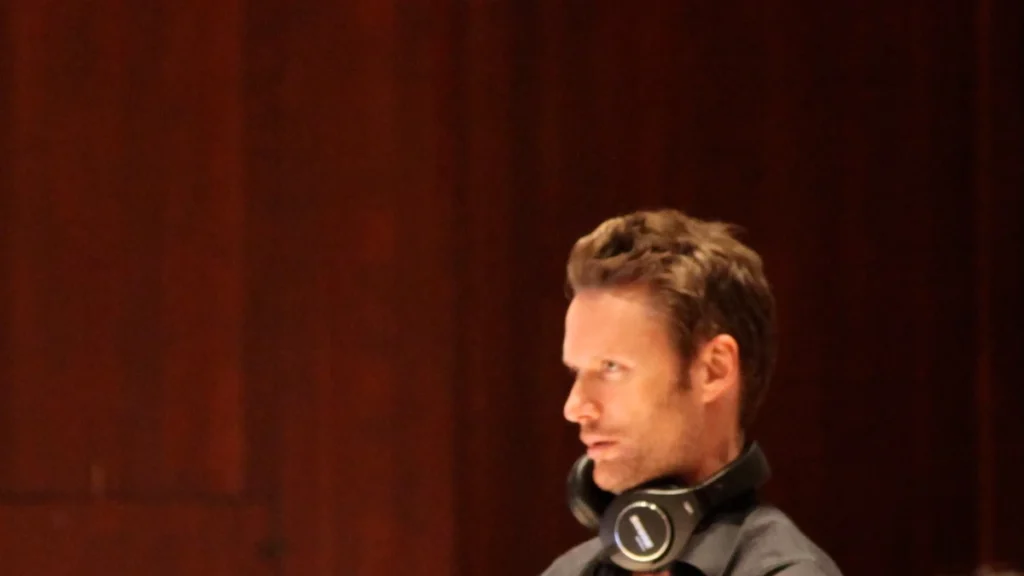
Brian Tyler at a scoring session.

Brian Tyler built the score for this year's Mario film almost entirely from music written for the games rather than composing it fresh.

The composer of that original music returned as consultant.

Adapting Rather Than Composing

The distinction matters, because a score assembled from existing themes is a different job from writing one.

What it involves is arrangement, development and structure: taking material written in short loops for interactive play and turning it into music that follows a narrative.

Game themes are built to repeat indefinitely without becoming irritating, which is close to the opposite of what a film cue needs.

Converting one into the other requires deciding where a loop becomes a phrase, and what happens when it has to end.

Why Game Music Loops

The structural difference is worth stating plainly, because it explains most of the adaptation problem.

A player might spend forty seconds in a level or forty minutes, and the music has to work for both. That forces composition into cycles with no natural ending and no dramatic arc.

Film music has the opposite constraint: a cue lasts exactly as long as the scene and must arrive somewhere by the end of it.

The Original Composer as Consultant

Koji Kondo, who wrote much of the source material, returned in a consulting role rather than as co-composer.

That arrangement is unusual and it says something about how the material is regarded, since the themes are treated as a repertoire with an author rather than as assets to be licensed.

Consultants on scores have limited formal authority and considerable practical influence, since a note from the person who wrote the tune is difficult to ignore.

Two Decades of Source Material

The album draws on themes from the two Super Mario Galaxy games and from other titles in the series.

Those games are themselves notable for their music, having used a live orchestra at a point when the platform was not expected to support one.

Adapting orchestral game music for an orchestral film score is therefore less of a translation than it sounds, since the material was already written for those forces.

Themes From Another Series

Material from the Star Fox series also appears, which is a crossover most of the audience will notice immediately.

Nintendo's catalogue functions as a shared musical universe in a way few franchises manage, with themes that carry recognition across unrelated titles.

Using one series' music inside another film is a fan-facing decision that costs nothing musically and returns a great deal in the room.

Twenty-Four Tracks

The album runs to twenty-four tracks and roughly eighty-seven minutes, which is long for a film soundtrack.

Animated features tend to be wall-to-wall scored, with very few unscored minutes, which produces far more music than a live-action film of the same length.

That makes the album closer to a complete score release than the selective ones most films get.

Two Labels on the Release

The soundtrack came out through a studio label alongside a specialist reissue house, which is an unusual pairing.

The specialist partner brings physical formats and the audience that buys them, which for game music is substantial and not served by streaming alone.

That partnership reflects a market in which game and game-adjacent music sells physical copies at rates most film scores no longer reach.

Returning From the Previous Film

He also scored the previous film in the series, which gives this one continuity most franchises do not manage.

Studios routinely change composers between instalments, usually because of scheduling rather than dissatisfaction, and the results are audibly inconsistent.

Keeping the same composer allows themes established in one film to be developed rather than restated in the next.

Less Licensed Music This Time

Reviewers noted that this film leans far more heavily on the game music than its predecessor, which used a substantial amount of licensed pop.

Licensed songs in family films are a marketing device as much as a creative one, since a recognisable track sells a trailer.

Reducing them in favour of the source material is a decision to trust the audience's attachment to the games, which is a reasonable bet with this particular property.

Writing It From Hospital

Tyler has said in an interview that he wrote most of the score from hospital after a health emergency during production.

Film scoring schedules are unforgiving and largely immovable, since a release date is fixed long before the music is written.

What that produces is a profession where working through circumstances that would stop most jobs is treated as normal, which is worth noticing rather than admiring.

Game Music as a Repertoire

Music written for games is increasingly treated as a body of work rather than as a functional component.

Concert tours of game scores sell out large halls, the albums chart, and a generation of listeners has the same relationship to these themes that earlier ones had to film music.

Adapting them for cinema is the point at which that repertoire enters a form with more cultural prestige, which is a transfer that has happened before in the other direction.

Nintendo and the Melody

The specific reason this material adapts well is that it is melodic in a way most contemporary scoring is not.

Game music from that era had to be memorable on limited hardware, which forced composers to write actual tunes rather than textures.

Themes built that way survive orchestration, reharmonisation and tempo changes, because there is something underneath to hold on to.

The Constraint of Recognition

An adaptation score carries a burden an original score does not, which is that the audience already knows the material.

Deviating too far produces complaints from the people most likely to buy a ticket, and staying too close produces music that could have been taken directly from the game.

The workable position is usually to state the theme recognisably early and then develop it, which gives both audiences what they came for in sequence rather than in competition.

Orchestrating a Loop

The technical work involved in this kind of score deserves more description than it usually gets.

A game theme arrives as a fixed arrangement, frequently sixteen or thirty-two bars, designed to be seamless at the join. The first task is deciding which four bars actually carry the identity, because that fragment is what the audience recognises.

Everything else can then be rebuilt. The fragment becomes a motif that can be stated by a solo instrument, buried in an inner voice, inverted under a dramatic scene, or brought back in full at the end.

Done well, an audience hears a familiar tune three or four times without noticing that only one of those was the original arrangement. Done badly, it is a medley.

Why Studios Hire the Same Composer Twice

Franchise continuity in scoring is worth more than studios historically believed.

A returning composer arrives with the thematic material already established, meaning the second film can begin developing ideas rather than introducing them, which is a genuine saving in a compressed schedule.

It also protects the property. Themes are among the most durable assets a franchise has, and handing them to a new composer every three years erodes them.

The counter-argument is stagnation, and it is real. Series that keep one composer across five films frequently sound like it by the fourth.

What Is Actually Being Tested

Two things. Whether a score built from existing themes counts as composition or as arrangement, which is a question the credits do not settle.

And whether treating game music as a repertoire worth adapting properly, rather than as nostalgia to be quoted, produces a better film score.

Twenty-four tracks, two decades of source material, one consultant who wrote most of it, and eighty-seven minutes of music.
Kris Bowers Reunited With Reinaldo Marcus Green on Punisher

Kris Bowers Reunited With Reinaldo Marcus Green on Punisher

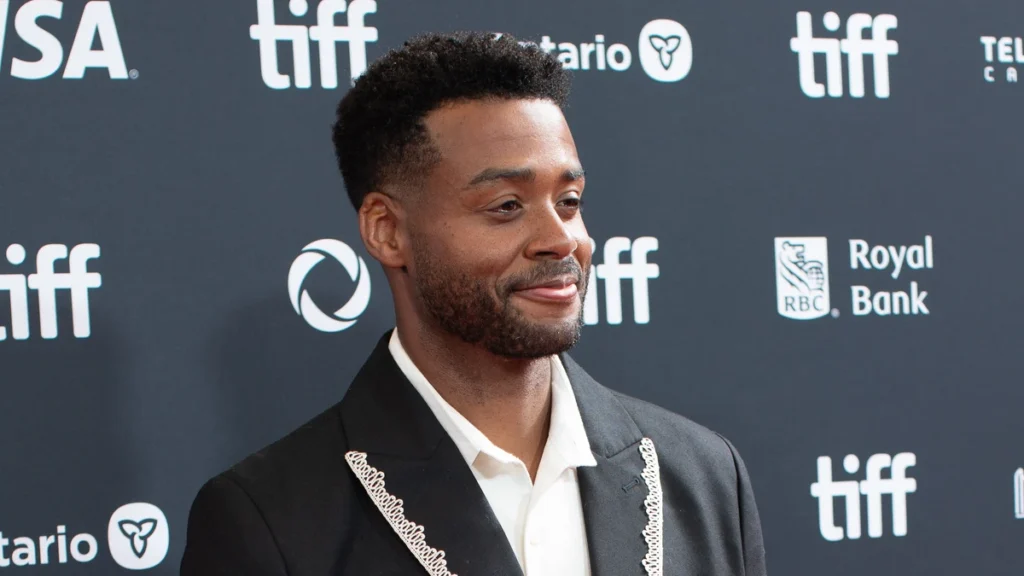
Kris Bowers at the Toronto International Film Festival in 2024.

Kris Bowers scored a Marvel special that premiered in May, working again with a director he has now collaborated with repeatedly.

A separate score of his had been released three months earlier on an entirely different label.

The Composer and Director Relationship

The most durable working relationships in film music are between a composer and one director, and they are less common than the famous examples suggest.

What they produce is efficiency. A director who has worked with the same composer four or five times does not need to explain what a scene requires, because the vocabulary already exists.

They also produce risk. A composer identified with one filmmaker can find it difficult to be considered for anything that does not resemble that filmmaker's work.

The relationship here spans sports drama, documentary-adjacent biography, television and now a comic book property, which is a wider spread than most such partnerships manage.

Scoring a Comic Book Property

Marvel scores have a reputation for anonymity, and it is largely deserved.

The standard criticism is that the music is written to be unnoticed, that the themes are interchangeable between films, and that nobody could hum one afterwards.

A composer arriving from character-driven drama has a different set of instincts, which is presumably why he was hired.

A Character Who Has Been Scored Before

The character has appeared across several previous productions with different composers each time.

That creates a specific problem: an audience arrives with an existing musical association, and a new composer must decide whether to acknowledge it or ignore it.

Ignoring it is usually the better choice artistically and the harder one commercially, since fans notice the absence of a theme they expected.

Two Labels in One Year

The two scores came out through entirely separate label systems, one attached to a studio and one to a classical imprint.

Studio-owned soundtrack labels exist to service their own films and rarely release anything else, which means a composer working across studios ends up with a catalogue scattered across imprints.

That fragmentation is invisible to listeners and significant to composers, since it determines how a body of work is presented and whether it can be collected at all.

Songs and Score as Separate Albums

The February film released its songs a week before its score, as two distinct albums.

This has become standard practice for films carrying both, and the logic is commercial: songs reach playlists and radio, scores reach a smaller and more specific audience.

Combining them produces an album that serves neither, which is why almost nobody does it any more.

A Score Album Is Not the Film

Releasing a score as an album requires rebuilding it, since the cues as written are frequently thirty seconds long and end abruptly.

Album versions are assembled by combining related cues, extending endings and occasionally rerecording material so it holds together without picture.

That work is done by the composer after the film is finished, and it is the reason score albums are frequently better listening than the score is in the film.

Three Months Between Releases

February and May is a short gap, and it reflects how film scoring schedules actually work.

Composers work on several projects simultaneously at different stages, since a score is written in a compressed window near the end of post-production.

Two releases three months apart usually means the writing happened months earlier and much closer together than the release dates suggest.

A Pianist Before a Composer

He came to scoring from jazz piano rather than from the orchestral tradition, which is audible in the writing.

Jazz-trained composers tend to voice chords differently, use more harmonic movement in quiet passages, and write piano parts that a session player cannot simply read down.

They also tend to play on their own scores, which changes the recording process and generally produces a more personal result.

The Strings Question

Contemporary film scoring runs on strings, and the reason is practical rather than aesthetic.

A string section can sustain, swell, disappear and return without drawing attention, which is exactly what underscore requires.

What separates composers within that constraint is what they do with the rest of the orchestra, and how often they are willing to let the strings stop entirely.

Television and Film Together

His work has moved between features and television, which was once a career distinction and is now barely one.

Prestige television scoring pays comparably, runs longer and offers more material, since a season contains several times the music of a feature.

What it does not offer is the concentrated attention a film score receives, which is why composers still take features that pay less.

Documentary Work

He has also worked in documentary, which is a genuinely different discipline from dramatic scoring.

Documentary music has to avoid telling the audience what to feel about material that is presented as factual, which rules out most of the techniques dramatic scoring depends on.

Composers who do both frequently describe documentary as the harder job, precisely because the obvious tools are unavailable.

Streaming Premieres and Score Releases

The May project premiered on a streaming service rather than in cinemas, which changes the soundtrack release calculus.

A cinema release gives a score a fixed opening weekend to build around. A streaming premiere has no equivalent moment, and the album arrives into a much flatter attention curve.

Releasing three days after the premiere rather than on the same day is a small acknowledgement of that, giving the film a head start.

Why Directors Keep the Same Composer

The practical reasons are more interesting than the sentimental ones.

Scoring happens under extreme time pressure at the end of a production, when the budget is spent and the release date is fixed. A director who has to explain their intentions from scratch is losing days they do not have.

A returning composer also knows how a particular director cuts, which matters enormously, since music has to fit an edit that is still changing while the score is being written.

What the director gives up is surprise. A composer who knows exactly what is wanted will deliver it, and occasionally the more useful outcome is somebody delivering something nobody asked for.

The Anonymity Problem

Franchise scoring has a structural difficulty that no individual composer can solve.

The music has to sound consistent with everything else in the franchise, support action sequences cut before the score exists, and survive being mixed under dialogue and effects at low volume.

Those constraints push every composer toward the same solutions, which is why so much of it sounds alike regardless of who wrote it.

The composers who escape it generally do so in the quiet scenes, where the constraints loosen and there is room for actual writing. That is where a distinctive voice becomes audible, and it is usually about four minutes of a two-hour film.

What Is Actually Being Tested

Two things. Whether a composer known for character drama can bring anything distinguishable to a franchise built on established musical conventions.

And whether a director and composer partnership that has already crossed several genres holds up in the one where the studio has the most opinions.

Two scores, two label systems, three months apart, and one director he has now worked with more than anyone else.

Hans Zimmer Is Running Three Separate Tours This Year

Hans Zimmer Is Running Three Separate Tours This Year

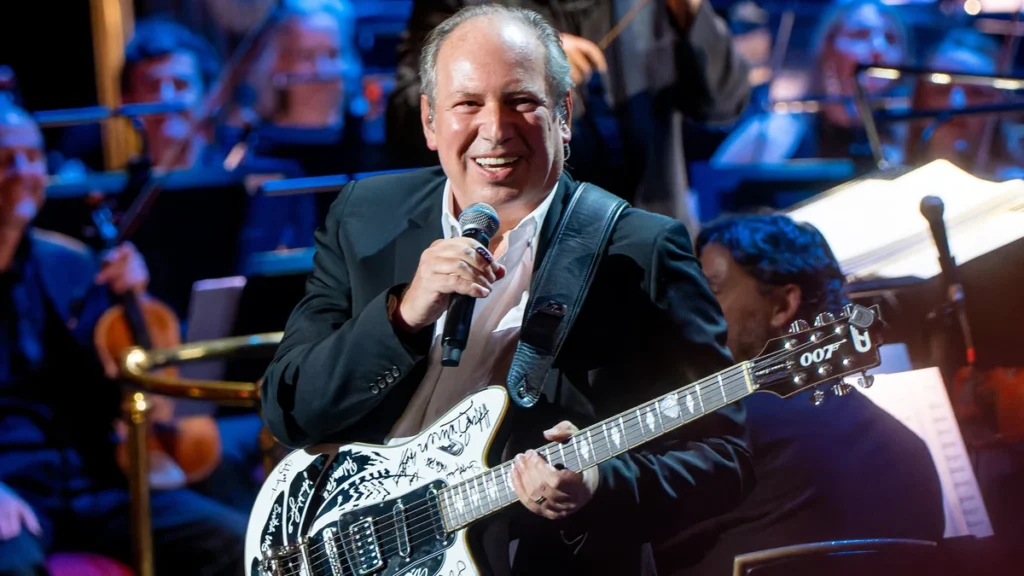
Hans Zimmer performing with an orchestra in 2022.

Hans Zimmer has three separate productions touring under his name this year, and he appears on stage in only one of them.

The others run with an orchestra, soloists and his name on the poster.

Three Shows at Once

Running three touring productions simultaneously is not something composers do, and it is barely something bands do.

A conventional artist tours one show, because there is one of them and the show is built around their presence.

Detaching two of the three from the person named on the ticket turns a tour into a format, which can be staged in several countries at the same time.

That is a structural difference from how live music normally works, and it is the reason this operation has the scale it does.

The One He Plays In

Hans Zimmer Live is the production he performs in, and it reached Asia and Australia before returning to European arenas.

It runs to roughly three hours, which is long for any concert and extremely long for orchestral material.

Zimmer appears in it as a bandleader rather than as a conductor, playing keyboards and guitar in what is closer to a rock configuration than an orchestral one.

The Two He Only Curates

The other two productions carry his name and his music without him being present.

He functions as musical director and curator, which means selecting the repertoire, approving the arrangements and shaping how the evening is structured.

That is a real creative role and it is also, unavoidably, a licensing arrangement, since the show exists to sell tickets on a name that is not in the building.

Forty Concerts From Luxembourg

The immersive symphony production opened on 6 March in Luxembourg and runs to close to forty concerts.

The routing covers Luxembourg, France, Austria, Germany and Switzerland, which is a tight geographical cluster rather than a continental tour.

Dense routing of that kind is what makes a forty-date run of a large production financially possible, because the travel between dates is measured in hours rather than days.

The Orchestra on Stage

The European production is performed by the Odesa Orchestra and Friends alongside soloists from Zimmer's own ensemble.

Touring orchestras assembled for a specific production are a distinct part of the live industry, and they work differently from resident symphony orchestras.

A resident orchestra plays a season in one hall. A touring one plays the same programme forty times, which produces a very different kind of ensemble.

Twenty-Four American Arenas

The arena production brings twenty-four North American dates from September, ahead of European arena dates in October.

Arena-scale orchestral touring is a relatively recent development and it depends entirely on production values, since the acoustics are hostile and the sightlines are poor.

What sells those rooms is the visual staging as much as the music, which is why these shows are described in terms of dimension and immersion rather than repertoire.

The Repertoire Is the Draw

The programmes are built from scores for films that were enormously successful, and the audience arrives knowing every cue.

That is a completely different relationship from a classical concert, where a substantial part of the audience is hearing a work for the first time.

Film music concerts operate more like a greatest-hits set, with the recognition of each theme forming part of the event.

Why Film Scores Fill Arenas

The commercial logic is straightforward once stated. Hundreds of millions of people have heard this music, and almost none of them think of themselves as classical listeners.

An orchestral concert marketed as classical reaches an audience of a certain size and a certain age. The same orchestra playing film music reaches a different one entirely.

That is not a small distinction for the orchestral world, which has spent decades trying and failing to find new audiences by other means.

What Gets Lost Without Picture

Film music was written to accompany images, and removing the images changes what the music is doing.

A cue built to underscore tension has a shape determined by the scene rather than by musical logic, and played alone it can feel like it is waiting for something.

Concert versions therefore have to be rearranged, usually by combining several cues into a suite with a beginning and an end, which is a compositional job in itself.

The Composer as a Brand

Very few film composers are known by name to general audiences, and a name that can sell an arena without the person attending is rarer still.

What produced that recognition was a run of scores for films with enormous audiences, combined with a sound distinctive enough to be identified without credits.

The result is a name that functions commercially the way a band name does, which is why two shows can tour on it while he is elsewhere.

Zimmer's Route Into Film

He came into scoring from popular music rather than from a conservatory, which is unusual for a composer at this level and audible throughout the work.

The approach relies heavily on synthesis, on ostinato patterns rather than developed melody, and on treating the orchestra as one texture among several.

That method has been enormously influential and enormously criticised, largely by people who prefer the tradition it displaced.

A Talent Factory

His operation has functioned for decades as a training ground, with a substantial number of working film composers having come through it.

That structure resembles a workshop more than a studio, with senior figures overseeing multiple projects and junior composers doing a great deal of the writing.

It is how film music has actually been produced for a long time, and it is discussed far less often than the single credited name on a poster suggests.

Three Productions and the Risk of Saturation

The obvious hazard is dilution, since three shows drawing on the same repertoire in the same year compete with each other.

The mitigation is geography and staging: different territories, different scales, different visual concepts around a largely shared catalogue.

Whether an audience distinguishes between them is the open question, and it is the one that determines how long this model lasts.

How a Show Tours Without Its Artist

The mechanics of a touring production built on an absent name are worth understanding, because they are increasingly common.

The production is assembled once, with arrangements, staging, lighting and visual content locked in place. A musical director rehearses the ensemble against that fixed template, and the show is then reproducible by any competent orchestra.

What the named artist supplies is the repertoire, the approvals and the reputation. What the production supplies is everything else, and the two are contractually separable in a way a rock tour is not.

The model has been used for decades by orchestral pops programmes and by tribute productions. What is new is a living composer operating it on his own catalogue, at arena scale, while simultaneously touring a show he does appear in.

What This Means for Orchestras

Film music touring has become a significant employer of orchestral musicians, and the implications are mixed.

It provides steady, well-paid work in a field where steady work is scarce, and it puts orchestral playing in front of audiences who would never buy a symphony ticket.

The criticism from inside the profession is that it is repetitive work with limited artistic development, playing the same forty-concert programme rather than a varied season.

Both things are true, and most musicians who do it describe it in exactly those terms: good money, real audiences, and a programme they could play in their sleep by the twentieth date.

What Is Actually Being Tested

Two things. Whether three concurrent productions on one catalogue expand the audience or divide it.

And whether a show that tours successfully without the composer present has proved that the name is the product, which is a conclusion with implications well beyond film music.

Three productions, one composer, forty European concerts, twenty-four American arenas, and one stage he actually stands on.

Damon Albarn on stage with arms outstretched under blue light

Gorillaz Brought Six Late Collaborators Onto an Album About Death

Six of the voices on the ninth Gorillaz album belong to people who are dead. That is not an accident of the archive; it is the record's subject.

The Mountain — its title written in Devanagari as पर्वत — came out on 27 February through Kong, the band's own label, distributed by the Sony subsidiary The Orchard. It runs sixty-six minutes and twenty-two seconds and is the first Gorillaz album released without Parlophone.

An Album Made After Two Deaths

The premise is not a conceit. Damon Albarn and Jamie Hewlett each lost a close family member before the band travelled to India to make the record, and both have described the result as a cohesive conceptual work about death and the afterlife, told through the band's fictional characters.

The liner notes make the dedication explicit. It is inscribed to both men's late fathers, to Hewlett's late mother-in-law Amo, and to twelve past Gorillaz collaborators: Lou Reed, Ibrahim Ferrer, Dennis Hopper, Proof, Mark E. Smith, Tony Allen, Bobby Womack, David Jolicoeur, Ike Turner, Terry Hall, MF Doom and Craig Duffy.

That list is a quiet argument for how long the project has run. A band twenty-five years old has outlived a substantial share of the people who passed through it, and a record about death made by that band has an unusually deep bench of ghosts to draw on.

Six of them appear on the album itself. Dennis Hopper, Bobby Womack, David Jolicoeur of De La Soul, Tony Allen, Proof and Mark E. Smith all feature posthumously, which explains why the recording credits list sessions from 2001 to 2010 alongside 2024 and 2025.

Using Archival Vocals Is a Choice, Not a Trick

Posthumous appearances have become contentious, largely because the technology now exists to synthesise a voice that never said the words. That is not what is happening here.

These are recordings the collaborators actually made, in sessions they attended, across the band's first three albums and the years around them. Using them on a record explicitly about the afterlife turns the archive into the argument rather than into a novelty.

It is also the only version of the idea that survives scrutiny. A song about the dead assembled from things the dead genuinely said has a claim to sincerity; the same song built from a model does not.

The living guest list is no less wide: Asha Bhosle, Asha Puthli, Anoushka Shankar, Black Thought, Idles, Johnny Marr, Sparks, Omar Souleyman, Trueno and Yasiin Bey. Two generations of Indian classical and playback singing sit alongside British guitar bands, American rap and Syrian dabke.

Recorded in Fourteen Places, Sung in Six Languages

The location list reads like an itinerary rather than a credit. Sessions took place at Studio 13 in London and Devon, Island City in Mumbai, 5020 and Criteria in Miami, and Sparks Studio in Los Angeles — and also in Jaipur, Rishikesh, New Delhi, Amritsar, Haridwar, at the Amber Fort in Rajasthan, on the ghats at Varanasi, in Ashgabat in Turkmenistan, in Damascus and in New York.

The performances are in English, Spanish, Arabic, Hindi, Yoruba and Russian, and the album draws heavily on Indian classical instrumentation alongside the band's electronic and pop habits.

Recording at the ghats at Varanasi is the detail that ties the method to the theme. They are the cremation grounds on the Ganges where Hindu funeral rites are performed, and taking a record about death there is a decision about place rather than about sound.

The title came from the same trip. Albarn and Hewlett took it from their first visit to the Amber Fort in Jaipur, and from a mountain they had seen in western China while making the opera Monkey: Journey to the West.

Six languages on one record is a harder proposition than a long guest list suggests. A listener will understand at most two of them, so the majority of the vocal material has to work as sound and delivery rather than as text — which is closer to how instrumental music operates than to how pop usually does.

The production team was assembled to match. Albarn worked with Remi Kabaka Jr., James Ford, Samuel Egglenton and the Argentine producer Bizarrap, which is a set of hands spanning British indie production, Gorillaz's own long-standing engine room, and Latin American electronic music.

They Played It Live Before Anyone Had Heard It

The reveal was unusual even by this band's standards. On 3 September 2025 the album was performed in full as the final "mystery show" of four staged around Gorillaz's twenty-fifth anniversary exhibition, House of Kong, in London.

The other three shows were complete performances of Gorillaz, Demon Days and Plastic Beach — the three albums the archival vocals largely come from. Playing the back catalogue and then the new record in sequence made the connection audible before it was explained.

Eight days later the band announced the album formally, with title, artwork, an original release date of 20 March 2026 and the lead single "The Happy Dictator". Four more singles followed: "The Manifesto" in October, "The God of Lying" in November, "Damascus" in December and the double A-side "The Hardest Thing" / "Orange County" in January.

The date was then brought forward to 27 February, three weeks earlier than announced — the opposite of the usual direction of travel for a record of this scale.

Hewlett Wants You to Sit Through It

The band have been direct about how they expect the album to be used. Listeners are "supposed to listen to it from beginning to end", Hewlett said, describing an attempt to "bring back that idea of taking time to invest in something, instead of this culture of scrolling".

That is a large ask for sixty-six minutes, and it is the one part of the project the format works against. Our piece on what a new classical recording is competing with covers the same attention problem from the other end of the catalogue.

It is also consistent with everything else about the record. An album sequenced as a single argument about mortality, carrying voices from across twenty-five years, does not survive being sampled one track at a time.

The chart result suggests enough people accepted the terms. The Mountain entered the UK Albums Chart at number one — the band's third UK chart-topper — and reached number seven on the Billboard 200, with what has been described as widespread critical acclaim for its thematic ambition and stylistic cohesion.

Leaving Parlophone Was the Practical Decision

Underneath the concept sits a structural change. This is the first Gorillaz album not released through Parlophone, arriving instead on Kong with distribution handled by The Orchard.

A distribution deal is not a record deal. The label keeps a percentage and moves the product; the creative and financial control stays with the artist, along with the risk.

For a sixty-six-minute conceptual album about grief, recorded in fourteen locations across six countries with an eleven-strong living guest list and archival vocals to clear, that control is not an ideological point. It is what makes the record possible.

A deluxe edition and a Special Edition followed, which is the other half of owning your own release — the ability to keep issuing versions on your own schedule rather than a label's.

The timing of the move is worth noting. Bands usually leave a major label after a commercial decline, when the deal has stopped being worth its terms to either side. Gorillaz left before making the record that went to number one, which reverses the usual causality.

Albarn had signalled the ambition well in advance. Ahead of the band's Coachella headline slot in 2023 he said the next album would take the pair somewhere they had never been, and later called it a "paradigm shift". Work began after he finished his adaptation of the second part of The Magic Flute, at which point he and Hewlett went to India.

The Mountain is out now on Kong.