Kris Bowers Reunited With Reinaldo Marcus Green on Punisher
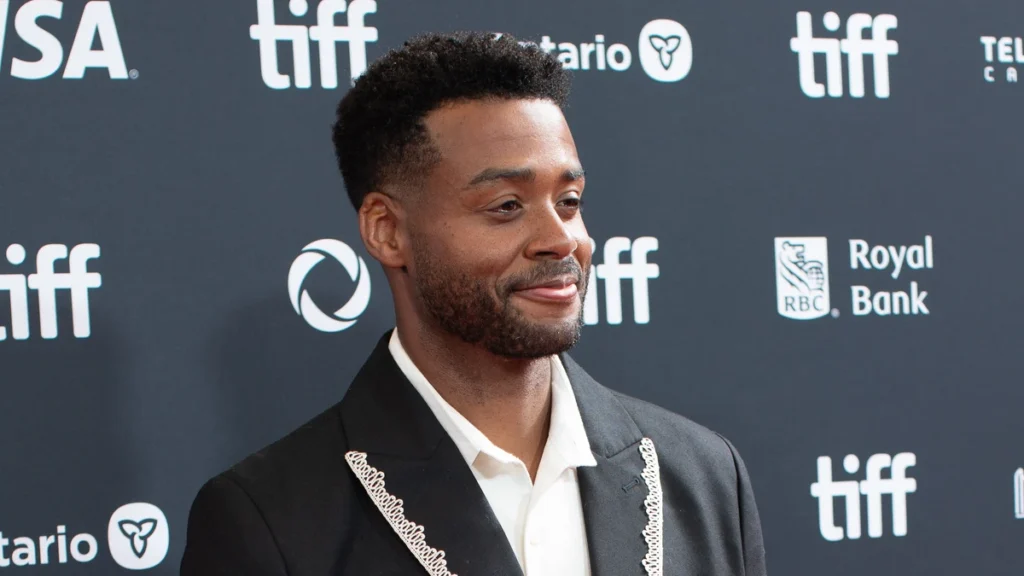
Kris Bowers at the Toronto International Film Festival in 2024.
Kris Bowers at the Toronto International Film Festival in 2024.
Kris Bowers scored a Marvel special that premiered in May, working again with a director he has now collaborated with repeatedly.
A separate score of his had been released three months earlier on an entirely different label.
The Composer and Director Relationship
The most durable working relationships in film music are between a composer and one director, and they are less common than the famous examples suggest.
What they produce is efficiency. A director who has worked with the same composer four or five times does not need to explain what a scene requires, because the vocabulary already exists.
They also produce risk. A composer identified with one filmmaker can find it difficult to be considered for anything that does not resemble that filmmaker’s work.
The relationship here spans sports drama, documentary-adjacent biography, television and now a comic book property, which is a wider spread than most such partnerships manage.
Scoring a Comic Book Property
Marvel scores have a reputation for anonymity, and it is largely deserved.
The standard criticism is that the music is written to be unnoticed, that the themes are interchangeable between films, and that nobody could hum one afterwards.
A composer arriving from character-driven drama has a different set of instincts, which is presumably why he was hired.
A Character Who Has Been Scored Before
The character has appeared across several previous productions with different composers each time.
That creates a specific problem: an audience arrives with an existing musical association, and a new composer must decide whether to acknowledge it or ignore it.
Ignoring it is usually the better choice artistically and the harder one commercially, since fans notice the absence of a theme they expected.
Two Labels in One Year
The two scores came out through entirely separate label systems, one attached to a studio and one to a classical imprint.
Studio-owned soundtrack labels exist to service their own films and rarely release anything else, which means a composer working across studios ends up with a catalogue scattered across imprints.
That fragmentation is invisible to listeners and significant to composers, since it determines how a body of work is presented and whether it can be collected at all.
Songs and Score as Separate Albums
The February film released its songs a week before its score, as two distinct albums.
This has become standard practice for films carrying both, and the logic is commercial: songs reach playlists and radio, scores reach a smaller and more specific audience.
Combining them produces an album that serves neither, which is why almost nobody does it any more.
A Score Album Is Not the Film
Releasing a score as an album requires rebuilding it, since the cues as written are frequently thirty seconds long and end abruptly.
Album versions are assembled by combining related cues, extending endings and occasionally rerecording material so it holds together without picture.
That work is done by the composer after the film is finished, and it is the reason score albums are frequently better listening than the score is in the film.
Three Months Between Releases
February and May is a short gap, and it reflects how film scoring schedules actually work.
Composers work on several projects simultaneously at different stages, since a score is written in a compressed window near the end of post-production.
Two releases three months apart usually means the writing happened months earlier and much closer together than the release dates suggest.
A Pianist Before a Composer
He came to scoring from jazz piano rather than from the orchestral tradition, which is audible in the writing.
Jazz-trained composers tend to voice chords differently, use more harmonic movement in quiet passages, and write piano parts that a session player cannot simply read down.
They also tend to play on their own scores, which changes the recording process and generally produces a more personal result.
The Strings Question
Contemporary film scoring runs on strings, and the reason is practical rather than aesthetic.
A string section can sustain, swell, disappear and return without drawing attention, which is exactly what underscore requires.
What separates composers within that constraint is what they do with the rest of the orchestra, and how often they are willing to let the strings stop entirely.
Television and Film Together
His work has moved between features and television, which was once a career distinction and is now barely one.
Prestige television scoring pays comparably, runs longer and offers more material, since a season contains several times the music of a feature.
What it does not offer is the concentrated attention a film score receives, which is why composers still take features that pay less.
Documentary Work
He has also worked in documentary, which is a genuinely different discipline from dramatic scoring.
Documentary music has to avoid telling the audience what to feel about material that is presented as factual, which rules out most of the techniques dramatic scoring depends on.
Composers who do both frequently describe documentary as the harder job, precisely because the obvious tools are unavailable.
Streaming Premieres and Score Releases
The May project premiered on a streaming service rather than in cinemas, which changes the soundtrack release calculus.
A cinema release gives a score a fixed opening weekend to build around. A streaming premiere has no equivalent moment, and the album arrives into a much flatter attention curve.
Releasing three days after the premiere rather than on the same day is a small acknowledgement of that, giving the film a head start.
Why Directors Keep the Same Composer
The practical reasons are more interesting than the sentimental ones.
Scoring happens under extreme time pressure at the end of a production, when the budget is spent and the release date is fixed. A director who has to explain their intentions from scratch is losing days they do not have.
A returning composer also knows how a particular director cuts, which matters enormously, since music has to fit an edit that is still changing while the score is being written.
What the director gives up is surprise. A composer who knows exactly what is wanted will deliver it, and occasionally the more useful outcome is somebody delivering something nobody asked for.
The Anonymity Problem
Franchise scoring has a structural difficulty that no individual composer can solve.
The music has to sound consistent with everything else in the franchise, support action sequences cut before the score exists, and survive being mixed under dialogue and effects at low volume.
Those constraints push every composer toward the same solutions, which is why so much of it sounds alike regardless of who wrote it.
The composers who escape it generally do so in the quiet scenes, where the constraints loosen and there is room for actual writing. That is where a distinctive voice becomes audible, and it is usually about four minutes of a two-hour film.
What Is Actually Being Tested
Two things. Whether a composer known for character drama can bring anything distinguishable to a franchise built on established musical conventions.
And whether a director and composer partnership that has already crossed several genres holds up in the one where the studio has the most opinions.
Two scores, two label systems, three months apart, and one director he has now worked with more than anyone else.
About The Author