Will Lisil

Founder of MW3.biz, building technology that empowers creators and democratising access to digital tools.
Out Now: Moments in My Notebook by Fiona Ross, the Album That Took Her to 100 Songs

Out Now: Moments in My Notebook by Fiona Ross, the Album That Took Her to 100 Songs

The London Jazz Vocalist and Pianist Closes Her Eighth Album on Her Hundredth Original Song

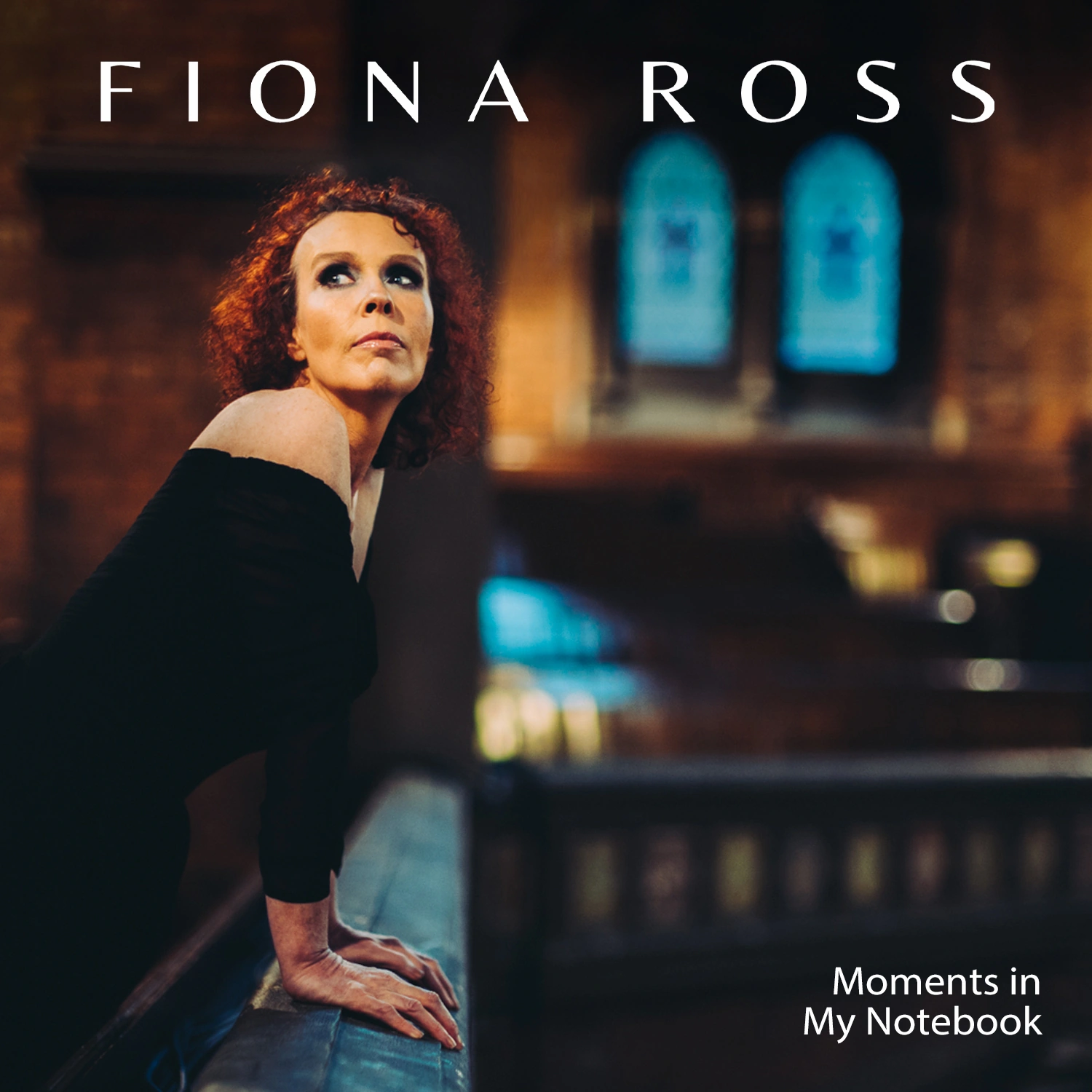
Fiona Ross released Moments in My Notebook on 30 May 2025. The 21-track contemporary jazz album runs from fast Latin jazz to late-night piano ballads. It is her eighth album, and its closing track, 100 Songs, is her hundredth original song. In August 2026 the record won Female Album of the Year from the International Singer Songwriters Association.

https://open.spotify.com/album/0YqaVNIjkSK0FNH9K1jEBN

Fiona Ross's music sits in the playlist below, and her full run of coverage is collected on her artist profile. Moments in My Notebook came to this desk through PopHits.Co Music Charts, which verifies independent artists and places their releases across its network of music news desks. Press play on the album, then read on for the story behind it.

https://open.spotify.com/playlist/1LUQUppwMVUVn3MZTo8oZM


Out Now: Moments in My Notebook by Fiona Ross, the Album That Took Her to 100 Songs

Before Moments in My Notebook, Fiona Ross Built a Career Across London Jazz Clubs, Classrooms and Seven Albums

Ross started early. She was on stage in London's West End by the age of eight. At fourteen she talked her way into weekend gigs in the city's jazz clubs. She was paid in cash at the end of the night, and the venues had no idea how young she was.

After training at the Arts Educational School, she worked across the industry. She was a musical director, session musician, composer and choreographer. Teaching then became a second track. For nearly nine years she was Head of the British Academy of New Music in London. Her students there included Ed Sheeran, Rita Ora and Jess Glynne. That is how many people first heard her name: as the teacher who gave Ed Sheeran his first push.

Seven Albums Before This One

The recorded catalogue built steadily from there. Red Flags and High Heels launched with a show at Pizza Express in Soho in 2021. Then Thoughts, Conversations and To Do Lists followed in 2023, and Music Arena GH was among the outlets that covered it. That title later named her podcast, which was nominated for Best Podcast at the World Entertainment Awards.

Recognition arrived along the way. Ross won Best Jazz Song at the World Songwriting Awards. She also took an Outstanding Achievement award from the Global Music Awards. In addition, the International Singer Songwriters Association named her International Female Songwriter of the Year, and Jazzwise is among the magazines that have featured her work. Meanwhile, she writes about jazz herself. She founded Women in Jazz Media and is a senior writer for Jazz in Europe.

Moments in My Notebook Pulls 21 Songs From Fiona Ross's Notebooks and Takes Her to 100 Originals

Ross still writes in notebooks, and this album is built from those pages. Some songs began with a bass line, some with a lyric, and some with a line overheard in a café. Two of the 21 were written when she was a teenager and only now reach a record.

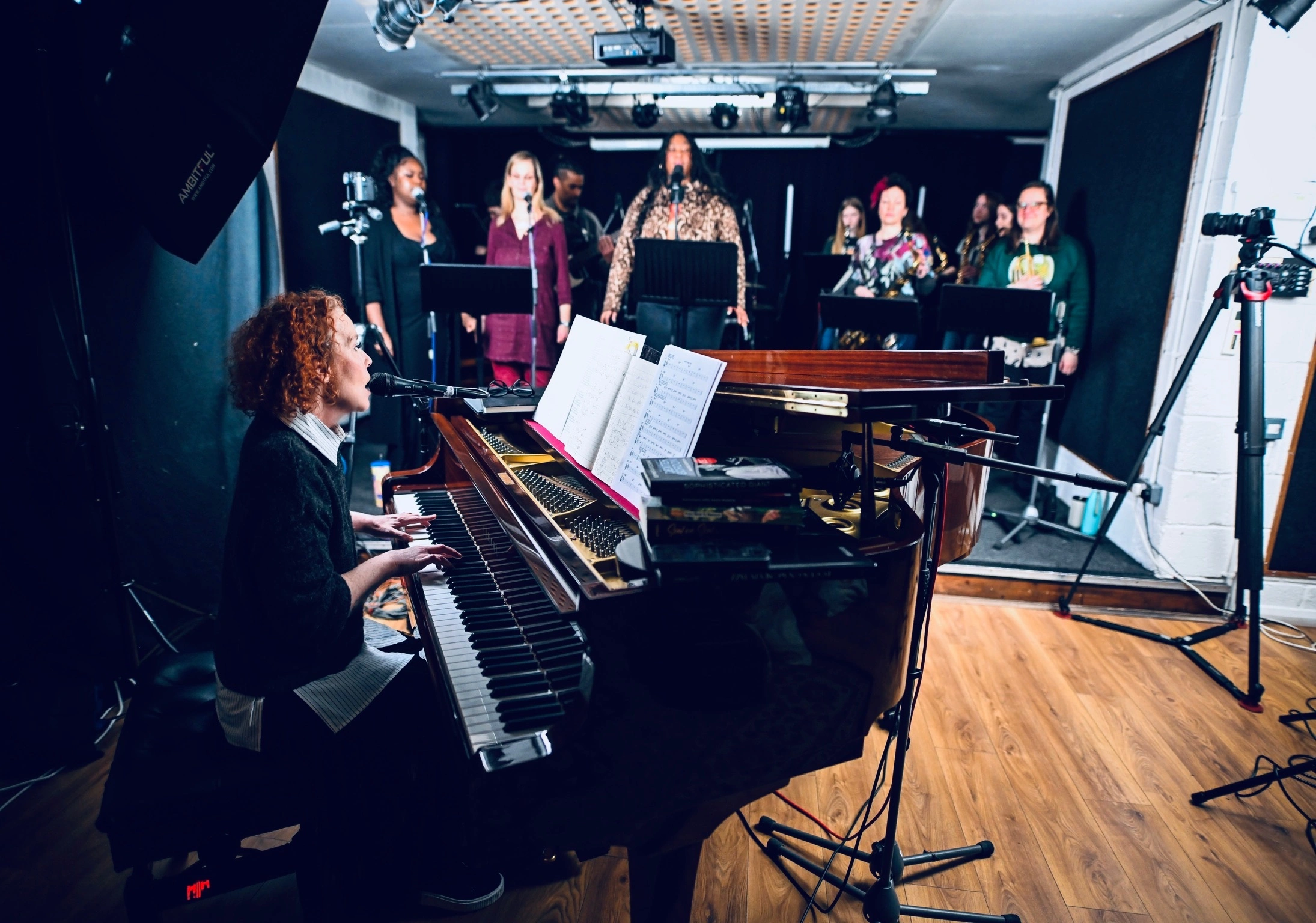
The album runs to nearly 80 minutes. It opens with Running Into Your Arms and closes on 100 Songs. Ross wrote, arranged and produced every track, and she sings and plays piano throughout. Her band features Gibbi Bettini on guitar, Derek Daley on bass and Marley Drummond on drums. Loren Hignell plays saxophones, clarinet and flutes, with Dave Boa on trumpets and Simon Todd on percussion. The sleeve notes are by Maxine Gordon.

Six guest artists also share credits on three tracks. Trombonist Laura Impallomeni plays on This Energy, and drummer Migdalia Van Der Hoven joins La Façon Dont Tu Bouges. China Told Me (Live) adds singer Mary Sho and saxophonist Hannah Horton. Trumpeter Charlotte Keeffe and the youth ensemble J Steps join them, with Van Der Hoven back on drums. The whole track was recorded in a single day at Premises Studios in London.

The songs show the range. For example, Let Your Soul Shine came from a sign she spotted on a market stall. She walked home, sat at the piano and had the song finished in ten minutes. By contrast, I Don't Want Money is about the cost of making music at all. Voices Unheard then closes by naming Melba Liston, James Baldwin, Countee Cullen, Mary Lou Williams and Ida B. Wells.

https://www.youtube.com/watch?v=GKuA4dMItYM
Watch the video and check the artist's YouTube channel for more.

Out Now: Moments in My Notebook by Fiona Ross, the Album That Took Her to 100 Songs

Pirates in Paris, a Run of Reviews and a Female Album of the Year Award

Pirates in Paris turns her many trips to the French capital into a song about freedom. "Paris has always been my escape," Ross says.

Coverage started before release day. First, Record World reported the 100-song milestone in early May 2025. Project Timbre then wrote up Let Your Soul Shine as a single. Reviews followed through June from The Indie Grid and IndieTapes. The Italian site Dolce Brano also reviewed it and singled out the hundredth original song.

The reviews came first. More than a year after release, the award followed.

After Moments in My Notebook, Fiona Ross Takes the Songs on Tour and Starts Writing Album Nine

The closing track points forward by looking back. 100 Songs asks what her parents would make of everything she has built, and it leaves that question open.

Since the release, the momentum has carried on. In 2026 Ross made her Paris debut at the Sunset Sunside club. She played Pirates in Paris there at an International Jazz Day show held in partnership with UNESCO. The same year, the Jazz Journalists Association gave her a Jazz Heroes award.

Next, she plays the Acorn Theatre in Penzance on 15 October and Hampstead Jazz Club in London on 11 December. After that comes an Irish date at Magy's Farm in Dromara on 6 March 2027. She has also set aside time to write her next album.

Who It Is For

Moments in My Notebook suits listeners who like contemporary jazz built around songs rather than long solos. Fans of Jamie Cullum will recognise the pull between a piano-led band and pop songwriting. Cullum took that mix to a mainstream British audience on Twentysomething in 2003. Similarly, fans of Melody Gardot will find a shared ease with Latin rhythm. Gardot carried that through bossa nova on The Absence in 2012. So start with Let Your Soul Shine and Pirates in Paris, then play 100 Songs last, where Ross placed it.

From the MusicDrops.News Curator Team: "The credits list finger clicks, band banter and recorded rain alongside the horns. Those small details make a 21-track album feel lived in. So when the hundredth song arrives, it sounds like a diary entry rather than a trophy."

Stream Moments in My Notebook on Spotify, Apple Music, Bandcamp, YouTube Music and Amazon Music.

Follow Fiona Ross across platforms: Spotify, Apple Music, SoundCloud, Deezer, YouTube, Instagram, TikTok, Threads, Facebook and Bluesky. For tour dates, visit her official site.

Back to Black Turns 20 With Four Unreleased Amy Winehouse Demos

Back to Black Turns 20 With Four Unreleased Amy Winehouse Demos

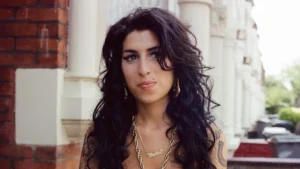
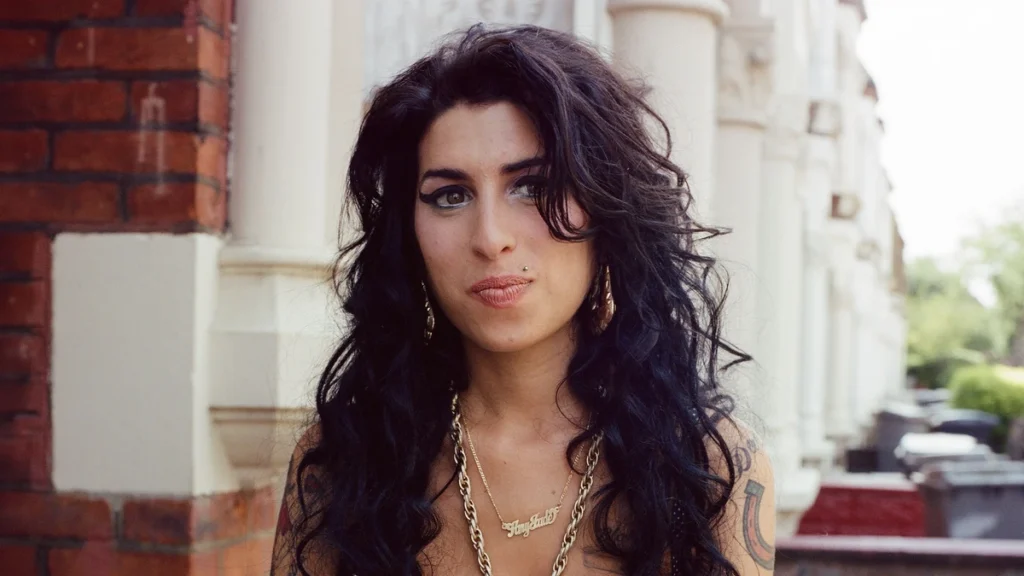
Amy Winehouse photographed during the Back to Black era.

Republic/UMe releases a 20th anniversary edition of Amy Winehouse's Back to Black on Friday, October 23, four days short of the album's 20th birthday. The reason to pay attention is in the archive: four demos that have never been released, including early versions of the title track and "Love Is a Losing Game", plus the first full release of her February 8, 2007 show at the Paradiso in Amsterdam, uDiscover Music reported.

The set arrives as a 3LP clear-vinyl edition, a 3CD edition and a digital deluxe edition, with single-LP versions of the original album alongside them. For anyone who knows Back to Black only as the finished 11-track record, this is a chance to hear how its songs started.

What the Four Unreleased Demos Are

The new material sits mainly on the second disc. According to Happy Mag, the four previously unreleased demos are:

  • "Back to Black" (Original Demo): an early version of the title track.
  • "Love Is a Losing Game" (Original Demo): an early version of the ballad.
  • "I'm No Good": the original demo for "You Know I'm No Good".
  • The original demo of "Me & Mr Jones": recorded under an earlier, unprintable working title.

They sit beside other alternate takes from the same sessions. "I've Been Drinkin'" is an alternative version of "Just Friends", "Tears Dry" is an alternative demo of "Tears Dry on Their Own", and "Some Unholy War" appears in a down-tempo version. Not all of this is new: Pitchfork, in a report syndicated by Yahoo, noted that the four unreleased demos come "in addition to several included on a prior deluxe edition".

The value of demos like these is in the distance between draft and record. A working title that later became "Me & Mr Jones", or a first pass at "Back to Black" before the finished production, shows which parts of the songs were there from the start and which arrived in the studio.

Every Format, From Clear Vinyl to a Zoetrope

The anniversary run comes in several versions, as set out by uDiscover Music and the tracklists published by Consequence:

  • 3LP clear vinyl: the original album on LP1, B-sides and demos on LP2, and 11 songs from the Paradiso show on LP3.
  • 3CD and digital deluxe: the original album, a 17-track second disc of B-sides, bonus tracks and demos, and a 14-song Paradiso disc.
  • "Chalkboard Marble" 1LP: a limited colour-vinyl pressing of the original album.
  • Zoetrope 1LP: a webstore-exclusive pressing featuring moving footage of Winehouse as the record spins.
  • 1CD: an Amazon-exclusive single disc of the original 11 tracks.
  • Blu-ray audio: a Super Deluxe Edition exclusive with a Dolby Atmos mix of the album and 17 bonus tracks in stereo.

The 3LP and 3CD editions also come with brand-new alternative cover artwork. The difference between the vinyl and CD versions matters if you want everything. The 3CD set carries eight more bonus tracks than the 3LP, as Super Deluxe Edition points out: five extra on the rarities disc and three on the live disc.

The Blu-ray is aimed at listeners who care most about how the record sounds. According to Super Deluxe Edition, it pairs a Dolby Atmos mix by Oli Morgan with Miles Showell's 2018 stereo remaster, prepared at Abbey Road Studios for that year's half-speed vinyl pressing, and adds a 16-page booklet of unseen Mischa Richter photographs. It was a time-limited pre-order that closed on September 15, so availability now is not guaranteed, although the site says some copies may turn up in the official Amy Winehouse shop without the collectible slipcase.

The Full Paradiso Show, Released at Last

The live recording may be the bigger draw for longtime fans. Winehouse played the Paradiso in Amsterdam on February 8, 2007, during the Back to Black tour, and the performance "has never previously been released in full on vinyl or streaming", uDiscover Music reported.

On the CD and digital editions the show runs to 14 songs. It opens with "Addicted", "Just Friends" and "Tears Dry on Their Own", and closes on "Rehab", "Love Is a Losing Game" and "Valerie". Along the way she reaches back to older material such as "I Heard Love Is Blind", and Happy Mag points out a detour into Lauryn Hill's "Doo Wop (That Thing)" during "He Can Only Hold Her".

The timing of the recording is part of its appeal. February 2007 caught Winehouse a few months after the album came out, playing the new songs to a club audience, and a year before the ceremony at which she won five Grammys. The vinyl edition trims the set to 11 songs across two sides; the full 14 are on the CD and digital versions.

B-Sides and Rarities on the Second Disc

The second disc gathers the era's B-sides and bonus tracks. The vinyl side of B-sides opens with "Valerie" (Live at BBC Radio 1 Live Lounge), followed by "Monkey Man", "Hey Little Rich Girl", "You're Wondering Now", "Do Me Good" and "Close to the Front".

The CD and digital editions add more: "Cupid", "To Know Him Is to Love Him", "You Know I'm No Good" featuring Ghostface Killah, a demo version of "Rehab" and the down-tempo "Some Unholy War". Taken together with the demos, the disc runs to 17 tracks and reads like a map of everything that orbited the album in 2006 and 2007.

Ronson, Remi and the Photographs

The physical editions lean on the people who were there. They include an image of Winehouse's handwritten lyrics from Mark Ronson's archives, never-before-seen photos by the original album photographers Mischa Richter and Alex Lake, and new liner notes from Ronson and Salaam Remi, the two producers who shaped the record.

Both producers spoke about the anniversary. "It's crazy that six songs made in a fit of furious musical infatuation would matter so deeply to so many people twenty years later," Ronson said. Remi put it more simply. "Amy was one of one," he said. "One-of-a-kind artist. One-of-a-kind spirit. One-of-a-kind soul. Experiencing that level of talent, passion, humour, honesty, and love for what she created was a gift."

The photographs matter here too. Richter and Lake were the album's original photographers, and unseen frames from their sessions give the physical sets something a stream cannot.

Why Back to Black Still Matters

The album's track record explains why it is getting this treatment. Back to Black was first released on October 27, 2006, and was Winehouse's final album before her death in 2011, Consequence noted. In the UK it debuted at No. 3 and later reached No. 1 on the Official Albums Chart, then finished as the best-selling album of 2007, according to uDiscover Music. In the US it debuted at No. 7 on the Billboard 200 and peaked at No. 2 after her Grammy wins.

Its reach has only grown since. Super Deluxe Edition notes that it is now the second best-selling album of this century in the UK, behind Adele's 21, and that lead single "Rehab" was a top 10 hit on both sides of the Atlantic. Rolling Stone UK puts its global sales at more than 25 million copies.

Those wins came at the 2008 ceremony, where Winehouse took five awards: Record of the Year, Song of the Year, Best Pop Vocal Album, Best New Artist and Best Female Pop Vocal Performance for "Rehab". In 2025, the album was selected by the Library of Congress for preservation in the National Recording Registry as a "culturally, historically, or aesthetically significant" work.

Where to Start When It Arrives

Reissue season is busy this autumn; musicdrops.news has already covered how Rubber Soul gets new mixes and an unheard Lennon song. What sets this one apart is that the new material comes from a single, short era and a single album, so it all points back to the same 11 songs.

For a first listen on October 23, three things stand out:

  • The title-track demo. Hearing "Back to Black" before its finished production is the clearest way into how the album was built.
  • The "Love Is a Losing Game" demo. The ballad's first version shows how much of the finished song was already in place.
  • The full Paradiso set. Fourteen songs from February 2007, released in full for the first time, put the album's songs back on a stage.

Twenty years on, Back to Black does not need rediscovering. What the anniversary edition offers instead is the process behind it: the drafts, the B-sides and a live night in Amsterdam that fans have waited a long time to hear in full.

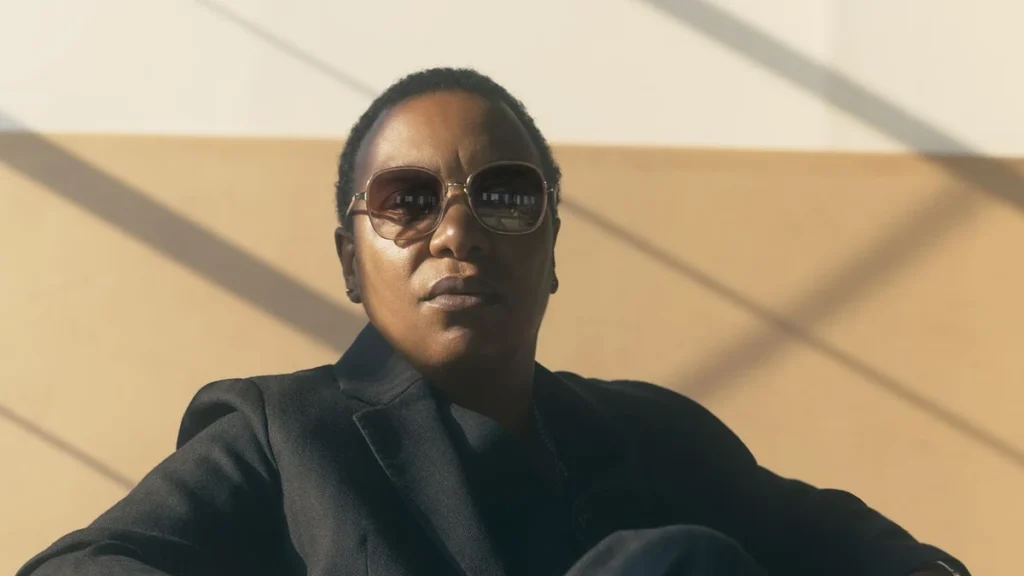
Meshell Ndegeocello Recasts 15 Classic Duets on Synonym

Meshell Ndegeocello Recasts 15 Classic Duets on Synonym

Meshell Ndegeocello released Synonym on 2 October through Blue Note Records. It runs to 15 cover songs, every one of them a duet, and the twist is in the pairings: each song is sung by people who identify as the same gender.

That turns a familiar list of classic duets into something new. Here is what is on the record, who is singing, and why it stands out.

What Synonym Is and Who Made It

Synonym is Meshell Ndegeocello's third album for Blue Note. It arrives on colour vinyl, black vinyl, CD and digital download.

The songs range from 1960s folk and 1970s soul, country and pop to 1980s R&B and electro-boogie, early-1990s alternative rock and early-2000s hip-hop, according to Blue Note's announcement. The label describes the themes as desire, care, heartbreak, friendship, disappointment and love in all its forms.

Ndegeocello co-produced the album with Abe Rounds and David Gamson. The Gamson credit is a reunion: he produced her first two albums, Plantation Lullabies in 1993 and Peace Beyond Passion in 1996.

Ndegeocello describes the collection as classic songs that are known and loved, chosen for their different tones, genres and grooves. She has also said the album is about joy, selfhood, individual representation and universal experience, which is a wider brief than most covers records set themselves.

The Same-Gender Duet Idea

The concept is simple to state and harder to pull off. On Synonym, every song becomes a duet sung by two people who identify as the same gender, which changes how familiar lyrics about love and longing land.

Ndegeocello has been careful about how she frames that. She told Blue Note the pairings were people of the same gender, or who hover around the same continuum of feeling, and said she was not trying to define anything, because the absence of definition is where she feels most free.

The title carries the same idea. A synonym is a word that means the same thing as another, and she applies that to people: different on the surface, the same underneath. "This project is an expression of queer liberation as a synonym for liberation of all kinds," she said. The arrangements follow the same logic. They sound different from the originals, but they mean the same thing.

She has explained the choice of word in two steps. First, she says, it simply feels good to say. Then comes the definition, a word or phrase that means the same thing as another, which she connects to people: whatever our differences, she argues, most of us want the same basic things, such as healthy food and a safe place to live. She also points back to the writer Audre Lorde and the idea that there is no single-issue struggle, which is how a covers album ends up carrying a statement about liberation.

The Guests, Track by Track

The album opens with "I Knew You Were Waiting (For Me)", the George Michael and Aretha Franklin duet, sung by Ndegeocello with Cynthia Erivo. It was the lead single when the album was announced in July.

Cat Power joins on "Don't You Want Me", the Human League hit. Nick Hakim and Robert Glasper take "Don't Stop the Music", first recorded by Yarbrough and Peoples. Chaka Khan sings "Islands in the Stream".

Madison Cunningham joins on Bob Dylan's "It Ain't Me Babe". Laura Lee of Khruangbin takes "Always on Time", the Ja Rule and Ashanti hit, which pulls the record into early-2000s hip-hop.

The middle of the album leans into soul. Emily King and Lizz Wright share "Be Real Black for Me". Lianne La Havas sings "Don't Look Any Further". Destin Conrad and Moses Sumney take "The Closer I Get to You".

Then the country and pop end of the list. Brandi Carlile joins on "Golden Ring". ANOHNI sings "I Got You Babe". Evann McIntosh takes "Here We Come (Here He Comes)", and Ink sings "Guilty".

WILLOW joins on "Hunger Strike", the early-1990s alternative rock song. The album closes on Bob Dylan's "With God on Our Side", with Bill Callahan and Chris Thile. That was the final single before release.

The Band Behind the Duets

The guest list is the headline, but the playing is what holds it together. Blue Note lists a rotating cast of Ndegeocello's regular collaborators: Abe Rounds and Deantoni Parks on drums, Chris Bruce on guitar, and Jake Sherman, Jebin Bruni and Larry Goldings on keyboards.

Josh Johnson and Levon Henry play saxophone. Elena Pinderhughes plays flute. Béla Fleck appears on banjo.

The wider credits run deeper still. That Eric Alper's release-day rundown adds guitarists Ella Feingold, Wendy Melvoin, Oliver Leiber and Doyle Bramhall, keyboardist Benny Bock, and bassists Gabe Noel and Alan Hampton to the list.

That matters on a covers record. With 15 different guest voices, the band gives the album one sound rather than 15. Ndegeocello has said she wanted this record to show her as a producer, and the consistency of the arrangements is where that shows.

Why It Matters Now

Synonym follows two Grammy-winning records. The Omnichord Real Book (2023) and No More Water: The Gospel of James Baldwin (2024) both won the Grammy for Best Alternative Jazz Album, as That Eric Alper noted on release day. They were the first Grammys awarded to her own albums in a three-decade recording career.

That run bought her room to try something big. A duets album with this many guests is an ambitious project for any artist, and a concept built on same-gender pairings gives it a point of view rather than a novelty hook. Blue Note itself calls it one of the most ambitious projects in her discography.

The test of a duets record is whether the voices fit, and Ndegeocello has named that as her own measure. She has said she hopes what stands out is that everyone is well matched musically and that the singers complement each other, rather than the concept doing all the work.

Ndegeocello has said the queer community claimed her when others did not, and that she now recognises how her communities overlap. Synonym reads as a response to that, put in the language she knows best: other people's songs, played her way.

Where It Sits in Her Catalogue

Covers have always been part of Ndegeocello's work. She has traced it back to playing in go-go bands in Washington, D.C., where musicians had to take somebody else's song. On Synonym she treats the songs as frameworks rather than scripts.

The record also continues her move away from albums that centre on herself. She has said she wants to make more collective music, and that being on Blue Note means she still gets to be a musician. The band motto on her recent records puts it plainly: Meshell Ndegeocello is a band.

For listeners who know her mainly from the 1990s singles, Synonym is a good way back in. The songs are familiar, the guest list is wide, and the producer who shaped those early records is back in the room.

Where to Start

Three tracks make a good first listen. "I Knew You Were Waiting (For Me)" with Cynthia Erivo was the lead single and opens the album. "Always on Time" with Laura Lee shows how far the genre range stretches, into early-2000s hip-hop. "With God on Our Side" with Bill Callahan and Chris Thile was the final single and closes the record.

From there, the running order moves through the decades in a way a playlist would not, with the same core band linking the stylistic jumps.

For more of the autumn's album releases, see our round-up of six new albums worth hearing, from Tinashe to Tom Morello. Synonym by Meshell Ndegeocello is out now on Blue Note Records.

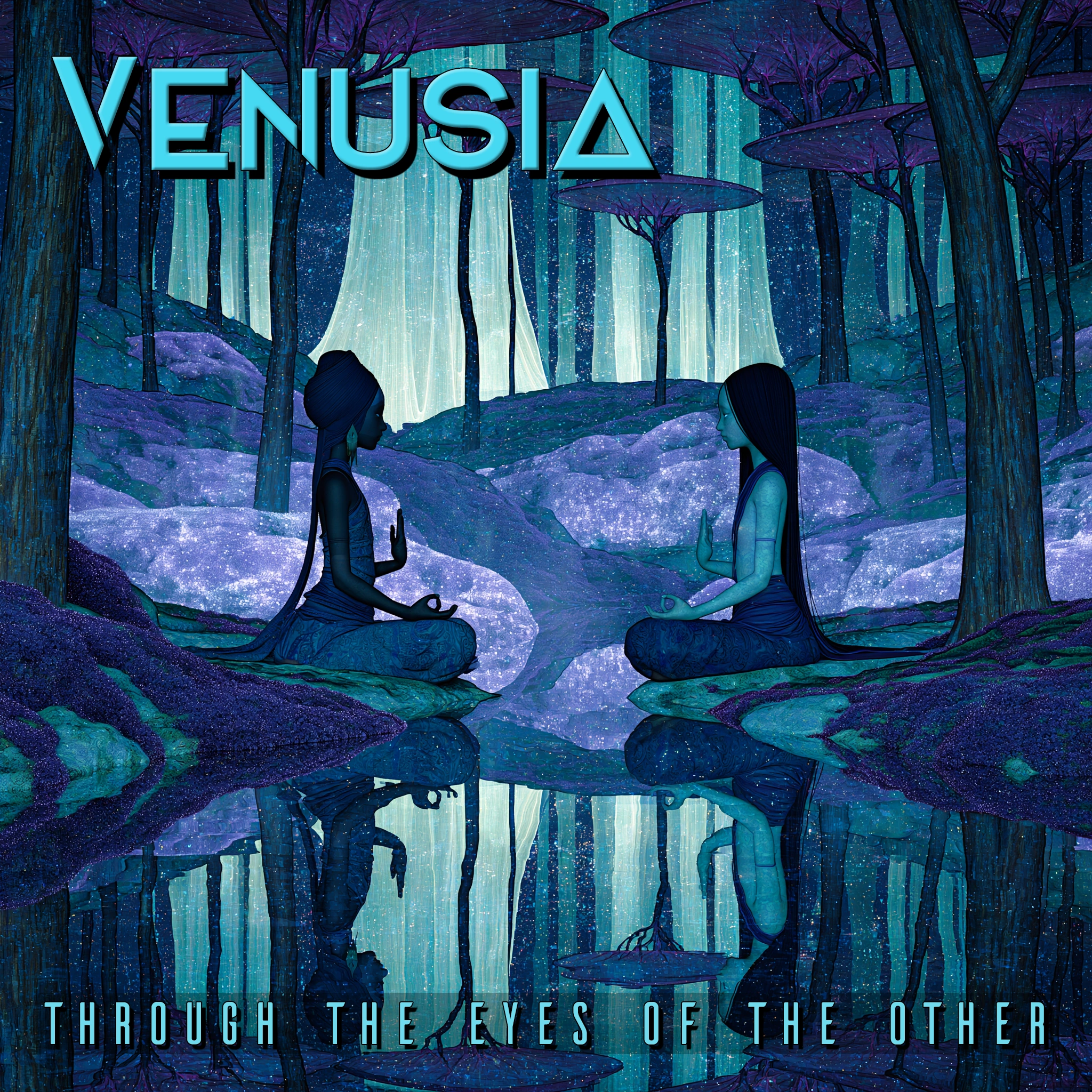
Venusia Lead Light Waves with Through the Eyes of the Other

Venusia Lead Light Waves with Through the Eyes of the Other

A Song Andrew Bayuk Wrote in 2008 Becomes the Basel Duo's Two-Voice Case for Empathy

Venusia released Through the Eyes of the Other on 22 August 2026 as the first single from Light Waves. That is the Basel duo's debut album. Across the single's four minutes, Andrew Bayuk and Anisah Alyahya trade lead vocals. As a result, a song about seeing life from the other side is sung from two sides at once.

https://open.spotify.com/track/4EuJNduHddUkluNILLZDB0

Venusia’s music is in the playlist below, alongside the rest of this desk’s rock and alternative picks, and the full run of coverage is collected on the Venusia profile. Through the Eyes of the Other came to MusicDrops.News through PopHits.Co Music Charts, which verifies independent artists and places their releases across its network of music news desks. Press play, then read on for the story behind the song.

https://open.spotify.com/playlist/2zc7e1w8s4p4lILt3XSJiL


Venusia Lead Light Waves with Through the Eyes of the Other

Before Light Waves, Five Venusia Singles Built the Two-Voice Sound Heard Here

Venusia started in 2020, during the pandemic lockdowns. Bayuk grew up in the United States and Alyahya in Malaysia. Their first recordings were built from sound clips sent back and forth by email.

The first song they wrote in the same room, at their first meeting on the Winter Solstice, became Solstice Love. They released it on the Summer Solstice in June 2022. That September, the French blog Indie Chronique picked it up. The same year, the pair told Illustrate Magazine they were finishing a first album called Light Waves.

Four more singles followed. Their version of David Bowie's The Man Who Sold The World arrived in October 2022. Next, Think Peace came out on 2 June 2023. When Obscure Sound reviewed Think Peace, it heard a Beatles influence in the harmonies and hooky guitar. It also picked out the dual vocals as an edge of their own. Waking Dream and The Dreamer or the Dream complete that early run of five.

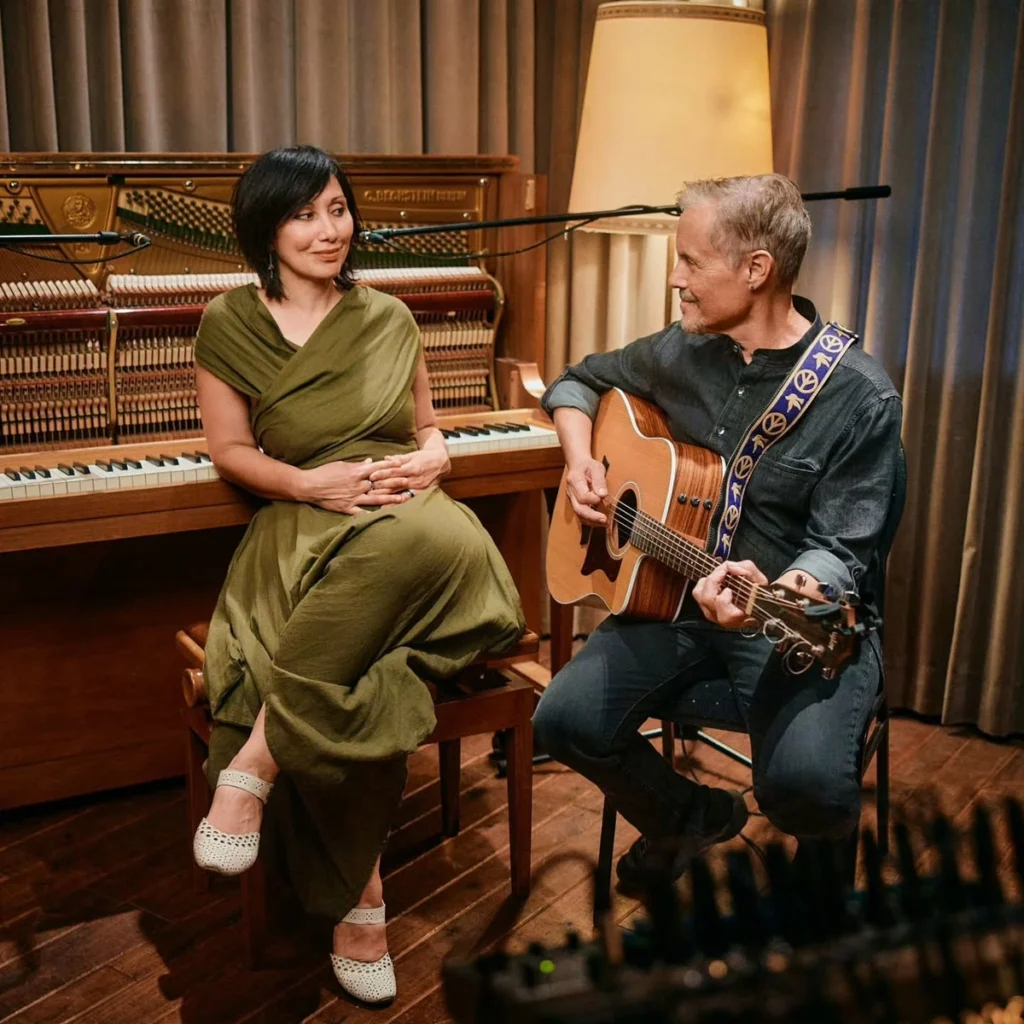
Meanwhile, the instruments split cleanly between the two of them. Bayuk plays acoustic and electric guitars, bass and drums, while Alyahya plays piano, synthesiser and cello, and both sing. In fact, the new single was already part of their live set. A live performance on YouTube, filmed at Schifflände in Basel, went up on their channel in May 2025. That was more than a year before the studio version.

Through the Eyes of the Other Sets Two Lead Voices Against Acoustic Guitar, Piano and Cello

The song is older than the band. Bayuk wrote it in 2008 after hearing the story of an Israeli mother and a Palestinian mother talking. At first, each described how she had been treated by the other side. As they kept talking, however, they found they wanted the same things. Both wanted food, shelter, freedom, safety and a good education for their children.

The recording follows that shape. Bayuk and Alyahya take turns at the lead, so two perspectives move toward each other as the song goes on. The lyric opens on the line "An eye for an eye will make us blind". From there it works through the old rules of payback, from tooth for tooth to fire with fire. Then the chorus turns to the idea of learning to see through the eyes of the other.

Musically, it pairs the raw energy of 90s rock with acoustic melody. The track runs to 4:10. Bayuk's guitars, bass and drums sit underneath, with Alyahya's piano, synthesiser and cello around the two voices. Bayuk also wrote and produced it, and the duo recorded it at Guardians Records. Reto Muggli then mixed and mastered it at Powerplay Studios in Zürich.

So who is it for? Listeners raised on the later records of The Beatles will recognise the method. Bayuk has named their stacked harmonies and counter-melodies as the starting point for the duo's arrangements. Fans of Crosby, Stills, Nash & Young get the other half of the lineage. That means close harmony over acoustic guitars, used to carry a message rather than decorate it. Alyahya, meanwhile, counts Pearl Jam and Nirvana among the bands of a teenage grunge phase. That fits the 90s rock grit the single leans on.

https://www.youtube.com/watch?v=ETj328eg39A
Watch the video and check the artist's YouTube channel for more.

Venusia Lead Light Waves with Through the Eyes of the Other

Shadow Boxing Followed in September as the Light Waves Album Heads for Vinyl and CD

Shadow Boxing, the next song from the album, came out on 11 September 2026. According to the duo's website, Light Waves is due on vinyl and CD in September. Their profile on Switzerland's Mx3 music portal describes the album as six years of work. It ties songs of unconditional love to calls for peace and empathy.

That gives the single a clear place in the story. Think Peace argued that peace starts from within. By contrast, Through the Eyes of the Other asks the listener to step into someone else's position. As the first release from Light Waves, it also sets the album's terms early. Expect two lead voices, guitar, piano and cello, and a message in plain words.

From the Curator Team: "What earned Through the Eyes of the Other a first listen here is the casting. The song gives each side of its argument a real voice, Bayuk's and Alyahya's. It also puts cello and piano beside a rock rhythm section. As a result, a plea for empathy arrives with the warmth of an acoustic record and the drive of a band."

Where to Stream Venusia and Follow the Duo Through the Light Waves Album Cycle

Stream Through the Eyes of the Other on Spotify or pick your preferred platform from the release page. Venusia's catalogue also sits on Apple Music, Tidal and SoundCloud, and the duo post videos on their YouTube channel.

To keep up with the album rollout, follow Venusia on Instagram, Threads and Facebook. Every current link sits on their Linktree and their Mx3 profile. The lyrics and the story behind the song are on the official website.


Rubber Soul Gets New Mixes and an Unheard Lennon Song

Rubber Soul Gets New Mixes and an Unheard Lennon Song

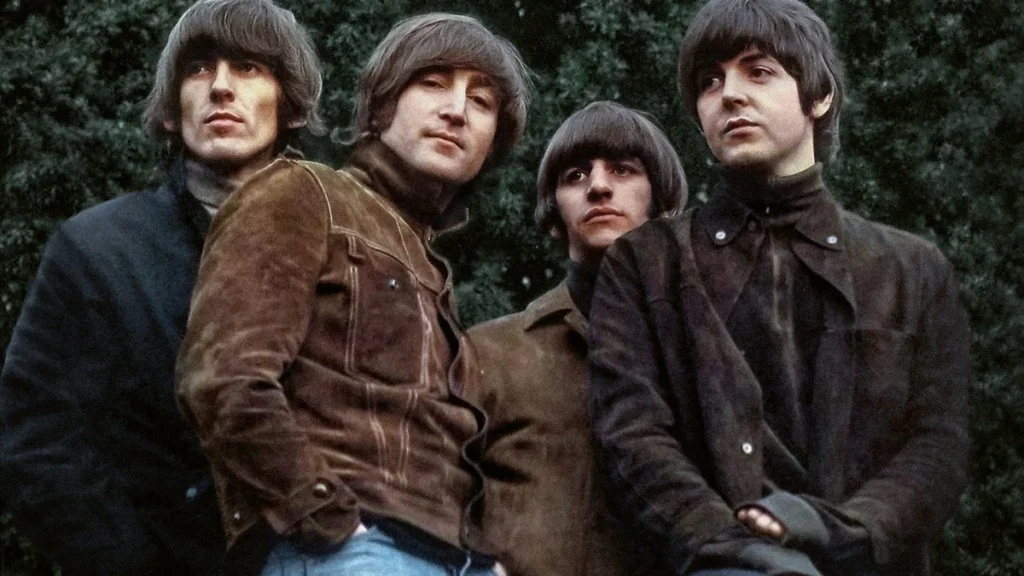
The Beatles' Rubber Soul arrives in an expanded special edition on Friday 2 October, with a new stereo mix by producer Giles Martin and engineer Sam Okell and a Super Deluxe box that runs to 68 tracks. The find that matters most is a John Lennon home demo called "Little Girl", a song outline that, according to the official announcement, was never before released or even rumoured.

Apple Corps and Universal Music announced the Rubber Soul reissue on 29 July. It is out on 2 October through Apple Corps, Capitol and UMe, more than six decades after the album was first released on 3 December 1965.

What Is in the New Rubber Soul Box

The Super Deluxe edition comes as four CDs or five LPs, each with an 88-page hardbound book in a 12-inch slipcase. The CD set runs to 68 tracks: the new stereo mix of the 14-song album, a disc of 28 sessions, demos and the single, the original 1965 mono mix, and the 12-track Capitol US version of the album, according to the full format listing from Universal Music Canada.

The vinyl box splits the outtakes across two records of 26 tracks and adds a 7-inch single of "Day Tripper" and "We Can Work It Out". Every format carries the new stereo mix, which the labels say was sourced directly from the original four-track master tapes.

Below the box sets sit 2CD and 2LP special editions with a curated selection of session highlights, demos and the single, plus standard 1CD and 1LP releases. A Blu-ray carries a new Dolby Atmos mix, high-resolution stereo and the promotional films for "Day Tripper" and "We Can Work It Out". There is also a limited orange vinyl pressing and a zoetrope picture disc sold direct to fans.

The Lennon Demo Nobody Knew About

"Little Girl" is the headline for collectors. Rolling Stone's Rob Sheffield, who previewed the set in an exclusive first listen, describes it as a raw sketch with an unfinished lyric and a bittersweet tune that sounds like an early draft of "I'm Only Sleeping", the song that later became a highlight of Revolver.

Martin told the magazine the tape came from the Lennon side of the family. "It was one of those things that came from the Lennon estate, I think it was Sean," he said. "It was one of those things where they say, 'Oh, and then there's this.'"

It sits on the sessions disc next to two more home demos: an early songwriting work tape of "Day Tripper" and Paul McCartney's demo of "We Can Work It Out". Those three demos, and 20 of the session takes, have never been released before, according to the announcement.

Session Tapes That Show the Songs Changing

The outtakes are arranged to show songs being built. "Norwegian Wood (This Bird Has Flown)" appears in three versions, takes one to three. "Nowhere Man" and "I'm Looking Through You" each appear in a first and a second version, so the arrangement can be heard changing between sessions, according to the track listing published by The Beatles Bible.

There are instrumental backing tracks for "Drive My Car", "Wait", "Run for Your Life", "If I Needed Someone", "What Goes On", "The Word" and "Girl". "Michelle" appears as a guitar rehearsal and as its first take, which was released as a preview track on the day of the announcement.

"In My Life" gets its first take and an extract with an unused organ solo. The finished record famously uses George Martin's piano solo, sped up to sound like a harpsichord, and this collection includes an outtake where he tries the part on organ, Rolling Stone reports.

The disc also keeps the studio chatter. A track titled Beatle Talk catches the band working out vocal overdubs for George Harrison's "Think for Yourself". "I try and put as much dialogue on there as possible, because I think it's really important to hear them as people," Martin told Rolling Stone.

How the New Stereo Mix Was Made

The new mix uses the de-mixing technology built for Peter Jackson's Get Back documentary. The software was developed by the sound team led by Emile de la Rey at Jackson's WingNut Films, and Martin and Okell used it on this project to bring the audio forward from the original tapes.

That matters on a record made on four-track tape. The new stereo mix is sourced directly from the original four-track masters, and the labels say the aim was clarity while staying faithful to the spirit of the original recordings. All 14 of the new stereo mixes are collected together for the first time.

The album was recorded over four weeks in October and November 1965, following the band's record-breaking Shea Stadium concert in front of more than 55,000 fans in New York. Martin's own summary of the sessions is blunt: "It's an album born out of frustration of not wanting to be little boys anymore."

Why Rubber Soul Still Sounds Like a Turning Point

The labels bill Rubber Soul as the record where the band stopped writing for the singles chart, and it is widely regarded as having pioneered the long-form pop album. Martin put it the same way to Rolling Stone: "This is the first album where they weren't trying to write a bunch of singles and deciding what should be the single."

The album carried "Drive My Car", "Norwegian Wood (This Bird Has Flown)", "Nowhere Man", "Michelle", "Girl" and "In My Life", and it brought new sounds into the band's records, including the sitar on "Norwegian Wood" and the harmonium on "The Word". "It was a license to experiment," Martin said.

The sessions changed the band's working hours too. "'Drive My Car' was the first session they played beyond 12 o'clock at night," Martin told the magazine. "But by the time two weeks later, they were recording till seven in the morning."

Its reach went well beyond the band. Brian Wilson heard the album and set out to match it, recalling in 2009: "I said to myself, 'Now I'm gonna make an album just as good as Rubber Soul.'" The next morning he went to the piano and wrote "God Only Knows", according to Rolling Stone.

Where This Fits in the Beatles Reissue Series

Rubber Soul is the latest in a run of special editions that began with Sgt. Pepper in 2017 and continued with the White Album in 2018, Abbey Road in 2019, Let It Be in 2021, Revolver in 2022 and Anthology in 2025, Rolling Stone notes. With Revolver already done, both records from the band's turn toward the studio now have full editions.

The Super Deluxe book adds new writing too. It opens with a fresh introduction by Paul McCartney and a foreword compiled from John Lennon's own words about the album across his life, including the years after the band split, alongside rare photographs and track notes.

The Capitol US version is worth a listen in its own right. The American album dropped some UK tracks and added "I've Just Seen a Face" and "It's Only Love" from Help!, opening with "I've Just Seen a Face", a different running order from the UK album, according to the Beatles Bible listing.

Is the Rubber Soul Special Edition Worth It

For most listeners the answer depends on format. The 1CD and 1LP editions carry only the new stereo mix, which is the point of entry for anyone who knows the songs from streaming. The 2CD and 2LP sets add the best of the outtakes, and the Super Deluxe box is for anyone who wants every take, the mono mix and the book.

The reissue lands in a busy stretch for the band's catalogue. The announcement also points to a fan experience planned at 3 Savile Row, the site of the rooftop concert, opening in 2027, and to Sam Mendes's four-film Beatles project due in April 2028. Elsewhere this month, we reported that Watching the Tide is Steve Cropper's final studio album.

Rubber Soul is out on Friday 2 October. "Michelle (Take 1)" is streaming now.

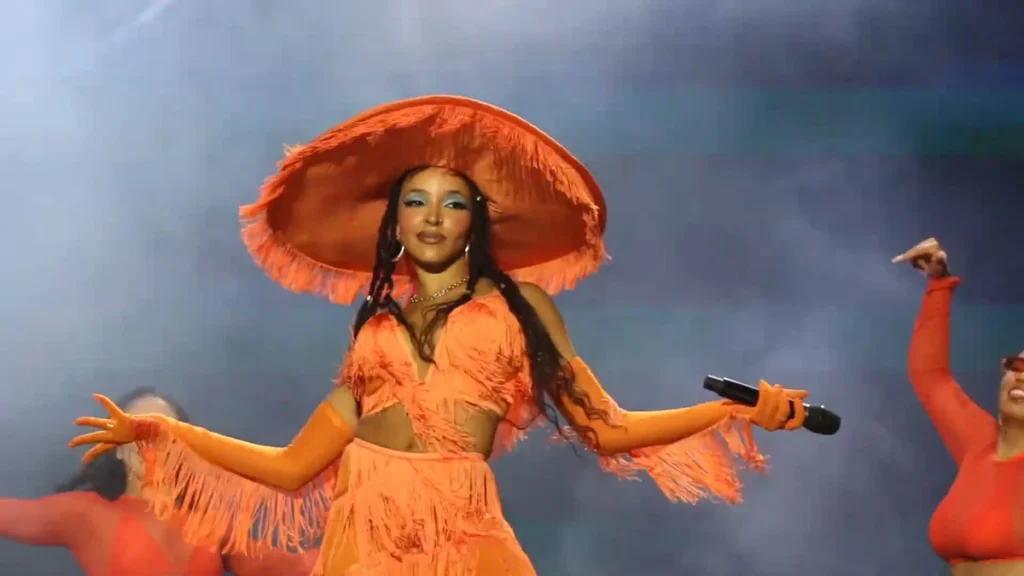
Tinashe performing on stage in an orange fringed outfit and wide-brimmed hat with dancers

Six New Albums Worth Hearing, From Tinashe to Tom Morello

Tinashe performing in 2023

Six new albums arrived on Friday 25 September that are worth pressing play on, and they could hardly be further apart: an eighth album from Tinashe, a new record from Blondshell, a 21st from Kenny Chesney, a fifth from Nothing But Thieves, a new collection from Joy Oladokun and what Tom Morello calls his first solo rock album.

Here is what each one is, who made it and who it is for. All six appear on this week's Friday release list.

Tinashe Stretches What a Popstar Can Be

Popstar is out now, and it is Tinashe's eighth studio album. Clash describes the 16-track collection as moving between high-octane, club-skewed experiments and languid R&B futurism, built with a long list of pop and electronic producers including Arca, Machinedrum, Kingdom, Fred Ball, Ricky Redd, Zach Sekoff and Dave Hamelin.

The singles set out both sides. Lead single "Crash Out" is the straight pop song; "Melatonin", in The FADER's description, is a vaguely ballroom-inflected sugar rush that sounds like a longer pop song chopped, screwed and sent into hyperdrive. The FADER singles out "Flashbacks" as the standout, opening with vocal chops that recall Arca before settling into chanted lines over a sombre piano loop, and reads the album's thesis as simple: Tinashe is a popstar, but under her gaze that label can mean just about anything.

She is marking the release with in-store vinyl signings in New York, Baltimore, Chicago and Southern California, and the Grammy Museum will host an intimate performance and Q&A on 22 October in Los Angeles. Who it is for: anyone who likes their pop with the edges left on.

Blondshell Takes the Slow Road on Violins

Violins is out now on Partisan Records. Blondshell, the project of Sabrina Teitelbaum, made it with producer Yves Rothman, and it was mixed by Beatriz Artola and mastered by Emily Lazar, according to Stereogum. The first taste was "Heart Has To Work So Hard", followed by the title track and a video directed by Sabra Binder, in which Teitelbaum tries to save a melting ice sculpture of a fawn in a room of one-way mirrors.

Teitelbaum has said the title track sums up the album: it sets images of patience and kindness beside images of violence, and it is about healing slowly and refusing to be rushed. In a social post before the announcement, she said that "each time I get to do this the music ends up closer to what I intended." Stereogum called the title song the brooding, thoughtful rock that listeners have come to expect from her. Who it is for: fans of guitar-led indie rock with lyrics that cut close.

Kenny Chesney Goes Independent on Silver Sands Marina

Silver Sands Marina is Kenny Chesney's 21st album and his first full-length release on his own HEY NOW Records, produced by Chesney with longtime collaborator Buddy Cannon. Its lead single, "Carry On", was the label's debut, and according to Chesney's own announcement it became the first independent single, and only the third ever, to lock out the country radio reporting panel in its first week.

The songs come from a deep bench of Nashville writers, among them Tony Lane, Matraca Berg, Shane McAnally and Brett James, alongside Jessie Jo Dillon, Tenille Townes and Adam Wright, with guest turns from Colbie Caillat, Lily Meola and Megan Moroney. "I love everything about music, but especially how it makes you feel," Chesney says. "It can crack open a tough moment, lift you up, blow you up and make you laugh harder than anything."

He announced the album just after opening his second residency at Sphere in Las Vegas. Who it is for: anyone who wants the long-drive, sunshine side of country, from a 2025 Country Music Hall of Fame inductee.

Nothing But Thieves Head Back to Where They Started

Stray Dogs is the fifth album from the Southend five-piece and their first since 2023's Dead Club City. Speaking to NME on release day, the band said they wrote it over five months on the road and recorded it in the same studio where they made their 2015 debut, taking a DIY approach and turning the songs towards gratitude for the friends, family, crew and fans around them.

"I feel like we're a band that takes left turns," they told the magazine. This time, the left turn was to make something "smaller and noisy", designed like a dream-state version of their live show: the songs bleed into each other, and crowd noise from their own gigs is woven into the transitions, including the album's opening. The singles "Evolution", "Baby Kool (Evelyn)", "A Different Kind Of Happiness" and the title track previewed it, with "#5", which the band call the cornerstone of the album, arriving alongside it. Who it is for: rock fans who like their big choruses with some grit.

Joy Oladokun Confronts the Past on Hope Is a Heavy Thing

Hope Is A Heavy Thing is out now on Concord Records: 12 songs produced by Oladokun with additional contributions from the Nigerian producer Spellz, and a collaboration with the Nigerian artist Adekunle Gold. "'To understand your future you have to confront your past.' This is the driving theme behind Hope Is A Heavy Thing," Oladokun says in the album announcement. She describes it as a collection she wrote "to help myself find my light again after burning out".

The record was produced in Nashville, New York and, in her words, "the back of a speeding tour bus", and it nods to the Soulquarians, Bob Dylan, Afrobeats, the sampling of J Dilla and the Ronettes, with some songs drawing on the rock and roll protest music of the 1960s and 70s. The daughter of Nigerian immigrants, Oladokun has been nominated for Americana Artist of the Year, and her song "i see america" was a finalist for the Recording Academy's Best Song for Social Change award. Who it is for: listeners who want folk and soul songwriting with a wider world of rhythm underneath it.

Tom Morello Makes His First Solo Rock Album

Everyone Gets Everything They Want is out now on Mom + Pop Music, and Tom Morello calls it his first solo rock album, after decades with Rage Against the Machine, Audioslave and his solo work as The Nightwatchman. According to Blabbermouth, the 12 tracks confront fascism, immigrant rights and global political turmoil, with production from Tyler Smyth, Carl Restivo, Zakk Cervini, Dan Carey and Sam Nelson Harris.

Serj Tankian, Kneecap and Beartooth all appear, and his 15-year-old son Roman shares writing credits on five songs. "Date Night" tells the true story of Truus and Freddie Oversteegen and Hannie Schaft, three young Dutch resistance fighters who worked against the Nazis during the Second World War. "'Date Night' is really a 'which side are you on?' song," Morello said. On 3 October he hosts Power To The People, a sold-out one-day festival he curated at Merriweather Post Pavilion in Maryland. Who it is for: anyone who wants riffs with a message attached.

For more from the release calendar, MusicDrops also covered how Sia pitched Chaka Khan a dance album, and Chakzilla is the result. Between them, this week's six new albums cover pop, indie rock, country, arena rock, folk-soul and protest rock.

Sia Pitched Chaka Khan a Dance Album, and Chakzilla Is the Result

Sia Pitched Chaka Khan a Dance Album, and Chakzilla Is the Result

Chaka Khan releases Chakzilla on Friday 18 September. It is her first album since Hello Happiness in 2019, it runs to 10 songs, and it exists because Sia asked a simple question: could she write a dance album for the funk legend?

The answer is a record co-written with Sia, produced by Greg Kurstin and built for the dancefloor. Snoop Dogg, Sia and Lenny Kravitz all appear as guests. Khan says there is not a single slow jam on it.

How Sia Talked Chaka Khan Into a Dance Record

The partnership goes back a few years. Khan and Sia sang together on stage when Khan was inducted into the Rock and Roll Hall of Fame in 2023, and they collaborated on Sia's song Immortal Queen in 2024, according to WBEZ Chicago.

Then Sia made her pitch. Khan told WBEZ she responded that Sia would have to deliver something that popped, and that Sia did exactly that. Khan calls Sia her goddaughter and has praised her songwriting in unusually blunt terms on stage.

The working process was quick. Sia and Kurstin sent ideas, and Khan told WBEZ that the lyrics felt as though she had written them herself. When she asked Sia how she had managed it, Sia said she had been watching and listening to Khan since she was a baby.

Sia has been equally warm in public. In comments carried by WBLS, she described working with Khan as a long-held dream and praised her voice as one of the most distinctive in music.

Ten Songs and No Slow Jams

The album runs to 10 tracks, according to RETROPOP: Chakzilla, Boogie's in My Soul featuring Snoop Dogg, Curious Subject, Cool U Down featuring Sia, I Know You Can, Bring the Party featuring Lenny Kravitz, Always Love the Challenge, Heart of Gold, Now and Forever and Dreamy Stuff.

Fans hoping for a ballad will not find one. Khan told WBEZ that slow songs simply did not fit the vibe. She described the record as uplifting and positive, and said it is about being out in the world, living your life, having fun and being a good person, rather than about heartbreak.

Her official statement makes the same point. Khan said the album is about joy, freedom and loving yourself and each other, and about finding your power wherever you are in life. She added that she has lived a lot of life since her last record and wanted these songs to celebrate that.

The singles released so far bear that out. WBEZ describes them as upbeat pop songs flavoured with disco, funk and jazz, with lyrics about confidence, fun, spreading joy and a promising new romance.

The Singles So Far

The title track came first. Its video shows a supersized Khan walking through a city and restoring buildings instead of flattening them. Khan told WBLS that she loved the Godzilla films as a child and wanted her own giant to be a force for good rather than destruction.

A promotional image for the song shows the giant Khan leaning against a building beside a Chaka Khan Way street sign. WBEZ notes that the same sign exists in real life in Hyde Park, Chicago, the neighbourhood where she grew up, and Khan told the station that everything about her comes from being from Chicago.

Boogie's in My Soul followed in June as the second release. It is a dance-pop track with Snoop Dogg, and WBLS reports that Snoop opens the song with a nod to Khan's 1984 hit I Feel for You, the Prince-written single from her solo catalogue. Its video shows the pair performing in front of a lively crowd.

The latest single is Curious Subject, according to the Pause and Play release listings. WBEZ reports that its lyrics play on Khan's enduring appeal, inviting listeners to get to know her.

A Release on Her Own Terms

Chakzilla arrives through BMG, according to retail listings, and WBEZ reports that Khan is releasing it on her own label, EarthSong. That matters to her. She left Warner Bros in the mid-1990s because she felt she had lost control of the direction of her music, recorded Come 2 My House with Prince on his NPG label, and founded EarthSong in 1998.

Khan told WBEZ that her career now runs at a pace that keeps her happy after years in a gruelling industry. She lives on her own farm in Georgia, and said she has always wanted to feel this free with her music.

Pause and Play lists the album on CD and on vinyl, including an Amazon-exclusive CD with a signed insert. The listing credits Kurstin as producer, and names Lenny Kravitz, Snoop Dogg and Sia as the guests.

The Chicago Story Behind the Name

Chaka Khan was born Yvette Marie Stevens and grew up in Chicago's Hyde Park and Auburn Gresham neighbourhoods in the 1950s and 1960s. WBEZ reports that her home was full of art and records: her father made charcoal sketches, her mother painted, and the adults around her played everything from opera and jazz to soul.

Spirituality came early too. Her great-grandmother, a spiritualist, made her learn Psalm 23 and read her palm, predicting that many people would one day know her name. The name itself arrived later, when a Yoruba priest gave the teenager the name Chaka, meaning woman of fire, according to WBEZ.

Her teenage years were also political. While at Calumet High School and Kenwood Academy, she campaigned for Black liberation and joined the Black Panther Party, working with Fred Hampton before he was killed in a police raid. Khan told WBEZ that the hard side of city life made her stronger and taught her lessons she still carries.

Music took over in the 1970s. After talent shows and club gigs on the North Side, she joined the local funk band Rufus, which scored early hits with Tell Me Something Good, You Got the Love and Sweet Thing before her solo career took off. That history explains why a street sign, a hometown and a sense of doing good sit at the heart of the Chakzilla videos rather than on the margins.

A Year Full of Honours

The album lands at the end of an unusually busy year. According to WBEZ, the highlights have included a Grammy Lifetime Achievement Award, the West End debut of I'm Every Woman: The Chaka Khan Musical, a viral performance of Through the Fire for the COLORS platform, and the addition of I Feel for You to the Library of Congress National Recording Registry.

She has also been road-testing the new material. Khan previewed songs from the album at First Avenue in Minneapolis on 3 June during Prince Celebration: 2026, a week-long tribute to her late friend and collaborator, as a DJ played Boogie's in My Soul and Curious Subject for a crowd that was among the first to hear them.

The 11-time Grammy winner followed her Rufus years with solo classics such as I'm Every Woman. Chakzilla is not an attempt to recreate that era. It is a pop and dance record written with a songwriter, Sia, who grew up listening to it.

Where to Start on Friday

For listeners who want the party first, Boogie's in My Soul is the obvious entry point, with Snoop Dogg bridging her 1984 hit and the new album. For the clearest sense of the Sia partnership, start with Cool U Down, the track Sia sings on. Bring the Party, with Lenny Kravitz, adds a third very different voice to the record.

MusicDrops.News recently covered another late-career release from a soul great, when Watching The Tide became Steve Cropper's final studio album. Chakzilla points in a different direction. At 73, Chaka Khan has made a record that looks forward, sounds bright and asks nothing more of its listeners than that they get up and dance.

Nate Amos of This Is Lorelei holding a guitar

This Is Lorelei Wrote His Matador Debut From a Van Window

This Is Lorelei releases The Singer in My Band this week, the first album Nate Amos has made for Matador Records. It is for anyone who followed the run of records he has been putting out since 2024 and wondered what happens when the underground songwriter gets a proper label behind him.

The thing worth noting is how it was written. Amos was on tour, with no instrument to hand, and the songs arrived through a van window.

Written Without an Instrument

"The ideas incubated while daydreaming in the car without access to any instruments," Amos says in Matador's own notes on the record. "So instead of being home and writing on the guitar or a computer, they developed slowly and subconsciously, existing as a sort of intangible thing while looking out the van window."

That is a real constraint, not a colour detail. A song written at a guitar tends to be shaped by what the hands can reach. A song assembled in the head has no such limit, and no editing either.

Matador calls it the first true road record in his discography. It was written while touring in support of releases from both of his projects, which is a lot of van.

What He Is Building On

Amos plays in Water From Your Eyes and runs This Is Lorelei on his own. In 2024 he signed the solo project to Double Double Whammy and released Box For Buddy, Box For Star.

That record did more than land well. Stereogum described it as having emerged as one of the defining indie rock albums of this decade, and noted the growing recognition of Amos as a singular songwriter.

Last year he re-recorded a batch of old songs as Holo Boy. Before any of that, This Is Lorelei was known only to a small circle in Chicago, where Amos moved in his early twenties and produced hundreds of albums and EPs before relocating to New York.

Other Artists Keep Covering Him

The clearest measure of where he stands is who has recorded his songs. MJ Lenderman, Hayley Williams, Jeff Tweedy and Cameron Winter have all covered his material, and Waxahatchee and Snail Mail joined the run of Box For Buddy covers issued across deluxe editions.

That is an unusual list for someone at this stage. Covers from established artists usually follow commercial success; here they arrived alongside it, and in some cases ahead of it.

It also tells you something about the songs themselves. Material that survives being sung by four very different voices is material with structure underneath it, not just a performance.

He Made It Himself, With His Family on It

Amos engineered, produced and performed everything on the record. The exceptions are all family: banjo from his father, the bluegrass musician Bob Amos, and vocals from his sister Sarah Amos and his partner Al Nardo.

"They're three people who had a fundamental impact on what this album was to begin with," he told The Line of Best Fit when the album was detailed in June.

Banjo from a bluegrass parent is not a decorative credit on a record framed around the Great American Songbook. It is the actual lineage, played by someone who plays it for a living.

Lead single "Billy Came Back" arrived with the announcement, and Amos described its writing in terms that match the van-window method exactly. "'Billy Came Back' stewed for months before I picked up a guitar to work it out," he said. "I kept forgetting about it but it always came back. Finishing the song was the only way to get it to leave me alone."

That is the same filter described earlier, stated from the inside. The song was not written down and worked on; it was carried until it refused to be ignored. On a record made this way, the surviving material has already passed a test most demos never face.

The Songbook Reference Is Doing Real Work

Matador frames the record as taking the building blocks of the Great American Songbook and twisting them into new shapes, describing the result as at once strangely familiar and endearingly offbeat.

Read that alongside the writing method and it makes sense. Standards are the most portable songs ever written: melody and chord movement that survive being hummed, transposed and rearranged, because they were built to be played by anyone. They are exactly the kind of song you can carry in your head across a continent.

A record written without an instrument almost has to lean that way. Whatever cannot be remembered does not make it into the song, which is a harsh filter and a useful one.

Formats and Release

The record is out this week, with Matador listing orders arriving around 11 September. It comes on bone white vinyl and standard black vinyl, both at under twenty-six dollars, and on CD at under fourteen. LP orders include a bumper sticker while supplies last, and there is a T-shirt bundle.

The two vinyl variants are worth a note for anyone who cares. Colour-variant pressings on an indie label usually sell out first and do not return, so the choice is effectively made in the first week or not at all.

For a first album on a new label, that is a straightforward release: three formats, no deluxe edition, no staggered rollout. The record is the product.

Three Records in Three Years

The release rate is worth stating plainly, because it is unusual for a songwriter at this level of attention. Box For Buddy, Box For Star in 2024, Holo Boy in 2025 pulling songs from his back catalogue, and now The Singer in My Band, alongside continuing work with Water From Your Eyes.

Most artists slow down after a record lands the way the 2024 album did. The standard advice is to protect the moment, tour it for eighteen months and take time over the follow-up.

Amos did roughly the opposite, and the Chicago years explain why. Someone who produced hundreds of releases before anyone was listening does not experience a two-year gap as caution; he experiences it as a stoppage. The pace here is the normal pace, and the attention is the new part.

That also reframes the deluxe editions. Two expanded versions of the 2024 album, carrying covers by other artists, kept that record in circulation while this one was being carried around in a van. It is an efficient way to stay present without releasing filler, and it is the sort of move a prolific catalogue makes possible.

What the Label Move Actually Changes

Double Double Whammy to Matador is a real step up in reach rather than in prestige. Both are respected; only one has the distribution to put a record in shops on three continents in the same week.

Amos has already played sold-out shows across multiple continents, so the audience exists. What a larger label supplies is the ability to serve that audience physically, at the moment the record comes out, rather than by mail order six weeks later.

The risk of the move is the familiar one. A songwriter who produced hundreds of releases in Chicago on his own terms now has a release schedule and a marketing calendar. On the evidence of the writing method, that has not reached the songs yet.

What to Play First

Start with the title track, because a record named after one of its songs is usually telling you where its argument sits. Then work outward.

If you are new to Amos entirely, Box For Buddy, Box For Star is the sensible entry point and the reason anyone is paying attention to this one. If you already know that record, the question here is whether songs assembled in transit hold together differently from songs built at a desk. Two years of van windows is a strange way to make an album, and it is the most interesting thing about this one.

Songwriters who take the long route to a first proper platform tend to arrive with more finished than anyone expects, as with Marco Margna, who spent twenty years on other people's records before I Say No to You.

The Singer in My Band is out this week on Matador Records.

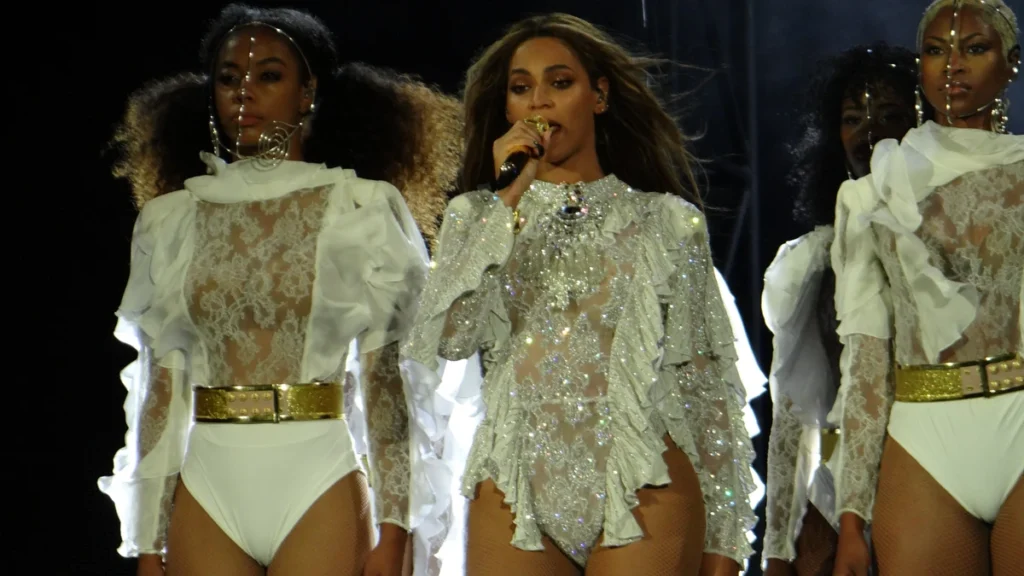
Beyonce singing into a microphone on stage flanked by dancers

B’Day Returns With Thirty-One Tracks and a Selena Duet

Beyonce performing live

B'Day is out again, twenty years on, and this time it runs to thirty-one tracks. The expanded edition arrived alongside the album's twentieth anniversary and Beyonce's birthday on 4 September, and it is a genuine expansion rather than a remaster with two bonus cuts attached.

The headline addition is a duet that could not have been made at the time. Irreemplazable (Como La Flor) folds Beyonce's Spanish-language version of Irreplaceable together with Selena Quintanilla's Como La Flor, released with permission from Selena's estate. Beyonce had previously cited Selena as an influence on the Spanish-language material from this era, which is what makes the pairing read as a closing loop rather than a novelty.

What Is New on the Record

Three tracks are previously unreleased. Alongside the Selena duet there is Cuerpo (Tumbao), a rework of Get Me Bodied featuring Maluma and built on a sample of Celia Cruz's La Negra Tiene Tumbao, and Can I Watch You, produced by Beyonce with Pharrell.

The vault material fills out the rest. Three B-sides return in Lost Yo Mind, Creole and Back Up, and My First Time appears from the sessions for 2003's Dangerously in Love, which puts a track older than B'Day itself on a B'Day reissue. Morning Dew (Donk), released in July, is also included, with the JAY-Z remix that followed in August.

Production credits on the new material are specific. Cuerpo (Tumbao) is produced by Beyonce, Edgar Barrera and CASTA, with co-production from Ali "Ali Ali" Alvarez. Can I Watch You is a Beyonce and Pharrell production. Consequence listed the full contents when the edition landed.

The Physical Editions

The packaging is where the twentieth-anniversary framing shows. The deluxe physical set is four LPs on 180-gram blue vinyl with a 60-page booklet and two art prints, sitting above standard two-LP and CD editions.

A 60-page booklet is a substantial object for a reissue, and it signals the intended buyer: someone who owned the record in 2006 and wants the artefact, rather than someone discovering it on a playlist. The four-LP length is a straightforward consequence of the track count, since thirty-one songs will not fit on two discs at listenable cutting levels.

That split between a 31-track digital edition and a collector's vinyl set is now the standard shape of a major anniversary release. The digital version does the streaming work and the physical version does the revenue.

Maluma Found Out in Public

The Maluma feature is the first collaboration between the two artists, and his reaction arrived on Instagram Story in Spanish rather than through a label statement. "I can't believe it. I never imagined I'd be saying this," he said, before adding "Colombia en la casa, carajo" and calling the track, in his own words, an enormous flex.

That is a more useful data point than it looks. Consequence reported the reaction, and the unguarded delivery suggests the feature was kept tightly under wraps until release, which is consistent with how this campaign has been run generally.

Musically, the track does something more interesting than a guest verse. Get Me Bodied was already a percussion-led record, and pushing it through La Negra Tiene Tumbao moves it into a different rhythmic tradition rather than layering one on top. A bilingual version of a twenty-year-old album track is a reinterpretation, not a remix.

What Beyonce Says She Was Doing in 2006

The press release accompanying the reissue carries a statement from Beyonce about what she was aiming at first time round, and it is more specific than most artist reflections on their own back catalogue. "Hip-hop was taking over at the time, but I was fighting to preserve the bridges, melodies, and harmonies that have always been at the heart of R & B," she said. "The goal was to blend those two worlds through the art of sampling. I loved the minimalism of a beautiful vocal arrangement over a simple drum loop or a classic guitar like 'Irreplaceable'…but only if that 808 was banging underneath."

That is a useful description of the record's actual construction, and it explains why the anniversary edition leans so heavily on sampling rather than on remixes. Cuerpo (Tumbao) applies the stated method to a new set of source material two decades later, which makes it continuous with the album rather than bolted onto it.

At the time of release, ABC News reported, she had said she wanted the album to be big, hard, up-tempo and energised, which is the shortest accurate description of B'Day anyone has managed. The reissue includes remastered versions of the original tracks alongside the Spanish-language recordings, and features from the era include Alejandro Fernandez, Voltio and Pharrell.

Why This Album Gets the Treatment

B'Day arrived on 4 September 2006 and won Best Contemporary R&B Album at the 2007 Grammys. It has always occupied an unusual position in the catalogue: made quickly, dense with percussion, and more aggressive than the album before it, which is why its reputation has risen steadily rather than peaking on release.

An anniversary edition works best when the vault has something in it, and this one clearly did. Three unreleased tracks plus four archival cuts is a real haul from a period two decades old, and it suggests the sessions produced considerably more than the original running order used.

The Spanish-language thread is the part that has aged most interestingly. Irreemplazable was a serious commercial move at the time rather than a token gesture, and building the anniversary around a Selena pairing and a Colombian feature makes explicit what the original edition only implied.

The Permissions Behind the Two Big Tracks

The two most striking additions both required somebody outside the project to say yes, which is the part of a vault release that never appears in the tracklist. Neither could have been assembled by opening a hard drive.

Irreemplazable (Como La Flor) needed Selena Quintanilla's estate to grant permission for a posthumous pairing. An estate controls not only the recording and the composition but the reputational question of who the artist is heard beside, and that second consideration is why so many proposed posthumous duets never happen. Approving one means accepting an interpretation of the artist's legacy that the artist cannot revise.

Cuerpo (Tumbao) required a different clearance. Building it on Celia Cruz's La Negra Tiene Tumbao means licensing both the master and the underlying composition, and doing so for a track that is itself a rework of an existing Beyonce recording. That is a stack of rights three deep on a single song, before Maluma's new verses are added on top.

The production credits show the same layering. Beyonce, Edgar Barrera and CASTA are credited as producers on Cuerpo (Tumbao), with Ali Alvarez co-producing, which is a four-name credit block on a reinterpretation of a song that already had its own producers in 2006. Anniversary editions are usually described as archival exercises, and the archival parts here genuinely are: the three B-sides and the Dangerously in Love outtake needed nothing but a decision to release them. The two headline tracks are new commissions wearing an archival label, and they are the reason this edition is worth more than a remaster.

What Reissues Are Competing With Now

A thirty-one-track edition is not a small ask of a listener's attention, and it lands in a market where catalogue is competing directly with new releases for the same streaming minutes. The physical side of the same release is doing well, which MusicDrops.News noted when Kylie Minogue took a Christmas reissue to number one.

The mechanics reward it. A deluxe edition re-enters the album into the release cycle with new metadata, which puts it back in front of algorithmic surfaces that would otherwise treat it as a twenty-year-old record. Three previously unreleased tracks give editorial playlists something legitimately new to add.

The risk is dilution: a listener arriving at B'Day for the first time now meets a thirty-one-track object rather than the tight thirteen-song record that built its reputation. Most streaming services keep the original edition available separately, which is the sensible answer, but the deluxe is what the algorithm will surface.

What to Play First

Start with Irreemplazable (Como La Flor), because it is the track that could only exist now and required a decision by another artist's estate to be possible at all. Then Cuerpo (Tumbao) for the rhythmic rework, which is the most substantial reimagining of an existing song here rather than an addition beside it.

Can I Watch You is the one for people who track producers, since a Beyonce and Pharrell co-production held back for two decades is an unusual thing to release without ceremony. The three B-sides are for completists, and My First Time is a curiosity from a different album's sessions.

After that, the original thirteen tracks are still there and still work in sequence. Twenty years is long enough for a record to stop being a recent album and start being a reference point, and B'Day crossed that line some time ago.

Watching The Tide Is Steve Cropper's Final Studio Album

Watching The Tide Is Steve Cropper’s Final Studio Album

Watching The Tide arrived on 28 August through Provogue Records, on CD, LP and digital, credited to Steve Cropper & The Midnight Hour. It runs to twelve tracks and it is the last studio album Steve Cropper finished before his death on 3 December 2025.

The thing worth knowing before pressing play is on track three. Brian May wrote the lyrics to "My Angels Are Calling" from Cropper's perspective, and sings them himself.

The Record He Was Determined to Make

Most people assumed the Grammy-nominated Friendlytown, from 2024, would close the catalogue. Cropper had other ideas.

"Making music was Steve's greatest joy," longtime collaborator, songwriter and producer Jon Tiven told The Blues Magazine. "He was energized by Friendlytown and was determined to make another record." Sessions took place at RCA Studio C in Nashville, where Cropper is reported to have stayed sharp and fully engaged throughout.

This is a posthumous release only in the narrow sense that it came out after he died. He played on it, finished it and signed it off.

Brian May Wrote Lyrics From Cropper's Perspective

"My Angels Are Calling" opens with ocean sounds, then May's vocal. He wrote the words as if he were Cropper, which is an unusual thing to attempt and an unusually direct one.

"I'm here to thank you Lord for taking me on board; I been a lucky man," he sings, and later, "but now my angels are calling, my angels are calling me home. My angels are calling to bring me back where I belong." Billy Gibbons plays on the same track.

Writing a farewell in someone else's voice could easily have gone wrong. Reviewing the album for Blues Rock Review, Moe Moore called it "a beautiful piece, especially considering the circumstances", and said it deserves an audience beyond people who already knew Cropper's work.

Clapton Opens the Guest List

The first single, "Ticket First", features Eric Clapton and came out ahead of the album. Tiven says Clapton recorded eleven takes of it in Nashville.

Its origin is a joke Cropper used to tell, about a woman who rubs a magic lamp and asks the genie to let her win the lottery. The genie tells her she needs a ticket first. Roger C. Reale sings the payoff line: "If you want to win the prize, you got to get a ticket first."

Ronnie Wood adds slide guitar to "Until Now", a blues rocker with Reale again on lead. Gibbons returns alongside vocalist Ana Grosh on "Stand Right Here".

Twelve Tracks, and Two Titles That Point Backwards

The tracklist runs: "Tandoori Chicken", "Ticket First" featuring Eric Clapton, "My Angels Are Calling" featuring Brian May and Billy F. Gibbons, "Until Now" featuring Ronnie Wood, "Blood From A Stone", "Here & Gone" featuring Ana Grosh, "It's Gonna Get Worse", "Down & Out", "Stand Right Here" featuring Billy F. Gibbons and Ana Grosh, "Tipoff To The Ripoff", "House Of Cards" and "Tandoori Chicken Part 2".

Both names on the sleeve are self-references. The album title comes from a lyric in "(Sittin' On) The Dock Of The Bay", which Cropper co-wrote with Otis Redding. The band name comes from "In The Midnight Hour", which he co-wrote with Wilson Pickett.

A record that opens and closes on two parts of the same instrumental, and takes its title from a song about watching time pass, is not accidentally structured.

Who Actually Plays on It

The Midnight Hour is Cropper on guitar, Jon Tiven on keyboards, bass, saxophone and vocals, Roger C. Reale on lead vocals, Ana Grosh on vocals, Nioshi Jackson on drums and percussion, and Eddie Gore on keyboards and percussion. The four guests appear across four tracks.

It is worth stating who the bandleader was, because the guest list can make a record like this sound like a tribute assembled around an absence. Cropper was born in Dora, Missouri, moved to Memphis at nine and got his first guitar at fourteen. He was an early member of the Royal Spades, who became The Mar-Keys, and then a founding member of Booker T. & the M.G.'s, the Stax Records house band. He played in the Blues Brothers Band.

His co-writes include "Sittin' on the Dock of the Bay", "Green Onions", "In the Midnight Hour" and "Knock on Wood". He took seven Grammy nominations and won twice, entered the Songwriters Hall of Fame in 2005 and the Nashville Songwriters Hall of Fame in 2010, and sits 36th on Rolling Stone's list of the 100 greatest guitarists. Keith Richards summarised him in two words: "Perfect, man."

Where the Playing Came From

Cropper's style was formed in Memphis rather than in the Delta, and the distinction shows up in what he does not play. He arrived in the city at nine and was exposed to a great deal of Black gospel music, which Blues Rock Review identifies as the formative influence on his playing. His named guitar influences were Chuck Berry, Chet Atkins, Lowman Pauling and Jimmy Reed, which is a short list covering rock and roll, country fingerstyle, gospel-schooled R&B and downhome blues in four names.

What came out of that combination was a player who served the song. The records his parts sit on are famous for their restraint: the guitar arrives, states something small and gets out of the way of the vocal. That is a producer's instinct as much as a guitarist's, and Cropper was both, plus an engineer and a songwriter, which is why his catalogue is so much larger than his solo discography suggests.

It is a useful frame for this album, because a record with Clapton, May, Gibbons and Wood on it could easily have become a guitar exhibition. It does not. The guests appear across four of the twelve tracks and each is given a defined job: Clapton a blues lead, Gibbons a texture, Wood a slide part, May a lyric and a vocal. Reviewing it, Moore described the set as twelve tracks of masterfully performed and recorded music and singled out the band itself, not the visitors, for doing an outstanding job.

For a first listen, "Ticket First" and "Until Now" are the two that move; "My Angels Are Calling" is the one to sit with.

He Heard It, and He Called It His Best

Cropper was in hospital when Tiven brought him a copy. According to Tiven, he phoned the night before he died to say how much he loved the recording, and that it was the best record he had ever made.

That is a large claim from a man who played on "Green Onions". It is also the only review of this album that carries any real authority, and it is worth taking at face value rather than treating as sentiment: he had heard the mixes, he knew the catalogue he was measuring it against, and he made the call himself.

Whether a listener agrees matters less than what the sequence documents. A guitarist in his eighties, energised by one late record, went back in and made another with friends who flew in to play on it, then got to hear it finished.

Blues Rock Review's Moore notes the obvious caveat: this is the last release under the name unless unreleased recordings surface, which, given how productive Cropper was, would surprise nobody.

For anyone tracking what is out this season, it lands in an unusually crowded week for the genre. The same 28 August date brought new records from Danielle Nicole, Kevin Burt and Heather Anne Lomax, a fiftieth-anniversary Antone's tribute and the first Alabama Shakes album in eleven years, all listed on The Blues Magazine's 2026 release calendar. Watching The Tide is the one with a full stop at the end of it.