Meshell Ndegeocello Recasts 15 Classic Duets on Synonym
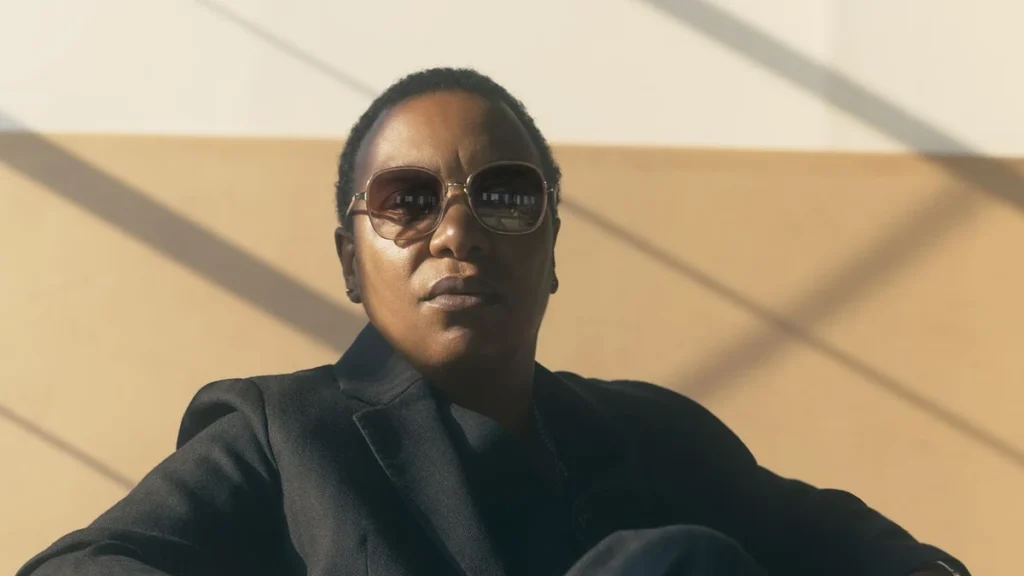
Meshell Ndegeocello released Synonym on 2 October through Blue Note Records. It runs to 15 cover songs, every one of them a duet, and the twist is in the pairings: each song is sung by people who identify as the same gender.
That turns a familiar list of classic duets into something new. Here is what is on the record, who is singing, and why it stands out.
What Synonym Is and Who Made It
Synonym is Meshell Ndegeocello’s third album for Blue Note. It arrives on colour vinyl, black vinyl, CD and digital download.
The songs range from 1960s folk and 1970s soul, country and pop to 1980s R&B and electro-boogie, early-1990s alternative rock and early-2000s hip-hop, according to Blue Note’s announcement. The label describes the themes as desire, care, heartbreak, friendship, disappointment and love in all its forms.
Ndegeocello co-produced the album with Abe Rounds and David Gamson. The Gamson credit is a reunion: he produced her first two albums, Plantation Lullabies in 1993 and Peace Beyond Passion in 1996.
Ndegeocello describes the collection as classic songs that are known and loved, chosen for their different tones, genres and grooves. She has also said the album is about joy, selfhood, individual representation and universal experience, which is a wider brief than most covers records set themselves.
The Same-Gender Duet Idea
The concept is simple to state and harder to pull off. On Synonym, every song becomes a duet sung by two people who identify as the same gender, which changes how familiar lyrics about love and longing land.
Ndegeocello has been careful about how she frames that. She told Blue Note the pairings were people of the same gender, or who hover around the same continuum of feeling, and said she was not trying to define anything, because the absence of definition is where she feels most free.
The title carries the same idea. A synonym is a word that means the same thing as another, and she applies that to people: different on the surface, the same underneath. “This project is an expression of queer liberation as a synonym for liberation of all kinds,” she said. The arrangements follow the same logic. They sound different from the originals, but they mean the same thing.
She has explained the choice of word in two steps. First, she says, it simply feels good to say. Then comes the definition, a word or phrase that means the same thing as another, which she connects to people: whatever our differences, she argues, most of us want the same basic things, such as healthy food and a safe place to live. She also points back to the writer Audre Lorde and the idea that there is no single-issue struggle, which is how a covers album ends up carrying a statement about liberation.
The Guests, Track by Track
The album opens with “I Knew You Were Waiting (For Me)”, the George Michael and Aretha Franklin duet, sung by Ndegeocello with Cynthia Erivo. It was the lead single when the album was announced in July.
Cat Power joins on “Don’t You Want Me”, the Human League hit. Nick Hakim and Robert Glasper take “Don’t Stop the Music”, first recorded by Yarbrough and Peoples. Chaka Khan sings “Islands in the Stream”.
Madison Cunningham joins on Bob Dylan’s “It Ain’t Me Babe”. Laura Lee of Khruangbin takes “Always on Time”, the Ja Rule and Ashanti hit, which pulls the record into early-2000s hip-hop.
The middle of the album leans into soul. Emily King and Lizz Wright share “Be Real Black for Me”. Lianne La Havas sings “Don’t Look Any Further”. Destin Conrad and Moses Sumney take “The Closer I Get to You”.
Then the country and pop end of the list. Brandi Carlile joins on “Golden Ring”. ANOHNI sings “I Got You Babe”. Evann McIntosh takes “Here We Come (Here He Comes)”, and Ink sings “Guilty”.
WILLOW joins on “Hunger Strike”, the early-1990s alternative rock song. The album closes on Bob Dylan’s “With God on Our Side”, with Bill Callahan and Chris Thile. That was the final single before release.
The Band Behind the Duets
The guest list is the headline, but the playing is what holds it together. Blue Note lists a rotating cast of Ndegeocello’s regular collaborators: Abe Rounds and Deantoni Parks on drums, Chris Bruce on guitar, and Jake Sherman, Jebin Bruni and Larry Goldings on keyboards.
Josh Johnson and Levon Henry play saxophone. Elena Pinderhughes plays flute. Béla Fleck appears on banjo.
The wider credits run deeper still. That Eric Alper’s release-day rundown adds guitarists Ella Feingold, Wendy Melvoin, Oliver Leiber and Doyle Bramhall, keyboardist Benny Bock, and bassists Gabe Noel and Alan Hampton to the list.
That matters on a covers record. With 15 different guest voices, the band gives the album one sound rather than 15. Ndegeocello has said she wanted this record to show her as a producer, and the consistency of the arrangements is where that shows.
Why It Matters Now
Synonym follows two Grammy-winning records. The Omnichord Real Book (2023) and No More Water: The Gospel of James Baldwin (2024) both won the Grammy for Best Alternative Jazz Album, as That Eric Alper noted on release day. They were the first Grammys awarded to her own albums in a three-decade recording career.
That run bought her room to try something big. A duets album with this many guests is an ambitious project for any artist, and a concept built on same-gender pairings gives it a point of view rather than a novelty hook. Blue Note itself calls it one of the most ambitious projects in her discography.
The test of a duets record is whether the voices fit, and Ndegeocello has named that as her own measure. She has said she hopes what stands out is that everyone is well matched musically and that the singers complement each other, rather than the concept doing all the work.
Ndegeocello has said the queer community claimed her when others did not, and that she now recognises how her communities overlap. Synonym reads as a response to that, put in the language she knows best: other people’s songs, played her way.
Where It Sits in Her Catalogue
Covers have always been part of Ndegeocello’s work. She has traced it back to playing in go-go bands in Washington, D.C., where musicians had to take somebody else’s song. On Synonym she treats the songs as frameworks rather than scripts.
The record also continues her move away from albums that centre on herself. She has said she wants to make more collective music, and that being on Blue Note means she still gets to be a musician. The band motto on her recent records puts it plainly: Meshell Ndegeocello is a band.
For listeners who know her mainly from the 1990s singles, Synonym is a good way back in. The songs are familiar, the guest list is wide, and the producer who shaped those early records is back in the room.
Where to Start
Three tracks make a good first listen. “I Knew You Were Waiting (For Me)” with Cynthia Erivo was the lead single and opens the album. “Always on Time” with Laura Lee shows how far the genre range stretches, into early-2000s hip-hop. “With God on Our Side” with Bill Callahan and Chris Thile was the final single and closes the record.
From there, the running order moves through the decades in a way a playlist would not, with the same core band linking the stylistic jumps.
For more of the autumn’s album releases, see our round-up of six new albums worth hearing, from Tinashe to Tom Morello. Synonym by Meshell Ndegeocello is out now on Blue Note Records.
About The Author