Hans Zimmer Is Running Three Separate Tours This Year
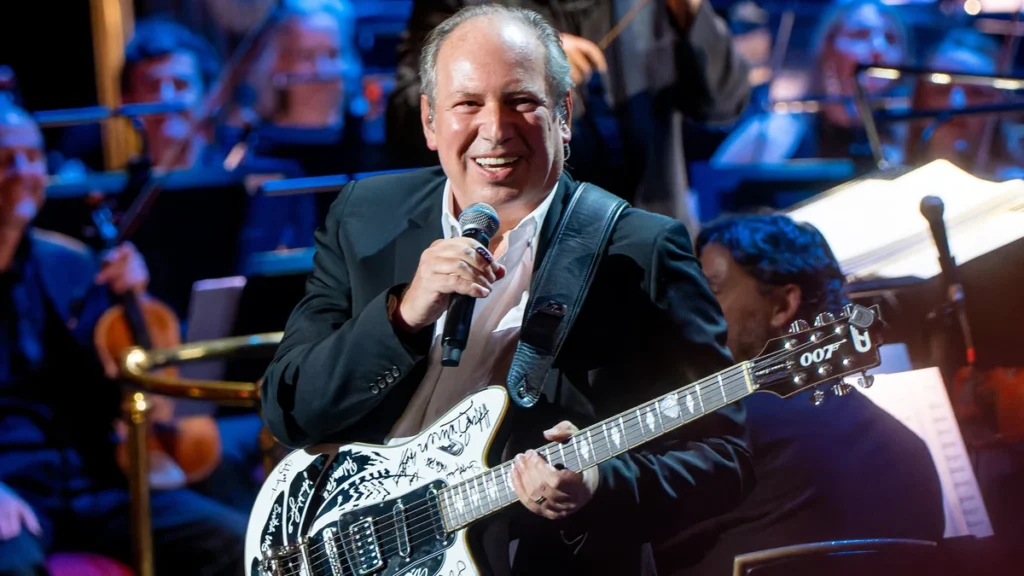
Hans Zimmer performing with an orchestra in 2022.
Hans Zimmer performing with an orchestra in 2022.
Hans Zimmer has three separate productions touring under his name this year, and he appears on stage in only one of them.
The others run with an orchestra, soloists and his name on the poster.
Three Shows at Once
Running three touring productions simultaneously is not something composers do, and it is barely something bands do.
A conventional artist tours one show, because there is one of them and the show is built around their presence.
Detaching two of the three from the person named on the ticket turns a tour into a format, which can be staged in several countries at the same time.
That is a structural difference from how live music normally works, and it is the reason this operation has the scale it does.
The One He Plays In
Hans Zimmer Live is the production he performs in, and it reached Asia and Australia before returning to European arenas.
It runs to roughly three hours, which is long for any concert and extremely long for orchestral material.
Zimmer appears in it as a bandleader rather than as a conductor, playing keyboards and guitar in what is closer to a rock configuration than an orchestral one.
The Two He Only Curates
The other two productions carry his name and his music without him being present.
He functions as musical director and curator, which means selecting the repertoire, approving the arrangements and shaping how the evening is structured.
That is a real creative role and it is also, unavoidably, a licensing arrangement, since the show exists to sell tickets on a name that is not in the building.
Forty Concerts From Luxembourg
The immersive symphony production opened on 6 March in Luxembourg and runs to close to forty concerts.
The routing covers Luxembourg, France, Austria, Germany and Switzerland, which is a tight geographical cluster rather than a continental tour.
Dense routing of that kind is what makes a forty-date run of a large production financially possible, because the travel between dates is measured in hours rather than days.
The Orchestra on Stage
The European production is performed by the Odesa Orchestra and Friends alongside soloists from Zimmer’s own ensemble.
Touring orchestras assembled for a specific production are a distinct part of the live industry, and they work differently from resident symphony orchestras.
A resident orchestra plays a season in one hall. A touring one plays the same programme forty times, which produces a very different kind of ensemble.
Twenty-Four American Arenas
The arena production brings twenty-four North American dates from September, ahead of European arena dates in October.
Arena-scale orchestral touring is a relatively recent development and it depends entirely on production values, since the acoustics are hostile and the sightlines are poor.
What sells those rooms is the visual staging as much as the music, which is why these shows are described in terms of dimension and immersion rather than repertoire.
The Repertoire Is the Draw
The programmes are built from scores for films that were enormously successful, and the audience arrives knowing every cue.
That is a completely different relationship from a classical concert, where a substantial part of the audience is hearing a work for the first time.
Film music concerts operate more like a greatest-hits set, with the recognition of each theme forming part of the event.
Why Film Scores Fill Arenas
The commercial logic is straightforward once stated. Hundreds of millions of people have heard this music, and almost none of them think of themselves as classical listeners.
An orchestral concert marketed as classical reaches an audience of a certain size and a certain age. The same orchestra playing film music reaches a different one entirely.
That is not a small distinction for the orchestral world, which has spent decades trying and failing to find new audiences by other means.
What Gets Lost Without Picture
Film music was written to accompany images, and removing the images changes what the music is doing.
A cue built to underscore tension has a shape determined by the scene rather than by musical logic, and played alone it can feel like it is waiting for something.
Concert versions therefore have to be rearranged, usually by combining several cues into a suite with a beginning and an end, which is a compositional job in itself.
The Composer as a Brand
Very few film composers are known by name to general audiences, and a name that can sell an arena without the person attending is rarer still.
What produced that recognition was a run of scores for films with enormous audiences, combined with a sound distinctive enough to be identified without credits.
The result is a name that functions commercially the way a band name does, which is why two shows can tour on it while he is elsewhere.
Zimmer’s Route Into Film
He came into scoring from popular music rather than from a conservatory, which is unusual for a composer at this level and audible throughout the work.
The approach relies heavily on synthesis, on ostinato patterns rather than developed melody, and on treating the orchestra as one texture among several.
That method has been enormously influential and enormously criticised, largely by people who prefer the tradition it displaced.
A Talent Factory
His operation has functioned for decades as a training ground, with a substantial number of working film composers having come through it.
That structure resembles a workshop more than a studio, with senior figures overseeing multiple projects and junior composers doing a great deal of the writing.
It is how film music has actually been produced for a long time, and it is discussed far less often than the single credited name on a poster suggests.
Three Productions and the Risk of Saturation
The obvious hazard is dilution, since three shows drawing on the same repertoire in the same year compete with each other.
The mitigation is geography and staging: different territories, different scales, different visual concepts around a largely shared catalogue.
Whether an audience distinguishes between them is the open question, and it is the one that determines how long this model lasts.
How a Show Tours Without Its Artist
The mechanics of a touring production built on an absent name are worth understanding, because they are increasingly common.
The production is assembled once, with arrangements, staging, lighting and visual content locked in place. A musical director rehearses the ensemble against that fixed template, and the show is then reproducible by any competent orchestra.
What the named artist supplies is the repertoire, the approvals and the reputation. What the production supplies is everything else, and the two are contractually separable in a way a rock tour is not.
The model has been used for decades by orchestral pops programmes and by tribute productions. What is new is a living composer operating it on his own catalogue, at arena scale, while simultaneously touring a show he does appear in.
What This Means for Orchestras
Film music touring has become a significant employer of orchestral musicians, and the implications are mixed.
It provides steady, well-paid work in a field where steady work is scarce, and it puts orchestral playing in front of audiences who would never buy a symphony ticket.
The criticism from inside the profession is that it is repetitive work with limited artistic development, playing the same forty-concert programme rather than a varied season.
Both things are true, and most musicians who do it describe it in exactly those terms: good money, real audiences, and a programme they could play in their sleep by the twentieth date.
What Is Actually Being Tested
Two things. Whether three concurrent productions on one catalogue expand the audience or divide it.
And whether a show that tours successfully without the composer present has proved that the name is the product, which is a conclusion with implications well beyond film music.
Three productions, one composer, forty European concerts, twenty-four American arenas, and one stage he actually stands on.
About The Author