Protoje Made The Art of Acceptance With Winta James
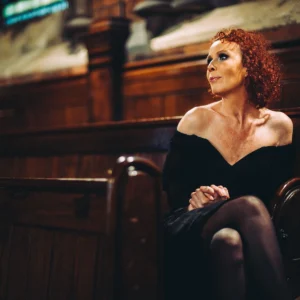
Protoje performing at a reggae festival.
Protoje released his seventh album in April and spent the following months touring it across two continents.
It was produced by Winta James and made almost entirely with Jamaican collaborators.
An Almost Entirely Jamaican Cast
The guest list is the clearest statement the record makes, and it is a statement about where the music is from.
Reggae and dancehall albums aimed at international audiences routinely reach outside the island for features, usually to American rappers or pop singers, because that is what opens playlists.
Building a record from Jamaican artists instead is a decision to be judged on the terms of the music rather than on its crossover potential.
It also produces a different record, since the collaborators share a rhythmic vocabulary that does not have to be explained to anybody in the room.
Two Marleys on One Album
Damian and Stephen Marley both appear, which is a substantial endorsement in a scene where lineage still carries weight.
Both have long careers of their own and both work at the more experimental edge of what reggae is allowed to be, rather than as custodians of a legacy.
Their presence positions the album within a tradition without making it a tribute to one, which is a distinction reggae records frequently fail to manage.
Dancehall Alongside Roots
The guest list also crosses a line that is often treated as a border, bringing dancehall artists onto a record that is broadly roots reggae.
Those two forms have distinct audiences, distinct venues and, frequently, distinct opinions about each other.
Records that put them together are attempting to describe Jamaican music as one thing rather than two, which is closer to how it is actually made.
The Producer Relationship
Winta James has worked with him across multiple albums, and continuity of that kind is the most underrated factor in a catalogue.
A producer who has made four or five records with an artist knows what has already been tried, which removes an enormous amount of wasted studio time.
It also means the sound develops rather than resets, so a listener can follow a line through the catalogue instead of encountering a different project each time.
Running His Own Label
The album comes out through his own collective in partnership with an independent label.
Artist-owned labels in Jamaican music have a long and mostly difficult history, since distribution and international marketing are exactly the things a small operation cannot do alone.
Pairing an artist-owned imprint with an established independent solves that, and it is now the standard structure for reggae records that reach outside the Caribbean.
What a Collective Is For
His imprint functions as more than a release vehicle, having put out records by other Jamaican artists alongside his own.
That is a deliberate use of a position, since an artist with international distribution can extend it to people who do not have it.
Scenes that produce infrastructure rather than only individual stars tend to last longer, which is the argument for doing it.
Nineteen Cities Across Europe
The European leg ran nineteen cities and closed in London on 12 April, five days before the album came out.
Touring ahead of a release is unusual and it is a specific bet: the audience is already there, so the shows sell on the catalogue and the new material arrives as a preview.
Europe has supported reggae touring more consistently than anywhere outside Jamaica, with a festival circuit that has run for decades.
Twenty-Five Cities in North America
The American run covered twenty-five cities, which is a substantial routing for a reggae act.
The market is real but scattered, concentrated in Florida, California, New York and college towns, with long distances between the places that sell tickets.
A twenty-five city run means playing several markets that most international acts skip entirely.
Red Rocks in May
The tour included Red Rocks Amphitheatre outside Denver on 17 May.
Colorado has one of the most durable reggae audiences in the United States, which surprises people who assume the music travels only to coastal cities.
Red Rocks in particular has a long association with the genre, and a headline date there is a marker most reggae artists do not reach.
The American Festival Circuit
The routing took in several dedicated reggae festivals as well as a major jazz and heritage festival.
Genre festivals do the work that radio does not, gathering an audience that would otherwise be invisible to promoters.
Appearing at a non-genre festival alongside them is the move that reaches listeners who did not come looking for reggae at all.
Playing With a Live Band
He tours with a named band rather than over backing tracks, which is less common in contemporary Jamaican music than the history suggests.
Dancehall in particular is frequently performed over recorded rhythms, because the music was built in a sound-system culture where that was the format.
A full band changes what a set can do, since arrangements can stretch, and it is the main reason reggae acts hold festival stages built for rock audiences.
After a Grammy Nomination
The previous album drew a Grammy nomination, which changes the commercial position of the record that follows it.
Nominations in genre categories rarely move sales much, but they change what promoters will pay and what festivals will book.
That is the practical value: not the trophy but the line on a booking agent's email.
Reggae Revival and What Came After
He emerged from a generation of Jamaican artists who returned to roots reggae at a point when dancehall dominated the island's output.
That movement was widely covered internationally, partly because it fit a story about tradition being rescued, which was never quite what the musicians said they were doing.
What has happened since is more interesting than the label suggested: the same artists have moved across dancehall, hip-hop and R and B without treating any of it as a betrayal.
Why Jamaican Music Travels Differently
Reggae's international position is unlike that of any other music from a small country, and the reasons are historical rather than musical.
It arrived in Britain with Caribbean migration and became part of British popular music from the inside rather than as an import, which is why the UK has a reggae audience that is not defined by nostalgia.
In continental Europe it took a different route, through festivals and sound systems, and built an audience that is largely white, largely young and enormously loyal.
Neither of those routes ran through American radio, which is why a Jamaican artist can sell out European cities while remaining unknown to most American listeners.
The Cost of Not Chasing Crossover
Making a record with local collaborators rather than international guests has a measurable commercial cost.
Features are the main mechanism by which songs enter playlists outside their home genre, and a record without them is largely dependent on an audience that already exists.
The offsetting argument is durability. Crossover records date quickly because they are built around whoever was popular in the year they were made, whereas a record built on a scene ages with the scene.
Seven albums into a career, the second calculation starts to look better than the first.
What Is Actually Being Tested
Two things. Whether a record made without international features can carry a forty-four city tour across two continents.
And whether an artist-owned label paired with an independent distributor is now a durable structure rather than a compromise.
Seven albums, one producer across most of them, nineteen European cities, twenty-five American ones, and a guest list that never left the island.