Month: August 2026

Wynonna Judd Co-Wrote an Album for the First Time

Wynonna Judd Co-Wrote an Album for the First Time

Wynonna Judd singing on stage.

Wynonna Judd releases The Hard Truth on 2 October, reported as the first album she has co-written.

It arrives through ANTI- Records, an independent label rather than a Nashville major.

Four Decades Before the First Co-Write

The detail worth sitting with is how long it took, because she has been making records since the mid-1980s.

Country's professional system separates singing from writing more strictly than any other genre, and singers of her generation were rarely expected to write at all.

Songs arrived from a pool of professional writers, were selected by an artist and a producer, and the singer's job was interpretation.

Deciding to write at this stage is therefore not a natural next step but a departure from how the career was constructed.

Why Interpretation Was the Job

The division of labour was not an accident, and it was not a judgement about anybody's ability.

Nashville built a system in which writers wrote full time and artists toured full time, and both halves were better at their jobs for the specialisation.

What the system produced was a very high floor and a fairly low ceiling: consistently competent records, very few strange ones.

A Label From Outside the Genre

ANTI- is an independent label with roots outside country, and it has a long record of taking on established American artists later in their careers.

The arrangement usually works the same way: the label offers creative latitude in exchange for accepting that the record will not be worked to country radio.

For an artist who no longer needs radio, that is a straightforward trade, and it explains why so many veteran musicians end up on labels like this one.

Who Is On the Record

The contributors include Patterson Hood of Drive-By Truckers, the duo The War and Treaty, and Iron and Wine.

None of those is a mainstream country act. One is a Southern rock songwriter, one a gospel-rooted soul duo, and one a folk songwriter with an indie following.

That list describes the record's intended audience more precisely than any press release could.

What Patterson Hood Brings

Hood writes narrative songs about the American South that refuse both nostalgia and condescension, which is a difficult register to hold.

His subject matter overlaps almost exactly with country's, and his treatment of it does not, which is why his songs sound unfamiliar in a country setting.

Pairing that with a voice built for mainstream country is the kind of combination that either produces something genuinely new or fails visibly.

The War and Treaty on a Country Record

The War and Treaty are a husband-and-wife duo whose singing comes out of gospel and soul rather than country tradition.

They have been working steadily at the edge of the country establishment for years, welcomed in some rooms and not in others.

Their presence pushes the record toward the older, blurrier boundary between country and soul that existed before the formats separated.

Fifteen Dates, Opening in New York

The tour runs fifteen dates, opening on 8 October in New York City and closing on 21 November in Gary, Indiana.

Opening a country tour in New York rather than Nashville is consistent with everything else about this record.

Between those two dates it takes in Houston, Tulsa, St. Louis and Tampa, which is a compact run rather than a national campaign.

Ending in Gary, Indiana

Closing in Gary is an unusual choice for a country tour, since it is a small post-industrial city outside Chicago.

Tours that finish in places like that are generally doing so because a specific venue made sense rather than because the market did.

It is also, for a run this short, a reasonable distance from where it started, which matters when the whole thing has to be routed in six weeks.

A Dollar From Every Ticket

One dollar from each ticket goes to a fund administered through a music charity.

Per-ticket giving has become common enough that it now reads as standard practice rather than as a gesture, which is the point at which it starts to matter.

On a fifteen-date theatre run the total is modest, and the mechanism is what carries across an artist's remaining touring years.

Troubadour Blue in Support

Troubadour Blue opens all fifteen dates, which is the older model of a single support act rather than a rotating bill.

One opener across a whole run builds something a rotating cast cannot: a band that improves measurably over six weeks in front of the same kind of audience every night.

It is also considerably simpler to administer, which is why short tours almost always do it this way.

The Duo That Came First

Her career began in a duo with her mother, one of the most commercially successful acts country music has produced.

Duo singing is a specific discipline, built on blend rather than projection, and singers who come up in one develop an ear for harmony that solo performers rarely need.

Everything after that has been solo work, which is a longer stretch of the career than the part most people remember her for.

What Happens to a Voice Over Forty Years

The instrument changes across a career of that length, and pretending otherwise produces the worst kind of late-period record.

Range narrows, the top loses some ease, and what is gained is weight in the middle and an ability to place a note exactly where it is wanted.

Records built for the voice as it is now sound better than records built for the voice it used to be, and the difference is audible immediately.

Why Veteran Artists Move to Indie Labels

The pattern is consistent enough across genres to be worth stating plainly.

Major labels are structured around radio, and radio in every format prefers new artists, which means an established performer is expensive to promote and unlikely to be played.

Independent labels have a different arithmetic. They sell fewer records at a higher margin to an audience that buys physical copies and attends shows.

For an artist with a durable audience and no interest in chasing a format, the smaller label is the better deal in every direction that matters.

What Co-Writing Changes About a Set List

An artist who has spent forty years singing other people's songs has a catalogue full of material chosen rather than made.

That produces a particular relationship to a set list, in which the songs are a repertoire to be performed rather than a body of work to be represented.

Adding self-written material changes the balance of an evening, because those songs carry a different obligation and audiences read them differently.

The risk on a fifteen-date run is straightforward: an audience that came for the hits will tolerate new material in proportion to how good it is.

Late Records and the Reverence Problem

The main hazard of a late-career album is everybody involved treating the artist as a monument.

That produces records where the arrangements are careful, the guests are respectful, and nothing on the whole thing is at risk of failing.

The collaborators chosen here are not obviously reverent people, which is the strongest argument that this is not that kind of record.

What Is Actually Being Tested

Two things. Whether a singer who spent four decades interpreting other people's writing has something of her own worth a full album.

And whether an audience built entirely on mainstream country radio will follow her to an independent label and a set of collaborators from outside it.

Forty years, one first co-write, a label from the wrong genre, and fifteen nights to find out.
Ashley McBryde Recorded Wild Live With Her Touring Band

Ashley McBryde Recorded Wild Live With Her Touring Band

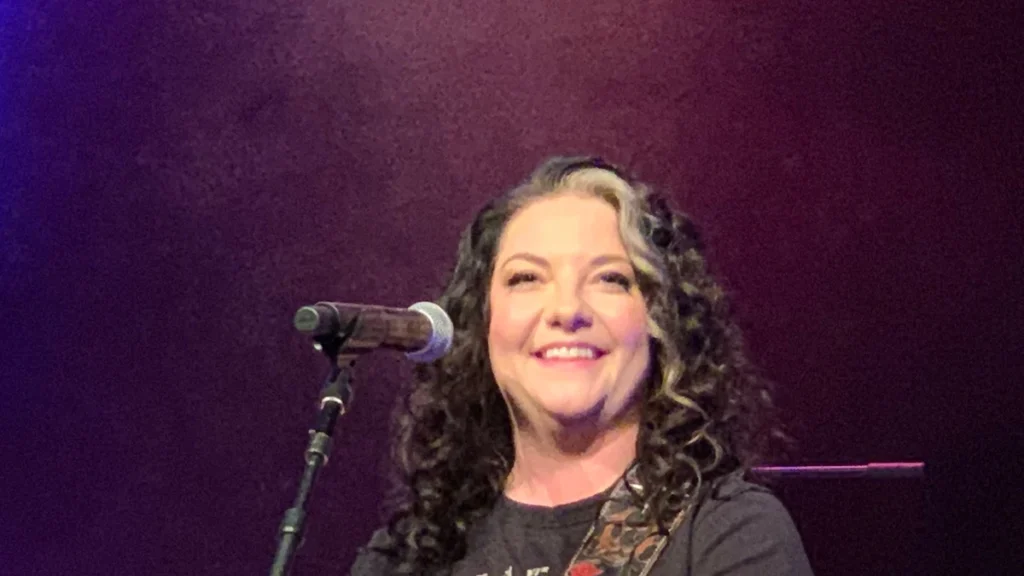
Ashley McBryde performing on stage.

Ashley McBryde made her fifth album with the band she tours with, recorded live rather than assembled from session players.

Twenty-six dates behind it open in Kentucky in September.

Recording With the Band You Already Have

The decision to record with a touring band is a bigger departure in Nashville than it would be almost anywhere else.

The city's studio system is built on a small pool of session musicians who play on an enormous share of what comes out of it, and they are extraordinarily good at it.

What they cannot do is know how a song has changed across two hundred nights on the road, because they were not there for any of them.

A band that has played the material live arrives with arrangements that have already been tested in front of people, which is a different starting point entirely.

What Live Recording Actually Means

Recording live means the players are in a room at the same time, and the take is the performance rather than a foundation for one.

The modern default is the opposite: a drum take, then bass, then guitars, then vocals, each recorded separately and each fixable in isolation.

That method produces clean records and removes the thing that makes a band a band, which is four or five people responding to each other in real time.

The Cost of Playing It Live

The trade-off is that mistakes are collective. A bad note in the third verse means the whole take goes, not just one player's part.

That requires either a great deal of studio time or a band that can genuinely play, and studio time is the expensive one.

Bands who have spent years on the road are the only groups for whom this is cheaper rather than dearer, which is precisely why the approach is tied to touring.

Who Produced It

John Osborne produced the record, which is a choice with an obvious logic behind it.

He is a working guitarist in a touring band rather than a career producer, and musicians who still play for a living tend to make different decisions in a control room.

The most common of those is a tolerance for imperfection, on the grounds that a slightly ragged take with the right feel beats a clean one without it.

The Lead Single at Radio

The first single went to country radio in February, three months ahead of the album.

Country radio remains genuinely important in a way it no longer is for most genres, with a formal add process and a chart that takes months to climb.

That lag is why country singles are released so far ahead of albums: the record has to arrive while the single is still ascending, not after it has peaked.

Naming the Band

The touring band has a name of its own, which is a small thing that signals something larger.

Most solo artists' bands are billed generically, if at all, and the players are interchangeable by design.

Giving a group a name makes replacing a member a visible event rather than an administrative one, and that is usually the intention.

Twenty-Six Dates in Old Theatres

The tour opens on 10 September at the Paramount Theater in Ashland, Kentucky, and runs through venues of a similar kind.

The Louisville Palace, the Alabama Theatre in Birmingham and the Robinson Center in Little Rock are all restored buildings from the first half of the last century.

They seat between one and three thousand, they were built for acoustic performance before amplification, and they sound better than anything built since.

Why the Routing Avoids the Obvious

Ashland, Walhalla and Goldsboro are not cities that appear on most national tours.

Routing through them is a decision about where the audience lives rather than where the industry pays attention, and it is a decision country artists make more often than others.

The rooms are smaller, but they sell out, and an audience in a town that rarely gets a headline tour behaves differently from one in a city that gets forty a month.

Little Rock and the Home State

The Little Rock date is a home-state show, since she grew up in Arkansas.

Those nights carry a different weight, and performers generally describe them as the hardest of a run rather than the easiest.

The audience contains people who knew you before any of this, which removes the distance that makes performing possible.

Finishing in Anaheim

The run closes on 1 December in Anaheim, which is about as far from the opening night as the routing could put it.

Country tours have played Southern California reliably for decades, despite a persistent assumption that the audience is regional.

Finishing on the West Coast in December is also a weather decision, since the alternative is a December date somewhere that might be under snow.

A Fifth Album and What That Means

Five studio albums is the point at which a catalogue starts constraining a set list.

An artist with five records has more material than a ninety-minute show can hold, which means every new album displaces songs the audience came to hear.

That is a good problem, and it is the first one that cannot be solved by working harder.

Theatres Versus Sheds

The choice of seated theatres rather than outdoor amphitheatres is a decision about what kind of evening this is.

Amphitheatres hold far more people and sell far more beer, and the back half of the audience is at a picnic rather than a concert.

A seated theatre puts everyone in a chair facing forward, which suits material that depends on the words being audible.

Songs Built to Be Heard

Her writing is narrative and detail-driven, which places specific demands on a room.

A song that turns on one line in the third verse fails completely if that line is lost, and there is no way to compensate for it with the arrangement.

Choosing venues where the lyric survives is therefore not a preference but a requirement of the material.

What a Touring Band Learns That a Session Player Cannot

The gap between the two is easiest to see in what happens to a song over a year of playing it.

Tempos settle. Almost every song ends up slightly slower or faster than the recorded version, because the room and the audience push it somewhere and the band follows.

Arrangements simplify. Parts that seemed essential in the studio turn out to be inaudible live and get dropped, while a small figure nobody planned becomes the thing the crowd waits for.

Recording after that process captures the version the songs became rather than the version they started as, and the two are frequently not the same song at all.

Why This Approach Went Out of Fashion

Live band recording was the only method available until multitrack tape made overdubbing practical, and it disappeared quickly once it did.

The reason was control. Separating the instruments means each one can be fixed, replaced or rebalanced afterwards, and a producer who can fix anything will eventually fix everything.

What got lost was the interaction. A drummer responding to a vocal phrase cannot do that if the vocal has not been sung yet, and the resulting records are accurate in a way that is difficult to describe as alive.

The method has returned in pockets, almost always with artists whose bands are already good enough not to need the safety net.

What Is Actually Being Tested

Two things. Whether a record made with a road band rather than session players sounds meaningfully different to an audience that does not know how it was made.

And whether twenty-six theatre dates in towns most tours skip build something a run of larger rooms would not.

Five albums, one band with a name, a restored cinema in Kentucky, and a set list that is already too long.

Chris Stapleton Added Twenty-Four Dates to the Road Show

Chris Stapleton Added Twenty-Four Dates to the Road Show

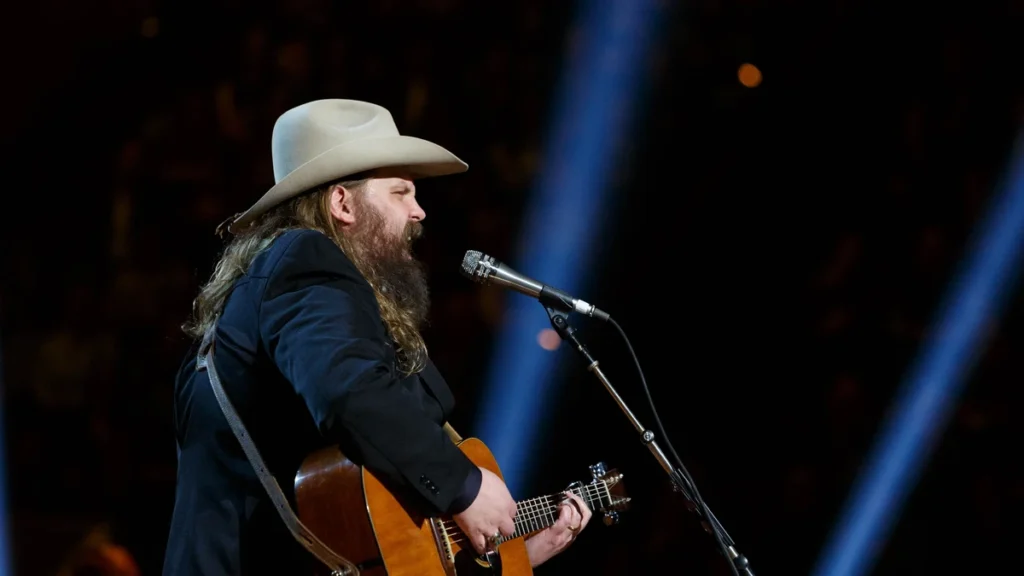
Chris Stapleton performing with an acoustic guitar.

Chris Stapleton added twenty-four North American dates to the All-American Road Show for 2026, most of them in stadiums.

The run opened at Nissan Stadium in Nashville in May and closes in Kansas City in October.

A Tour With a Name That Has Outlasted Albums

The All-American Road Show has carried the same name since 2017, which makes it a franchise rather than a tour.

Most touring is named after the album it supports, which ties the branding to a two-year cycle and forces a new identity every time.

Keeping one name across a decade builds something an album title cannot: an annual event that an audience recognises without having to check what record it belongs to.

It also removes the requirement to have a new album at all, which is the practical reason artists do it.

Opening at Nissan Stadium

The 2026 run opened on 23 May at Nissan Stadium, the football ground in Nashville.

Opening a national tour in the city you are most associated with is the conventional choice and it carries a specific risk, because a hometown crowd will forgive a rough first night that a paying audience elsewhere will not.

Playing a stadium rather than an arena for that first date removes the option of easing into the run.

Seven Acts in the Opening Slot

Rather than a single support act, the 2026 dates rotate through several, drawn from mainstream country, Americana and rock.

Rotating openers is administratively harder than booking one act for the whole tour, since every change means new contracts, new production requirements and a different soundcheck.

What it buys is variety for the headliner's own audience and exposure for a group of artists rather than one, which is a use of the slot that costs the headliner nothing.

Fenway Park in August

The routing includes Fenway Park in Boston on 14 August, which is one of a small number of American baseball grounds that host concerts.

Ballpark shows are logistically awkward: the stage has to go where the outfield is, the sightlines were designed for a different sport, and the sound bounces off structures built to hold crowd noise rather than music.

They persist because the capacity is enormous and the venues have a hold on their cities that no purpose-built arena matches.

Vancouver and the Canadian Date

A Vancouver stop on 22 July is the only Canadian date in the run.

Country music's Canadian audience is substantial and concentrated in specific regions, which makes the routing decision less about the whole country than about one or two markets.

Crossing the border also means separate work permits, customs carnets for the equipment and a different tax treatment, which is why single Canadian dates are common and Canadian legs are rare.

The Southern and Midwestern Spine

Tampa, Charlotte, Cincinnati, Detroit and Atlanta form the core of the routing, all in pro sports venues.

That is a map of where the audience actually is, rather than a map of where the media attention is.

Artists at this level frequently sell more tickets in mid-sized southern and midwestern markets than in the coastal cities that generate the coverage.

Closing in Kansas City

The run finishes on 9 October in Kansas City, at an amphitheatre rather than a stadium.

Ending a stadium tour in a smaller room is unusual and generally reflects seasonal weather rather than demand, since an outdoor stadium in October is a risk in most of the country.

The last night of a long run is also frequently the loosest, because the band has nothing left to save anything for.

The Album That Is Not Behind It

His most recent studio album arrived in 2023 through Mercury Records, which means this tour is three years past its nominal support cycle.

That gap is normal for artists whose live business has outgrown their release schedule, and it is the clearest evidence that the touring is now the primary activity.

It also creates a set list problem worth noticing: an audience arriving without a new record to hear has come specifically for the older songs.

Why Stadium Country Works

Country is one of the few genres whose audience will reliably fill a stadium for an artist who is not a pop act.

The reason is repeat attendance. Country audiences return annually in a way that audiences for most other genres do not, which allows a tour to sell the same market year after year.

That behaviour is why the annual-tour model works in this genre and fails in almost every other one.

The Songwriter Half of the Career

Before the solo records, Stapleton spent years writing songs recorded by other artists, a substantial number of which reached number one.

Nashville's professional songwriting system is unlike anything in other genres, with writers working scheduled sessions and pitching material to artists who did not write it.

Coming through that system produces a particular kind of performer, because a decade of writing to a brief teaches structure in a way that writing only for yourself does not.

A Voice That Does Not Need the Stadium

The instrument is the reason the rooms have grown, and it is worth being specific about what it does.

It is a loud, rough, high-volume voice with a soul singer's phrasing rather than a country singer's, which is why the material sits comfortably next to rock and blues without adjustment.

Voices of that size are the ones that survive stadium sound systems, where subtlety is lost and volume carries.

What a Rotating Bill Does to a Night

An audience that sees a different opener depending on which date they attend is having a measurably different evening.

Some of those acts are established headliners in their own right, which means the bill in some cities is effectively a double header rather than a support slot.

That is a generous piece of programming and a commercially shrewd one, since a stronger bill sells the second and third tiers of a stadium.

The Economics of a Ten-Year Tour Brand

Running the same named tour for a decade produces savings that are invisible from outside.

The production is built once and refined rather than redesigned, the crew stays constant, and the promoters know exactly what they are buying without a pitch.

Those efficiencies are why a tour that does not chase novelty can be more profitable than one that reinvents itself annually.

Why the Support Slot Still Matters

An opening slot on a stadium run is one of the last mass-exposure mechanisms left in music.

Radio no longer breaks artists at the rate it did, playlist placement is impersonal, and a television appearance reaches people who will not remember it by the weekend.

Standing in front of forty thousand people who did not come for you is a blunt instrument, but the ones it converts tend to stay converted.

Artists who remember being given that slot generally hand it out later, which is roughly how the country touring circuit has always worked.

Stadiums Change What Can Be Played

The room dictates the set more than most audiences realise, and a stadium dictates it hardest.

Quiet material does not survive. A song built on a whispered verse becomes inaudible past the lower bowl, and the natural response is to play everything a little louder and a little faster than the record.

The counter-move is to program the quiet songs deliberately and make the crowd come to them, which works only for artists whose audience will actually go silent on request.

That is the real test of a stadium show: whether forty thousand people will stop talking for four minutes because the person on stage asked them to.

What Is Actually Being Tested

Two things. Whether a tour brand can keep filling stadiums three years after the album that nominally supports it.

And whether a rotating bill of seven acts adds enough to the evening to justify the administrative cost of running it that way.

Twenty-four dates, a football ground in Nashville, a ballpark in Boston, and a name that has outlasted three records.

Brandi Carlile Is Reissuing Her Album as a Sad Gay Version

Brandi Carlile Is Reissuing Her Album as a Sad Gay Version

Brandi Carlile at the Library of Congress Gershwin Prize event in 2023.

Brandi Carlile releases an expanded edition of her 2025 album on 25 September, remaking its songs as quiet, stripped-back versions.

She has titled it Returning to Myself (Sad Gay Version), after a genre she says she named herself.

What the Record Actually Is

The digital edition collects the original album alongside ten reimagined versions and a cover of Billy Joel's And So It Goes.

The reworkings are not remixes or acoustic demos but full re-recordings, built to sit at a different emotional register from the versions released last October.

It arrives through Interscope Records and Lost Highway Records, the same pairing that put out the original.

The framing matters more than usual here, because the title is doing the work a press release normally has to do.

The Genre She Named Herself

Carlile has described the project as an homage to a category she says very few people are willing to call by its rightful name.

Her account of it is specific: as a teenager she deliberately sought out songs that would work on her own feelings, and she has since identified that pursuit as a genre in its own right.

The reference points she cites are a mix of stadium rock, folk duos, art pop and a film soundtrack from the early nineties, which is an unusual set to have arrived at as one coherent thing.

What She Says It Is For

Her stated reason is unusually direct for an album announcement: she wants to be returned to the edge of her bed, and to bring listeners with her.

That is a description of a listening posture rather than of a sound, and it identifies the audience precisely.

Records made for that specific situation are common. Records that admit to being made for it are considerably rarer.

The First Song Released From It

The preview track is Human (Sad Gay Version), featuring Jon Hopkins.

The original is an electrified song; the new version rebuilds it as a piano ballad that climbs steadily rather than arriving loud.

Hopkins is a producer whose own work sits between electronic music and piano composition, which makes him an unusually apt collaborator for a rearrangement that has to move between the two.

Long Pond and Aaron Dessner

Four tracks were co-produced with Aaron Dessner at Long Pond, the studio in upstate New York he built in a converted barn.

Long Pond has become the default location for a particular kind of American record: acoustic, close-recorded, and made quickly with a small number of people in the room.

Going back there for the reimagined versions rather than to a conventional studio is a decision about the recording method as much as the arrangements.

The Album It Reworks

Returning to Myself was released on 24 October 2025 and entered the Billboard 200 at number seven.

That is a strong chart position for a record made without a pop crossover strategy, and it reflects an audience built steadily over two decades rather than acquired through a single hit.

The original is a full production, which is precisely what makes a stripped version a meaningful exercise rather than a redundant one.

Four Producers on One Record

The original album was produced by Carlile with Andrew Watt, Aaron Dessner and Justin Vernon.

Those three work in noticeably different registers, from large-scale rock production to intimate acoustic recording to heavily processed experimentation.

Assembling all of them on one album is a choice that risks incoherence, and the usual defence is a strong enough set of songs to survive being treated four different ways.

A Vinyl Pressing That Drops the Originals

The vinyl edition carries only the ten reimagined versions, with the original recordings left off entirely.

That is a real editorial decision rather than a packaging quirk, because it presents the quiet versions as the album rather than as bonus material.

It is pressed on rainbow-coloured vinyl and signed, with pre-orders closing at the start of October.

A Billy Joel Cover at the End

The added cover is And So It Goes, a Billy Joel song from the late 1980s that is among the plainest things he wrote.

It is essentially voice and piano, with no arrangement to hide behind, which makes it a logical fit for a record built on removal.

Covers appended to reissues are usually filler. A song chosen because it demonstrates the thesis of the record is doing something else.

The Human Tour, First Leg

The touring behind the album opened on 10 February in Philadelphia and ran to 6 March in San Francisco.

It included Madison Square Garden in New York and the Kia Forum in Los Angeles, which are arena rooms rather than theatres.

Reaching that scale as a singer-songwriter rather than as a pop act takes a great deal longer, and it tends to hold once it arrives.

The Second Leg Running Now

A second North American leg opened on 13 August in Portland, Maine, and runs through August and September.

It takes in Nashville, Austin, Vancouver and San Diego, which is a routing that treats the country as a whole rather than as four coastal markets.

The announcement of the reimagined album landed in the middle of that leg, which is the point at which an audience is already assembled and paying attention.

Six Support Acts and What They Signal

The second leg carries a rotating set of openers drawn from folk, Americana and Irish pop.

A tour that uses six different support acts across one leg is spending money it does not have to spend, since a single opener is cheaper and simpler to route.

Doing it anyway distributes exposure across a group of artists rather than concentrating it, which is a deliberate use of a headline position.

Three Nights at Red Rocks

The leg includes a three-night run at Red Rocks Amphitheatre outside Denver.

One night at Red Rocks is a career marker for most American artists. Three consecutive nights is a different order of demand entirely.

It also allows a set list that changes across the run, which is only worth doing when a meaningful share of the audience is attending more than once.

Why Reimagined Editions Usually Fail

The stripped-back reissue is a well-established format and most examples are disposable.

The failure mode is mechanical: the same performance with the instruments turned down, which removes the production without replacing it with anything.

What separates the exceptions is re-recording rather than remixing, and a genuine decision about what the quiet version is for, rather than a contractual need for extra tracks.

What Stripping a Song Back Reveals

Reducing a produced song to voice and piano is a diagnostic procedure, and it produces information the original recording conceals.

Tempo is the first thing to change. Songs written at a band's tempo are almost always too fast without the band, and the quiet version usually settles several beats slower.

Melodies also become negotiable. A vocal line delivered over drums has to hold its shape to be heard, whereas the same line over a piano can be phrased loosely, delayed, or half-spoken.

What survives that process is the writing. A song that still works at half the volume and a slower tempo was carried by its structure; one that collapses was carried by the arrangement.

Naming a Genre as a Deliberate Act

Attaching the phrase to the title rather than burying it in an interview is the most interesting decision here.

The words in question have historically been used against the people this record is aimed at, and using them as a product title on a major-label release inverts that in the plainest way available.

It also functions as a filter. Anyone uncomfortable with the title will not buy the record, which removes a conversation the artist evidently has no interest in having.

Reclamation of this kind is common in conversation and rare on a sleeve, largely because retailers and radio prefer titles that raise no questions at all.

What Is Actually Being Tested

Two things. Whether a full album re-recorded quietly holds up as a record in its own right, which the vinyl pressing commits to by leaving the originals off.

And whether naming the thing plainly reaches further than describing it carefully, which is a bet about an audience rather than about a sound.

Eleven songs, ten quiet versions, a barn studio in New York, three nights at Red Rocks, and a title nobody at the label could have suggested.

Allison Russell Is Taking the Rainbow Coalition Out Again

Allison Russell Is Taking the Rainbow Coalition Out Again

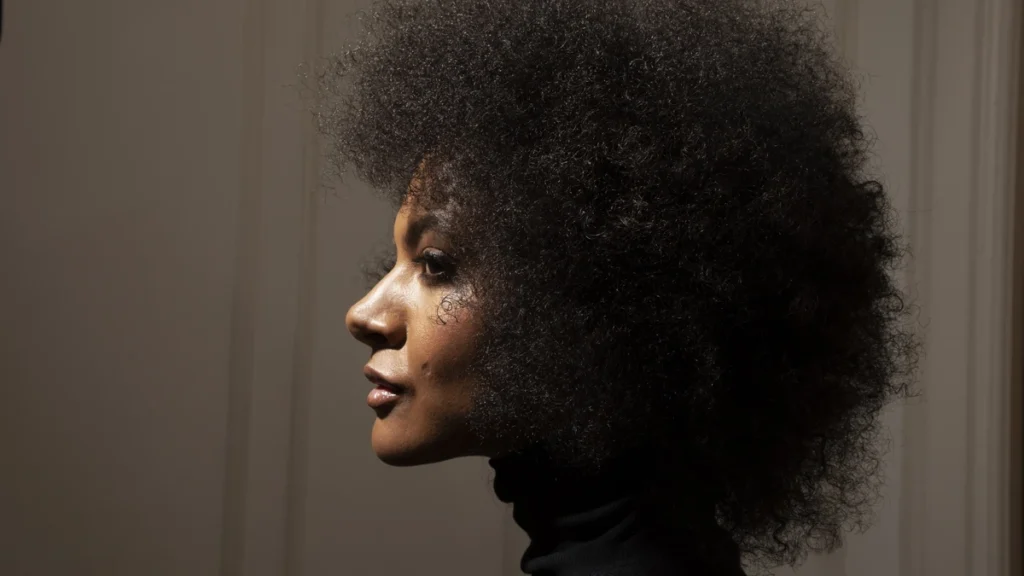
Allison Russell in a portrait released for editorial use.

Allison Russell announced twenty North American dates for the autumn, behind a third solo album released in July.

She is playing them with the Rainbow Coalition, the band she has kept on the road continuously for two years.

Twenty Dates From Asheville to Berkeley

The run opens on 15 October in Asheville and closes on 15 November in Berkeley, California.

In between it takes in Washington, Boston, New York, Chicago, Minneapolis, Seattle, Portland and San Francisco, along with a substantial Canadian stretch.

Twenty dates in a month is a dense schedule, and it only works in theatres, where load-in is quick and the production travels in one truck.

The routing reads as a tour designed around the band rather than around the largest available rooms.

What the Rainbow Coalition Is

The Rainbow Coalition is the group of women and non-binary musicians Russell performs with, covering strings, horns, percussion and backing vocals.

It is described by everyone involved as a community rather than a backing band, and that distinction is structural rather than rhetorical.

A backing band is hired for a tour and released at the end of it. A standing group is a continuing commitment, with all the obligations that implies in both directions.

Two Years Without Getting Off the Road

The group has now been touring together for two years continuously, which is unusual for any band and very unusual for one assembled around a solo artist.

Continuity of personnel changes what a group can play, because arrangements stop being rehearsed and start being remembered.

It also changes the economics. Keeping a large ensemble working requires enough dates to make the arrangement viable for people who could otherwise take session work.

The Album Behind the Tour

In the Hour of Chaos, her third solo album, arrived on 10 July.

It has been received as an unusually hopeful record for a moment that has not given anybody much to be hopeful about, which is a difficult register to sustain without sounding evasive.

Records that manage it generally do so by acknowledging the situation rather than avoiding it, and then choosing a response anyway.

Two Singers Who Had Never Met

The sessions brought together Kyshona and Sara Watkins, two singers who had not previously sung together.

They subsequently named their unofficial duo, which is the kind of thing that happens when a session produces a working relationship rather than just a recording.

Introducing musicians to each other is one of the least discussed functions a bandleader performs, and one of the most consequential.

Opening for Sarah McLachlan

Ahead of her own dates, Russell is on the road as the opening act for Sarah McLachlan, with the Rainbow Coalition playing the support slot.

McLachlan founded a touring festival in the nineties built specifically around women performers, at a time when promoters were still insisting such a bill could not sell.

The lineage between that and a band structured the way this one is does not need spelling out, and neither artist has been shy about drawing it.

Why an Opening Slot Is Not a Demotion

Support tours are frequently read as a step down for an artist with their own headline dates, and the reading is usually wrong.

An opening slot on an established act's tour puts a band in front of several thousand people a night who have not chosen them, which is the only reliable way to grow an audience.

Doing that immediately before a headline run is a deliberate sequence: build the room in summer, then sell it tickets in October.

A Band That Is Not a Backing Band

The practical difference shows up in the arrangements more than in the credits.

Music written for a hired ensemble tends to be built around the frontperson, with everything else supporting a single voice.

Music written for a standing group distributes the material, giving players parts that are theirs rather than parts that could be handed to a substitute.

What Hierarchy Does to a Stage

Audiences read the power structure of a band within about ninety seconds, without being able to say how.

The signals are positional and behavioural: where people stand, who is lit, who is allowed to move, and whether anybody other than the singer is looked at.

A group organised horizontally looks different from the seats, and the difference is not decorative. It changes what the audience believes they are watching.

Strings, Horns and Percussion

The instrumentation is larger than a standard folk or Americana touring band, which usually tops out at five players.

Strings and horns are the first thing cut from a touring budget, because each additional player adds a fee, a flight and a hotel room to every date.

Carrying them anyway is a decision to prioritise what the songs were arranged for over what the tour accounting would prefer.

A Solo Career That Started Late

Her solo debut arrived when she was already two decades into a working career, which is an unusual shape for a career in this field.

Musicians who front their own records early tend to spend years learning in public. Those who arrive later have generally done that learning inside other people's bands.

The advantage is that almost nothing about touring, recording or audiences comes as a surprise, which is visible in how quickly the work has scaled.

The Bands That Came Before

Before the solo records she spent years in group projects, sharing writing and frontline duties rather than leading.

That history explains a great deal about how the Rainbow Coalition is organised, since somebody who has spent a career inside collaborative bands is unlikely to build a hierarchical one.

It also explains the range. Musicians from those backgrounds tend to play several instruments competently rather than one exceptionally.

The Canadian Half of the Routing

The autumn dates include Toronto, Montreal, Ottawa, Edmonton and Vancouver, which is a substantial Canadian commitment for a twenty-date tour.

Russell is Canadian, and touring the country properly means crossing distances that make North American routing genuinely difficult.

Most American tours take Toronto and Vancouver and skip everything between them, which is why the inclusion of Edmonton and Ottawa is worth noticing.

Why Community Bands Are Rare

The reason most touring groups are hierarchical is not ideology but administration.

Somebody has to sign the contracts, carry the insurance, and be legally responsible when a date is cancelled, and that person is almost always the name on the ticket.

Running a group as a community while one person carries the liability requires the leader to give up authority they are still accountable for, which is why so few do it.

The arrangements that survive tend to depend on a stable roster, since every new member has to be brought into an understanding that is not written down anywhere.

What a Hopeful Record Costs to Make

Writing hopeful music in a bleak period is harder than writing bleak music, and the difficulty is credibility rather than craft.

Despair is easy to make convincing because the evidence for it is everywhere, and an audience will accept it without argument.

Hope has to be earned inside the song. It requires acknowledging what is actually happening and then making a case, which is a great deal more writing than a mood piece needs.

The records that manage it are usually made by people who have survived something specific, because a general optimism reads as naive while a particular one does not.

What Is Actually Being Tested

Two things. Whether a large ensemble carrying strings and horns can be sustained across a twenty-date theatre tour without being cut down to a quintet.

And whether a band run as a community holds its shape into a third year, which is the point at which most such arrangements quietly become conventional.

Twenty nights, a room in Asheville, a room in Berkeley, and a band nobody on stage is working for.