Chris Stapleton Added Twenty-Four Dates to the Road Show
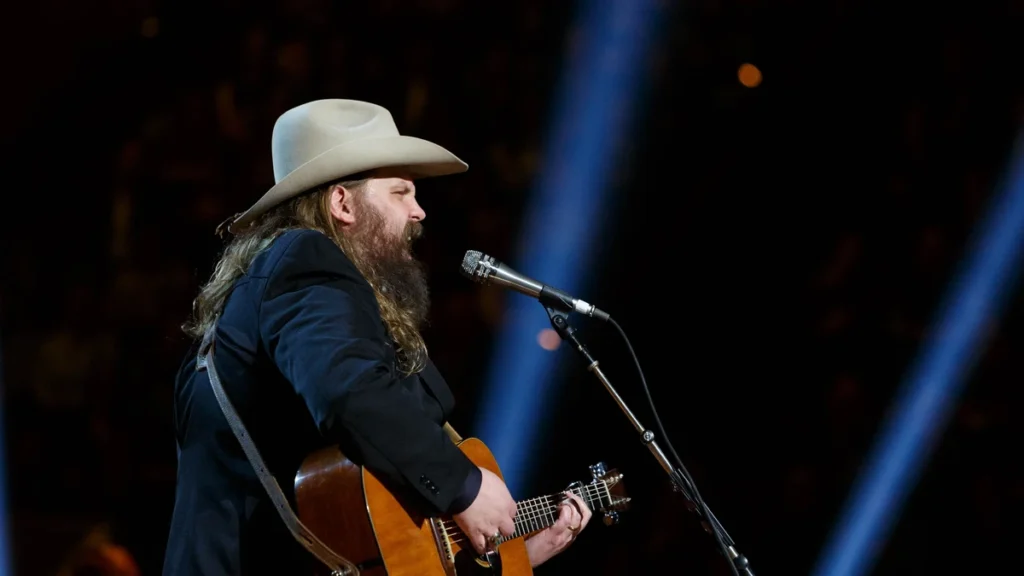
Chris Stapleton performing with an acoustic guitar.
Chris Stapleton performing with an acoustic guitar.
Chris Stapleton added twenty-four North American dates to the All-American Road Show for 2026, most of them in stadiums.
The run opened at Nissan Stadium in Nashville in May and closes in Kansas City in October.
A Tour With a Name That Has Outlasted Albums
The All-American Road Show has carried the same name since 2017, which makes it a franchise rather than a tour.
Most touring is named after the album it supports, which ties the branding to a two-year cycle and forces a new identity every time.
Keeping one name across a decade builds something an album title cannot: an annual event that an audience recognises without having to check what record it belongs to.
It also removes the requirement to have a new album at all, which is the practical reason artists do it.
Opening at Nissan Stadium
The 2026 run opened on 23 May at Nissan Stadium, the football ground in Nashville.
Opening a national tour in the city you are most associated with is the conventional choice and it carries a specific risk, because a hometown crowd will forgive a rough first night that a paying audience elsewhere will not.
Playing a stadium rather than an arena for that first date removes the option of easing into the run.
Seven Acts in the Opening Slot
Rather than a single support act, the 2026 dates rotate through several, drawn from mainstream country, Americana and rock.
Rotating openers is administratively harder than booking one act for the whole tour, since every change means new contracts, new production requirements and a different soundcheck.
What it buys is variety for the headliner’s own audience and exposure for a group of artists rather than one, which is a use of the slot that costs the headliner nothing.
Fenway Park in August
The routing includes Fenway Park in Boston on 14 August, which is one of a small number of American baseball grounds that host concerts.
Ballpark shows are logistically awkward: the stage has to go where the outfield is, the sightlines were designed for a different sport, and the sound bounces off structures built to hold crowd noise rather than music.
They persist because the capacity is enormous and the venues have a hold on their cities that no purpose-built arena matches.
Vancouver and the Canadian Date
A Vancouver stop on 22 July is the only Canadian date in the run.
Country music’s Canadian audience is substantial and concentrated in specific regions, which makes the routing decision less about the whole country than about one or two markets.
Crossing the border also means separate work permits, customs carnets for the equipment and a different tax treatment, which is why single Canadian dates are common and Canadian legs are rare.
The Southern and Midwestern Spine
Tampa, Charlotte, Cincinnati, Detroit and Atlanta form the core of the routing, all in pro sports venues.
That is a map of where the audience actually is, rather than a map of where the media attention is.
Artists at this level frequently sell more tickets in mid-sized southern and midwestern markets than in the coastal cities that generate the coverage.
Closing in Kansas City
The run finishes on 9 October in Kansas City, at an amphitheatre rather than a stadium.
Ending a stadium tour in a smaller room is unusual and generally reflects seasonal weather rather than demand, since an outdoor stadium in October is a risk in most of the country.
The last night of a long run is also frequently the loosest, because the band has nothing left to save anything for.
The Album That Is Not Behind It
His most recent studio album arrived in 2023 through Mercury Records, which means this tour is three years past its nominal support cycle.
That gap is normal for artists whose live business has outgrown their release schedule, and it is the clearest evidence that the touring is now the primary activity.
It also creates a set list problem worth noticing: an audience arriving without a new record to hear has come specifically for the older songs.
Why Stadium Country Works
Country is one of the few genres whose audience will reliably fill a stadium for an artist who is not a pop act.
The reason is repeat attendance. Country audiences return annually in a way that audiences for most other genres do not, which allows a tour to sell the same market year after year.
That behaviour is why the annual-tour model works in this genre and fails in almost every other one.
The Songwriter Half of the Career
Before the solo records, Stapleton spent years writing songs recorded by other artists, a substantial number of which reached number one.
Nashville’s professional songwriting system is unlike anything in other genres, with writers working scheduled sessions and pitching material to artists who did not write it.
Coming through that system produces a particular kind of performer, because a decade of writing to a brief teaches structure in a way that writing only for yourself does not.
A Voice That Does Not Need the Stadium
The instrument is the reason the rooms have grown, and it is worth being specific about what it does.
It is a loud, rough, high-volume voice with a soul singer’s phrasing rather than a country singer’s, which is why the material sits comfortably next to rock and blues without adjustment.
Voices of that size are the ones that survive stadium sound systems, where subtlety is lost and volume carries.
What a Rotating Bill Does to a Night
An audience that sees a different opener depending on which date they attend is having a measurably different evening.
Some of those acts are established headliners in their own right, which means the bill in some cities is effectively a double header rather than a support slot.
That is a generous piece of programming and a commercially shrewd one, since a stronger bill sells the second and third tiers of a stadium.
The Economics of a Ten-Year Tour Brand
Running the same named tour for a decade produces savings that are invisible from outside.
The production is built once and refined rather than redesigned, the crew stays constant, and the promoters know exactly what they are buying without a pitch.
Those efficiencies are why a tour that does not chase novelty can be more profitable than one that reinvents itself annually.
Why the Support Slot Still Matters
An opening slot on a stadium run is one of the last mass-exposure mechanisms left in music.
Radio no longer breaks artists at the rate it did, playlist placement is impersonal, and a television appearance reaches people who will not remember it by the weekend.
Standing in front of forty thousand people who did not come for you is a blunt instrument, but the ones it converts tend to stay converted.
Artists who remember being given that slot generally hand it out later, which is roughly how the country touring circuit has always worked.
Stadiums Change What Can Be Played
The room dictates the set more than most audiences realise, and a stadium dictates it hardest.
Quiet material does not survive. A song built on a whispered verse becomes inaudible past the lower bowl, and the natural response is to play everything a little louder and a little faster than the record.
The counter-move is to program the quiet songs deliberately and make the crowd come to them, which works only for artists whose audience will actually go silent on request.
That is the real test of a stadium show: whether forty thousand people will stop talking for four minutes because the person on stage asked them to.
What Is Actually Being Tested
Two things. Whether a tour brand can keep filling stadiums three years after the album that nominally supports it.
And whether a rotating bill of seven acts adds enough to the evening to justify the administrative cost of running it that way.
Twenty-four dates, a football ground in Nashville, a ballpark in Boston, and a name that has outlasted three records.
About The Author