Allison Russell Is Taking the Rainbow Coalition Out Again
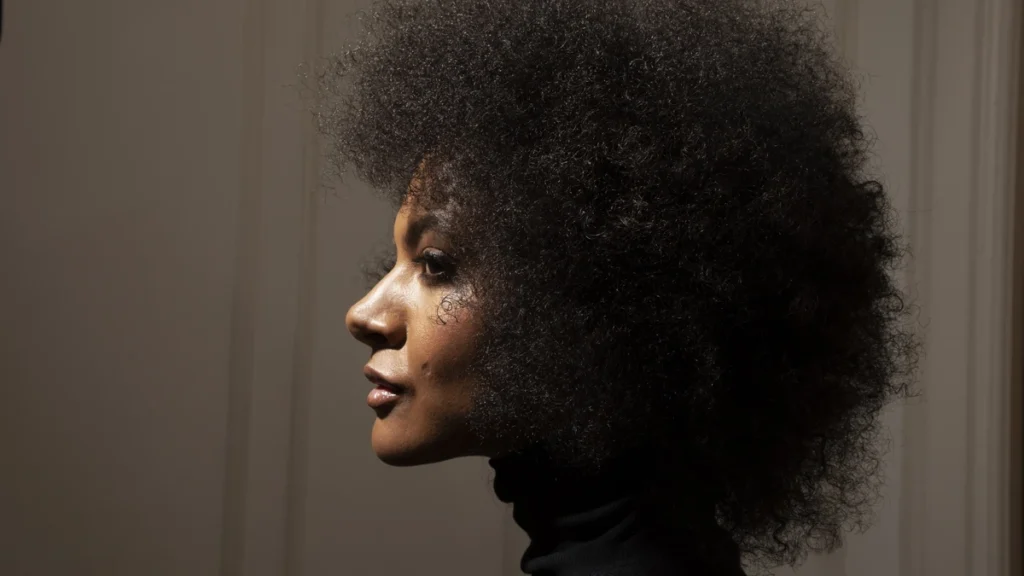
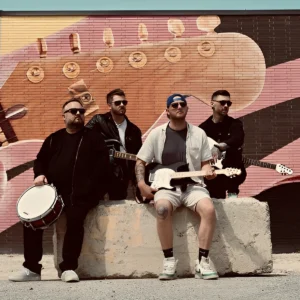
Allison Russell in a portrait released for editorial use.
Allison Russell in a portrait released for editorial use.
Allison Russell announced twenty North American dates for the autumn, behind a third solo album released in July.
She is playing them with the Rainbow Coalition, the band she has kept on the road continuously for two years.
Twenty Dates From Asheville to Berkeley
The run opens on 15 October in Asheville and closes on 15 November in Berkeley, California.
In between it takes in Washington, Boston, New York, Chicago, Minneapolis, Seattle, Portland and San Francisco, along with a substantial Canadian stretch.
Twenty dates in a month is a dense schedule, and it only works in theatres, where load-in is quick and the production travels in one truck.
The routing reads as a tour designed around the band rather than around the largest available rooms.
What the Rainbow Coalition Is
The Rainbow Coalition is the group of women and non-binary musicians Russell performs with, covering strings, horns, percussion and backing vocals.
It is described by everyone involved as a community rather than a backing band, and that distinction is structural rather than rhetorical.
A backing band is hired for a tour and released at the end of it. A standing group is a continuing commitment, with all the obligations that implies in both directions.
Two Years Without Getting Off the Road
The group has now been touring together for two years continuously, which is unusual for any band and very unusual for one assembled around a solo artist.
Continuity of personnel changes what a group can play, because arrangements stop being rehearsed and start being remembered.
It also changes the economics. Keeping a large ensemble working requires enough dates to make the arrangement viable for people who could otherwise take session work.
The Album Behind the Tour
In the Hour of Chaos, her third solo album, arrived on 10 July.
It has been received as an unusually hopeful record for a moment that has not given anybody much to be hopeful about, which is a difficult register to sustain without sounding evasive.
Records that manage it generally do so by acknowledging the situation rather than avoiding it, and then choosing a response anyway.
Two Singers Who Had Never Met
The sessions brought together Kyshona and Sara Watkins, two singers who had not previously sung together.
They subsequently named their unofficial duo, which is the kind of thing that happens when a session produces a working relationship rather than just a recording.
Introducing musicians to each other is one of the least discussed functions a bandleader performs, and one of the most consequential.
Opening for Sarah McLachlan
Ahead of her own dates, Russell is on the road as the opening act for Sarah McLachlan, with the Rainbow Coalition playing the support slot.
McLachlan founded a touring festival in the nineties built specifically around women performers, at a time when promoters were still insisting such a bill could not sell.
The lineage between that and a band structured the way this one is does not need spelling out, and neither artist has been shy about drawing it.
Why an Opening Slot Is Not a Demotion
Support tours are frequently read as a step down for an artist with their own headline dates, and the reading is usually wrong.
An opening slot on an established act’s tour puts a band in front of several thousand people a night who have not chosen them, which is the only reliable way to grow an audience.
Doing that immediately before a headline run is a deliberate sequence: build the room in summer, then sell it tickets in October.
A Band That Is Not a Backing Band
The practical difference shows up in the arrangements more than in the credits.
Music written for a hired ensemble tends to be built around the frontperson, with everything else supporting a single voice.
Music written for a standing group distributes the material, giving players parts that are theirs rather than parts that could be handed to a substitute.
What Hierarchy Does to a Stage
Audiences read the power structure of a band within about ninety seconds, without being able to say how.
The signals are positional and behavioural: where people stand, who is lit, who is allowed to move, and whether anybody other than the singer is looked at.
A group organised horizontally looks different from the seats, and the difference is not decorative. It changes what the audience believes they are watching.
Strings, Horns and Percussion
The instrumentation is larger than a standard folk or Americana touring band, which usually tops out at five players.
Strings and horns are the first thing cut from a touring budget, because each additional player adds a fee, a flight and a hotel room to every date.
Carrying them anyway is a decision to prioritise what the songs were arranged for over what the tour accounting would prefer.
A Solo Career That Started Late
Her solo debut arrived when she was already two decades into a working career, which is an unusual shape for a career in this field.
Musicians who front their own records early tend to spend years learning in public. Those who arrive later have generally done that learning inside other people’s bands.
The advantage is that almost nothing about touring, recording or audiences comes as a surprise, which is visible in how quickly the work has scaled.
The Bands That Came Before
Before the solo records she spent years in group projects, sharing writing and frontline duties rather than leading.
That history explains a great deal about how the Rainbow Coalition is organised, since somebody who has spent a career inside collaborative bands is unlikely to build a hierarchical one.
It also explains the range. Musicians from those backgrounds tend to play several instruments competently rather than one exceptionally.
The Canadian Half of the Routing
The autumn dates include Toronto, Montreal, Ottawa, Edmonton and Vancouver, which is a substantial Canadian commitment for a twenty-date tour.
Russell is Canadian, and touring the country properly means crossing distances that make North American routing genuinely difficult.
Most American tours take Toronto and Vancouver and skip everything between them, which is why the inclusion of Edmonton and Ottawa is worth noticing.
Why Community Bands Are Rare
The reason most touring groups are hierarchical is not ideology but administration.
Somebody has to sign the contracts, carry the insurance, and be legally responsible when a date is cancelled, and that person is almost always the name on the ticket.
Running a group as a community while one person carries the liability requires the leader to give up authority they are still accountable for, which is why so few do it.
The arrangements that survive tend to depend on a stable roster, since every new member has to be brought into an understanding that is not written down anywhere.
What a Hopeful Record Costs to Make
Writing hopeful music in a bleak period is harder than writing bleak music, and the difficulty is credibility rather than craft.
Despair is easy to make convincing because the evidence for it is everywhere, and an audience will accept it without argument.
Hope has to be earned inside the song. It requires acknowledging what is actually happening and then making a case, which is a great deal more writing than a mood piece needs.
The records that manage it are usually made by people who have survived something specific, because a general optimism reads as naive while a particular one does not.
What Is Actually Being Tested
Two things. Whether a large ensemble carrying strings and horns can be sustained across a twenty-date theatre tour without being cut down to a quintet.
And whether a band run as a community holds its shape into a third year, which is the point at which most such arrangements quietly become conventional.
Twenty nights, a room in Asheville, a room in Berkeley, and a band nobody on stage is working for.
About The Author