Clipse Ended a Sixteen-Year Gap With Pharrell Producing
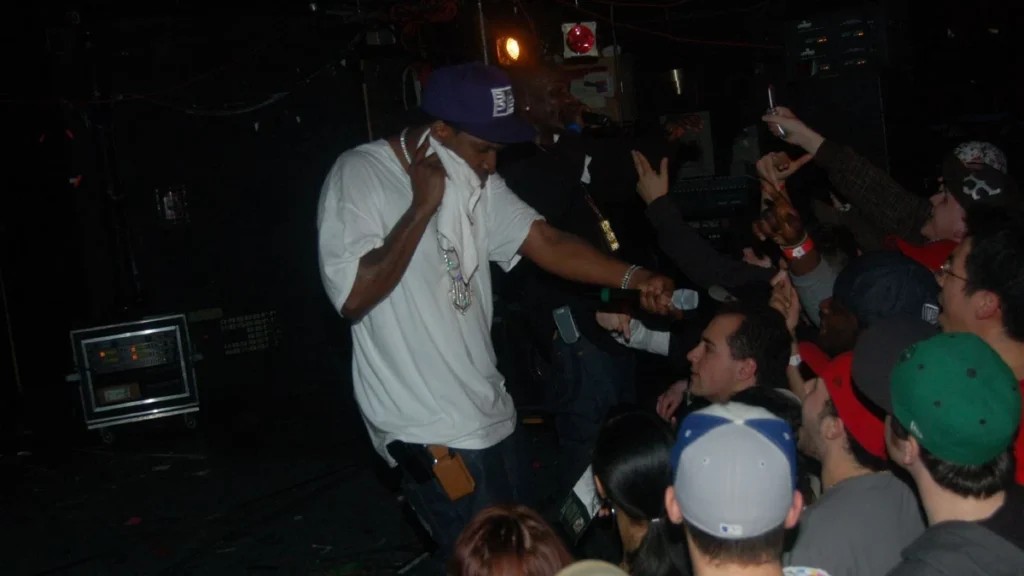
Clipse performing in Cambridge, Massachusetts.
Clipse performing in Cambridge, Massachusetts.
Clipse released Let God Sort Em Out, their first album in sixteen years, self-released across thirteen tracks with Pharrell Williams producing.
The previous record came out in 2009. A gap that long usually means a career has ended rather than paused.
Sixteen Years Is Not a Hiatus
Groups that stop for sixteen years generally do not come back, and when they do the results are usually a nostalgia exercise.
The two members spent the intervening period in very different places. One built a substantial solo career and a label executive role; the other left secular music entirely for a period.
That divergence is what makes the reunion genuinely surprising rather than merely delayed. It was not a scheduling problem.
It also means the album had to answer a question most reunion records do not face: whether the two halves still make sense together.
Pharrell Produced All of It
Pharrell Williams produced the record, which is the single most consequential fact about how it sounds.
He and his production partner made the duo’s early records, and the sound of those albums was as much a production identity as a rapping one.
Minimal, percussive, harmonically strange beats built from very few elements gave the group a frame no other rappers had, and their delivery was written for it.
Reuniting the group without the producer would have been a different and much weaker proposition.
Self-Released
The album came out with no label, which for an act of this profile is a decision rather than a necessity.
Self-releasing means no advance, no marketing budget and no radio department, and it also means no ownership transfer and no committee.
For artists with an established audience and a producer already attached, the trade is straightforwardly favourable, and the industry has shifted heavily in this direction.
Thirteen Tracks and a Heavy Guest List
The record runs thirteen songs with an unusually strong set of features: Tyler The Creator, John Legend, Nas, Kendrick Lamar, Stove God Cooks, The-Dream and Ab-Liva.
That mix spans three generations of rap plus two singers, which is a lot of weight for a thirteen-track album to carry.
Guest lists that heavy usually indicate either a producer’s address book or genuine standing, and in this case both apply.
What the Duo Was Known For
Clipse built their reputation on a specific and narrow subject: the mechanics of drug dealing, described in unusual technical detail.
What distinguished it from the enormous volume of rap covering the same ground was the writing. The imagery was precise, the wordplay was dense, and the tone was cold rather than celebratory.
That approach aged better than most, because it was closer to reportage than to boasting.
Two Very Different Deliveries
The group works because the two members do not sound alike.
One is aggressive and front-footed, attacking the beat with a hard consonant emphasis. The other is smoother and more conversational, sitting behind the rhythm.
Duos generally fail when the members are too similar, because the listener stops distinguishing them. The contrast here has always been the structural advantage.
The Return of the Second Voice
The more significant question for the reunion was whether the second member would return to the material at all, having spent years away from it.
An artist who leaves a subject for religious reasons and then returns to a record about that subject is doing something more complicated than a comeback.
How the album handles that is one of the more interesting things about it, and it is not a question most reunion records have to answer.
Virginia as a Scene
The duo came out of Virginia, which produced a specific and influential strand of production in the late nineties and 2000s.
That scene’s sound was built on sparse, syncopated percussion and unusual sonic choices, and it reshaped mainstream rap and pop production for a decade.
Clipse were the rap act most closely associated with it, and their records are the clearest surviving document of what it sounded like at its peak.
Ace Trumpets Set the Terms
The lead single established the record’s approach before anyone heard the album.
Lead singles from reunion albums usually try to reassure, presenting something recognisable so the audience knows the group still works.
Doing that successfully requires the production to sound current rather than reconstructed, which is the specific difficulty when the original sound was itself distinctive.
Rap’s Long-Gap Problem
Hip-hop has historically been unkind to returning acts, more so than rock or soul.
The genre moves quickly, its audience skews young, and the vocabulary of production changes every few years, which means a returning artist is competing in a language that has moved on.
The acts that manage it usually do so by not attempting to sound current, which is a more defensible position than chasing the present.
Why the Features Matter Here
A guest list drawn from several generations does a specific job on a reunion record: it locates the returning act in the present.
Younger artists appearing on the album signal that the group is regarded rather than merely remembered, which is not something the artists themselves can assert.
The older names do the opposite, confirming the group’s standing within the tradition, and having both on one record covers the argument from two directions.
Thirteen Tracks Is a Choice
Thirteen songs is disciplined by current standards, where rap albums routinely run to twenty or more.
Long tracklists exist for streaming arithmetic rather than for artistic reasons, and a self-released album has less incentive to play that game.
A shorter record from a group returning after sixteen years also reads as confidence. There is no padding to hide behind.
What the Neptunes Sound Actually Was
The production that made the duo is worth describing precisely, because it is frequently mischaracterised as minimalism for its own sake.
The records were built from very few elements: a hard programmed kick and snare, one or two synthesiser lines, and often a percussion sound that had no obvious source. What made them strange was not the sparseness but the harmony, which used intervals and voicings borrowed from soul and jazz rather than from anything else on rap radio.
The space that left was the point. With so little happening underneath, the vocal had nowhere to hide, and every syllable was audible in a way a dense beat would have masked.
That is why the duo’s dense, technical writing worked over those beats and would have been buried by almost anything else. The production and the rapping were designed for each other, which is a rarer thing than it sounds.
The Economics of Going Without a Label
Self-releasing a record at this level is a calculation with a fairly clear arithmetic behind it.
A conventional deal advances money against future royalties, funds marketing, and takes ownership of the recordings plus the large majority of income until the advance is recouped. Most records never recoup, which means most artists never see royalties at all.
Releasing independently removes the advance and the marketing spend, and in exchange the artist keeps the masters and the majority of the revenue from the first sale onward. Distribution can be bought as a service rather than traded for ownership.
The model works when the audience already exists and the artist does not need a label to find one. For a group with a substantial catalogue, a well-known producer and sixteen years of accumulated anticipation, those conditions are met about as well as they can be.
What Is Actually Being Tested
Two things. Whether a production style that defined an era still functions as contemporary rap rather than as revival.
And whether a duo separated by sixteen years and very different lives can still sound like one group rather than two solo artists sharing tracks.
Sixteen years, thirteen songs, no label, the original producer, and a guest list spanning three generations of the genre.
About The Author