Tyla Announced Her Second Album on Stage at the Grammys

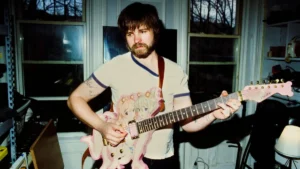
Tyla performing at the Montreux Jazz Festival.
Tyla performing at the Montreux Jazz Festival.
Tyla announced her second studio album on stage during the Grammy ceremony in February and released it in July.
It runs fourteen songs across forty-four minutes, and amapiano percussion sits under almost every track on it.
Announcing From the Stage
Album announcements are normally made through a label’s press channels on a date chosen for maximum coverage.
Making one during an awards ceremony puts it in front of a live television audience with no intermediary, and it takes the news out of the industry’s hands.
It also fixes the announcement to a moment people remember, which a press release cannot do.
The trade is that it commits the artist publicly to a record that then has to arrive, and this one did, five months later.
Los Angeles and Barcelona
The album was recorded primarily across two cities during 2025, and neither is where she is from.
Los Angeles is the obvious destination for an artist signed to a major American label, with the largest concentration of writers and producers anywhere.
Barcelona is a less predictable choice, and studios there have become a favoured location for artists wanting distance from the Los Angeles session economy while keeping professional facilities.
Amapiano as the Foundation
The defining feature of the record is that amapiano percussion runs underneath nearly all of it rather than appearing on selected tracks.
Amapiano is a South African dance form built on log-drum bass and a specific shuffling rhythmic feel, and it has spread internationally over the last several years.
Most artists outside South Africa use it as a texture on one or two songs. Building a full pop album on it is a structural commitment rather than a nod.
Where the Debut Left Off
Her self-titled debut arrived in 2024 and combined amapiano with R&B, and it produced a single that travelled globally.
That put her in a familiar position for an artist whose first record breaks internationally: the follow-up has to either repeat the formula or move.
Reports describe the new album as more diverse and more considered, which suggests movement rather than repetition.
An Extended Play as a Bridge
A 2025 extended play sat between the two albums, and she described it explicitly as a bridge to the new project.
Releasing something deliberately transitional is an honest thing to do and unusually rare.
It also solves a scheduling problem. An album cycle running eighteen months leaves a long silence, and a short release keeps the audience engaged without spending the album.
Two Years of Touring in Between
She toured twice between the records, first under the debut album’s name and then behind the extended play.
Touring at that rate immediately after a breakthrough is standard and physically demanding, and it is how an international audience actually gets built.
It also means the second album was written by someone who had spent two years playing the first one to rooms across several continents, which changes what a writer knows.
Two Singles, Nine Months Apart
The lead single arrived in October 2025, three months before the album was announced, and a second single followed in April with a Swedish pop singer featured.
A nine-month single campaign is long by current standards and indicates a release that was planned well ahead rather than assembled quickly.
Leading that early also means the first single had to work on its own for months, which is a different job from a track released two weeks before an album.
Fourteen Songs in Forty-Four Minutes
The running time averages just over three minutes per track, which is disciplined for a pop record in the streaming era.
Dance-derived music generally benefits from that length. A track built on a rhythmic loop has a limited window before repetition stops being hypnotic and starts being tedious.
It also means the album can be heard in one sitting, which a sixty-minute pop record realistically cannot.
South African Music’s International Position
The last decade has seen South African music reach international audiences at a scale that had no precedent, driven largely by amapiano and its associated dance culture.
That movement spread initially through short-form video and club play rather than through radio or label investment, which is why it arrived without the usual gatekeeping.
An artist from that scene making a major-label pop album is the point at which a movement becomes an industry, with everything gained and lost in that transition.
The Second-Album Problem
A debut that breaks internationally creates the hardest possible conditions for a follow-up.
The audience arrived through one specific song and largely expects more of it, while the artist has spent two years becoming a different musician.
Spending longer on the second record, which is what she has said she did, is the only real defence against that pressure.
Working With a Swedish Pop Singer
The second single featured Zara Larsson, which is a European pop pairing rather than an American R&B one.
Feature choices are strategic as much as musical, and a Scandinavian pop collaboration points at European radio rather than at the American market.
For an artist whose first hit travelled globally, building deliberately across territories is more useful than concentrating on one.
What FAX and Epic Provide
The album came through FAX and Epic Records, an imprint-plus-major structure of the kind that is now standard.
The major supplies international distribution, radio relationships and marketing scale across dozens of territories.
For music originating in a regional scene, that infrastructure is the difference between an international hit and an international career.
Log Drums and Pop Structure
The technical challenge in this kind of record is that amapiano and pop songwriting want different things from a track.
Amapiano is built on extended grooves that develop slowly, while pop structure requires a chorus arriving within the first minute and returning on schedule.
Reconciling them means compressing the groove without flattening it, which is a production problem rather than a writing one.
Recording Across Two Continents
Splitting sessions between Los Angeles and Barcelona produces a practical benefit beyond geography.
Different studios attract different players and different working hours, and an album made in two places usually carries two distinct sets of instincts.
The risk is incoherence, which is why records made across many locations often need a single producer holding the sound together.
How Amapiano Actually Travelled
The route this music took out of South Africa is worth setting out, because it did not follow the usual path for a regional genre.
There was no label campaign and no international radio push. The form spread through DJ sets, WhatsApp file sharing, YouTube mixes and then short-form video, where a dance attached to a track could carry it to millions of people who had never heard of the genre.
That produced a distinctive result. Amapiano arrived internationally as a rhythm and a dance rather than as a set of named artists, which is why many listeners recognised the sound years before they could name anybody making it.
An artist reaching the top of international pop from inside that scene therefore does something the movement itself could not: attaches a face and a career to a sound that had been travelling anonymously.
What Long Recording Time Buys
Spending longer on a record is frequently cited by artists and rarely examined, but the difference it makes is concrete.
A quick album is built from whatever is working in the sessions available. A long one can be built from selection: writing forty songs, keeping fourteen, and discarding material that would have made the record simply because it was there.
Time also allows revision. A song can be rewritten after being lived with for months, which is impossible on a schedule where the deadline arrives before the perspective does.
The cost is momentum. An artist who breaks through and then disappears for two years is gambling that the audience is attached to them rather than to a moment, and the touring in between is what makes that bet survivable.
What Is Actually Being Tested
Two things. Whether a rhythmic form specific to one country can carry a full international pop album without being diluted into a texture.
And whether an artist who broke through on one enormous single can convert that into a career, which is the question every second album asks.
Fourteen songs, two cities, an announcement made on live television, and a South African rhythm running underneath all of it.
About The Author