Article

Chris Stapleton Added Twenty-Four Dates to the Road Show

Chris Stapleton Added Twenty-Four Dates to the Road Show

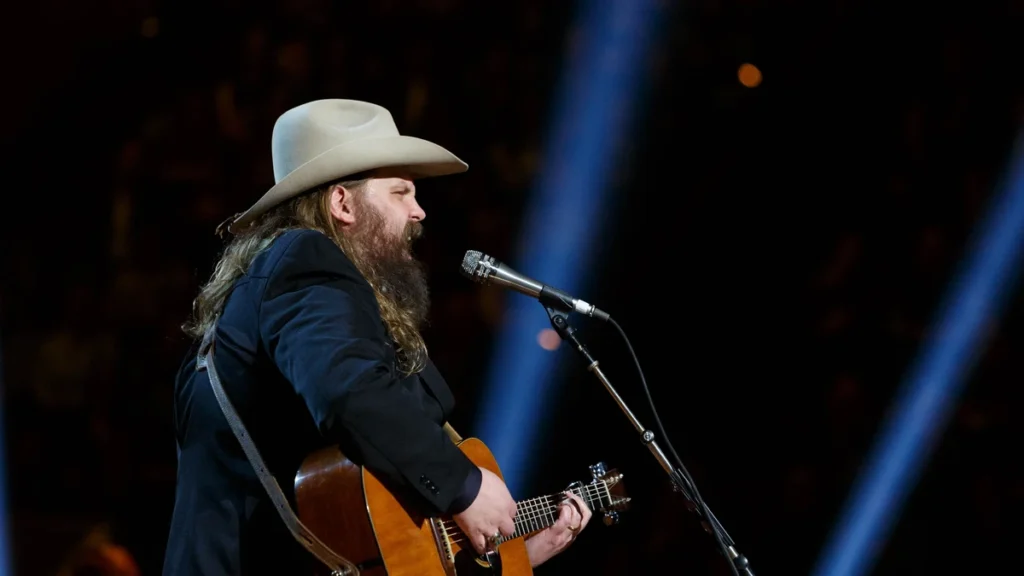
Chris Stapleton performing with an acoustic guitar.

Chris Stapleton added twenty-four North American dates to the All-American Road Show for 2026, most of them in stadiums.

The run opened at Nissan Stadium in Nashville in May and closes in Kansas City in October.

A Tour With a Name That Has Outlasted Albums

The All-American Road Show has carried the same name since 2017, which makes it a franchise rather than a tour.

Most touring is named after the album it supports, which ties the branding to a two-year cycle and forces a new identity every time.

Keeping one name across a decade builds something an album title cannot: an annual event that an audience recognises without having to check what record it belongs to.

It also removes the requirement to have a new album at all, which is the practical reason artists do it.

Opening at Nissan Stadium

The 2026 run opened on 23 May at Nissan Stadium, the football ground in Nashville.

Opening a national tour in the city you are most associated with is the conventional choice and it carries a specific risk, because a hometown crowd will forgive a rough first night that a paying audience elsewhere will not.

Playing a stadium rather than an arena for that first date removes the option of easing into the run.

Seven Acts in the Opening Slot

Rather than a single support act, the 2026 dates rotate through several, drawn from mainstream country, Americana and rock.

Rotating openers is administratively harder than booking one act for the whole tour, since every change means new contracts, new production requirements and a different soundcheck.

What it buys is variety for the headliner's own audience and exposure for a group of artists rather than one, which is a use of the slot that costs the headliner nothing.

Fenway Park in August

The routing includes Fenway Park in Boston on 14 August, which is one of a small number of American baseball grounds that host concerts.

Ballpark shows are logistically awkward: the stage has to go where the outfield is, the sightlines were designed for a different sport, and the sound bounces off structures built to hold crowd noise rather than music.

They persist because the capacity is enormous and the venues have a hold on their cities that no purpose-built arena matches.

Vancouver and the Canadian Date

A Vancouver stop on 22 July is the only Canadian date in the run.

Country music's Canadian audience is substantial and concentrated in specific regions, which makes the routing decision less about the whole country than about one or two markets.

Crossing the border also means separate work permits, customs carnets for the equipment and a different tax treatment, which is why single Canadian dates are common and Canadian legs are rare.

The Southern and Midwestern Spine

Tampa, Charlotte, Cincinnati, Detroit and Atlanta form the core of the routing, all in pro sports venues.

That is a map of where the audience actually is, rather than a map of where the media attention is.

Artists at this level frequently sell more tickets in mid-sized southern and midwestern markets than in the coastal cities that generate the coverage.

Closing in Kansas City

The run finishes on 9 October in Kansas City, at an amphitheatre rather than a stadium.

Ending a stadium tour in a smaller room is unusual and generally reflects seasonal weather rather than demand, since an outdoor stadium in October is a risk in most of the country.

The last night of a long run is also frequently the loosest, because the band has nothing left to save anything for.

The Album That Is Not Behind It

His most recent studio album arrived in 2023 through Mercury Records, which means this tour is three years past its nominal support cycle.

That gap is normal for artists whose live business has outgrown their release schedule, and it is the clearest evidence that the touring is now the primary activity.

It also creates a set list problem worth noticing: an audience arriving without a new record to hear has come specifically for the older songs.

Why Stadium Country Works

Country is one of the few genres whose audience will reliably fill a stadium for an artist who is not a pop act.

The reason is repeat attendance. Country audiences return annually in a way that audiences for most other genres do not, which allows a tour to sell the same market year after year.

That behaviour is why the annual-tour model works in this genre and fails in almost every other one.

The Songwriter Half of the Career

Before the solo records, Stapleton spent years writing songs recorded by other artists, a substantial number of which reached number one.

Nashville's professional songwriting system is unlike anything in other genres, with writers working scheduled sessions and pitching material to artists who did not write it.

Coming through that system produces a particular kind of performer, because a decade of writing to a brief teaches structure in a way that writing only for yourself does not.

A Voice That Does Not Need the Stadium

The instrument is the reason the rooms have grown, and it is worth being specific about what it does.

It is a loud, rough, high-volume voice with a soul singer's phrasing rather than a country singer's, which is why the material sits comfortably next to rock and blues without adjustment.

Voices of that size are the ones that survive stadium sound systems, where subtlety is lost and volume carries.

What a Rotating Bill Does to a Night

An audience that sees a different opener depending on which date they attend is having a measurably different evening.

Some of those acts are established headliners in their own right, which means the bill in some cities is effectively a double header rather than a support slot.

That is a generous piece of programming and a commercially shrewd one, since a stronger bill sells the second and third tiers of a stadium.

The Economics of a Ten-Year Tour Brand

Running the same named tour for a decade produces savings that are invisible from outside.

The production is built once and refined rather than redesigned, the crew stays constant, and the promoters know exactly what they are buying without a pitch.

Those efficiencies are why a tour that does not chase novelty can be more profitable than one that reinvents itself annually.

Why the Support Slot Still Matters

An opening slot on a stadium run is one of the last mass-exposure mechanisms left in music.

Radio no longer breaks artists at the rate it did, playlist placement is impersonal, and a television appearance reaches people who will not remember it by the weekend.

Standing in front of forty thousand people who did not come for you is a blunt instrument, but the ones it converts tend to stay converted.

Artists who remember being given that slot generally hand it out later, which is roughly how the country touring circuit has always worked.

Stadiums Change What Can Be Played

The room dictates the set more than most audiences realise, and a stadium dictates it hardest.

Quiet material does not survive. A song built on a whispered verse becomes inaudible past the lower bowl, and the natural response is to play everything a little louder and a little faster than the record.

The counter-move is to program the quiet songs deliberately and make the crowd come to them, which works only for artists whose audience will actually go silent on request.

That is the real test of a stadium show: whether forty thousand people will stop talking for four minutes because the person on stage asked them to.

What Is Actually Being Tested

Two things. Whether a tour brand can keep filling stadiums three years after the album that nominally supports it.

And whether a rotating bill of seven acts adds enough to the evening to justify the administrative cost of running it that way.

Twenty-four dates, a football ground in Nashville, a ballpark in Boston, and a name that has outlasted three records.

Brandi Carlile Is Reissuing Her Album as a Sad Gay Version

Brandi Carlile Is Reissuing Her Album as a Sad Gay Version

Brandi Carlile at the Library of Congress Gershwin Prize event in 2023.

Brandi Carlile releases an expanded edition of her 2025 album on 25 September, remaking its songs as quiet, stripped-back versions.

She has titled it Returning to Myself (Sad Gay Version), after a genre she says she named herself.

What the Record Actually Is

The digital edition collects the original album alongside ten reimagined versions and a cover of Billy Joel's And So It Goes.

The reworkings are not remixes or acoustic demos but full re-recordings, built to sit at a different emotional register from the versions released last October.

It arrives through Interscope Records and Lost Highway Records, the same pairing that put out the original.

The framing matters more than usual here, because the title is doing the work a press release normally has to do.

The Genre She Named Herself

Carlile has described the project as an homage to a category she says very few people are willing to call by its rightful name.

Her account of it is specific: as a teenager she deliberately sought out songs that would work on her own feelings, and she has since identified that pursuit as a genre in its own right.

The reference points she cites are a mix of stadium rock, folk duos, art pop and a film soundtrack from the early nineties, which is an unusual set to have arrived at as one coherent thing.

What She Says It Is For

Her stated reason is unusually direct for an album announcement: she wants to be returned to the edge of her bed, and to bring listeners with her.

That is a description of a listening posture rather than of a sound, and it identifies the audience precisely.

Records made for that specific situation are common. Records that admit to being made for it are considerably rarer.

The First Song Released From It

The preview track is Human (Sad Gay Version), featuring Jon Hopkins.

The original is an electrified song; the new version rebuilds it as a piano ballad that climbs steadily rather than arriving loud.

Hopkins is a producer whose own work sits between electronic music and piano composition, which makes him an unusually apt collaborator for a rearrangement that has to move between the two.

Long Pond and Aaron Dessner

Four tracks were co-produced with Aaron Dessner at Long Pond, the studio in upstate New York he built in a converted barn.

Long Pond has become the default location for a particular kind of American record: acoustic, close-recorded, and made quickly with a small number of people in the room.

Going back there for the reimagined versions rather than to a conventional studio is a decision about the recording method as much as the arrangements.

The Album It Reworks

Returning to Myself was released on 24 October 2025 and entered the Billboard 200 at number seven.

That is a strong chart position for a record made without a pop crossover strategy, and it reflects an audience built steadily over two decades rather than acquired through a single hit.

The original is a full production, which is precisely what makes a stripped version a meaningful exercise rather than a redundant one.

Four Producers on One Record

The original album was produced by Carlile with Andrew Watt, Aaron Dessner and Justin Vernon.

Those three work in noticeably different registers, from large-scale rock production to intimate acoustic recording to heavily processed experimentation.

Assembling all of them on one album is a choice that risks incoherence, and the usual defence is a strong enough set of songs to survive being treated four different ways.

A Vinyl Pressing That Drops the Originals

The vinyl edition carries only the ten reimagined versions, with the original recordings left off entirely.

That is a real editorial decision rather than a packaging quirk, because it presents the quiet versions as the album rather than as bonus material.

It is pressed on rainbow-coloured vinyl and signed, with pre-orders closing at the start of October.

A Billy Joel Cover at the End

The added cover is And So It Goes, a Billy Joel song from the late 1980s that is among the plainest things he wrote.

It is essentially voice and piano, with no arrangement to hide behind, which makes it a logical fit for a record built on removal.

Covers appended to reissues are usually filler. A song chosen because it demonstrates the thesis of the record is doing something else.

The Human Tour, First Leg

The touring behind the album opened on 10 February in Philadelphia and ran to 6 March in San Francisco.

It included Madison Square Garden in New York and the Kia Forum in Los Angeles, which are arena rooms rather than theatres.

Reaching that scale as a singer-songwriter rather than as a pop act takes a great deal longer, and it tends to hold once it arrives.

The Second Leg Running Now

A second North American leg opened on 13 August in Portland, Maine, and runs through August and September.

It takes in Nashville, Austin, Vancouver and San Diego, which is a routing that treats the country as a whole rather than as four coastal markets.

The announcement of the reimagined album landed in the middle of that leg, which is the point at which an audience is already assembled and paying attention.

Six Support Acts and What They Signal

The second leg carries a rotating set of openers drawn from folk, Americana and Irish pop.

A tour that uses six different support acts across one leg is spending money it does not have to spend, since a single opener is cheaper and simpler to route.

Doing it anyway distributes exposure across a group of artists rather than concentrating it, which is a deliberate use of a headline position.

Three Nights at Red Rocks

The leg includes a three-night run at Red Rocks Amphitheatre outside Denver.

One night at Red Rocks is a career marker for most American artists. Three consecutive nights is a different order of demand entirely.

It also allows a set list that changes across the run, which is only worth doing when a meaningful share of the audience is attending more than once.

Why Reimagined Editions Usually Fail

The stripped-back reissue is a well-established format and most examples are disposable.

The failure mode is mechanical: the same performance with the instruments turned down, which removes the production without replacing it with anything.

What separates the exceptions is re-recording rather than remixing, and a genuine decision about what the quiet version is for, rather than a contractual need for extra tracks.

What Stripping a Song Back Reveals

Reducing a produced song to voice and piano is a diagnostic procedure, and it produces information the original recording conceals.

Tempo is the first thing to change. Songs written at a band's tempo are almost always too fast without the band, and the quiet version usually settles several beats slower.

Melodies also become negotiable. A vocal line delivered over drums has to hold its shape to be heard, whereas the same line over a piano can be phrased loosely, delayed, or half-spoken.

What survives that process is the writing. A song that still works at half the volume and a slower tempo was carried by its structure; one that collapses was carried by the arrangement.

Naming a Genre as a Deliberate Act

Attaching the phrase to the title rather than burying it in an interview is the most interesting decision here.

The words in question have historically been used against the people this record is aimed at, and using them as a product title on a major-label release inverts that in the plainest way available.

It also functions as a filter. Anyone uncomfortable with the title will not buy the record, which removes a conversation the artist evidently has no interest in having.

Reclamation of this kind is common in conversation and rare on a sleeve, largely because retailers and radio prefer titles that raise no questions at all.

What Is Actually Being Tested

Two things. Whether a full album re-recorded quietly holds up as a record in its own right, which the vinyl pressing commits to by leaving the originals off.

And whether naming the thing plainly reaches further than describing it carefully, which is a bet about an audience rather than about a sound.

Eleven songs, ten quiet versions, a barn studio in New York, three nights at Red Rocks, and a title nobody at the label could have suggested.

Allison Russell Is Taking the Rainbow Coalition Out Again

Allison Russell Is Taking the Rainbow Coalition Out Again

Allison Russell in a portrait released for editorial use.

Allison Russell announced twenty North American dates for the autumn, behind a third solo album released in July.

She is playing them with the Rainbow Coalition, the band she has kept on the road continuously for two years.

Twenty Dates From Asheville to Berkeley

The run opens on 15 October in Asheville and closes on 15 November in Berkeley, California.

In between it takes in Washington, Boston, New York, Chicago, Minneapolis, Seattle, Portland and San Francisco, along with a substantial Canadian stretch.

Twenty dates in a month is a dense schedule, and it only works in theatres, where load-in is quick and the production travels in one truck.

The routing reads as a tour designed around the band rather than around the largest available rooms.

What the Rainbow Coalition Is

The Rainbow Coalition is the group of women and non-binary musicians Russell performs with, covering strings, horns, percussion and backing vocals.

It is described by everyone involved as a community rather than a backing band, and that distinction is structural rather than rhetorical.

A backing band is hired for a tour and released at the end of it. A standing group is a continuing commitment, with all the obligations that implies in both directions.

Two Years Without Getting Off the Road

The group has now been touring together for two years continuously, which is unusual for any band and very unusual for one assembled around a solo artist.

Continuity of personnel changes what a group can play, because arrangements stop being rehearsed and start being remembered.

It also changes the economics. Keeping a large ensemble working requires enough dates to make the arrangement viable for people who could otherwise take session work.

The Album Behind the Tour

In the Hour of Chaos, her third solo album, arrived on 10 July.

It has been received as an unusually hopeful record for a moment that has not given anybody much to be hopeful about, which is a difficult register to sustain without sounding evasive.

Records that manage it generally do so by acknowledging the situation rather than avoiding it, and then choosing a response anyway.

Two Singers Who Had Never Met

The sessions brought together Kyshona and Sara Watkins, two singers who had not previously sung together.

They subsequently named their unofficial duo, which is the kind of thing that happens when a session produces a working relationship rather than just a recording.

Introducing musicians to each other is one of the least discussed functions a bandleader performs, and one of the most consequential.

Opening for Sarah McLachlan

Ahead of her own dates, Russell is on the road as the opening act for Sarah McLachlan, with the Rainbow Coalition playing the support slot.

McLachlan founded a touring festival in the nineties built specifically around women performers, at a time when promoters were still insisting such a bill could not sell.

The lineage between that and a band structured the way this one is does not need spelling out, and neither artist has been shy about drawing it.

Why an Opening Slot Is Not a Demotion

Support tours are frequently read as a step down for an artist with their own headline dates, and the reading is usually wrong.

An opening slot on an established act's tour puts a band in front of several thousand people a night who have not chosen them, which is the only reliable way to grow an audience.

Doing that immediately before a headline run is a deliberate sequence: build the room in summer, then sell it tickets in October.

A Band That Is Not a Backing Band

The practical difference shows up in the arrangements more than in the credits.

Music written for a hired ensemble tends to be built around the frontperson, with everything else supporting a single voice.

Music written for a standing group distributes the material, giving players parts that are theirs rather than parts that could be handed to a substitute.

What Hierarchy Does to a Stage

Audiences read the power structure of a band within about ninety seconds, without being able to say how.

The signals are positional and behavioural: where people stand, who is lit, who is allowed to move, and whether anybody other than the singer is looked at.

A group organised horizontally looks different from the seats, and the difference is not decorative. It changes what the audience believes they are watching.

Strings, Horns and Percussion

The instrumentation is larger than a standard folk or Americana touring band, which usually tops out at five players.

Strings and horns are the first thing cut from a touring budget, because each additional player adds a fee, a flight and a hotel room to every date.

Carrying them anyway is a decision to prioritise what the songs were arranged for over what the tour accounting would prefer.

A Solo Career That Started Late

Her solo debut arrived when she was already two decades into a working career, which is an unusual shape for a career in this field.

Musicians who front their own records early tend to spend years learning in public. Those who arrive later have generally done that learning inside other people's bands.

The advantage is that almost nothing about touring, recording or audiences comes as a surprise, which is visible in how quickly the work has scaled.

The Bands That Came Before

Before the solo records she spent years in group projects, sharing writing and frontline duties rather than leading.

That history explains a great deal about how the Rainbow Coalition is organised, since somebody who has spent a career inside collaborative bands is unlikely to build a hierarchical one.

It also explains the range. Musicians from those backgrounds tend to play several instruments competently rather than one exceptionally.

The Canadian Half of the Routing

The autumn dates include Toronto, Montreal, Ottawa, Edmonton and Vancouver, which is a substantial Canadian commitment for a twenty-date tour.

Russell is Canadian, and touring the country properly means crossing distances that make North American routing genuinely difficult.

Most American tours take Toronto and Vancouver and skip everything between them, which is why the inclusion of Edmonton and Ottawa is worth noticing.

Why Community Bands Are Rare

The reason most touring groups are hierarchical is not ideology but administration.

Somebody has to sign the contracts, carry the insurance, and be legally responsible when a date is cancelled, and that person is almost always the name on the ticket.

Running a group as a community while one person carries the liability requires the leader to give up authority they are still accountable for, which is why so few do it.

The arrangements that survive tend to depend on a stable roster, since every new member has to be brought into an understanding that is not written down anywhere.

What a Hopeful Record Costs to Make

Writing hopeful music in a bleak period is harder than writing bleak music, and the difficulty is credibility rather than craft.

Despair is easy to make convincing because the evidence for it is everywhere, and an audience will accept it without argument.

Hope has to be earned inside the song. It requires acknowledging what is actually happening and then making a case, which is a great deal more writing than a mood piece needs.

The records that manage it are usually made by people who have survived something specific, because a general optimism reads as naive while a particular one does not.

What Is Actually Being Tested

Two things. Whether a large ensemble carrying strings and horns can be sustained across a twenty-date theatre tour without being cut down to a quintet.

And whether a band run as a community holds its shape into a third year, which is the point at which most such arrangements quietly become conventional.

Twenty nights, a room in Asheville, a room in Berkeley, and a band nobody on stage is working for.

Ethel Cain Finished a Ninety-Two Show Tour in Hamburg

Ethel Cain Finished a Ninety-Two Show Tour in Hamburg

Ethel Cain performing at Primavera Sound in 2024.

Ethel Cain played the final night of the Willoughby Tucker Forever Tour in Hamburg on 1 July, closing a run of ninety-two shows.

It opened in Seattle in August 2025 and took eleven months to finish.

Ninety-Two Nights Across Eleven Months

The scale is the first thing worth stating plainly, because ninety-two shows is a large number for an artist two studio albums into a career.

Tours of that length are normally the province of established acts with a decade of material to draw on, and they are usually broken up by long gaps at home.

This one was structured as five legs with breaks between them, which is the standard way to make a run of that size survivable, and it still meant most of a year on the road.

What it buys is territory. An artist who plays ninety-two rooms reaches audiences that streaming numbers alone never convert into a live following.

Where It Started and Where It Ended

It began on 12 August 2025 at the Paramount Theatre in Seattle, a large old room on the opposite side of the country from where she grew up.

It ended on 1 July in Hamburg, which is an unglamorous place to finish and a very normal one, because European routing rarely puts the most famous city last.

Between those two dates it covered North America, the United Kingdom, continental Europe, Australia and New Zealand.

A Dollar From Every Ticket

Cain partnered with The Ally Coalition so that one dollar from every ticket sold went to organisations serving trans people.

Structured as a per-ticket amount rather than a lump sum, that scales with the size of the audience, which makes it a meaningfully different commitment on a ninety-two date tour than on a short run.

It is also a durable arrangement rather than a gesture attached to one night, which is the distinction that usually separates real support from a press release.

The Album It Was Built Around

The tour supported her second studio album, released in 2025, and was named after it.

That record continued a narrative approach she had established on the debut, where songs function as chapters rather than as standalone singles.

Touring narrative material creates a specific problem: the songs assume an order, and a set list that reshuffles them for pacing risks dismantling the thing that made the record work.

The Other Record From the Same Year

Earlier in 2025 she released a separate project running to roughly ninety minutes, built from ambient and drone rather than from songs.

Putting out a long-form ambient work and a narrative album in the same year is an unusual pair of moves, and the second one is the commercially sensible half.

Artists who do both are generally signalling that the audience should not expect the next record to resemble the last one, which is a useful expectation to set early.

Two Hometown Nights at The Moon

The spring leg included two nights at The Moon in Tallahassee, on 5 and 6 May, billed as hometown shows.

Cain is from north Florida, and Tallahassee is the nearest city of any size to the part of the state she grew up in.

Hometown dates on a tour of this scale are usually about something other than ticket revenue, and playing two of them rather than one suggests demand rather than sentiment.

Australia and New Zealand in February

The second leg ran through Auckland, Melbourne, Sydney, Brisbane and Fremantle between 13 and 28 February.

Australasian legs are expensive to mount and are usually the first thing cut when a tour budget tightens, because the flights alone can exceed the revenue from a short run of shows.

Including one at this stage of a career is a bet that the audience there is worth establishing early rather than later.

Two Weekends at Coachella

She played both Coachella weekends in April, at the Empire Polo Club in Indio.

Festival bookings of that kind serve a different purpose from headline dates, since the audience is largely there for somebody else and has to be won rather than assumed.

Playing both weekends doubles the exposure and also doubles the risk, because a set that does not land the first weekend is public knowledge before the second.

Red Rocks and the American Spring

The North American spring leg took in San Diego, Las Vegas, Omaha, Milwaukee, Louisville, New Orleans and Tulsa, and included Red Rocks Amphitheatre outside Denver.

Red Rocks is the venue American artists measure their standing by, because it is a natural amphitheatre that seats several thousand and sells out on the strength of the room as much as the act.

Reaching it two albums in is quick, and the rest of the routing is notable for how much of it avoids the largest markets in favour of mid-sized cities.

Primavera Sound in June

She played Primavera Sound at the Parc del Forum in Barcelona in early June.

Primavera occupies a particular position in European festival programming, with a reputation for booking artists ahead of their commercial peak rather than after it.

An appearance there tends to function as a signal to other European programmers, which is why it so often precedes a wider run of continental dates.

Eight Shows to Finish in Europe

The final leg ran through Luxembourg City, Cologne, Cardiff, Halifax, Birmingham, Dublin and Edinburgh before Hamburg.

The British dates avoid London entirely, which is a deliberate choice rather than an oversight, and Halifax in particular is an unusual booking for an artist at this level.

Routing away from capital cities spreads a tour into places that rarely receive them, and audiences in those towns tend to respond accordingly.

What the Support Acts Tell You

The opening slots rotated substantially: one band covered most of the 2025 dates, with different acts appearing on individual nights across the later legs.

Support choices are one of the few places an artist can make a public statement about what they are listening to, since the slot has no commercial logic beyond taste.

A tour that used a Scottish piper and a British art-rock band on the same European leg is not choosing openers by genre, which is the point.

What Five Legs Cost a Performer

The physical demand of a tour this size is routinely underestimated by everybody except the people doing it.

Singing at full commitment four or five nights a week for months is an athletic activity, and a voice that is also the instrument has no substitute available when it fails.

Long tours are consequently built around rest days, humidifiers, cancelled press and a great deal of silence during daylight hours, none of which the audience ever sees.

Narrative Albums and the Set List Problem

An album built as a story creates a live problem with no clean solution.

Playing it in sequence preserves the narrative and produces a set with the pacing of a record rather than of a concert, including whatever quiet stretch sits in the middle.

Reordering it for energy produces a better-paced show and discards the structure the songs were written to support.

Most artists compromise, and the compromise is visible: a broadly sequential first half, then a reshuffled run to the end.

Playing a Character for Eleven Months

The name is a persona rather than a stage name, attached to a specific fictional figure whose story the records tell.

Performing a character nightly is closer to theatre than to most touring, and theatre has developed an entire vocabulary about the cost of it that music largely has not.

What makes it harder in this case is that the material draws on religion, violence and the American South in ways audiences frequently read as autobiography regardless of the framing.

Why the Southern Gothic Register Travels

The imagery is specifically American and rural, which by conventional logic should limit how far it reaches.

In practice it has done the opposite, and the reason is that the register is legible without the geography. Isolation, religious inheritance and the sense that a landscape is watching you are not confined to Florida.

Audiences in Auckland and Cologne responded to a body of work about the American South because the emotional architecture translates even when the specific references do not.

That is the usual mechanism by which regional music becomes international, and it works better than any attempt to write for everywhere at once.

What Is Actually Being Tested

Two things. Whether an artist two albums in can sustain a ninety-two date tour without the material or the performer coming apart somewhere in the middle.

And whether a per-ticket commitment to trans organisations, carried across a full year of shows, sets an expectation other tours will now be measured against.

Ninety-two nights, five legs, a theatre in Seattle, a room in Hamburg, and a dollar from every ticket in between.

Perfume Genius Is Touring Glory as a Two-Person Show

Perfume Genius Is Touring Glory as a Two-Person Show

Perfume Genius performing in November 2025.

Perfume Genius is touring the album Glory as a duo, with Mike Hadreas singing and Alan Wyffels playing keyboards, and nobody else on stage.

The run opened in Chicago in January, broke for two months, and resumes at the end of March.

Two People and a Keyboard

The configuration is the entire story here, because Glory was not made this way.

The record is a full band album with drums, guitars and arrangements built in a studio over months, and the obvious way to tour it is with the musicians who played on it.

Reducing that to a singer and a keyboard player removes almost every element the songs were constructed around, which means the arrangements have to be rewritten rather than reduced.

What survives that process is a reasonable test of whether the songs were good before the production arrived.

Who Alan Wyffels Is

Wyffels is Hadreas's longtime partner as well as his keyboard player and co-writer, which makes this a domestic arrangement as much as a musical one.

Couples who tour together are not unusual in music, but couples who tour as a two-piece with nobody else present are a much smaller category.

There is no band to absorb a bad night, no other musicians in the van, and no separation at all between the working relationship and the personal one for the length of the run.

Fifteen Years Back to the Start

The pair first performed together around fifteen years ago, and the duo format is what they used then.

The earliest Perfume Genius shows were exactly this: one voice, one keyboard, and material that had been recorded at home rather than in a studio.

Returning to that configuration after seven albums is a deliberate loop rather than a cost-saving measure, and the framing of the tour makes that explicit.

What Glory Actually Was

Glory arrived through Matador Records in March 2025 and runs to eleven tracks.

It is a warmer and more band-oriented record than its immediate predecessor, built around live playing rather than the processed textures that dominated the previous album.

Aldous Harding appears on one track, which is a pairing that makes sense on paper: two singers who both use their voices in ways that unsettle listeners expecting conventional phrasing.

The Grammy That Went Elsewhere

Glory was nominated for best recording package at the 68th Grammy Awards, held on 1 February 2026.

The award went to Tyler, the Creator, and the Perfume Genius nomination recognised the album's art direction rather than the music itself.

Packaging categories are frequently dismissed as minor, which underrates how much of an album's identity is established before anybody presses play.

A Tour Split Into Two Halves

The routing is unusual: the run opened on 22 January at Lincoln Hall in Chicago, then stopped for two months.

It resumes on 31 March at the Lincoln Theatre in Washington, and continues through Philadelphia, New York, Boston, Montreal and Toronto.

Splitting a tour that way is a scheduling choice rather than an artistic one, and it usually reflects a venue calendar, a recording commitment or simply a decision not to spend eleven consecutive weeks on the road.

Ending in a Town Nobody Tours

The final date is 9 April at the Center for the Arts in Homer, New York, which is a village in the centre of the state with a population in the low thousands.

Artists at this level do not usually finish a tour there, and the choice says something about what the duo format makes possible.

A two-piece can play a small arts centre profitably in a way a six-piece band cannot, which opens up a map of venues that are otherwise permanently out of reach.

What a Duo Does to a Song

Removing a rhythm section changes the fundamental unit of a performance from groove to phrasing.

With drums present, a song moves forward whether or not anybody is doing anything interesting, because the pulse carries it.

Without them, the tempo is whatever the two players decide it is at that moment, and a song can slow down, hang, or stop entirely if that is what the room seems to want.

That is either liberating or exposing depending on the material, and songs that relied on momentum tend not to survive the transition.

Where the Voice Sits Without a Band

The most immediate consequence is that the voice becomes the loudest thing in the room by a considerable margin.

Hadreas sings in a way that is already unusually exposed, moving between a near-whisper and full volume within a single phrase, and a band normally provides a floor underneath that.

Taking the floor away means every breath, every crack and every decision about where to place a syllable is audible to the back row.

Matador and a Long Relationship

Matador has released Perfume Genius records for the entire career, which is now an unusually long label relationship.

Independent labels rarely keep an artist across seven albums, because the economics usually push either the artist toward a major or the label toward newer signings.

Continuity of that kind gives an artist something increasingly rare: people who have heard every record and can tell whether a new one is a development or a repetition.

Seven Albums Across Fifteen Years

The catalogue now runs to seven studio albums, beginning with a home-recorded debut in 2010.

The trajectory from that record to the present is one of the more complete transformations in recent independent music, moving from lo-fi piano songs to full studio productions without abandoning the original register.

What connects them is subject matter rather than sound. The songs have consistently been about bodies, shame, illness and desire, and the production has changed while the concerns have not.

The Dance Piece That Became an Album

One of the previous albums grew out of a collaboration with a choreographer, in which Hadreas performed as a dancer rather than only as a singer.

Writing music for bodies moving through space produces different material than writing songs, because the structure is dictated by choreography rather than by verses and choruses.

That record is the least conventional in the catalogue, and the album that followed it was noticeably more direct, which is the usual pattern after an experiment.

Why Stripping Back Is a Risk

Acoustic and reduced tours are often assumed to be safe, and the assumption is backwards.

A full band is a considerable safety net. Volume covers a great deal, arrangements are rehearsed, and the audience's attention is distributed across several players.

Two people have none of that. Every gap is real silence, and an audience that stops paying attention has nothing to look at.

Small Rooms as a Deliberate Choice

The venues on this run are mostly theatres and clubs in the several-hundred to low-thousand range rather than the larger rooms a full band tour would target.

That is a decision to trade gross revenue for a particular kind of evening, since the format only works in a room where quiet is possible.

Artists who can fill larger venues and choose not to are making a statement about what the performance is for, and audiences generally read it correctly.

What Partnership Does to a Performance

Two musicians who live together play differently from two musicians who work together, and the difference is legible from the audience.

Anticipation is the main one. A phrase that slows down does not need a cue, because the other player has heard that hesitation in a kitchen as well as on a stage.

The risk is the same thing inverted. A bad week is not left at the venue door, and there is no third person present to reset the atmosphere.

Why Artists Return to Their First Format

Going back to the configuration you started with is a recurring move late in a career, and the motivation is rarely nostalgia.

The usual reason is diagnostic. A songwriter who has spent a decade adding layers eventually wants to know which songs still function with everything removed, because that is the only way to find out whether the writing or the production was carrying them.

It is also a way of testing an audience. People who came for a spectacle will not enjoy a two-piece, and the ones who remain are the ones who were listening to the songs.

Doing it after seven albums rather than after two is what makes it interesting, because there is now a substantial body of material that was never designed to be played this way.

What Is Actually Being Tested

Two things. Whether a full band album survives being played by two people, which is a question about the songs rather than about the performance.

And whether a fifteen-year loop back to the original format reads as a return or as a retreat, which the room will decide nightly.

One voice, one keyboard, a Chicago club in January, a village arts centre in April, and nothing on stage to hide behind.

Christian McBride and Brad Mehldau Are Touring as a Duo

Christian McBride and Brad Mehldau Are Touring as a Duo

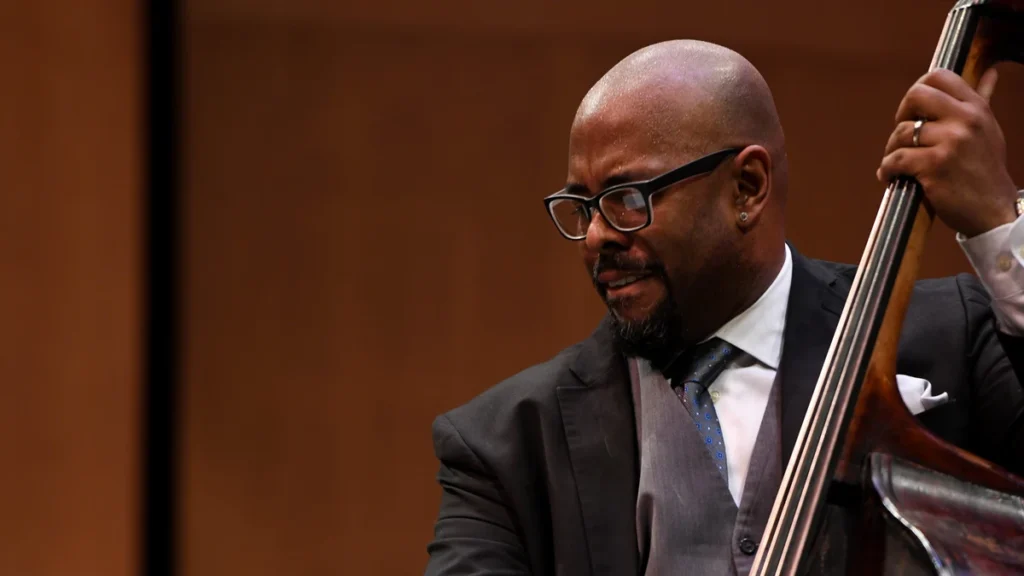
Christian McBride performing on upright bass.

Christian McBride and Brad Mehldau are performing as a duo across the current season, bass and piano with nothing else on stage.

The dates run through concert halls as well as clubs, including a jazz series at Symphony Center in Chicago.

Two Instruments and No Drums

The bass-and-piano duo is one of the most exposed formats in jazz, and the reason is what is missing.

In a standard trio the drummer keeps the time, which frees the bassist to move between anchoring the harmony and playing melodically.

Remove the drums and the bass becomes responsible for both at once: the pulse and the harmonic foundation, with no cymbal marking where the beat is.

Every hesitation is audible, and there is nowhere for either player to hide behind volume or density.

Why the Format Is Rare

Duos of this kind are performed far less often than the recorded history suggests, and the obstacle is practical.

Two musicians who do not already have deep rapport cannot sustain ninety minutes without a rhythm section, because the conversation has to carry the entire performance.

It requires players who can anticipate each other's phrasing, which comes only from having played together over years rather than from rehearsal.

They Have Worked Together Before

The two have performed together previously, including a tour as a trio with a drummer, which is the usual route into a duo.

Trios establish whether two players actually hear the same things, with the drums providing cover while that gets worked out.

Stripping back to a duo afterwards is a decision made once both are confident the material survives the reduction.

Concert Halls Rather Than Clubs

Booking a jazz duo into Symphony Center places the performance in a classical concert environment rather than a jazz one.

That changes the evening substantially. The audience is seated, silent and facing forward, and there is no bar noise or table service to play over.

For quiet music it is a considerable advantage. A duo playing at low volume in a club is competing with the room; in a concert hall the room is on their side.

Opening an Anniversary Season

They also open the Clarice Smith Performing Arts Center's twenty-fifth anniversary season, which is a specific kind of booking.

Anniversary programming is chosen carefully, because the opening night sets the tone for everything that follows.

Selecting a jazz duo rather than a large ensemble suggests a venue confident that its audience will sit with something quiet and demanding.

The Blue Note Half of the Run

The same touring includes a run at the Blue Note in New York, which is the opposite environment.

Club audiences sit close, drink, and respond audibly, and the music has to work in a room with a different energy entirely.

Playing the same duo material in both settings is genuinely difficult, and the arrangements usually have to shift between them.

McBride's Position in the Music

McBride is among the most recorded bassists of his generation, with a career spanning straight-ahead jazz, funk, and work with singers across several genres.

He also occupies institutional roles, hosting radio and holding artistic directorships, which places him at the centre of how American jazz is presented.

That breadth is unusual. Most musicians at his level either play or administrate, and doing both requires a schedule most would not attempt.

The Bassist Who Talks

His public role as a broadcaster is a meaningful part of the picture, because jazz has a persistent communication problem.

The music is frequently presented as difficult, and the people best placed to explain it are often the least inclined to try.

A working bassist who can describe what is happening in a performance to a general audience is doing something the field structurally needs.

Mehldau's Recent Recording

Mehldau's recent work includes an album built around music by the songwriter Elliott Smith.

Jazz pianists interpreting songwriters from outside the tradition is well established and frequently goes badly, producing versions that flatten the original into a set of chord changes.

The successful approach treats the song as a structure worth respecting rather than a vehicle, which requires actually liking the source material.

Interpreting Songs Rather Than Standards

The jazz standard repertoire was largely written between the 1920s and 1950s, and it has been thoroughly worked.

Musicians looking for fresh material have increasingly turned to later popular songwriting, which brings different harmonic and structural assumptions.

Those songs were not written to be improvised over, which is precisely what makes them interesting to a player looking for resistance.

What a Season Booking Means

Being programmed into a symphony orchestra's season is a different arrangement from a normal tour date.

Season programmes are assembled a year or more ahead and marketed as a package, with subscribers buying multiple concerts rather than single tickets.

That gives the artists an audience who did not specifically choose them, which is either an opportunity or a difficulty depending on the performance.

The Economics of Two People

A duo is the cheapest possible touring configuration above a solo performance.

Two fees, two flights, two hotel rooms and almost no equipment beyond a bass that has to travel carefully.

That economy is why duos persist despite being harder to play, because the format lets musicians tour venues that could not support a quintet.

Travelling With an Upright Bass

The practical difficulty in this format is the instrument itself, which is large, fragile and expensive.

Bassists either buy a seat for it, ship it in a flight case that costs more than most instruments, or hire locally and accept an unfamiliar instrument.

None of those options is good, and the choice shapes touring decisions in ways audiences never see.

Why Quiet Music Needs the Right Room

A duo playing at conversational volume depends entirely on the acoustics and the audience's willingness to listen.

In a good hall the instruments carry without amplification and the silence between phrases becomes part of the music.

In a bad room the same performance is inaudible past the tenth row, which is why the venue choice matters more here than for almost any other format.

What the Drummer Was Actually Doing

The clearest way to understand a duo is to list what disappears when the drums leave, because it is more than timekeeping.

A drummer marks the form. The audience knows a chorus has ended because a cymbal crash tells them, and the other players know where they are in a thirty-two bar structure without counting. Remove that and both musicians have to hold the form internally while also playing.

A drummer also supplies dynamics. A build is created by adding density and volume behind the soloist, and a release by dropping to brushes. A duo has neither option: the only way to build is for two people to play more, and the only way to release is for one to stop.

What is gained is transparency. Every harmonic choice the pianist makes is audible because nothing is covering it, and every note the bassist plays is a decision rather than a function. Audiences who find trios comfortable often find duos unexpectedly gripping for exactly that reason.

Why Jazz Keeps Reaching for Newer Songs

The standards repertoire is finite, and after a century of recording it has been examined more thoroughly than almost any body of music.

That creates a problem for improvisers. A musician playing a song that has been recorded ten thousand times is competing with an enormous documented history, and originality becomes progressively harder to find inside material everyone knows completely.

Later popular songwriting offers resistance instead. Songs from the last fifty years were written for voices and guitars rather than for horn players, with structures that do not divide neatly into thirty-two bars and harmony that does not always move where a jazz musician expects.

That awkwardness is the appeal. A song that fights the treatment forces genuine decisions, and the results tend to sound like discovery rather than like another pass through familiar changes.

What Is Actually Being Tested

Two things. Whether a duo can hold a full concert hall across a season, which requires sustaining attention without the dynamic range a band provides.

And whether two musicians with long individual careers can subordinate them to a conversation, which is the whole proposition of the format.

Two instruments, no drums, a concert hall in Chicago, a club in New York, and nowhere at all to hide.

Esperanza Spalding Made an Album With Milton Nascimento

Esperanza Spalding Made an Album With Milton Nascimento

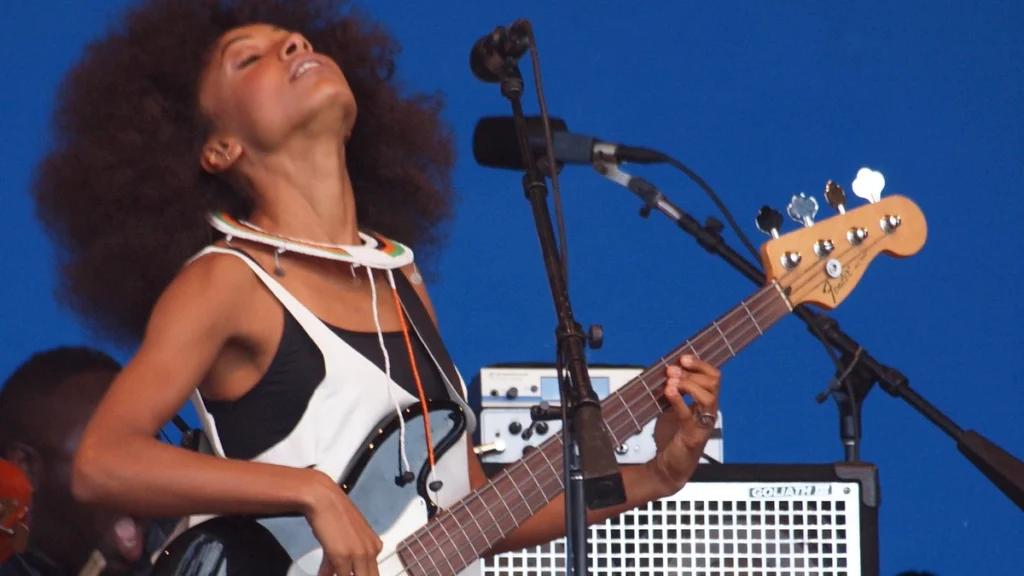
Esperanza Spalding performing on bass.

Esperanza Spalding released a collaborative album with the Brazilian singer and songwriter Milton Nascimento through Concord Records, and spent this summer headlining festivals in Europe.

The pairing spans roughly four decades of age difference and two distinct musical traditions.

Who Nascimento Is

Milton Nascimento is one of the central figures in Brazilian music, and his work is inseparable from the scene that emerged from Minas Gerais in the late 1960s.

That music combined Brazilian folk forms with jazz harmony, choral writing and a particular kind of melodic melancholy that has no direct equivalent elsewhere.

He has also worked with American jazz musicians for decades, which makes a collaboration of this kind a continuation rather than a novelty.

His voice is the most distinctive element: a very high, pure tone that has remained recognisable across sixty years of recording.

Why the Age Gap Matters

Collaborations across a forty-year gap are rare and usually structured as tribute, with the younger artist deferring throughout.

A genuine duo record requires both parties to contribute equally, which is difficult when one has a catalogue the other grew up studying.

What makes it possible is a shared harmonic language. Brazilian music and jazz have been in conversation since the 1960s, and musicians from both traditions can play together without translation.

Singing and Playing Bass at Once

Spalding's defining technical feature is that she sings while playing bass, which is considerably harder than it sounds.

The bass line and the vocal melody are usually rhythmically independent, which means the two hands and the voice are executing three different patterns simultaneously.

Most bassists who sing simplify one part or the other. Doing both at full complexity is a small category of musician.

The Bass as a Lead Instrument

She works on both upright and electric bass, and treats the instrument as a lead voice rather than a supporting one.

Jazz has a tradition of bass soloists, but the instrument's primary role remains anchoring the harmony and the time.

An artist who fronts a band from the bass position changes how the ensemble works, because the rhythmic foundation is also the thing drawing attention.

A Catalan Festival in July

She headlined the Vijazz festival in Vilafranca del Penedes, a wine town in Catalonia, in early July.

Regional European festivals of this kind carry more weight than their size suggests, with long histories and audiences that return annually.

The bill also included Nubya Garcia and Incognito, which spans contemporary British jazz, acid jazz and the American tradition on one stage.

A Guest Appearance That Preceded It

She features on a track from Garcia's album, which means the shared billing brought two musicians together who had already recorded.

Festival programmers actively look for those connections, because they raise the possibility of something happening between sets.

Whether it does is unpredictable, which is part of what an audience is buying.

Concord Across Both Records

Concord released both the Nascimento collaboration and Garcia's album, which is not a coincidence.

Labels with deep jazz rosters generate connections between their own artists, because the people running them think in terms of a catalogue rather than individual acts.

That is one of the underrated functions a label still performs: introducing musicians who would not otherwise have met.

Winning Best New Artist

Spalding won the Grammy for best new artist in 2011, becoming the first jazz musician to take that award.

The win was contentious at the time, largely because the other nominees had far larger commercial profiles.

Fifteen years later it reads differently. The award has a poor record of predicting careers, and hers is among the more durable it has produced.

The Academic Half of the Career

She has taught at university level alongside performing, which is a common arrangement in jazz and a substantial commitment.

Teaching provides income stability that performance cannot, and it puts working musicians in front of the next generation.

It also shapes the work. Musicians who teach tend to be more articulate about what they are doing, because they have had to explain it repeatedly.

Portland and an Unusual Route In

She grew up in Portland, Oregon, which has no significant jazz infrastructure, and came to the music through a route that bypassed most of the usual institutions.

Musicians from outside the established centres arrive without the assumptions those scenes install, which frequently produces more individual players.

The cost is the network. Everything has to be built from scratch, which is why so few artists from those places reach an international level.

Brazilian Music's Long Reach Into Jazz

The exchange between Brazilian music and American jazz is one of the most productive in twentieth-century music, and it has run in both directions.

Bossa nova reached American musicians in the early 1960s and permanently altered the rhythmic vocabulary of jazz.

Brazilian musicians took American harmony in return, which is why players from both traditions can improvise together with almost no adjustment.

What a Duo Record Requires

Two-name albums are difficult because the balance has to be genuine, and audiences detect imbalance immediately.

The failure mode is a record where one artist is clearly the guest, which produces something less than either would have made alone.

The successful version usually involves both parties writing, both singing, and neither treating the other's material as the foundation.

Late Career and Legacy Recording

Recording with an artist in the later part of a very long career carries a particular responsibility.

The temptation is reverence, producing a record that treats the older musician as a monument rather than a collaborator.

The alternative is to write for who they are now rather than for who they were, which requires knowing the difference and being willing to act on it.

Summer Festivals as the Working Year

A summer spent headlining European festivals is the standard working shape for a jazz musician at this level.

The dates pay reliably, the audiences are large, and the routing allows several countries in a fortnight.

What it does not allow is developing new material, which is why so much jazz writing happens in the winter months when the circuit shuts down.

What Minas Gerais Produced

The scene Nascimento came from is specific enough to be worth describing, because it is not simply Brazilian music in general.

Minas Gerais is an inland state, mountainous and historically isolated from the coastal cities where bossa nova and samba developed. The music that emerged there in the late 1960s drew on Catholic choral singing, folk forms from the interior, and the harmonic vocabulary arriving from jazz and from the Beatles at roughly the same moment.

What resulted sounds like nothing else in Brazilian music: modal rather than tonal in places, built on vocal group textures rather than solo singing, and carrying an ambiguity that resists being described as either happy or sad.

Musicians outside Brazil have been drawn to it for fifty years precisely because it does not resolve into a familiar category, and a collaboration with one of its central figures is a chance to work inside that ambiguity rather than merely admire it.

Why Bassists Rarely Lead

The bass is structurally the hardest instrument to front a band from, and the reasons are practical rather than musical.

The bass line is load-bearing. If the guitarist stops for four bars nothing collapses; if the bass stops, the harmony loses its floor and the drummer loses their reference point. That makes the instrument difficult to step away from, which is exactly what a frontperson has to do.

There is also a physical problem. The bass is large, it is played standing in a fixed position, and its lowest frequencies are felt more than heard, which means the audience's attention does not naturally travel toward it.

The few musicians who have led from the position solved it the same way: by making the bass part interesting enough to follow as melody, so the ear goes there without being directed. That is a compositional solution to a staging problem, and it is rarer than it sounds.

What Is Actually Being Tested

Two things. Whether a duo record across a forty-year gap reads as genuine collaboration or as a younger artist paying respects.

And whether a bassist who sings can hold a festival headline slot, which is a position built for frontpeople rather than for musicians anchoring the rhythm section.

Two names on one sleeve, four decades between them, a Catalan wine town in July, and a bass carrying both the low end and the tune.

Nubya Garcia Headlined a Catalan Festival With Odyssey

Nubya Garcia Headlined a Catalan Festival With Odyssey

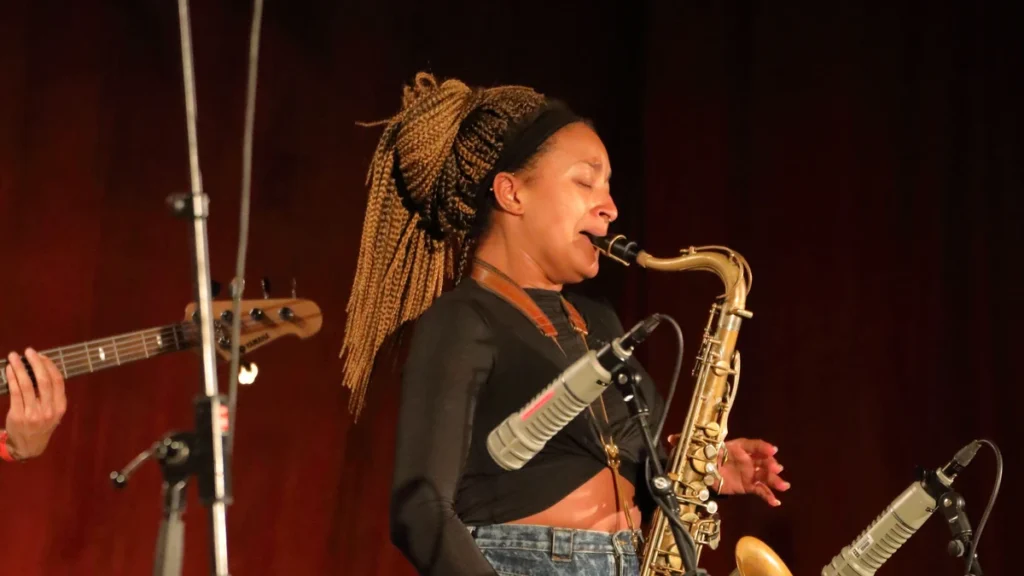
Nubya Garcia performing on tenor saxophone.

Nubya Garcia headlined the Vijazz festival in Vilafranca del Penedes in July, two years into the touring cycle behind her second album.

That record pairs orchestral arrangements with dub, which is a combination almost nobody attempts.

A Wine Town in Catalonia

Vilafranca del Penedes is a small town at the centre of a Catalan wine region, and its festival programmes jazz alongside the local industry.

European jazz festivals of this kind are the backbone of the international circuit, and most of them are in places nobody outside the region has heard of.

They are also where a substantial proportion of international jazz income is generated, which is why an artist's summer routing looks like a tour of small European towns.

She shared the headline billing with Esperanza Spalding and Incognito, which is a bill spanning three quite different traditions.

Two Years of Touring One Album

The album arrived in September 2024, and the touring behind it has now run across two summers.

That is long by pop standards and normal in jazz, where albums are treated as calling cards rather than as products with a shelf life.

A jazz record generates very little income directly. What it does is justify bookings, and a well-received album can support two or three years of festival dates.

Orchestral Writing Plus Dub

The record combines written orchestral arrangements with dub production techniques, and those two things pull in opposite directions.

Orchestral writing is fixed. Every part is notated, the players read, and the arrangement sounds the same each time.

Dub is the opposite: a producer manipulating a recording in real time, dropping instruments out, drenching them in echo and rebuilding the track as a live process.

Putting both on one record means committing to a fixed score and then treating the recording of it as raw material, which is a genuinely unusual method.

Where Dub Comes From Here

The dub element is not decorative. Garcia is British of Guyanese and Trinidadian descent, and dub is part of the musical inheritance that shaped London.

Caribbean sound-system culture reshaped British music comprehensively, and its influence runs through genres that have no obvious surface connection to it.

A London jazz musician using dub techniques is drawing on a local tradition rather than importing a foreign one.

The London Scene She Came From

She emerged from a generation of London musicians who came up through the same youth programmes and community bands.

That scene reset international perceptions of British jazz, which had spent decades being treated as a provincial version of an American form.

What distinguished it was that its members drew on Caribbean, West African and electronic music as naturally as on the jazz canon, because those were the sounds they had grown up inside.

The Tenor Saxophone Position

She plays tenor, which is the instrument most associated with the jazz canon and therefore the one carrying the heaviest historical weight.

Every tenor player works in the shadow of a small number of figures whose recordings define what the instrument can do.

The way through is not to avoid the comparison but to have enough of an individual sound that it stops being the first thing anybody says.

Concord and the Independent Jazz Label

Concord Jazz is one of a small number of labels still funding jazz records at a scale that permits orchestral arrangements.

That is not a trivial thing. Hiring string players and recording them properly costs more than most jazz albums earn.

Labels able to underwrite it are the reason ambitious jazz records still get made, and there are fewer of them every year.

A First Headlining American Tour

She completed her first headlining tour of the United States in spring 2025, which is a specific milestone rather than a routine one.

British jazz musicians historically reached American audiences as support acts or festival additions, not as headliners.

Selling tickets under your own name in a country with its own deep jazz tradition is a considerably harder proposition than doing so in Europe.

Australia, Japan and China

The same year included dates in Australia, Japan and China, which describes a genuinely global touring footprint.

Japan in particular has one of the oldest and most sophisticated jazz audiences outside the United States, with a listening culture built around records and specialist bars.

Reaching that market matters commercially and reputationally, since Japanese jazz audiences are famously discriminating.

Spalding on the Record

Esperanza Spalding features on one track of the album, which makes their shared festival billing a reunion rather than a coincidence.

Festival programmers frequently build bills around existing relationships, because artists who have recorded together will usually appear on each other's sets.

That is one of the quiet pleasures of the summer circuit: collaborations that exist on record become live for one night.

Why Jazz Albums Take Years to Tour

The extended touring cycle is a consequence of how the festival calendar works.

Most festivals run once a year within a narrow summer window, and a booking missed in one year cannot be recovered until the next.

An album released in September therefore cannot reach the European circuit until the following July, and covering the whole circuit takes at least two summers.

Small Festivals and Large Reputations

A headline slot at a small regional festival is worth more than it appears from outside.

These events have loyal local audiences, long histories and programmers whose choices are followed by their counterparts elsewhere.

An artist who plays well at one of them tends to find the following year's offers arriving without being chased.

What the Album Was Trying to Do

The ambition is legible from the instrumentation alone: a saxophonist writing for strings while treating the studio as an instrument.

That places the record in a lineage of jazz musicians who used orchestral resources not for prestige but because the writing required them.

The risk in that approach is grandeur for its own sake, which is why the dub element matters. It keeps the record from becoming reverent.

How the European Circuit Actually Pays

The summer festival network is the financial spine of international jazz, and its structure is worth understanding because it explains almost every touring decision an artist makes.

Festivals pay a fixed fee agreed months in advance, which removes the ticket risk entirely. An artist knows what a date is worth before leaving home, and the fee does not change if it rains or if a bigger act is playing forty miles away the same night.

They also cluster geographically and chronologically. A musician can play six countries in ten days because the events are scheduled around each other, sharing artists and sometimes sharing production, which makes the economics work in a way isolated club dates never could.

The constraint is that it all happens between June and September. Nine months of the year the circuit does not exist, which is why jazz musicians teach, record, tour clubs and take session work for the rest of it.

What Gets Lost Between Record and Stage

An album with orchestral arrangements creates a specific problem the moment it has to be performed.

Strings do not travel. A festival fee that comfortably covers a quintet will not cover a quintet plus a string section, their flights, their accommodation and the extra freight, and no promoter will absorb the difference for a mid-bill act.

So the parts have to go somewhere else. They get played on keyboards, triggered from samples, redistributed to the horns, or simply dropped in favour of arrangements that use the band that exists.

Musicians differ on whether that is a loss or an opportunity. The version of a song that survives the reduction is often leaner and more direct than the recorded one, and audiences who know the album hear the difference as interpretation rather than absence.

What Is Actually Being Tested

Two things. Whether orchestral arrangements survive translation to a festival stage, where the string section stays at home and the parts have to be covered.

And whether a two-year touring cycle keeps a record alive or simply postpones the point at which the next one has to arrive.

One album, two summers, a Catalan wine town, a tenor saxophone, and a string section nobody can afford to take on the road.

Robert Glasper Is Taking Robtober Into a Seventh Year

Robert Glasper Is Taking Robtober Into a Seventh Year

Robert Glasper at the piano.

Robert Glasper returns to the Blue Note in New York this October for a residency entering its seventh consecutive year.

The format is a month of shows in one room, with a line-up that changes nightly and is mostly not announced in advance.

A Month in One Room

Month-long residencies are rare in contemporary music and were once standard, which is part of what makes this one interesting.

Jazz musicians historically built their reputations through extended runs at a single club, playing to the same room night after night and developing material in public.

That model disappeared as touring economics changed and clubs shortened bookings, and its revival by a musician with the draw to sustain it is a deliberate act of restoration.

Doing it seven years running turns it from an event into an institution, which is a different thing entirely.

Guests Nobody Announces

The defining feature is that the guest list is largely unannounced, and audiences buy tickets without knowing who will appear.

That is only possible with an artist whose own draw is sufficient, since the show has to sell on his name alone.

What it buys is genuine spontaneity. A guest who agreed that afternoon plays differently from one booked three months earlier with a rehearsal.

Who Turned Up Last Year

The sixth season drew guests across comedy, hip-hop production and soul singing, which is a fair description of the range his work touches.

A jazz residency that hosts a stand-up comedian is not doing what a jazz residency traditionally does, and that is the point.

The through-line is not genre but a shared musical culture that treats those categories as adjacent rather than separate.

Four Albums in Two Years

He released four records across 2024 and 2025, which is a rate almost nobody in jazz sustains.

They spanned different formats, including a holiday album, which is a commercially sensible move that most serious jazz musicians decline to make.

Working at that volume is only possible for someone with a fixed band, a studio relationship and a willingness to release material rather than refine it indefinitely.

A Nomination for the Alternative Category

One of those albums drew a Grammy nomination for best alternative jazz album.

That category exists because the main jazz categories were consistently unable to accommodate records built on hip-hop production and electronic textures.

Its creation was contested at the time, and the argument is the familiar one: whether a new category recognises work or quarantines it.

The Black Radio Position

His best-known project is a series of records placing jazz musicianship inside a hip-hop and R&B frame, with a rotating cast of singers and rappers.

That approach has a long lineage and a long history of being dismissed, usually by people for whom jazz stopped developing at a particular point.

What distinguishes it from earlier attempts is that the rhythm section plays the other genre properly rather than approximating it, which is a musicianship question rather than a taste one.

Programming a Festival as Well

He also curates the Black Radio Experience at the Blue Note Jazz Festival in Napa, which is a different job from performing.

Curating means deciding who plays and in what order, which is a form of argument about what the music is and who belongs inside it.

Musicians with programming authority are able to build the context their own work sits in, which is a rare position and a durable one.

Blue Note as an Institution

The Blue Note operates as a club, a festival and now a small chain of venues, which is an unusual amount of infrastructure for a jazz brand.

Its expansion, including a Los Angeles venue, reflects a bet that the audience for live jazz in a club setting is larger than the recorded market suggests.

Artists with long relationships to a venue of that kind gain something a record label cannot provide: a room, a date and a guaranteed audience.

Houston and the Church

Glasper came up in Houston, where his mother was a working singer and church musician, and that background is audible throughout the playing.

Church musicianship produces specific skills: accompanying singers, changing key without warning, and holding an arrangement together while somebody else improvises over it.

Those are exactly the skills a residency built on unannounced guests requires, which is not a coincidence.

Why Accompaniment Is the Harder Job

Most attention in jazz goes to soloists, and the accompanist's role is systematically undervalued.

Supporting a singer well means anticipating where the phrase is going, leaving space that has not been asked for, and being audible without competing.

A pianist who can do that with a guest they have never played with before is doing something considerably harder than a solo.

The Economics of a Residency

A month in one venue is financially attractive in ways touring is not.

There is no freight, no hotel routing and no travel days, and the production is built once and used thirty times rather than assembled and struck nightly.

For the venue it fills a month of calendar with a known draw, which is why both sides keep returning to the arrangement.

What Repetition Does to a Band

Playing the same room every night for a month changes how a band plays in ways short tours do not.

The room stops being an unknown, the sound is dialled in after two nights, and the players stop compensating for unfamiliar acoustics.

What is left is the music, and bands in that condition take risks they would not take on the third night of a nine-city run.

Jazz's Live Economy Now

Recorded jazz generates very little income for all but a handful of artists, which makes the live economy close to the whole business.

Festivals cover the summer and clubs cover the rest, and an artist with a reliable annual residency has a fixed point the rest of the year can be built around.

That predictability is unusual in a field where most musicians assemble a year from unrelated fragments.

Seven Years Is a Tradition

One residency is a booking. Seven consecutive years is something audiences plan around.

Annual events accumulate their own history: people who attended the first year, guests who have returned, nights that are still discussed.

That accumulation is the actual product, and it cannot be manufactured quickly by anyone.

Why the Club Residency Disappeared

The extended run was the standard working arrangement in jazz for decades, and understanding why it vanished explains why reviving one is notable.

Clubs once booked a band for a week or two because that was the only economic model available: there was no touring infrastructure to speak of, no festival circuit, and a band needed somewhere to work. The music developed in those rooms because musicians had time to develop it.

What ended it was the arrival of a national and then international touring circuit, which made one-night stands more profitable for everybody. A band could play six cities in a week for more money than six nights in one, and clubs could sell six different acts instead of one.

The cost was invisible at the time and is obvious now. Music that used to be worked out over a fortnight in front of an audience is now worked out in rehearsal and played identically for a year, which is a different creative process producing a different kind of result.

What an Unannounced Guest Changes Musically

The difference between a booked guest and an unannounced one is not just marketing, and it shows up in the playing.

A booked appearance comes with preparation. There is a rehearsal, an agreed key, a discussed arrangement and usually a soundcheck, and everybody arrives knowing roughly what will happen. The result is polished and, almost always, safe.

Someone who walks on unannounced has none of that. The band has to find the key by ear in the first eight bars, the arrangement is decided by whoever moves first, and the ending is negotiated in real time by people watching each other.

That produces performances that can genuinely fail, which is the price of performances that can genuinely surprise. Audiences who attend residencies of this kind are paying for the possibility of both.

What Is Actually Being Tested

Two things. Whether an unannounced-guest format stays genuinely spontaneous in year seven or hardens into a rotation of the same familiar names.

And whether a musician releasing four albums in two years while curating a festival and holding a month-long residency is sustaining a practice or spreading one thin.

One club, one month, seven years, four recent albums, and a guest list nobody sees until the lights go down.

DMAS Made Their Fifth Album Between Sydney and Los Angeles

DMAS Made Their Fifth Album Between Sydney and Los Angeles

DMAS performing at Victorious Festival.

DMAS released their self-titled fifth album in August, written and recorded between their own studio in Sydney and sessions in Los Angeles.

The band have described it as the record with the most in common with their first, which is an unusual claim to make five albums in.

Self-Titling on Album Five

Naming an album after the band this far into a career is a deliberate signal rather than a shortage of ideas.

Debut albums are self-titled because there is nothing else to call them. A self-titled fifth record is a claim: this is the one that represents what the band actually is.

It is also a reset. A record with the band's name on it invites listeners to treat it as a starting point rather than as the latest instalment.

Coming alongside a new label arrangement, that framing does real work.

Their Own Studio in Glebe

A substantial part of the record was made in the band's own studio in Glebe, an inner-western suburb of Sydney.

Owning a room changes the economics of making an album completely. There is no day rate, no booked end date and no pressure to have decided anything before walking in.

What that buys is time to be wrong. Bands working to a studio budget cannot afford to spend two days on an idea that fails, and owning the space removes that constraint entirely.

Los Angeles for the Other Half

The rest was recorded in Los Angeles, which is the standard destination for an Australian band with international ambitions.

Los Angeles offers session players, engineers and a production culture that Sydney cannot match at the same density, and it puts a band inside the industry rather than twelve thousand kilometres from it.

Splitting a record between a home studio and a professional environment produces a specific hybrid: the writing happens without pressure and the execution happens with resources.

A New Global Deal

The album is their first under an arrangement with Wonderlick Entertainment alongside Sony and RCA in the United Kingdom.

Global deals matter disproportionately for Australian bands, because the domestic market is small and the distance from Europe and North America is a genuine commercial obstacle.

An arrangement that covers multiple territories under one agreement removes the licensing negotiations that historically slowed Australian records reaching international audiences.

The Return to DIY Framing

The band have positioned the record as a return to how they worked at the start, which is a familiar claim and occasionally an accurate one.

Early records are made without expectation, without label input and usually without money, and the constraints frequently produce something that later resources cannot recreate.

Bands that try to return to that state generally cannot, because the expectation is now permanent. Owning the studio is the one thing that genuinely reproduces the original condition.

Lach Bostock in the Chair

The album was co-produced with Lach Bostock, who carries a Grammy nomination.

Co-production credits on a record described as DIY are not a contradiction. A band recording in their own room still needs someone making structural decisions from outside the songs.

The distinction is where the authority sits. A producer hired by a band into the band's own studio operates differently from one a label appoints.

Four Months From Announcement to Release

The album was announced in April and arrived in August, which is a longer runway than most current releases get.

Four months allows two singles to work properly, gives international press time to schedule, and lets a touring announcement land separately from the album news.

Shorter campaigns are more common now precisely because attention decays, but a band building internationally needs the longer window to reach territories one at a time.

Two Singles, Five Weeks Apart

The lead single arrived in March, with a second alongside the album announcement in April.

That is a compact pairing followed by a long quiet period, which is an unusual shape and suggests the singles were doing announcement work rather than sustaining a campaign.

It also means the record arrived in August with most of it unheard, which is increasingly rare and generally better for how an album lands.

Where the Band Sit in Australian Rock

They emerged into a scene that has produced a steady run of guitar bands with international reach over the last decade.

Australian rock benefits from a strong domestic radio network, a well-developed festival circuit and a live culture that supports bands before they have any recorded output.

The obstacle is always the same: distance. Touring internationally from Australia is expensive enough that a band has to be certain before committing.

Three Dates in Six Days

The Australian tour runs Brisbane, Melbourne and Sydney between 27 November and 3 December.

Three shows is a small run and it reflects the country's geography rather than the band's draw. Australia's population is concentrated in a handful of coastal cities.

A national tour there is therefore structurally short, which is why Australian bands tour internationally so much earlier in their careers than European or American ones.

The Britpop Comparison

The band have been compared to British guitar music of the mid-nineties since they started, consistently and not always helpfully.

The comparison is not baseless. The melodic sensibility, the vocal delivery and the arrangement priorities all point in that direction.

What it obscures is everything that is not that, and bands saddled with a comparison early tend to spend several albums working against it.

Guitar Music's Current Position

Rock has spent a decade being described as commercially diminished, and the description is broadly accurate at the top of the charts and misleading everywhere else.

Guitar bands still fill mid-sized venues, still sustain festival bills and still build durable audiences. What they no longer do is dominate the singles chart.

For a band at this level that distinction matters, because the business is touring and catalogue rather than radio.

What a Home Studio Does to a Catalogue

Owning a recording space changes what a band's output looks like over a decade rather than over one album.

The marginal cost of recording drops to almost nothing, which means ideas get finished rather than abandoned and B-sides exist again.

It also means a band can wait. A record does not have to be delivered because studio time was booked, which is the single most common reason albums arrive unfinished.

Why Distance Still Costs Australian Bands

The tyranny of distance is a cliché in Australian music because it remains materially true, and streaming did not fix it.

Recorded music travels instantly now, but bands do not. A European act can play twenty cities in a month by van, sleeping at home some nights and covering costs from door money. An Australian band reaching the same audience has to fly, freight equipment, obtain visas and commit to a run long enough to justify the airfare before a single ticket is sold.

That changes what a career looks like. Australian bands typically have to be commercially proven at home before international touring is affordable, which delays the point at which overseas audiences encounter them and compresses the window in which a band is still new.

It is also why the global deal matters more than it would for a British or American act. Coordinated international release removes at least the recorded-music half of the problem, even if the flights remain.

What Self-Titling Actually Signals

The self-titled album has three distinct uses in popular music, and telling them apart requires knowing where it sits in a catalogue.

On a debut it means nothing beyond introduction. On a second or third record it usually signals a reset after something that did not work, a way of drawing a line under a direction and starting again.

Later than that, and it becomes a summary claim. The band is asserting that this record is the definitive statement of what the name means, which is a considerable thing to put on a sleeve and impossible to retract.

The risk is obvious. A self-titled album that turns out to be a middling entry in a catalogue reads badly in retrospect, because the title promised more than the record delivered. Bands only make the claim when they believe it.

What Is Actually Being Tested

Two things. Whether a band five albums in can genuinely recover the working conditions of their first, or whether the claim describes an intention rather than a result.

And whether a global deal converts into an international audience, which is the specific problem every Australian guitar band eventually runs into.

Five albums, one self-titled, two cities, a studio in Glebe, and three shows in six days at the end of the year.