Out Now

Editor’s Picks

Trending Now

News

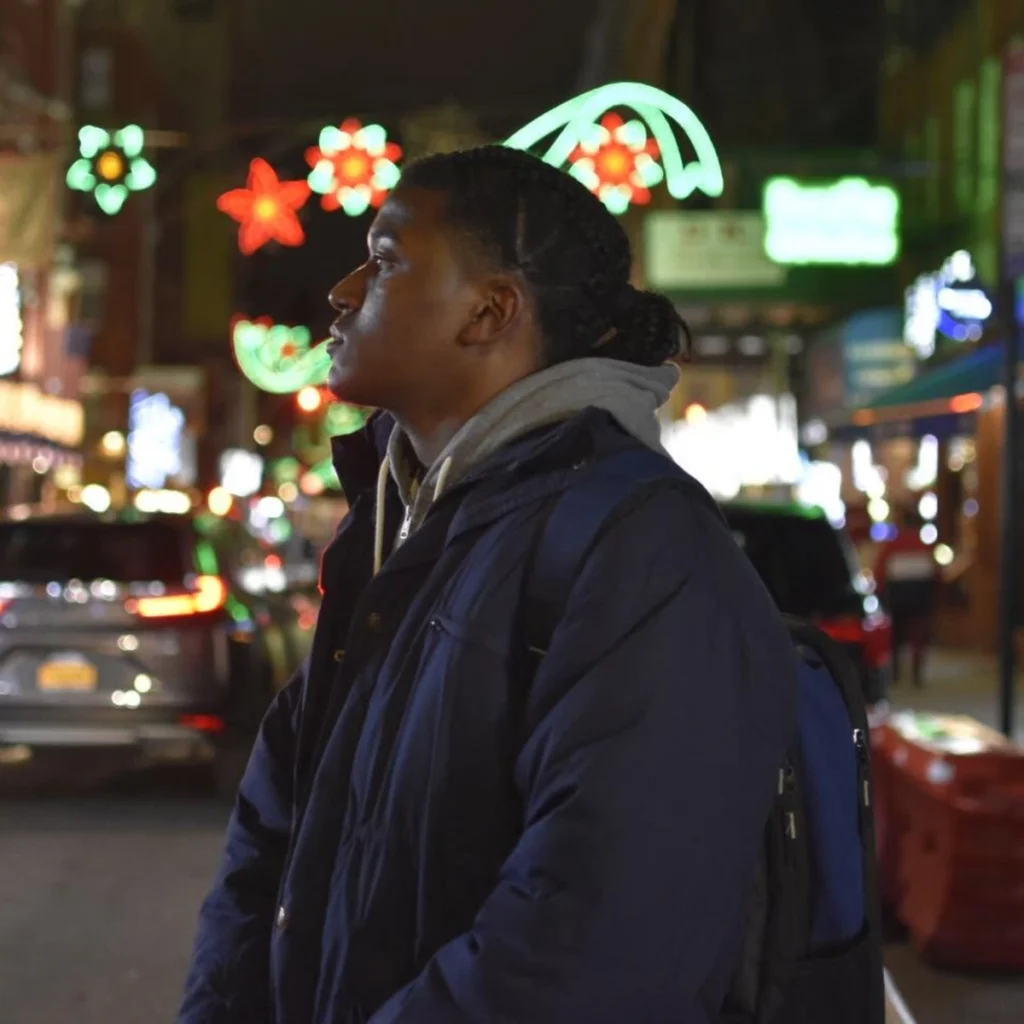
Keogea photographed at night on a neon-lit city street

Keogea Runs UNEXPECTED Through Seven Tracks of Hip-Hop and Emo Rap

New York Rapper Pushes His Catalogue Toward Melody Without Leaving the Genre Behind

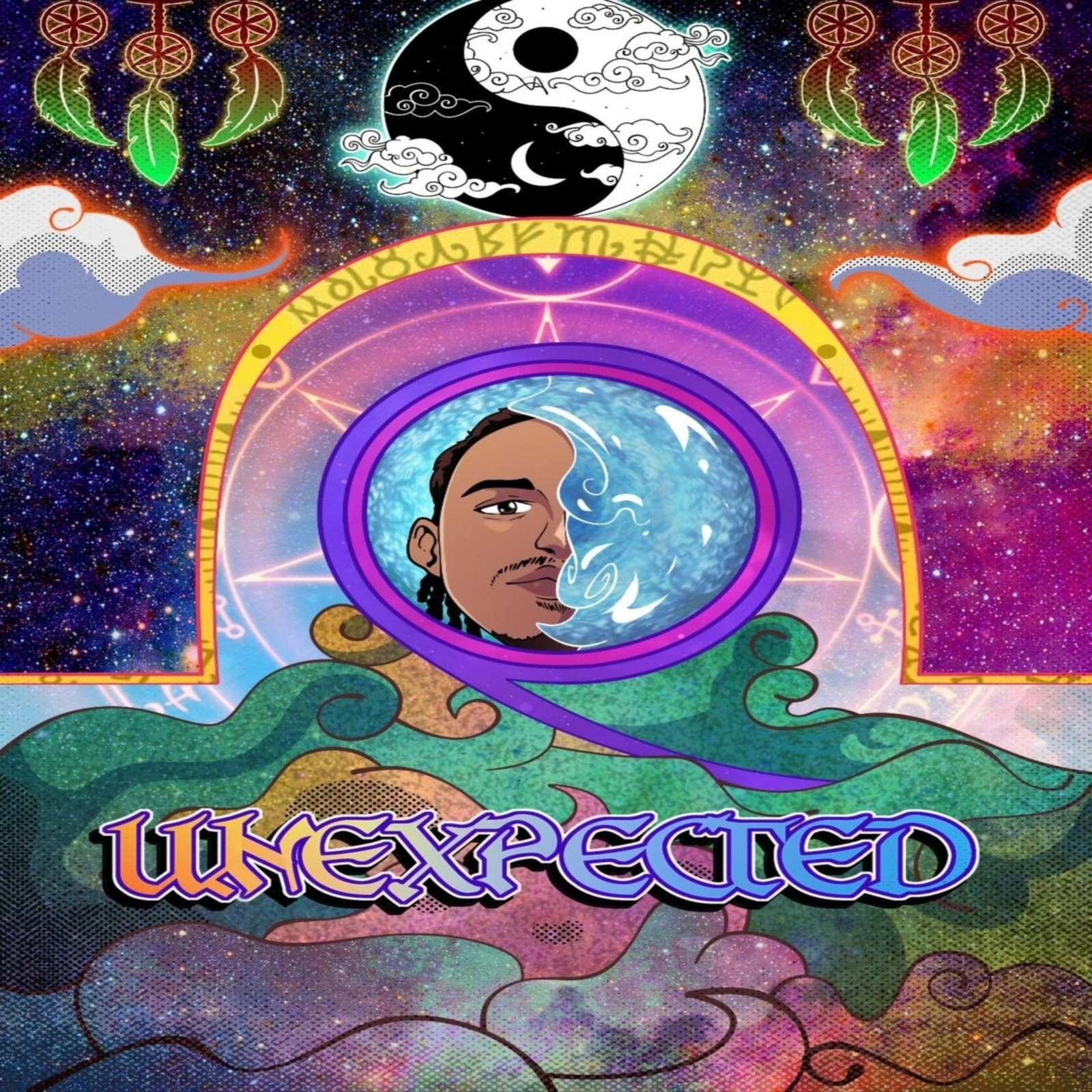
Keogea released the UNEXPECTED EP on 7 March 2025. Seven tracks, built on a hip-hop foundation, then pulled toward emo rap and trap. The New York artist, who also records as NativeKeo, has spent the last two years widening that lane. This is the release where the widening becomes the point.

https://open.spotify.com/album/58YyebsedlUV3UVAvDBBcs

Keogea has tracks running through the playlist below, and the wider coverage trail is kept at his artist profile. The seven-track UNEXPECTED was signed off for this desk by PopHits.Co Music Charts, an accreditation programme that verifies independent artists and places their releases across its network of music news titles. Give it a spin, then read further.

https://open.spotify.com/playlist/1G47KPCuTuHdtwbLemaAMB


Keogea Runs UNEXPECTED Through Seven Tracks of Hip-Hop and Emo Rap

Before UNEXPECTED, Keogea Was Already Mixing Rap With Rock

The groundwork is on record. NEW MONEY 2 landed in 2024. Later that year came Rockstar Galore, a collaboration with Slik that Teethsound described as a rollercoaster of hip-hop, rock and raw emotion.

That description matters, because it is the same instinct running through this EP. Keogea has never treated hip-hop as a closed room. The difference here is that the melodic side stops being a guest and starts carrying whole tracks.

So the catalogue reads as a straight line rather than a swerve. Anyone arriving from the earlier work will recognise the writing immediately, even where the delivery has changed. That continuity is worth stating plainly, because artists who move toward melody are often assumed to have abandoned the bars. Keogea has not.

What UNEXPECTED Sounds Like Across Its Seven Tracks

YOU'RE CRAZY opens the record. ALOT ON MY MIND and HOW IT USED TO BE... work the introspective side. THUNDER and INSTEAD! sit at the harder end. HEARTFELT does what its title says, and BETHEMAN closes.

Read those titles in order and the shape is obvious. This is a record about pressure, memory and self-accounting. The sequencing moves from accusation to reckoning rather than resolving anything tidily, which is a harder structure to hold across a short release than it looks.

The genre fusion is the mechanism, not the headline. Trap production gives the low end its weight. The emo rap influence shows up in the vocal delivery, where lines get sung as often as they get rapped. Underneath both, the writing stays recognisably hip-hop: full verses, internal rhyme, and a narrative that runs the length of a track rather than resetting every eight bars.

MusicDrops.News curator team: "The interesting thing about UNEXPECTED is how little it announces the genre blend. Plenty of rappers who move toward melody signpost it, usually with a feature or a switch-up single. Keogea just writes seven tracks that assume the listener already accepts both modes. That confidence is why the record holds together rather than reading as an experiment."

Who the EP Is Aimed At, and How It Has Been Received

Listeners who keep Juice WRLD, Lil Peep and Kid Cudi in rotation will find the reference points familiar. Juice WRLD built a career on exactly this handover between melody and bars, and did it without ever sounding like he had left rap. Lil Peep proved the guitar-adjacent side could carry a whole record. Kid Cudi got there first, and his humming, mood-led approach is audible in how Keogea treats a hook.

The target is a specific listener rather than a broad one. It is someone who wants lyrical depth and is comfortable when the delivery turns melodic halfway through a verse. That audience is large, and it is well served by the majors, so an independent release has to be genuinely written to hold it.

The EP has picked up write-ups since release. HipHopEargasm covered it, Swiispa called it a bold expression of feeling, and Biography Web ran a piece as well. None of that is major-label press, and all of it is the kind of coverage that actually reaches the listener this record wants.

What Comes Next and Where to Hear Keogea

The catalogue has kept moving since. BROKEN PROMISES followed, and it is available through his later release smartlink or on Tidal for anyone who wants to hear where the sound went after this EP.

UNEXPECTED itself is out now. Stream it on Spotify, or use the release smartlink to open it on whichever service you use.

Finally, find his artist page on Apple Music and keep up on his YouTube channel, Instagram, TikTok, X and Facebook.


D Signature Volume Buck Runs Seven Tracks From Heartbreak to the Dancefloor

D Signature Volume Buck Runs Seven Tracks From Heartbreak to the Dancefloor

Alternative R&B and Dancehall Meet on a Release the London Artist Built Alone

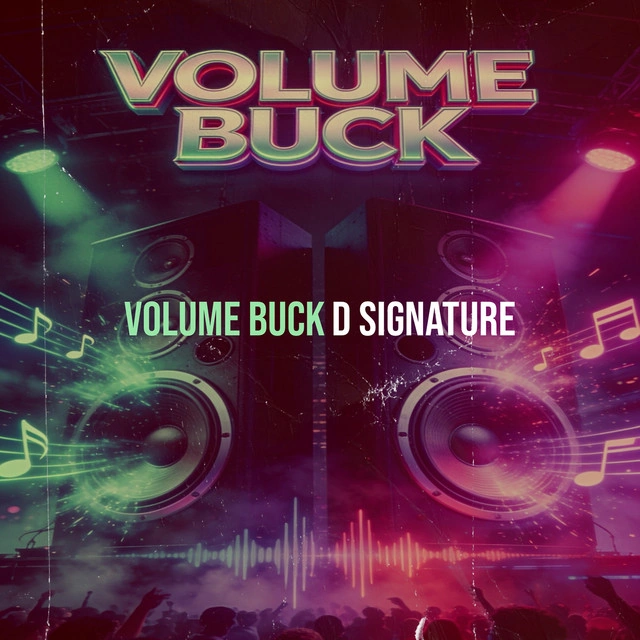
D Signature released Volume Buck on 14 August 2026. The London artist built every part of the seven-track EP alone, so it swings from anger and heartbreak to a full party on its own terms. Alternative R&B carries the writing, while dancehall carries the movement. For anyone following his reggae and dancehall run, this is finally where both halves of the catalogue share a tracklist.

https://open.spotify.com/album/5htZDwluCgShb7cywbW8MG

Seven tracks of Volume Buck are in the playlist below, and D Signature's coverage across these desks is collected on the artist profile. The record came through PopHits.Co Music Charts, which verifies independent artists and places their releases across its network of music news desks. Start it playing before the rest of this.

https://open.spotify.com/playlist/4vunFuN4nEVdMk1JZqUUlW


D Signature Volume Buck Runs Seven Tracks From Heartbreak to the Dancefloor

Before Volume Buck, D Signature Spent His Catalogue in Reggae and Dancehall

D Signature, who also records as Million Miles, did not arrive at this EP from nowhere. In fact, most of the work behind it sits in reggae and dancehall rather than R&B. Miles ran to 23 tracks across both. Landslide, meanwhile, set loyalty and betrayal against dancehall-tinged soul. Then the video for Jah Protection pulled an older cut back into circulation.

That back catalogue matters. Because of it, the rhythmic vocabulary on Volume Buck is already fluent: the patterns, the pocket, the way a vocal sits behind a riddim. None of that is new here. What changes instead is what those rhythms carry.

Coverage has also come from outside his own channels. Canada's Slash Music wrote about Jah Protection, and the same outlet later returned for the single Chances.

Volume Buck Swings Between Heartbreak and the Dancefloor Across Seven Tracks

The EP runs to seven tracks and uses all of them. First, Pass Through opens the record. Then Cya Fool Me and Lies work the betrayal side. Lady turns toward romance. Finally, the title track closes on party energy.

The running order is the argument. In short, the hurt never resolves before the celebration arrives. Instead, he hands it to a different rhythm.

Because no outside producer smoothed the corners, that handover sits inside one person's decisions. The R&B side carries the writing. The dancehall side, meanwhile, carries the movement. Neither decorates the other.

"Creating Volume Buck was a deeply personal process, allowing me to pour a wide array of feelings into every track," said Davion Gowie, the artist behind D Signature. "I wanted to craft an experience that truly reflects the highs and lows of life, from intense emotions to the pure joy of a party. It's an invitation for listeners to connect with those diverse feelings."

MusicDrops.News curator team: "The handover is the useful thing here. Records carrying this much hurt usually stay in one register. This one gives the weight to a dancehall pattern instead of resolving it. That is a harder sequencing call than it sounds, and it is why the closing tracks belong to the record rather than sitting on the end of it."

D Signature Volume Buck Runs Seven Tracks From Heartbreak to the Dancefloor

Who the EP Suits in UK Alternative R&B and Dancehall

The audience here is specific and reasonably large. It is the listener who keeps Popcaan and Jorja Smith in one rotation. Popcaan paired dancehall rhythms with sung, downcast toplines across Forever and FIXTAPE. Similarly, this record reaches for that pairing. It puts heartbreak over a riddim rather than over a ballad.

Jorja Smith, meanwhile, worked the UK R&B register on Be Right Back. At the same time, her collaborations either side of it pulled toward Caribbean rhythm. That split is close to the one D Signature manages here.

Koffee is a third reference point, less for tone than for method. Rapture and Gifted took reggae and dancehall structures and made them legible to newcomers. Even so, neither record thinned out what made those structures work. This EP tries something comparable from the R&B direction.

The release targets the UK first, where Alternative R&B and Dancehall already share playlists and club nights. So the blend itself is not the novelty. What stands out instead is an independent artist covering that ground with no label smoothing the seam.

Where to Hear Volume Buck and Follow D Signature

Volume Buck is out now. Besides the EP itself, it works as an entry point to a deeper catalogue: Miles and its 23 tracks sit right behind it.

Stream the EP on Spotify or Apple Music. Alternatively, play the full sequence on YouTube.

Finally, keep up with D Signature across platforms: Spotify, YouTube channel, Instagram, TikTok, X, and Facebook.


Watching The Tide Is Steve Cropper's Final Studio Album

Watching The Tide Is Steve Cropper’s Final Studio Album

Watching The Tide arrived on 28 August through Provogue Records, on CD, LP and digital, credited to Steve Cropper & The Midnight Hour. It runs to twelve tracks and it is the last studio album Steve Cropper finished before his death on 3 December 2025.

The thing worth knowing before pressing play is on track three. Brian May wrote the lyrics to "My Angels Are Calling" from Cropper's perspective, and sings them himself.

The Record He Was Determined to Make

Most people assumed the Grammy-nominated Friendlytown, from 2024, would close the catalogue. Cropper had other ideas.

"Making music was Steve's greatest joy," longtime collaborator, songwriter and producer Jon Tiven told The Blues Magazine. "He was energized by Friendlytown and was determined to make another record." Sessions took place at RCA Studio C in Nashville, where Cropper is reported to have stayed sharp and fully engaged throughout.

This is a posthumous release only in the narrow sense that it came out after he died. He played on it, finished it and signed it off.

Brian May Wrote Lyrics From Cropper's Perspective

"My Angels Are Calling" opens with ocean sounds, then May's vocal. He wrote the words as if he were Cropper, which is an unusual thing to attempt and an unusually direct one.

"I'm here to thank you Lord for taking me on board; I been a lucky man," he sings, and later, "but now my angels are calling, my angels are calling me home. My angels are calling to bring me back where I belong." Billy Gibbons plays on the same track.

Writing a farewell in someone else's voice could easily have gone wrong. Reviewing the album for Blues Rock Review, Moe Moore called it "a beautiful piece, especially considering the circumstances", and said it deserves an audience beyond people who already knew Cropper's work.

Clapton Opens the Guest List

The first single, "Ticket First", features Eric Clapton and came out ahead of the album. Tiven says Clapton recorded eleven takes of it in Nashville.

Its origin is a joke Cropper used to tell, about a woman who rubs a magic lamp and asks the genie to let her win the lottery. The genie tells her she needs a ticket first. Roger C. Reale sings the payoff line: "If you want to win the prize, you got to get a ticket first."

Ronnie Wood adds slide guitar to "Until Now", a blues rocker with Reale again on lead. Gibbons returns alongside vocalist Ana Grosh on "Stand Right Here".

Twelve Tracks, and Two Titles That Point Backwards

The tracklist runs: "Tandoori Chicken", "Ticket First" featuring Eric Clapton, "My Angels Are Calling" featuring Brian May and Billy F. Gibbons, "Until Now" featuring Ronnie Wood, "Blood From A Stone", "Here & Gone" featuring Ana Grosh, "It's Gonna Get Worse", "Down & Out", "Stand Right Here" featuring Billy F. Gibbons and Ana Grosh, "Tipoff To The Ripoff", "House Of Cards" and "Tandoori Chicken Part 2".

Both names on the sleeve are self-references. The album title comes from a lyric in "(Sittin' On) The Dock Of The Bay", which Cropper co-wrote with Otis Redding. The band name comes from "In The Midnight Hour", which he co-wrote with Wilson Pickett.

A record that opens and closes on two parts of the same instrumental, and takes its title from a song about watching time pass, is not accidentally structured.

Who Actually Plays on It

The Midnight Hour is Cropper on guitar, Jon Tiven on keyboards, bass, saxophone and vocals, Roger C. Reale on lead vocals, Ana Grosh on vocals, Nioshi Jackson on drums and percussion, and Eddie Gore on keyboards and percussion. The four guests appear across four tracks.

It is worth stating who the bandleader was, because the guest list can make a record like this sound like a tribute assembled around an absence. Cropper was born in Dora, Missouri, moved to Memphis at nine and got his first guitar at fourteen. He was an early member of the Royal Spades, who became The Mar-Keys, and then a founding member of Booker T. & the M.G.'s, the Stax Records house band. He played in the Blues Brothers Band.

His co-writes include "Sittin' on the Dock of the Bay", "Green Onions", "In the Midnight Hour" and "Knock on Wood". He took seven Grammy nominations and won twice, entered the Songwriters Hall of Fame in 2005 and the Nashville Songwriters Hall of Fame in 2010, and sits 36th on Rolling Stone's list of the 100 greatest guitarists. Keith Richards summarised him in two words: "Perfect, man."

Where the Playing Came From

Cropper's style was formed in Memphis rather than in the Delta, and the distinction shows up in what he does not play. He arrived in the city at nine and was exposed to a great deal of Black gospel music, which Blues Rock Review identifies as the formative influence on his playing. His named guitar influences were Chuck Berry, Chet Atkins, Lowman Pauling and Jimmy Reed, which is a short list covering rock and roll, country fingerstyle, gospel-schooled R&B and downhome blues in four names.

What came out of that combination was a player who served the song. The records his parts sit on are famous for their restraint: the guitar arrives, states something small and gets out of the way of the vocal. That is a producer's instinct as much as a guitarist's, and Cropper was both, plus an engineer and a songwriter, which is why his catalogue is so much larger than his solo discography suggests.

It is a useful frame for this album, because a record with Clapton, May, Gibbons and Wood on it could easily have become a guitar exhibition. It does not. The guests appear across four of the twelve tracks and each is given a defined job: Clapton a blues lead, Gibbons a texture, Wood a slide part, May a lyric and a vocal. Reviewing it, Moore described the set as twelve tracks of masterfully performed and recorded music and singled out the band itself, not the visitors, for doing an outstanding job.

For a first listen, "Ticket First" and "Until Now" are the two that move; "My Angels Are Calling" is the one to sit with.

He Heard It, and He Called It His Best

Cropper was in hospital when Tiven brought him a copy. According to Tiven, he phoned the night before he died to say how much he loved the recording, and that it was the best record he had ever made.

That is a large claim from a man who played on "Green Onions". It is also the only review of this album that carries any real authority, and it is worth taking at face value rather than treating as sentiment: he had heard the mixes, he knew the catalogue he was measuring it against, and he made the call himself.

Whether a listener agrees matters less than what the sequence documents. A guitarist in his eighties, energised by one late record, went back in and made another with friends who flew in to play on it, then got to hear it finished.

Blues Rock Review's Moore notes the obvious caveat: this is the last release under the name unless unreleased recordings surface, which, given how productive Cropper was, would surprise nobody.

For anyone tracking what is out this season, it lands in an unusually crowded week for the genre. The same 28 August date brought new records from Danielle Nicole, Kevin Burt and Heather Anne Lomax, a fiftieth-anniversary Antone's tribute and the first Alabama Shakes album in eleven years, all listed on The Blues Magazine's 2026 release calendar. Watching The Tide is the one with a full stop at the end of it.

Mannheim Steamroller Sends Two Ensembles Out at Once

Mannheim Steamroller Sends Two Ensembles Out at Once

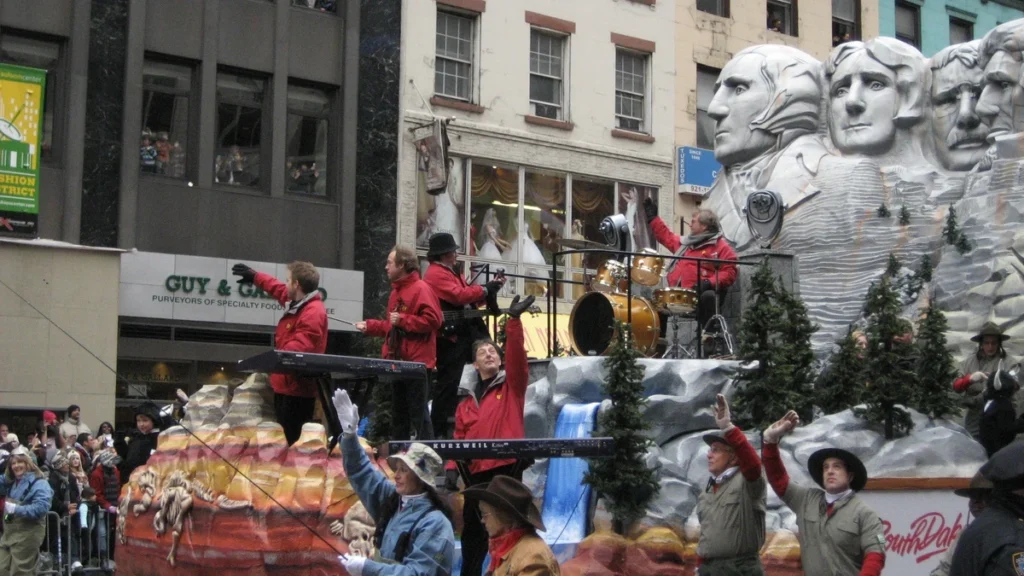
Mannheim Steamroller performing on a parade float.

Mannheim Steamroller runs its annual Christmas tour from 11 November to 30 December, using two separate travelling ensembles.

That allows two cities to be played on the same night.

Two Units on the Road

Sending out two ensembles under one name is the central fact about this operation and the reason it can do what it does.

A single touring group is limited by geography and by the calendar, which for holiday music means roughly seven weeks and one city a night.

Two units roughly double that, which turns a tour into something closer to a distributed annual event.

It also means the show has to be reproducible by musicians who are not interchangeable in any other sense, which is a genuine production discipline.

How the Format Works

Running parallel companies is standard in theatre and almost unknown in music.

A touring musical will have several productions running simultaneously, all working from the same score, staging and lighting plot, with different casts.

Applying that model to a concert requires treating the show as a fixed piece rather than as a performance that varies nightly, which is a decision with real artistic consequences.

Seven Weeks and Then Nothing

The run ends on 30 December, and there is no possibility of extension.

Every holiday act works inside the same wall: the audience for this material disappears completely within days of Christmas, and no amount of demand changes that.

Finishing on 30 December rather than the 23rd is itself notable, since it means playing the strange dead week when most touring has stopped.

Opening in Florida

The run opens at a theatre in St. Petersburg on 11 November before dates in Daytona Beach, Jacksonville and West Palm Beach.

Starting a Christmas tour in Florida in mid-November is counterintuitive and entirely practical, since the state has an enormous audience for this kind of programming and no weather risk.

It also allows the two ensembles to work through the southeast before the northern dates, which are the ones a snowstorm can cancel.

A Retirement Community With Two Shows

The first week includes two performances on the same day at a performing arts centre in a large Florida retirement community.

Booking two shows in one day in one venue is a demand signal that has nothing to do with the size of the surrounding city.

Communities of that kind are among the most reliable markets in American touring and are almost never discussed as such.

Old Theatres in the Routing

The Atlanta date is at the Fox Theatre, a restored cinema palace from the 1920s.

Rooms of that vintage are the natural home for this material, which was written for an ensemble sound rather than for amplification at volume.

They also carry an association with a particular kind of evening, which for a Christmas show is doing part of the work before anybody plays a note.

Where the Franchise Started

The group's founder has said the first Christmas album came out in 1984 and the first tour followed, at a point when the idea was not taken seriously.

His account is that people told him focusing on Christmas simply would not work as a business.

Four decades later the annual run is among the longest continuously operating tours in American music, which is a fairly complete rebuttal.

Why Nobody Believed It Would Work

The scepticism made sense at the time, because the holiday album was then understood as a novelty product.

Christmas records were made cheaply, sold for a few weeks, and were not expected to sustain anything, let alone a touring career.

What changed the arithmetic was durability: a seasonal record that returns every year eventually outsells a conventional one, and a tour that repeats annually builds an audience that plans around it.

Instrumental Music at Christmas

The group's material is largely instrumental, which distinguishes it from almost everything else in the seasonal market.

Christmas music is overwhelmingly vocal, because the songs are known by their words and audiences want to sing along.

An instrumental approach removes that, and it substitutes arrangement and texture, which is a harder sell and a more durable one once it lands.

Synthesisers and Early Music

The sound combines electronic keyboards with instruments and forms drawn from much older European music.

That combination was unusual when it started and remains identifiable, which is the single most valuable thing a seasonal act can have.

Distinctiveness matters more here than in any other genre, because the songs are shared and the arrangement is the only thing that belongs to the performer.

An Independent Label From Nebraska

The recordings have come out through a label the founder established himself, based in Omaha rather than in any music industry centre.

Artist-owned labels rarely sustain a catalogue at this scale, and the ones that do are almost always built on a product with predictable annual demand.

Seasonal music is close to the ideal case, since the sales are forecastable to a degree nothing else in music approaches.

A Tour That Books Itself

Regional theatres programme these dates a year or more ahead, and they compete for them.

A December show that reliably sells is worth a substantial share of a small venue's annual revenue, which gives a long-running holiday act unusual leverage.

That is why the routing can include markets that would not otherwise support a national tour.

What Happens When the Founder Is Not There

With two ensembles working simultaneously, the founder cannot be on both stages.

The same question applies to any touring franchise built on a name, and the answers are always some version of the same one: the show is the product and the name is the guarantee.

Audiences generally accept this provided the performance is good, and generally resent it if they were led to expect otherwise.

The Economics of Running Two Companies

Doubling the ensembles does not double the cost, and understanding why explains why more acts do not do it.

The expensive part of a production is designing it: the arrangements, the staging, the lighting design, the visual content. That cost is paid once regardless of how many companies perform it.

What doubles is the variable cost, which is musicians, crew, transport and accommodation. For an instrumental ensemble playing seated theatres, those numbers are manageable.

The reason it remains rare is that almost no act has a show that survives the separation of the performance from the performer. Most touring music is sold on the person, and a second company with different people is simply a different concert.

Forty Years of the Same Seven Weeks

An annual tour running four decades produces something no other format in music generates.

People attend it as children and return with their own children, which converts a concert into an inherited habit. Venues report the same families booking the same seats across generations.

That is a business built on repetition rather than novelty, and it is almost immune to the things that end other careers: chart position, radio, critical standing, a bad album.

What it is vulnerable to is the thing every institution is vulnerable to, which is succession, and that question sits underneath a tour that now needs two ensembles to cover it.

What Is Actually Being Tested

Two things. Whether a show designed to be performed by two separate ensembles is still a concert or has become a production.

And whether an annual event four decades old passes to a second generation of players and audiences, which is the only question a tour this established has left.

Two ensembles, seven weeks, one calendar that closes on 25 December, and a first album from 1984.

Kylie Minogue Took a Christmas Reissue to Number One

Kylie Minogue Took a Christmas Reissue to Number One

Kylie Minogue performing on the Tension Tour in Bangkok.

Kylie Minogue reissued her Christmas album for its tenth anniversary with four new songs, and it entered the British chart at number one.

It was her eleventh number one album there.

A Reissue That Charted Like a New Record

Anniversary editions rarely chart at all, let alone at the top, and this one did.

The reason is a quirk of how albums are counted: a reissue with sufficient new material is treated as a new release rather than as a re-entry.

Four new original tracks clears that threshold comfortably, which means an artist can convert a ten-year-old record into a chart contender by adding a fifth of an album.

That is not a criticism so much as a description of a rule everybody now works with.

Eleven Number Ones

The British chart has been unusually receptive to her across nearly four decades, and eleven number one albums is a substantial figure by any measure.

Careers of that length usually produce a run of chart-topping records early and then a long tail of respectable placings.

Continuing to reach number one thirty-odd years after the first is a different pattern, and it depends on an audience that has aged with the artist and kept buying.

A Song That Waited a Decade

One of the new tracks came from an idea she has said arrived in the summer of 2015, a few months after the original album's sessions had finished.

She has described it as having stayed with her since, which is a familiar experience for songwriters and an unusual length of time to act on.

Most ideas of that kind are either finished within a year or forgotten, and a decade of carrying one around implies a specific conviction about it.

Where the Idea Arrived

By her account the idea came while messing about with her guitarist on a terrace in Berlin, in the heat, months after a Christmas record had been completed.

Writing seasonal music out of season is standard practice and it is genuinely strange to do, since the entire emotional register of the material belongs to a different part of the year.

Most Christmas albums are recorded in spring or summer, because a December release requires manufacturing, marketing and radio servicing months in advance.

The Original Album

The record being reissued came out in 2015 and has become a fixture of her catalogue.

Christmas albums have unusually long commercial lives, returning every year rather than declining after release, which makes them among the most valuable things a pop artist can own.

That durability is what makes a tenth-anniversary edition worth mounting, since the audience is already there and returns annually without being reminded.

Songs Left on the Shelf

She has said that a couple of further tracks from the recent sessions were held back for another time.

Artists rarely admit to having finished material sitting unreleased, because it raises the obvious question of why it is not out.

In holiday music the answer is straightforward: there is one release window a year, and a song that misses it waits twelve months rather than twelve weeks.

Why Christmas Albums Get Reissued

The seasonal reissue has become a distinct commercial format, and the logic behind it is unusually clean.

A Christmas record does not need to be rediscovered, since the audience returns to it on schedule. Adding tracks gives that returning audience a reason to buy rather than simply to stream.

It also refreshes the record's position in playlists and shop displays, which for seasonal music is the difference between being heard and not.

Pop Longevity as a Subject

She has had commercially successful periods across five decades, with substantial gaps between them.

Careers that survive that long generally do so by changing register rather than by persisting with one, and hers has moved between styles repeatedly.

What has stayed constant is a particular relationship with an audience that treats each return as an event rather than a comeback.

A Christmas Record as a Career Move

Holiday albums were once regarded as something artists made at the end of a career, and that assumption has largely disappeared.

The modern version is made mid-career by artists with a substantial catalogue, and it functions as an annuity rather than a farewell.

The reason is streaming, which turned seasonal listening into a measurable annual spike that pays out for as long as the record exists.

The December Chart

Charting at number one in December is both easier and harder than at other times of year.

Easier because the market is enormous and seasonal records sell in volumes nothing else matches. Harder because every major act releases into the same fortnight.

A reissue reaching the top of that particular chart is therefore a stronger result than the same position in March.

Australia and Britain

She has held a distinctive position in two countries at once, having begun in Australia and built the larger part of her recording career in Britain.

Artists who move between markets that early usually end up strongly identified with one, and she has remained genuinely claimed by both.

That dual position has practical consequences, since a Christmas record has to work for a northern winter and a southern summer simultaneously.

Christmas in the Southern Hemisphere

The seasonal canon is built almost entirely on northern imagery: snow, fires, cold, darkness at four in the afternoon.

None of that describes an Australian December, and the songs are sung there anyway, which is one of the odder inheritances of cultural export.

Artists from that half of the world tend to be more conscious of the disconnect than anybody else recording this material.

What a Deluxe Edition Costs

The economics of an anniversary edition are more favourable than almost anything else a label can release.

The original recording is already paid for, the artwork exists, and the audience is identified. The only new expenditure is the additional tracks and the manufacturing.

That is why the format has proliferated, and it is also why so many examples are padded with material nobody needed.

The Rule That Makes Reissues Chart

The chart mechanics are worth spelling out, because they explain a great deal of current release behaviour.

Chart bodies set a threshold for how much new material a reissue must contain to be counted as a new release rather than as continued sales of the old one. Meet it, and the entire album's sales count afresh, including from listeners who already owned it.

That creates a strong incentive to record exactly enough new songs to qualify, and it is why so many anniversary editions arrive with a suspiciously precise number of additions.

Used cynically it is a loophole. Used well, as here, it is simply the mechanism by which an artist gets paid for finishing songs they had been carrying around for a decade.

Why Seasonal Songs Take So Long

The ten-year gap between the idea and the release is unusual in length and entirely ordinary in kind.

A Christmas song can only be released in one narrow window, and it competes in that window against a canon of songs everyone already loves. An artist with a half-finished idea has every reason to wait until it is genuinely good.

There is also no urgency of the usual sort. A pop single that sits for a decade sounds dated; a Christmas song does not, because the entire genre is already out of time.

That is the quiet advantage of writing in this form. Nothing in it expires, which is why an idea from a Berlin terrace in 2015 could arrive in December 2025 without sounding late.

What Is Actually Being Tested

Two things. Whether four new songs can carry a ten-year-old record back to the top of a chart, which this one answered.

And whether an artist with unreleased seasonal material sitting on a shelf treats it as a reserve or as an annual obligation.

Ten years, four new songs, eleven number ones, and a couple more still waiting.

Steven Page Is Making the Christmas Album He Wanted

Steven Page Is Making the Christmas Album He Wanted

Steven Page performing at a Christmas lights event in Toronto in 2009.

Steven Page has announced a holiday album for this autumn, more than twenty years after making one he has said he did not want to make.

A December trio tour follows it.

The Christmas Album He Did Not Want

His former band released a holiday record in 2004, and he has since said it was not his idea and not something he wanted to do at the time.

That is an unusually direct thing for a musician to say about their own catalogue, and it is worth taking at face value.

Holiday albums are frequently label-driven, because they sell reliably, cost little to make and can be reissued indefinitely.

An artist who does not want to make one has very little leverage against that arithmetic, which is presumably how it happened.

Why This One Is Different

The new record is his own, made with his own trio, at his own pace, and includes songs he chose rather than songs assigned to him.

The distinction matters for a genre where sincerity is the entire product, since a Christmas album made under duress tends to sound exactly like one.

Audiences are unusually good at detecting insincerity in this material, probably because they have heard so much of it.

Songs Written for a Band That Did Not Use Them

The album includes holiday songs he wrote during his years in the band, which is the most interesting item on the tracklist.

Songwriters accumulate material that does not fit the project they were writing for, and holiday songs are especially prone to this, since there is only one window a year to use them.

Material written in 2003 or 2004 and recorded in 2026 arrives with a specific quality, since it was written by a younger person for a different band.

New Originals in a Fixed Canon

The record also carries new original songs, which is the hardest thing to do in holiday music.

The Christmas repertoire effectively closed decades ago, and almost nothing written since has entered general circulation.

Writers keep trying because the reward for succeeding is enormous, since a single song that enters the canon generates income every December indefinitely.

Why New Christmas Songs Fail

The failure mode is consistent and worth naming: new holiday songs are usually about Christmas rather than set at it.

The standards that survived are mostly about longing, distance, home and weather, with the season as a setting rather than a subject.

A song that lists festive imagery has nothing underneath it, which is why it disappears by January.

The Traditional Half

The album also includes traditional holiday songs, which is the part every such record needs.

Those songs are what an audience actually shows up for, and a record composed entirely of originals will not be played at anybody's Christmas.

The usual construction is roughly half familiar material and half new, which lets the originals be heard in company they benefit from.

A Trio Rather Than a Band

The touring configuration is a trio, which suits both the material and the venues.

Three players can cover a great deal of ground if one of them sings, and the format allows arrangements to breathe in a way a full band cannot in a seated theatre.

It is also the configuration in which a strong voice is most exposed, which is a reasonable bet for a singer known primarily for one.

December Dates in Theatres

The run includes Le Poisson Rouge in New York on 10 December and a Syracuse date on 18 December, among others.

The venues are theatres and listening rooms rather than clubs, seating several hundred, which is the standard scale for this kind of touring.

Those rooms programme heavily in December because a holiday show is the most reliable seller a regional theatre has all year.

Nearly Forty Years of Material

The shows combine the seasonal material with songs from a career approaching four decades.

That mix is standard for holiday touring and it is also a practical necessity, since a new Christmas album does not contain enough material anybody knows to fill an evening.

What it produces is an unusual set list, moving between songs written last year and songs an audience has known since the nineties.

Leaving a Successful Band

He left the band he co-founded in 2009, after which both parties continued separately.

Departures of that kind are common and the outcomes are usually asymmetric, with the band retaining the name and the audience and the departing member starting again.

What made this case different is that the voice most associated with the catalogue was the one that left, which complicates the arithmetic for everybody.

A Canadian Career

The band was inducted into the Canadian Music Hall of Fame, an occasion that brought the original lineup back together.

Canadian music institutions have a stronger role in domestic careers than their equivalents elsewhere, partly because of broadcast content requirements that guarantee airplay.

That structure has produced a generation of acts with durable domestic followings and variable international ones.

Comedy and Songwriting

His former band was widely categorised as comic, which is a description that has consistently undersold the writing.

Funny songs are held to a lower standard by listeners and a higher one by writers, since a joke that does not land ruins a song in a way a weak metaphor does not.

Artists associated with humour frequently spend later careers demonstrating that they were doing something else as well, and a Christmas record is an unexpectedly good vehicle for that.

Revisiting Work You Disowned

Going back to a project you were unhappy with is a specific kind of career decision, and it is rarer than it sounds.

Most musicians simply leave the material behind, because returning to it invites the question of what was wrong the first time.

Doing it deliberately, and saying why, converts an old grievance into the frame for a new record. That is a considerably more interesting pitch than another holiday album, and it is presumably why the announcement was made this way.

It also carries a risk. A record positioned as the corrected version of an earlier one invites direct comparison, and the audience will make it whether or not the artist wants them to.

What a Voice Does in December

Holiday touring makes particular demands on a singer, and they are not the obvious ones.

The material sits high. A great deal of the canon was written for voices with easy top registers, and twelve nights of it in three weeks is harder than a rock set at the same frequency.

The rooms are also dry and heated, the tours run through winter, and every performer on this circuit describes the same thing: the songs are easy and the schedule is not.

What carries it is that the audience is entirely on your side, which is not true of any other kind of touring.

What Is Actually Being Tested

Two things. Whether an artist can make a genuinely personal record in the least personal genre in popular music.

And whether songs written for a band twenty years ago sound like recovered material or like something that was always meant to wait.

One album he did not want, one he did, a trio, and twelve nights in December.

Brian Tyler Built the Mario Galaxy Score From Game Themes

Brian Tyler Built the Mario Galaxy Score From Game Themes

Brian Tyler at a scoring session.

Brian Tyler built the score for this year's Mario film almost entirely from music written for the games rather than composing it fresh.

The composer of that original music returned as consultant.

Adapting Rather Than Composing

The distinction matters, because a score assembled from existing themes is a different job from writing one.

What it involves is arrangement, development and structure: taking material written in short loops for interactive play and turning it into music that follows a narrative.

Game themes are built to repeat indefinitely without becoming irritating, which is close to the opposite of what a film cue needs.

Converting one into the other requires deciding where a loop becomes a phrase, and what happens when it has to end.

Why Game Music Loops

The structural difference is worth stating plainly, because it explains most of the adaptation problem.

A player might spend forty seconds in a level or forty minutes, and the music has to work for both. That forces composition into cycles with no natural ending and no dramatic arc.

Film music has the opposite constraint: a cue lasts exactly as long as the scene and must arrive somewhere by the end of it.

The Original Composer as Consultant

Koji Kondo, who wrote much of the source material, returned in a consulting role rather than as co-composer.

That arrangement is unusual and it says something about how the material is regarded, since the themes are treated as a repertoire with an author rather than as assets to be licensed.

Consultants on scores have limited formal authority and considerable practical influence, since a note from the person who wrote the tune is difficult to ignore.

Two Decades of Source Material

The album draws on themes from the two Super Mario Galaxy games and from other titles in the series.

Those games are themselves notable for their music, having used a live orchestra at a point when the platform was not expected to support one.

Adapting orchestral game music for an orchestral film score is therefore less of a translation than it sounds, since the material was already written for those forces.

Themes From Another Series

Material from the Star Fox series also appears, which is a crossover most of the audience will notice immediately.

Nintendo's catalogue functions as a shared musical universe in a way few franchises manage, with themes that carry recognition across unrelated titles.

Using one series' music inside another film is a fan-facing decision that costs nothing musically and returns a great deal in the room.

Twenty-Four Tracks

The album runs to twenty-four tracks and roughly eighty-seven minutes, which is long for a film soundtrack.

Animated features tend to be wall-to-wall scored, with very few unscored minutes, which produces far more music than a live-action film of the same length.

That makes the album closer to a complete score release than the selective ones most films get.

Two Labels on the Release

The soundtrack came out through a studio label alongside a specialist reissue house, which is an unusual pairing.

The specialist partner brings physical formats and the audience that buys them, which for game music is substantial and not served by streaming alone.

That partnership reflects a market in which game and game-adjacent music sells physical copies at rates most film scores no longer reach.

Returning From the Previous Film

He also scored the previous film in the series, which gives this one continuity most franchises do not manage.

Studios routinely change composers between instalments, usually because of scheduling rather than dissatisfaction, and the results are audibly inconsistent.

Keeping the same composer allows themes established in one film to be developed rather than restated in the next.

Less Licensed Music This Time

Reviewers noted that this film leans far more heavily on the game music than its predecessor, which used a substantial amount of licensed pop.

Licensed songs in family films are a marketing device as much as a creative one, since a recognisable track sells a trailer.

Reducing them in favour of the source material is a decision to trust the audience's attachment to the games, which is a reasonable bet with this particular property.

Writing It From Hospital

Tyler has said in an interview that he wrote most of the score from hospital after a health emergency during production.

Film scoring schedules are unforgiving and largely immovable, since a release date is fixed long before the music is written.

What that produces is a profession where working through circumstances that would stop most jobs is treated as normal, which is worth noticing rather than admiring.

Game Music as a Repertoire

Music written for games is increasingly treated as a body of work rather than as a functional component.

Concert tours of game scores sell out large halls, the albums chart, and a generation of listeners has the same relationship to these themes that earlier ones had to film music.

Adapting them for cinema is the point at which that repertoire enters a form with more cultural prestige, which is a transfer that has happened before in the other direction.

Nintendo and the Melody

The specific reason this material adapts well is that it is melodic in a way most contemporary scoring is not.

Game music from that era had to be memorable on limited hardware, which forced composers to write actual tunes rather than textures.

Themes built that way survive orchestration, reharmonisation and tempo changes, because there is something underneath to hold on to.

The Constraint of Recognition

An adaptation score carries a burden an original score does not, which is that the audience already knows the material.

Deviating too far produces complaints from the people most likely to buy a ticket, and staying too close produces music that could have been taken directly from the game.

The workable position is usually to state the theme recognisably early and then develop it, which gives both audiences what they came for in sequence rather than in competition.

Orchestrating a Loop

The technical work involved in this kind of score deserves more description than it usually gets.

A game theme arrives as a fixed arrangement, frequently sixteen or thirty-two bars, designed to be seamless at the join. The first task is deciding which four bars actually carry the identity, because that fragment is what the audience recognises.

Everything else can then be rebuilt. The fragment becomes a motif that can be stated by a solo instrument, buried in an inner voice, inverted under a dramatic scene, or brought back in full at the end.

Done well, an audience hears a familiar tune three or four times without noticing that only one of those was the original arrangement. Done badly, it is a medley.

Why Studios Hire the Same Composer Twice

Franchise continuity in scoring is worth more than studios historically believed.

A returning composer arrives with the thematic material already established, meaning the second film can begin developing ideas rather than introducing them, which is a genuine saving in a compressed schedule.

It also protects the property. Themes are among the most durable assets a franchise has, and handing them to a new composer every three years erodes them.

The counter-argument is stagnation, and it is real. Series that keep one composer across five films frequently sound like it by the fourth.

What Is Actually Being Tested

Two things. Whether a score built from existing themes counts as composition or as arrangement, which is a question the credits do not settle.

And whether treating game music as a repertoire worth adapting properly, rather than as nostalgia to be quoted, produces a better film score.

Twenty-four tracks, two decades of source material, one consultant who wrote most of it, and eighty-seven minutes of music.

Mickey Guyton Booked a First Holiday Tour of Twelve Dates

Mickey Guyton Booked a First Holiday Tour of Twelve Dates

Mickey Guyton performing at a State Department event.

Mickey Guyton announced her first Christmas tour, twelve dates running from 29 November to 22 December.

It follows an album of seasonal standards released last year.

Twelve Dates in Twenty-Four Days

The shape of a Christmas tour is dictated entirely by the calendar, and it is unlike any other kind of touring.

There is no possibility of extending the run if it sells well, and no possibility of adding dates in January, because the entire market closes on 25 December.

That compresses everything into roughly three and a half weeks, which is why holiday tours are short, dense and routed with unusual efficiency.

Twelve dates across that window means playing every second or third night with almost no recovery time.

Why a First Christmas Tour Comes Late

Artists rarely mount a holiday tour early in a career, and the reason is that the format depends on familiarity.

A Christmas audience is buying an evening rather than a set list, frequently as a group outing, and they need to already trust the performer.

That trust takes years to build, which is why the holiday circuit is populated almost entirely by established acts rather than by new ones.

The Album That Preceded It

Her 2025 Christmas album consists largely of interpretations of seasonal standards rather than original material.

That is the conventional and sensible construction, since the songs an audience wants to hear at Christmas were mostly written between 1930 and 1965.

Original holiday songs almost never enter the canon, and artists who fill an album with them tend to find nobody plays it the following year.

Interpretation as the Whole Job

When the material is fixed and universally known, the entire content of a Christmas record is the arrangement and the voice.

Every listener has a reference version of each song in their head, usually recorded decades before they were born, and a new version is measured against it immediately.

The successful approach is generally to change one element decisively rather than to redecorate everything, since a wholly reinvented carol usually just sounds wrong.

A Routing Built Around Markets

The tour covers Atlanta, Nashville, Chicago, Houston, Pittsburgh, Annapolis, New York, Philadelphia, Boston, Ridgefield, Mesa and Palm Desert.

That is a geographically incoherent list by touring standards, jumping between the east coast, the south and the desert southwest.

Holiday routing frequently looks like this, because the venues that host these shows are booked a year ahead and availability rather than geography decides the order.

Small Cities on the List

Annapolis, Ridgefield, Mesa and Palm Desert are not markets that appear on a standard national tour.

All four have performing arts centres of the kind that programme heavily in December, since a holiday show is the most reliable seller a regional venue has.

That is the actual infrastructure of Christmas touring: a network of theatres that make a substantial share of their annual revenue in three weeks.

Unnamed Special Guests

The tour is billed with special guests who were not identified at announcement.

That is standard for holiday shows, where guests are frequently booked city by city rather than for the whole run.

It also allows local artists to appear, which is a genuine feature of the format rather than a compromise.

Country Music and Christmas

Country has a deeper relationship with holiday music than most genres, and it is not accidental.

The genre's core audience is family-oriented, regionally rooted and demonstrably willing to attend an annual event, which is precisely the audience a Christmas tour needs.

It is also a genre comfortable with sentiment, which is a requirement rather than a weakness in this material.

A Career That Took a Different Route

Guyton spent a long period signed to a Nashville label before her work reached a wide audience, which is a common and rarely discussed pattern.

Country radio has historically played very few women and almost no Black women, and an artist without radio has to find another route to an audience.

Hers came partly through songs that addressed that situation directly, which is a difficult thing to do from inside the industry making the decisions.

Grammy Nominations Without a Win

She has been nominated several times without winning, which is a specific professional position.

Repeated nomination establishes standing with peers and with bookers regardless of the result, and it is the thing that makes a twelve-date theatre tour bookable.

It also leaves an open question that follows an artist to every ceremony, which is a mixed inheritance.

What a Holiday Show Actually Is

A Christmas concert is a different product from a normal one, and performers who treat it as a regular set with tinsel tend to disappoint.

The audience expects staging, narration between songs, a degree of formality and a set that resolves rather than simply ends.

It is closer to theatre than to a rock show, which is why so many of them run in seated venues with a designed production.

The Economics of Three Weeks

Holiday touring is unusually profitable for its length, which is why so many artists return to it annually.

Tickets sell early, groups buy in bulk, and the merchandise attaches to a gift-buying season, so the per-night revenue is higher than a comparable spring date.

The production is also reusable. A Christmas show built once can be remounted every year with modest updates, which no other kind of touring allows.

Why the Repertoire Never Changes

The fixed canon is the strangest feature of this part of the music business and the most durable.

Almost every song a Christmas audience wants to hear was written before 1970, and the handful of later additions can be counted on two hands. No other genre operates on a repertoire that closed half a century ago.

The reason is that Christmas music is tied to memory rather than taste. Listeners want the songs they associate with childhood, and each generation inherits roughly the same set from the one before it.

That makes the field a performance discipline rather than a compositional one, which is unusual in popular music and closer to how classical repertoire works.

The Annual Tour as a Business Model

An artist who establishes a successful holiday run has built something with a value quite separate from their recording career.

It recurs without needing a new album, it sells to the same audience year after year, and it occupies a period when the rest of the touring industry is dormant and venues are competing for content.

Several performers have effectively made the December run their primary business, touring lightly the rest of the year and treating the Christmas dates as the season that pays for it.

Whether a first-year tour becomes that kind of institution is decided almost entirely by whether the audience returns in the second year, and nothing about the first tells you.

What Is Actually Being Tested

Two things. Whether a first holiday tour establishes an annual event or turns out to be a one-off in a crowded December.

And whether an album of standards can carry twelve nights on its own, or whether the evening has to be built around everything else in the catalogue.

Twelve dates, twenty-four days, a repertoire nobody wrote this century, and guests nobody has named yet.

Kris Bowers Reunited With Reinaldo Marcus Green on Punisher

Kris Bowers Reunited With Reinaldo Marcus Green on Punisher

Kris Bowers at the Toronto International Film Festival in 2024.

Kris Bowers scored a Marvel special that premiered in May, working again with a director he has now collaborated with repeatedly.

A separate score of his had been released three months earlier on an entirely different label.

The Composer and Director Relationship

The most durable working relationships in film music are between a composer and one director, and they are less common than the famous examples suggest.

What they produce is efficiency. A director who has worked with the same composer four or five times does not need to explain what a scene requires, because the vocabulary already exists.

They also produce risk. A composer identified with one filmmaker can find it difficult to be considered for anything that does not resemble that filmmaker's work.

The relationship here spans sports drama, documentary-adjacent biography, television and now a comic book property, which is a wider spread than most such partnerships manage.

Scoring a Comic Book Property

Marvel scores have a reputation for anonymity, and it is largely deserved.

The standard criticism is that the music is written to be unnoticed, that the themes are interchangeable between films, and that nobody could hum one afterwards.

A composer arriving from character-driven drama has a different set of instincts, which is presumably why he was hired.

A Character Who Has Been Scored Before

The character has appeared across several previous productions with different composers each time.

That creates a specific problem: an audience arrives with an existing musical association, and a new composer must decide whether to acknowledge it or ignore it.

Ignoring it is usually the better choice artistically and the harder one commercially, since fans notice the absence of a theme they expected.

Two Labels in One Year

The two scores came out through entirely separate label systems, one attached to a studio and one to a classical imprint.

Studio-owned soundtrack labels exist to service their own films and rarely release anything else, which means a composer working across studios ends up with a catalogue scattered across imprints.

That fragmentation is invisible to listeners and significant to composers, since it determines how a body of work is presented and whether it can be collected at all.

Songs and Score as Separate Albums

The February film released its songs a week before its score, as two distinct albums.

This has become standard practice for films carrying both, and the logic is commercial: songs reach playlists and radio, scores reach a smaller and more specific audience.

Combining them produces an album that serves neither, which is why almost nobody does it any more.

A Score Album Is Not the Film

Releasing a score as an album requires rebuilding it, since the cues as written are frequently thirty seconds long and end abruptly.

Album versions are assembled by combining related cues, extending endings and occasionally rerecording material so it holds together without picture.

That work is done by the composer after the film is finished, and it is the reason score albums are frequently better listening than the score is in the film.

Three Months Between Releases

February and May is a short gap, and it reflects how film scoring schedules actually work.

Composers work on several projects simultaneously at different stages, since a score is written in a compressed window near the end of post-production.

Two releases three months apart usually means the writing happened months earlier and much closer together than the release dates suggest.

A Pianist Before a Composer

He came to scoring from jazz piano rather than from the orchestral tradition, which is audible in the writing.

Jazz-trained composers tend to voice chords differently, use more harmonic movement in quiet passages, and write piano parts that a session player cannot simply read down.

They also tend to play on their own scores, which changes the recording process and generally produces a more personal result.

The Strings Question

Contemporary film scoring runs on strings, and the reason is practical rather than aesthetic.

A string section can sustain, swell, disappear and return without drawing attention, which is exactly what underscore requires.

What separates composers within that constraint is what they do with the rest of the orchestra, and how often they are willing to let the strings stop entirely.

Television and Film Together

His work has moved between features and television, which was once a career distinction and is now barely one.

Prestige television scoring pays comparably, runs longer and offers more material, since a season contains several times the music of a feature.

What it does not offer is the concentrated attention a film score receives, which is why composers still take features that pay less.

Documentary Work

He has also worked in documentary, which is a genuinely different discipline from dramatic scoring.

Documentary music has to avoid telling the audience what to feel about material that is presented as factual, which rules out most of the techniques dramatic scoring depends on.

Composers who do both frequently describe documentary as the harder job, precisely because the obvious tools are unavailable.

Streaming Premieres and Score Releases

The May project premiered on a streaming service rather than in cinemas, which changes the soundtrack release calculus.

A cinema release gives a score a fixed opening weekend to build around. A streaming premiere has no equivalent moment, and the album arrives into a much flatter attention curve.

Releasing three days after the premiere rather than on the same day is a small acknowledgement of that, giving the film a head start.

Why Directors Keep the Same Composer

The practical reasons are more interesting than the sentimental ones.

Scoring happens under extreme time pressure at the end of a production, when the budget is spent and the release date is fixed. A director who has to explain their intentions from scratch is losing days they do not have.

A returning composer also knows how a particular director cuts, which matters enormously, since music has to fit an edit that is still changing while the score is being written.

What the director gives up is surprise. A composer who knows exactly what is wanted will deliver it, and occasionally the more useful outcome is somebody delivering something nobody asked for.

The Anonymity Problem

Franchise scoring has a structural difficulty that no individual composer can solve.

The music has to sound consistent with everything else in the franchise, support action sequences cut before the score exists, and survive being mixed under dialogue and effects at low volume.

Those constraints push every composer toward the same solutions, which is why so much of it sounds alike regardless of who wrote it.

The composers who escape it generally do so in the quiet scenes, where the constraints loosen and there is room for actual writing. That is where a distinctive voice becomes audible, and it is usually about four minutes of a two-hour film.

What Is Actually Being Tested

Two things. Whether a composer known for character drama can bring anything distinguishable to a franchise built on established musical conventions.

And whether a director and composer partnership that has already crossed several genres holds up in the one where the studio has the most opinions.

Two scores, two label systems, three months apart, and one director he has now worked with more than anyone else.

Hans Zimmer Is Running Three Separate Tours This Year

Hans Zimmer Is Running Three Separate Tours This Year

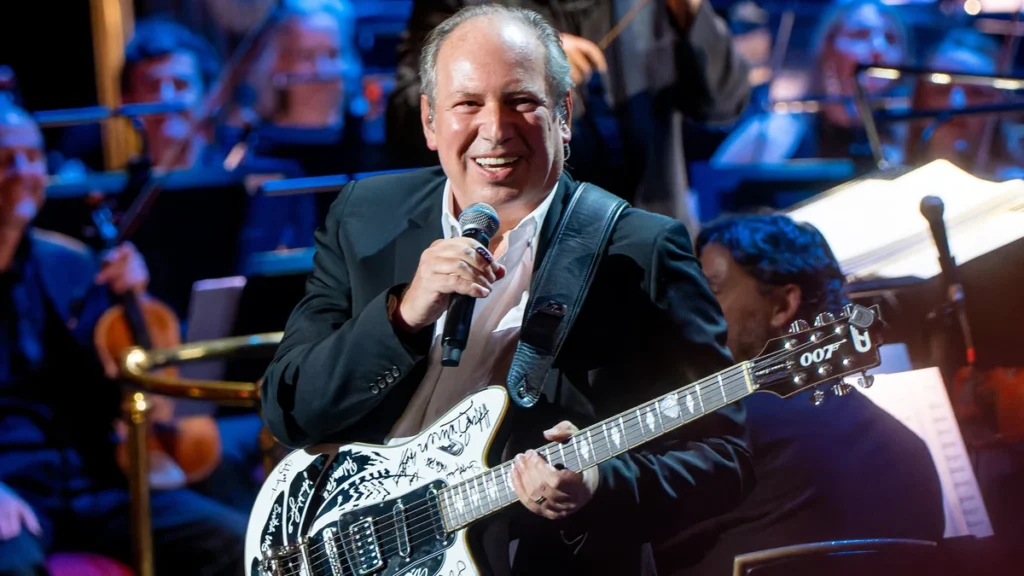
Hans Zimmer performing with an orchestra in 2022.

Hans Zimmer has three separate productions touring under his name this year, and he appears on stage in only one of them.

The others run with an orchestra, soloists and his name on the poster.

Three Shows at Once

Running three touring productions simultaneously is not something composers do, and it is barely something bands do.

A conventional artist tours one show, because there is one of them and the show is built around their presence.

Detaching two of the three from the person named on the ticket turns a tour into a format, which can be staged in several countries at the same time.

That is a structural difference from how live music normally works, and it is the reason this operation has the scale it does.

The One He Plays In

Hans Zimmer Live is the production he performs in, and it reached Asia and Australia before returning to European arenas.

It runs to roughly three hours, which is long for any concert and extremely long for orchestral material.

Zimmer appears in it as a bandleader rather than as a conductor, playing keyboards and guitar in what is closer to a rock configuration than an orchestral one.

The Two He Only Curates

The other two productions carry his name and his music without him being present.

He functions as musical director and curator, which means selecting the repertoire, approving the arrangements and shaping how the evening is structured.

That is a real creative role and it is also, unavoidably, a licensing arrangement, since the show exists to sell tickets on a name that is not in the building.

Forty Concerts From Luxembourg

The immersive symphony production opened on 6 March in Luxembourg and runs to close to forty concerts.

The routing covers Luxembourg, France, Austria, Germany and Switzerland, which is a tight geographical cluster rather than a continental tour.

Dense routing of that kind is what makes a forty-date run of a large production financially possible, because the travel between dates is measured in hours rather than days.

The Orchestra on Stage

The European production is performed by the Odesa Orchestra and Friends alongside soloists from Zimmer's own ensemble.

Touring orchestras assembled for a specific production are a distinct part of the live industry, and they work differently from resident symphony orchestras.

A resident orchestra plays a season in one hall. A touring one plays the same programme forty times, which produces a very different kind of ensemble.

Twenty-Four American Arenas

The arena production brings twenty-four North American dates from September, ahead of European arena dates in October.

Arena-scale orchestral touring is a relatively recent development and it depends entirely on production values, since the acoustics are hostile and the sightlines are poor.

What sells those rooms is the visual staging as much as the music, which is why these shows are described in terms of dimension and immersion rather than repertoire.

The Repertoire Is the Draw

The programmes are built from scores for films that were enormously successful, and the audience arrives knowing every cue.

That is a completely different relationship from a classical concert, where a substantial part of the audience is hearing a work for the first time.

Film music concerts operate more like a greatest-hits set, with the recognition of each theme forming part of the event.

Why Film Scores Fill Arenas

The commercial logic is straightforward once stated. Hundreds of millions of people have heard this music, and almost none of them think of themselves as classical listeners.

An orchestral concert marketed as classical reaches an audience of a certain size and a certain age. The same orchestra playing film music reaches a different one entirely.

That is not a small distinction for the orchestral world, which has spent decades trying and failing to find new audiences by other means.

What Gets Lost Without Picture

Film music was written to accompany images, and removing the images changes what the music is doing.

A cue built to underscore tension has a shape determined by the scene rather than by musical logic, and played alone it can feel like it is waiting for something.

Concert versions therefore have to be rearranged, usually by combining several cues into a suite with a beginning and an end, which is a compositional job in itself.

The Composer as a Brand

Very few film composers are known by name to general audiences, and a name that can sell an arena without the person attending is rarer still.

What produced that recognition was a run of scores for films with enormous audiences, combined with a sound distinctive enough to be identified without credits.

The result is a name that functions commercially the way a band name does, which is why two shows can tour on it while he is elsewhere.

Zimmer's Route Into Film

He came into scoring from popular music rather than from a conservatory, which is unusual for a composer at this level and audible throughout the work.

The approach relies heavily on synthesis, on ostinato patterns rather than developed melody, and on treating the orchestra as one texture among several.

That method has been enormously influential and enormously criticised, largely by people who prefer the tradition it displaced.

A Talent Factory

His operation has functioned for decades as a training ground, with a substantial number of working film composers having come through it.

That structure resembles a workshop more than a studio, with senior figures overseeing multiple projects and junior composers doing a great deal of the writing.

It is how film music has actually been produced for a long time, and it is discussed far less often than the single credited name on a poster suggests.

Three Productions and the Risk of Saturation

The obvious hazard is dilution, since three shows drawing on the same repertoire in the same year compete with each other.

The mitigation is geography and staging: different territories, different scales, different visual concepts around a largely shared catalogue.

Whether an audience distinguishes between them is the open question, and it is the one that determines how long this model lasts.

How a Show Tours Without Its Artist

The mechanics of a touring production built on an absent name are worth understanding, because they are increasingly common.

The production is assembled once, with arrangements, staging, lighting and visual content locked in place. A musical director rehearses the ensemble against that fixed template, and the show is then reproducible by any competent orchestra.

What the named artist supplies is the repertoire, the approvals and the reputation. What the production supplies is everything else, and the two are contractually separable in a way a rock tour is not.

The model has been used for decades by orchestral pops programmes and by tribute productions. What is new is a living composer operating it on his own catalogue, at arena scale, while simultaneously touring a show he does appear in.

What This Means for Orchestras

Film music touring has become a significant employer of orchestral musicians, and the implications are mixed.

It provides steady, well-paid work in a field where steady work is scarce, and it puts orchestral playing in front of audiences who would never buy a symphony ticket.

The criticism from inside the profession is that it is repetitive work with limited artistic development, playing the same forty-concert programme rather than a varied season.

Both things are true, and most musicians who do it describe it in exactly those terms: good money, real audiences, and a programme they could play in their sleep by the twentieth date.

What Is Actually Being Tested

Two things. Whether three concurrent productions on one catalogue expand the audience or divide it.

And whether a show that tours successfully without the composer present has proved that the name is the product, which is a conclusion with implications well beyond film music.

Three productions, one composer, forty European concerts, twenty-four American arenas, and one stage he actually stands on.